
Recipe scaling guide, 6–16 beds
How do you scale recipes for a 6–16 bed home
without software?
One formula, numbered scoops and a cook-to-census production sheet keep portions, nutrition and survey records consistent in a small care home kitchen. Plans from $15/mo.
4-Week Sample Cycle Menu
Approved by a Registered Dietitian
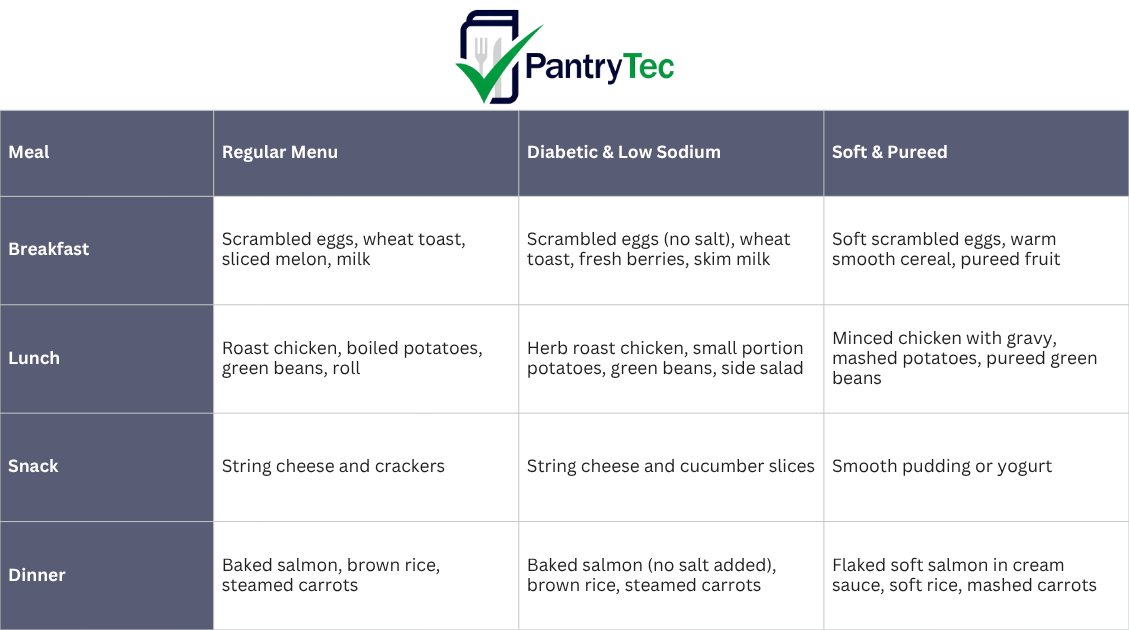
Why Is Recipe Scaling So Difficult for a 6–16 Bed Care Home?
Recipe scaling is hard in 6–16 bed homes because quantity recipes are written for 50 or 100 servings, and measuring errors grow as batches shrink. A 2002 California Health Care Foundation study found 85% of the state's residential care homes had fewer than 16 beds. Homes under 15 beds had a median of one staff member on duty in the evening, so the cook is often the caregiver, too.
According to Measuring Success with Standardized Recipes, a USDA-funded training guide, a standardized recipe delivers the same yield, quality and nutrient content every time. Guesswork breaks all three. In one example from the guide, 5 extra pounds of beef added $0.05 per serving, about $1,600 over a school year.
The two failure points below show where it goes wrong.
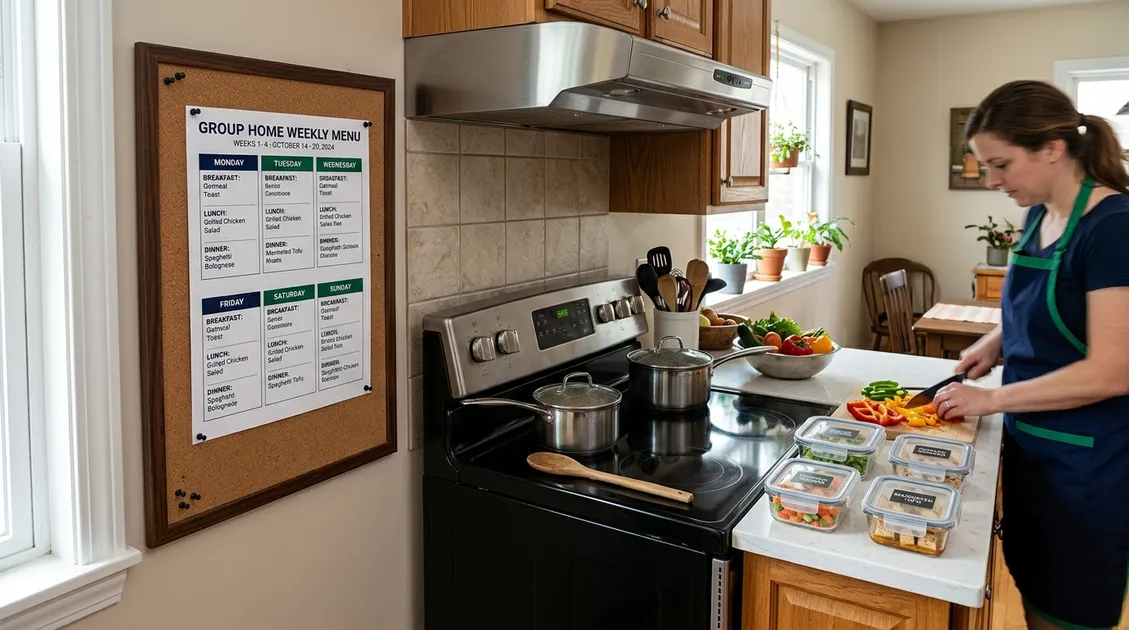
The Problem with Downscaling 50-Serving Commercial Recipes
Downscaling a 50-serving recipe to 8 portions multiplies everything by 0.16. Two tablespoons of thyme become 0.96 teaspoon, and a batch built for a steam kettle now simmers in a 4-quart saucepan.
Math Errors, Overproduction, and Nutritional Deficiencies
Overportioning costs money: cut a pan into 20 portions instead of 25, and each serving costs $0.12 more, per the same guide.
Underportioning costs nutrition. ESPEN's 2022 geriatric nutrition guideline uses about 30 kcal and at least 1.0 g of protein per kilogram daily as starting points. PantryTec plans menus to 100% of the Dietary Reference Intakes (DRI), a target that holds only when plates match the recipe.
What Is the Mathematical Formula for Scaling Recipes Manually?
The manual scaling formula is desired yield ÷ original yield, so a 50-serving recipe cooked for 10 residents uses a scaling factor of 0.20. Multiply every ingredient by that factor, then convert the result into pounds and ounces. A 50-serving recipe for 8 residents uses 0.16.
The USDA-funded guide teaches the same factor method for adjusting any quantity recipe. It handles census changes, too: a recipe written for 10 servings needs 0.80 when 2 residents are in the hospital. Two decimal places are enough, since extra precision is more than a kitchen scale or spoon measures.
Scaling by weight keeps small batches accurate, since ounces don't change with how tightly food is packed. The table below shows factors for common census counts.
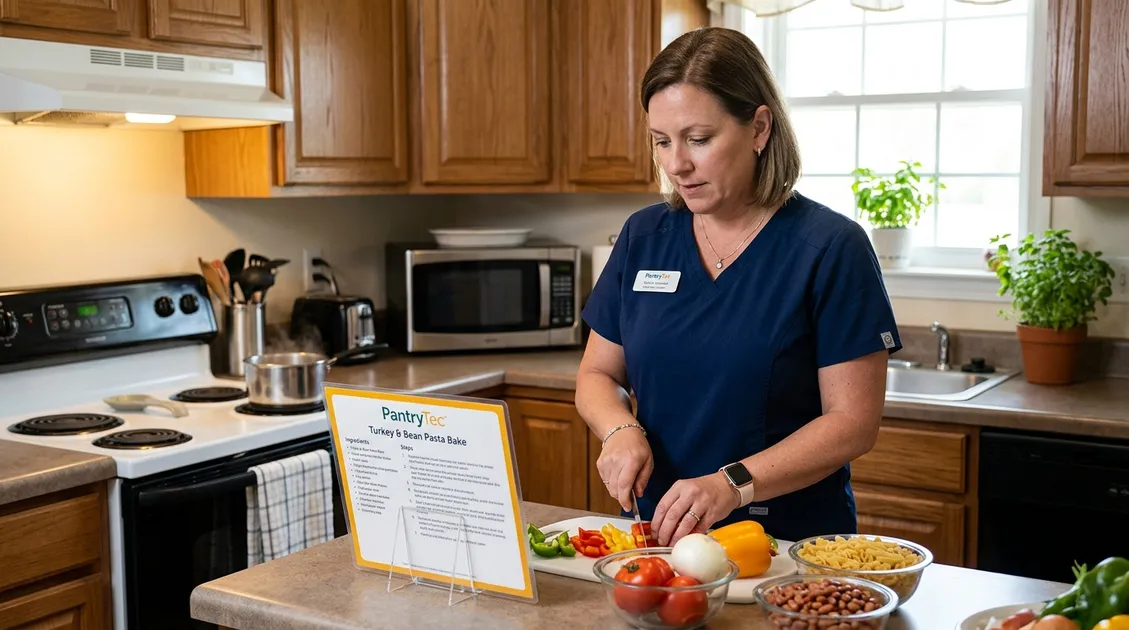
The Factor Method: Desired Yield Divided by Base Yield
| Residents served | Scaling factor | Ground turkey (12 lb in 50-serving recipe) |
|---|---|---|
| 6 | 0.12 | 1 lb 7 oz |
| 8 | 0.16 | 1 lb 15 oz |
| 10 | 0.20 | 2 lb 6 oz |
| 12 | 0.24 | 2 lb 14 oz |
| 16 | 0.32 | 3 lb 13 oz |
Recipe Scaling Factor Calculator
Weigh proteins and starches at the scaled amount. For salt and strong spices, round down to the nearest spoon and taste before adding more.
Converting Volume Measurements to Weight for Consistent Ratios
Set the bowl on a digital scale and press tare to zero it before adding each ingredient. Scale the as-purchased weight for shopping and the edible-portion weight for plating.
Why Don't Spices, Leaveners, and Liquids Scale Down Evenly?
Spices, leaveners and liquids don't scale evenly because tiny amounts round badly on measuring spoons and small batches lose liquid faster to evaporation. The USDA-funded guide warns that herbs, spices, leaveners, thickeners and liquids do not always scale in proportion, so test the scaled recipe and adjust.
Rounding is the hidden problem. Multiply 1 teaspoon of cayenne by 0.20 and you get 0.2 teaspoon, but the nearest spoon holds ¼ teaspoon, 25% more heat. In PantryTec's experience, that rounding, repeated across salt and spices, is why a scaled chili tastes harsher than the original.
Baked goods are the least forgiving, so bakers scale by weight with baker's percentages, each ingredient a percent of the flour weight. The two rules below handle seasonings and liquids.
The Non-Linear Adjustment Rule for Salt and Pungent Spices
For salt and strong spices such as cayenne, cloves and black pepper:
- Multiply by the factor, then round down to the nearest spoon.
- Add salt after liquids reduce, since reduction concentrates it.
- Taste, then add ⅛ teaspoon at a time. On a sodium-restricted diet, the scaled amount is the ceiling.
Surface Evaporation and Liquid Reductions in Small Pots
Evaporation happens at the surface, so small batches lose liquid faster. One-fifth of a batch in a pot of the same shape gets about 70% more surface per cup of liquid. Choose a pot the batch fills at least halfway, and keep hot low-sodium stock or water ready.
What Kitchen Portioning Tools Replace the Need for Software?
Numbered disher scoops and a cook-to-census production sheet replace software, because the scoop fixes each portion and the sheet fixes how many you make. USDA's Food Buying Guide defines the scoop number as how many level scoops fill a quart, so a #8 holds ½ cup.
Conventional wisdom says a small home needs culinary software to scale menus. PantryTec disagrees. A recipe already scaled to your census and a scoop number beside each item do the same job on paper. In our experience, a scoop chart taped inside a cabinet door gets used, while a software login gets forgotten.
Cross-trained caregivers match a handle color instead of doing math at the stove. Compare costs in menu software vs. done-for-you menus.
Color-Coded Disher Scoops and Portion Equivalents
| Scoop | Handle color | Level measure | About | Typical use |
|---|---|---|---|---|
| #6 | White | ⅔ cup | 5⅓ fl oz | Casseroles, hot cereal |
| #8 | Gray | ½ cup | 4 fl oz | Vegetables, fruit |
| #10 | Ivory | ⅜ cup | 3 fl oz | Potatoes, rice |
| #12 | Green | ⅓ cup | 2⅔ fl oz | Grains, pasta |
| #16 | Royal blue | ¼ cup | 2 fl oz | Sauces, toppings |
Level measures per USDA Food Buying Guide Table 13. Handle colors vary by brand, so go by the number. A 4-ounce ladle holds ½ cup (Table 14).
Cook-to-Census Batch Production Sheets
Cook-to-census means preparing for the residents you're feeding today, not the licensed bed count. Write each recipe's amounts for 6, 8, 10 and 12 servings once, and on a hospital-leave day the cook reads the 8 column.
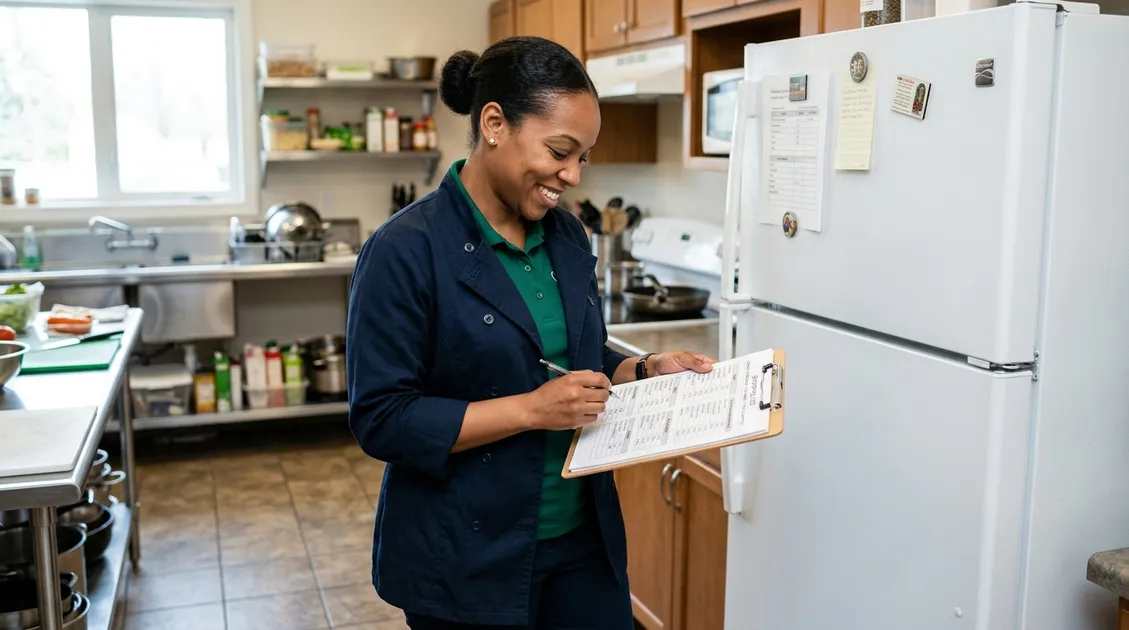
Sample production sheet: lunch, census 8 of 10
| Menu item | Recipe column | Prepared | Portion | Served | Left over |
|---|---|---|---|---|---|
| Turkey meatloaf | 8 | 1 lb 15 oz raw turkey | 3 oz slice | 8 | 0 |
| Mashed potatoes | 8 | 8 portions | #10 scoop | 8 | 0 |
| Green beans | 8 | 8 portions | #8 scoop | 7 | 1 |
How Do You Scale Pureed and Texture-Modified Diets for 1–2 Residents?
Texture-modified diets for 1–2 residents work best as a 4- to 6-portion batch, prepared to the ordered IDDSI level and frozen in single portions. A single 4-ounce portion is too small for most blenders to puree smoothly.
The IDDSI framework defines Level 4 Pureed food as smooth, lump-free and able to hold its shape on a spoon. Level 5 Minced & Moist allows soft, moist pieces up to 4 mm for adults. A texture error is a choking risk, so test every batch with IDDSI's fork and spoon tests before it's served.
Thinning with water dilutes nutrition, so use the recipe's milk, broth or gravy to keep a #8 scoop's planned calories and protein. See IDDSI Level 4 puree menus for ready-made plans.
Batching and Freezing Standardized IDDSI Level 4 Portions
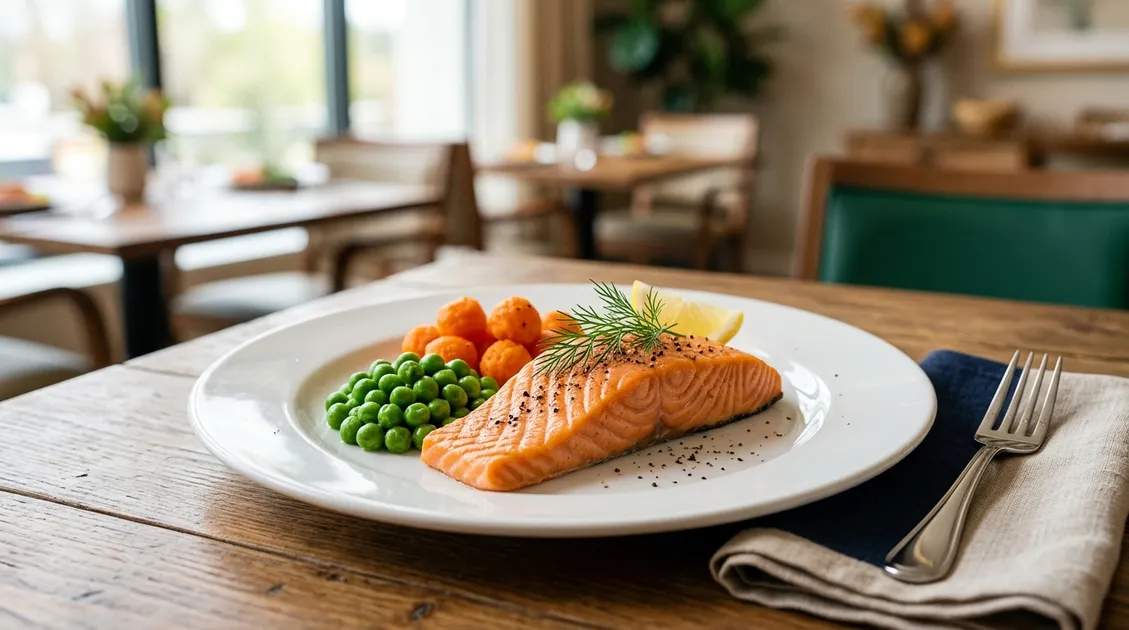
- Cook the full standardized batch and puree it to Level 4.
- Portion with the recipe's scoop, such as a #8 (½ cup), into silicone molds.
- Chill quickly, freeze, then label each bag with food, IDDSI level and date.
- Thaw in the refrigerator, reheat to 165°F, stir, and retest texture.
Minced & Moist (IDDSI Level 5) menus use the same method.
Slurry and Thickener Scaling Without Compromising Moisture
Thickener scaling follows the liquid left at the end, not the starting amount; dose by the manufacturer's chart. Starch-based thickeners keep thickening and often weep after freezing, so retest every thawed portion.
What Documentation Proves Your Scaled Recipes Meet State Survey Standards?
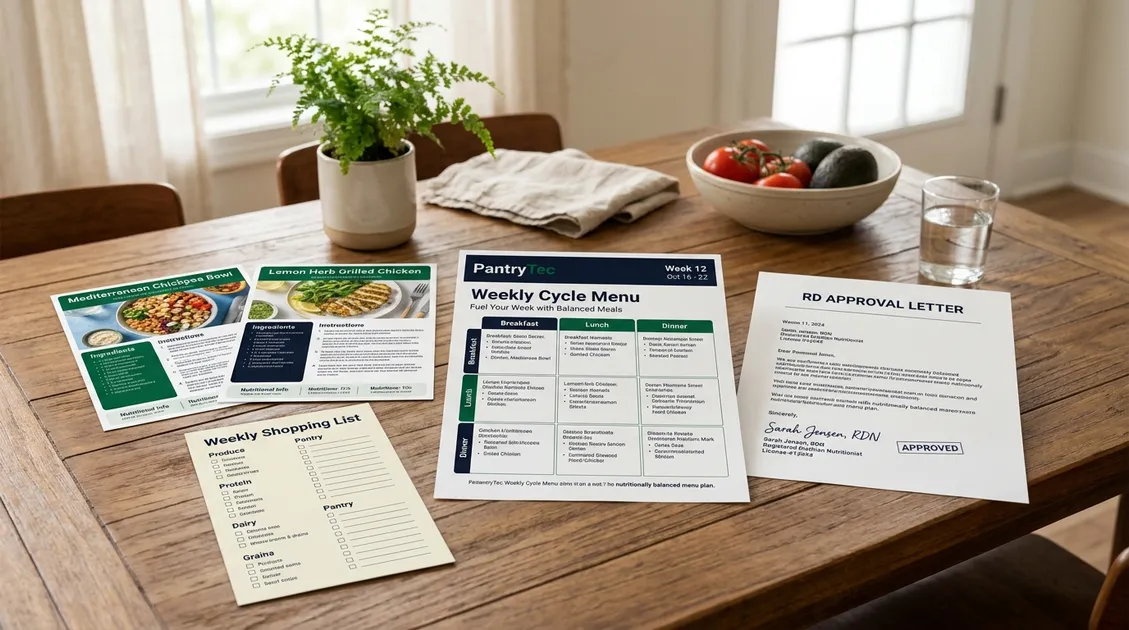
Three records support scaled recipes at survey: an RD-approved menu and approval letter, standardized recipes with yields and portions, and dated production sheets. In certified nursing homes, 42 CFR §483.60(c), cited as F-Tag F803, requires menus that meet national nutrition guidelines, are prepared in advance and are followed. A scaling error that shrinks portions means the menu is not being followed.
Small residential homes answer to state licensing rules instead, which vary by state. Washington's assisted living rule, WAC 388-78A-2300, requires written menus a week in advance, kept on file for six months. Substitutions must match the original's nutrient value and be noted on the menu.
PantryTec includes standardized recipes and production sheets with every weekly menu. Here's how to keep both.
Standardized Recipe Binders and RD Approval Letters
A standardized recipe binder holds the current RD-approved cycle menu, the RD approval letter and a recipe for every item. Each recipe lists yield, portion size, scoop number and cooking temperature. Washington's Senior Nutrition Program Standards expect the same of meal programs; care homes are not bound by them, but they are a useful benchmark.
Recording Actual Portions on Daily Production Sheets
Production sheets work only when you fill them in during service. Record census, amount prepared, scoop, portions served and leftovers. In our experience, the leftover column is the quickest way to spot overproduction and plate waste.
Key Takeaways: Foolproof Recipe Scaling for 6–16 Bed Facilities
- Scaling factor = desired yield ÷ original yield; 50 servings for 10 residents is 0.20.
- Scale by weight, and round salt and strong spices down.
- Portion by scoop number: #8 = ½ cup, #12 = ⅓ cup, #16 = ¼ cup (USDA).
- File the RD-approved menu, standardized recipes and production sheets together.
Frequently Asked Questions About Scaling Recipes for Small Care Homes
How do you calculate a recipe scaling factor for a small care home?
Divide the servings you need by the servings the recipe makes. A 50-serving recipe for 10 residents has a factor of 0.20, and for 8 residents, 0.16.
Why can't you divide commercial 50-serving recipes by five for a 10-bed home?
Dividing by five works for proteins, starches and vegetables, but not for salt, spices, leaveners, thickeners and liquids. Small amounts round up (0.2 teaspoon becomes ¼ teaspoon, 25% more), and small batches lose liquid faster.
What kitchen tools allow caregivers to portion food accurately without weighing every meal?
Numbered disher scoops and ladles portion food by volume in one motion. Per USDA, a #8 scoop and a 4-ounce ladle each hold ½ cup.
Do state licensing inspectors require standardized recipes in 6–16 bed homes?
Requirements vary by state. Washington's assisted living rule (WAC 388-78A-2300) requires written menus a week ahead and documented substitutions. Standardized recipes and production sheets are the clearest proof a menu was followed; F-Tag F803 applies only to certified nursing homes.
How do you scale recipes for residents requiring IDDSI texture-modified diets?
Scale the regular recipe to a 4- to 6-portion batch, then prepare it to the ordered IDDSI level, such as Level 4 Pureed. Freeze single portions and retest texture after every reheat.