
Dietary Scope and Severity Levels 1–4:
How CMS Scores a Dietary Citation
Dietary scope and severity is the two-axis system CMS uses to score every dietary deficiency, pairing four severity levels with three scope levels to produce a letter from A to L. Severity measures how badly residents were affected; scope measures how many. The first question after a survey is usually the same: what does this letter cost us? The parent guide on CMS dietary survey and F-tag menu requirements covers the tags. This page covers the scoring.
TL;DR: Four severity levels by three scope levels equals 12 cells, letters A–L. Levels 1 and 2 are no-harm findings, level 3 is actual harm, level 4 is immediate jeopardy (J, K, L). Substandard quality of care (F, H, I, J, K or L) applies only to certain regulatory groups, and the §483.60 food and nutrition tags are not among them.
Dietary managers can pull a free 4-week sample menu and compare it against the rotation they post today.
How Does the CMS Scope and Severity Grid Work?
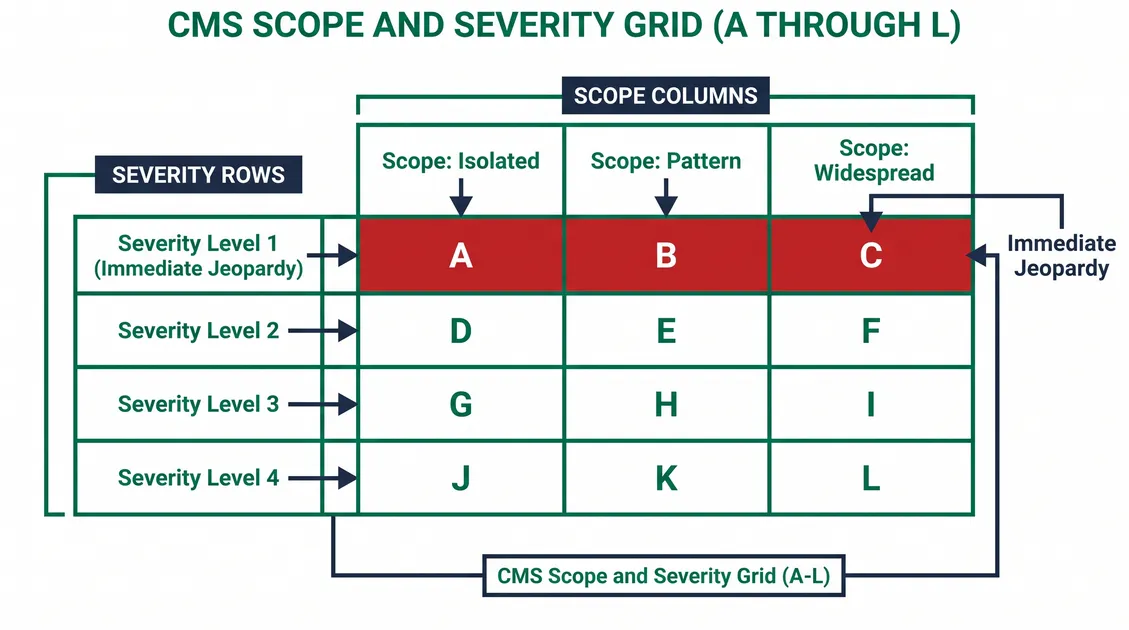
Scope and severity combine into a 12-cell grid: four severity levels down one axis, three scope levels across the other, producing letters A through L in the CMS State Operations Manual Appendix. Severity asks how much harm the noncompliance caused. Scope asks how many residents it touched. Isolated scope means one or a very limited number of residents, pattern scope means more than a very limited number or a repeated practice, and widespread scope means the problem is pervasive or systemic. Letters A, B and C mean the facility is still in substantial compliance (no more than potential for minimal harm); D through L are noncompliance. Immediate jeopardy occupies J, K and L, per 42 CFR §488.301. The same section defines substandard quality of care as a deficiency at F, H, I, J, K or L in specific regulatory groups such as freedom from abuse (§483.12), quality of life (§483.24) and quality of care (§483.25). Food and nutrition tags under §483.60 are not on that list, but a weight-loss finding cited under F692 (§483.25) can be. The same F-tag lands in different cells depending on reach. One cold entrée on one tray isn't scored like cold entrées served to an entire hall.
| Severity level | Isolated scope | Pattern scope | Widespread scope |
|---|---|---|---|
| Level 1: potential for minimal harm | A | B | C |
| Level 2: potential for more than minimal harm | D | E | F |
| Level 3: actual harm | G | H | I |
| Level 4: immediate jeopardy | J | K | L |
CMS Dietary Scope and Severity Grid: A to L
Four severity levels by three scope levels equals 12 cells. Select any cell to see a real dietary example and the typical remedy. Severity asks how much harm; scope asks how many residents.

| Severity level | Isolated | Pattern | Widespread |
|---|
Grid structure per the CMS State Operations Manual Appendix and 42 CFR 488.301. Examples are illustrative of dietary F-tags under 42 CFR 483.60 and are not a substitute for your survey packet or state agency guidance.
What Does a Level 1 or Level 2 Dietary Deficiency Look Like?
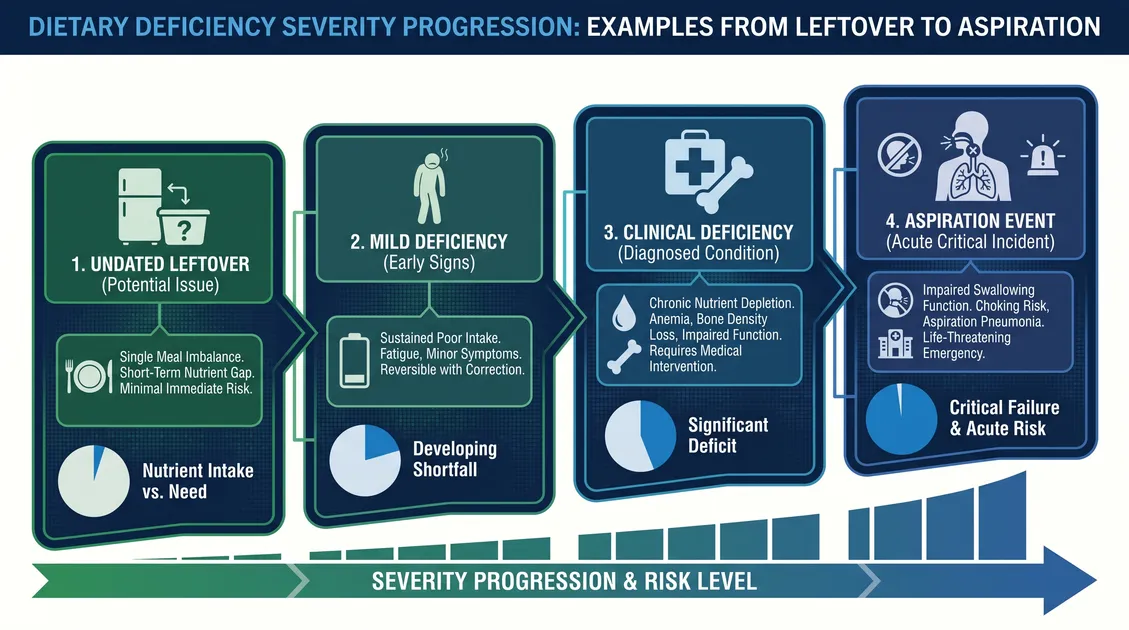
Dietary level 1 severity covers practice gaps with potential for minimal harm, such as an undated leftover in the walk-in or a posted menu that does not match what the tray line served. Level 2 severity means no actual harm but potential for more than minimal harm, and it is where most dietary citations land, usually in D, E or F. A missed therapeutic diet order, an undocumented substitution, or holding temperatures drifting outside safe food temperatures all sit here. The survey team writes level 2 when the practice could cause discomfort or compromise the resident assessment and plan of care. Documentation that keeps findings at the lowest severity level is what separates a D from a G.
Menu Survey Readiness Self Assessment
Check every documentation item your facility can produce today during an unannounced survey. The tool scores your gaps, then maps a plausible severity level (1 to 4) and scope to the CMS A to L grid. Educational estimate only, not a prediction of any surveyor finding.
Your readiness snapshot
| Severity level | Isolated | Pattern | Widespread |
|---|---|---|---|
| Level 1: potential for minimal harm | A | B | C |
| Level 2: potential for more than minimal harm | D | E | F |
| Level 3: actual harm | G | H | I |
| Level 4: immediate jeopardy | J | K | L |
Open documentation gaps
Nothing you enter here is sent, stored or transmitted. The email button simply opens a pre filled draft in your own mail application so you can send the summary to yourself or your dietary manager. Grid letters follow the CMS State Operations Manual Appendix and 42 CFR sections 488.301 and 483.60.
When Does a Dietary Finding Reach Level 3 or Level 4?
Severity level 3 is actual harm that falls short of immediate jeopardy. Unplanned weight loss is the common dietary trigger, and the Appendix PP guidance for F692 treats 5% in 1 month, 7.5% in 3 months or 10% in 6 months as significant (MDS item K0300 in the RAI Manual uses the 5% and 10% marks). Surveyors look for documented assessment and intervention. Lab-confirmed dehydration, a pressure injury tied to poor intake, or psychosocial harm from ignored preferences also count, because each blocks the resident's highest practicable well-being. Level 4 severity requires likely serious injury, impairment or death. Our page on dietary triggers for immediate jeopardy findings lists the usual causes, including a wrong-texture tray served to a dysphagia resident.

Severity ratings also drive texture decisions, so thickened liquid orders (IDDSI drink levels 1 to 4) and texture-modified diet records belong in the same evidence file as your weight records.
Key Takeaways on Dietary Scope and Severity
Severity is not a verdict on your cooking. It tracks harm, documentation and reach.
- Scope and severity grid: 4 severity levels by 3 scope columns, letters A–L.
- Plans of correction are due 10 calendar days after the CMS-2567, and remedies escalate under 42 CFR §488.408 (SOM §7400).
- Level 3 begins at actual harm; J, K and L mean immediate jeopardy.
- Nutrient analysis against the Dietary Reference Intakes for adults 51 and older gives your dietary manager evidence that menus meet residents' needs.
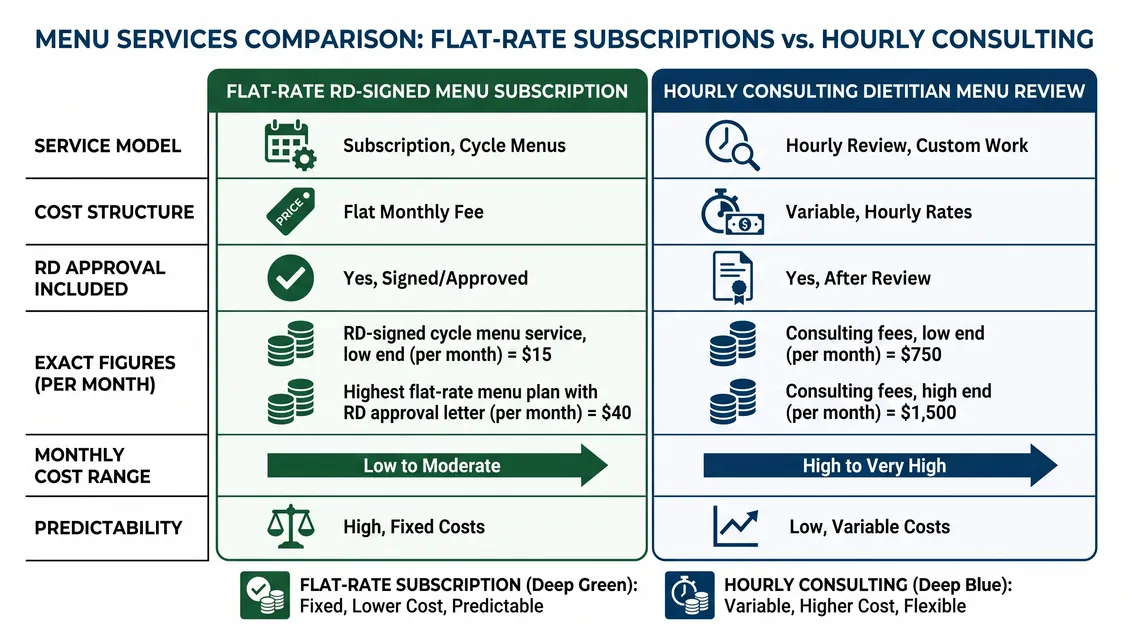
Flat-rate menu plans at $15, $20 and $40 a month (billed annually) include the RD Approval Letter.