Kitchen equipment, survey ready
Senior care kitchen equipment list, sized for a dietitian-approved cycle menu.
The cooking, cold storage, hot holding, texture-prep and safety tools a senior care kitchen needs for a 10-week, RD-approved cycle menu, with survey checks flagged. Plans from $15/mo.
- RD-approved
- CMS F804 & F812
- Food Code temps
- IDDSI textures
A senior care kitchen equipment list for a dietitian-approved cycle menu covers five groups: cooking, cold storage, hot holding, texture modification and food safety tools. Size each group to the busiest day in your cycle menu rotation, because the menu repeats that day every time the cycle turns. PantryTec writes RD-approved cycle menus for senior care kitchens. This guide builds on our step-by-step guide to planning a senior living cycle menu.
- RD-Approved Menus
- Meets CMS & State Standards
- No Long-Term Contracts
TL;DR: A cycle menu kitchen needs five equipment groups: cooking, cold storage, hot holding, texture prep and food safety. Size each group to your busiest menu day. Surveyors check for cold food at 41°F or below and hot food at 135°F or above, per the 2022 FDA Food Code.
What Is the Minimum Equipment List to Execute a Dietitian-Approved Cycle Menu?
The minimum kitchen equipment list for a dietitian-approved cycle menu covers five groups: a range and oven, refrigeration at 41°F or below, hot holding at 135°F or above, a blender for textures, and calibrated thermometers. Those two temperatures come from the 2022 FDA Food Code.
A cycle menu raises the bar because it repeats. PantryTec's 10-week rotation contains 70 daily menus, so your kitchen must handle the hardest of those days, not an average one. Texture-modified diets then add a second production line on the same stove.
States adopt the Food Code by rule, and not always the latest edition. Utah, for example, enforces the 2022 edition through Rule R392-100, and its assisted living rule, R432-270, requires a one-week supply of nonperishable food and a three-day supply of perishable food for the planned menus. That supply sets the floor for shelving, refrigerator and freezer space, so storage counts as much as cooking. Rules differ by state; our guide to finding and reading your state's menu rule shows where to look.
| Group | Must-have | Upgrade as volume grows |
|---|---|---|
| Cooking | Range and at least one oven | Convection oven, steamer or tilt skillet |
| Cold storage | Fridge at 41°F or below; freezer that keeps food frozen solid | Second reach-in or a blast chiller |
| Hot holding | Steam table or hot-holding cabinet at 135°F or above | Heated tray cart |
| Texture prep | Blender or food processor; a 10 mL syringe for IDDSI flow tests if you serve thickened drinks | Immersion blender and portion molds |
| Food safety | Thermometers, sanitizer test strips, and a dish machine or three-compartment sink | Wireless temperature logger |
New to rotations? See what a cycle menu looks like in assisted living. Texture-modified diets need their own tools and prep steps, which our soft and bite-sized (IDDSI Level 6) menus spell out.
Cooking Equipment Baseline
A range and one oven handle core cooking in a small home. Larger kitchens add a convection oven and a steamer or tilt skillet. Check each spec sheet's rack count, since racks cap how many pans bake at once.
Refrigeration and Freezer Capacity
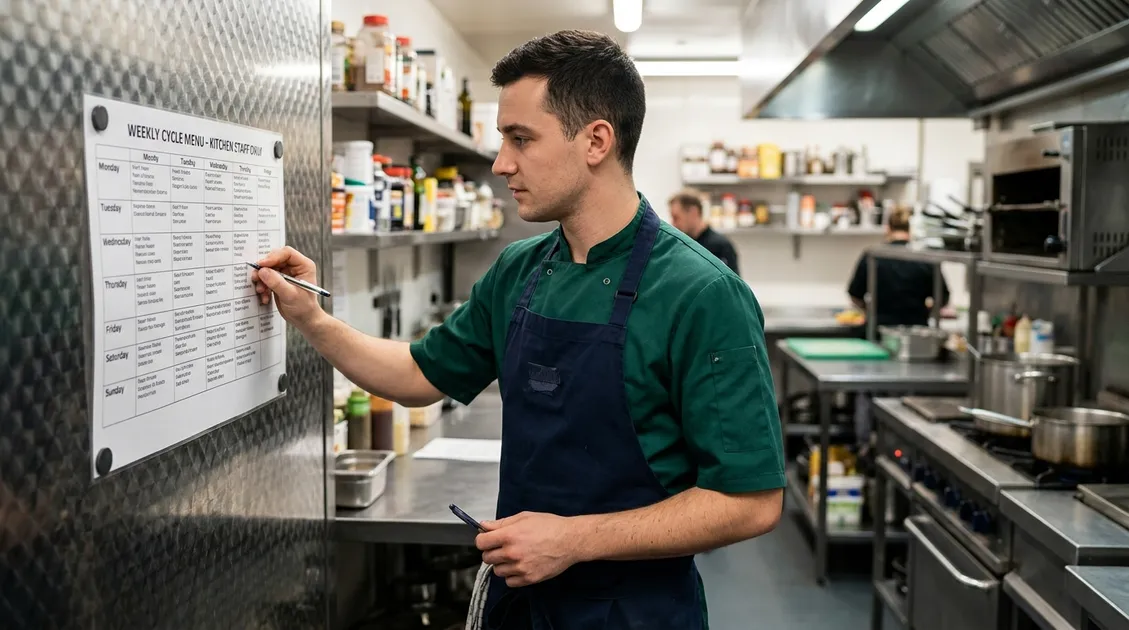
Refrigerators must hold 41°F or below, and the CMS Kitchen/Food Service Observation pathway has surveyors confirm freezers keep food frozen solid. Size cold storage from your vendor order guide, allowing one delivery cycle of perishables plus room for air to circulate.
Holding and Transport Equipment
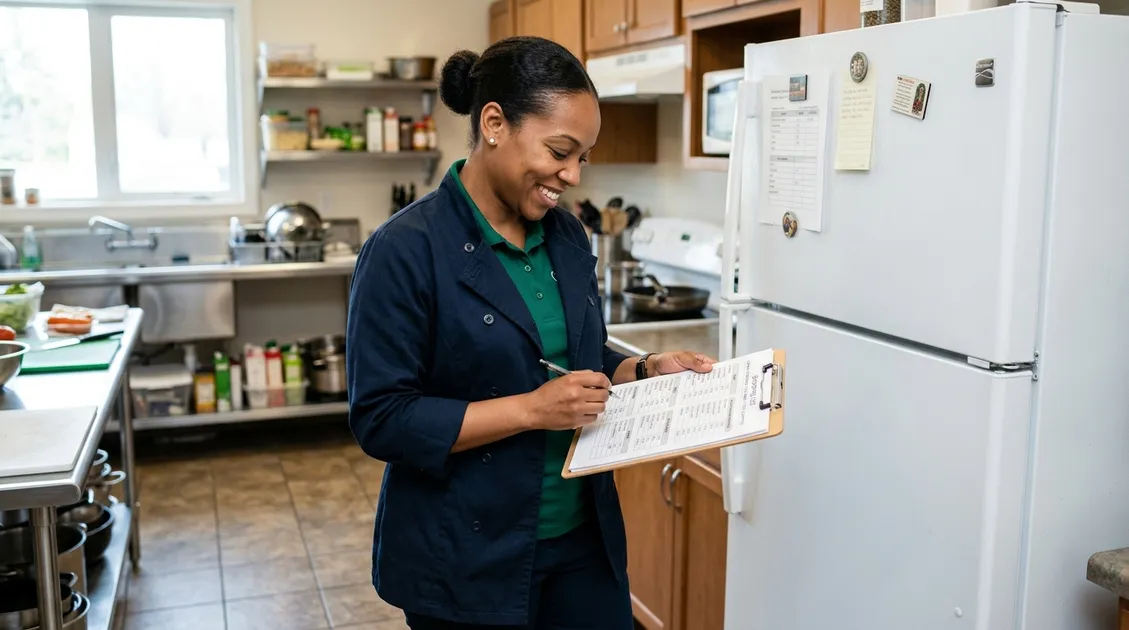
Steam tables must keep hot food at 135°F or above. Cooked-and-cooled food must reach 165°F for 15 seconds before it returns to hot holding, per the same pathway. Covered carts protect trays bound for resident rooms. The sample day below maps each item to its equipment and holding temperature.
| Menu item | Equipment | Hold |
|---|---|---|
| Scrambled eggs | Range | ≥ 135°F |
| Baked chicken | Convection oven | ≥ 135°F |
| Rice pilaf | Steamer | ≥ 135°F |
| Chicken, IDDSI 4 | Food processor | ≥ 135°F |
| Fruit cup | Reach-in | ≤ 41°F |
How Does Equipment Capacity Limit Which Recipes You Can Serve?
Equipment capacity limits a cycle menu through oven racks, burners and steam table wells, and one full-size steam table opening holds only 3 third-size pans or 6 sixth-size pans. Those limits decide how many hot items, diets and textures reach the line together.
The FDA Food Code states the rule in section 4-301.11. Equipment for cooling, heating and holding food must be sufficient in number and capacity to meet its temperature limits. A recipe that looks simple on paper fails that test if it needs the oven while two other dishes bake.
Surveyors watch for the same gap. The CMS kitchen pathway asks them to note which cooking methods are available and when cooking starts. You'll get more from the kitchen you have by reading each week's menu against your equipment before the order goes in.
Oven Deck Space Versus Batch Size
Oven space sets the batch size for every baked item. Most home ovens take half-sheet pans (13 × 18 inches), so a full-sheet recipe (18 × 26 inches) becomes two half-sheet pans. A 12 × 20-inch hotel pan cut 4 by 6 yields 24 portions.
Steam Table Wells and Menu Variety
| Line setup | Hot pans | Fits 12 third-size slots? |
|---|---|---|
| 3 hot items, regular only | 3 | Yes, 9 slots free |
| Same, plus IDDSI Level 6 | 6 | Yes, 6 slots free |
| Same, plus Levels 5 and 4 | 12 | Yes, no slots free |
| Plus an alternate entrée in all 4 textures | 16 | No; use sixth-size pans or a hot cabinet |
Plan space for that alternate. Federal rule 42 CFR §483.60(d)(5) requires appealing options of similar nutritive value for residents who decline the first meal.
Adjusting Recipes to Available Equipment
PantryTec's menu team sees capacity conflicts on the menu before they reach the kitchen. Two baked entrées and a baked dessert on one day will stall a one-oven home. PantryTec's cook-to-census instructions size each batch to the day's headcount.
Cooks can move a side dish from oven to steamer at equal nutritive value. Record the swap in your menu substitution log; Utah's R432-270, for example, requires keeping it for three months.
What Equipment Do Surveyors Inspect Under F804 and F812?
Surveyors inspecting F804 and F812 check thermometers, refrigerators at 41°F or below, steam tables at 135°F or above, dish machines or three-compartment sinks, sanitizer test strips and handwashing sinks. Both tags come from 42 CFR §483.60.
F804 covers food and drink that is palatable, attractive and served at a safe, appetizing temperature. F812 covers procuring, storing, preparing and serving food under professional food safety standards. The CMS Kitchen/Food Service Observation pathway walks surveyors through each check. It also lists F908 for essential kitchen equipment kept in safe operating condition. Surveyors ask staff to show how they test sanitizer and how they report broken equipment.
These tags bind Medicare- and Medicaid-certified nursing homes, while states license assisted living. State rules cover similar ground; Utah's assisted living rule, R432-270, for example, requires food delivered at the appropriate temperature and compliance with the state food code. Treat the federal checklist as your benchmark either way. Our guide to passing a CMS dietary survey covers the menu side of the same tags.
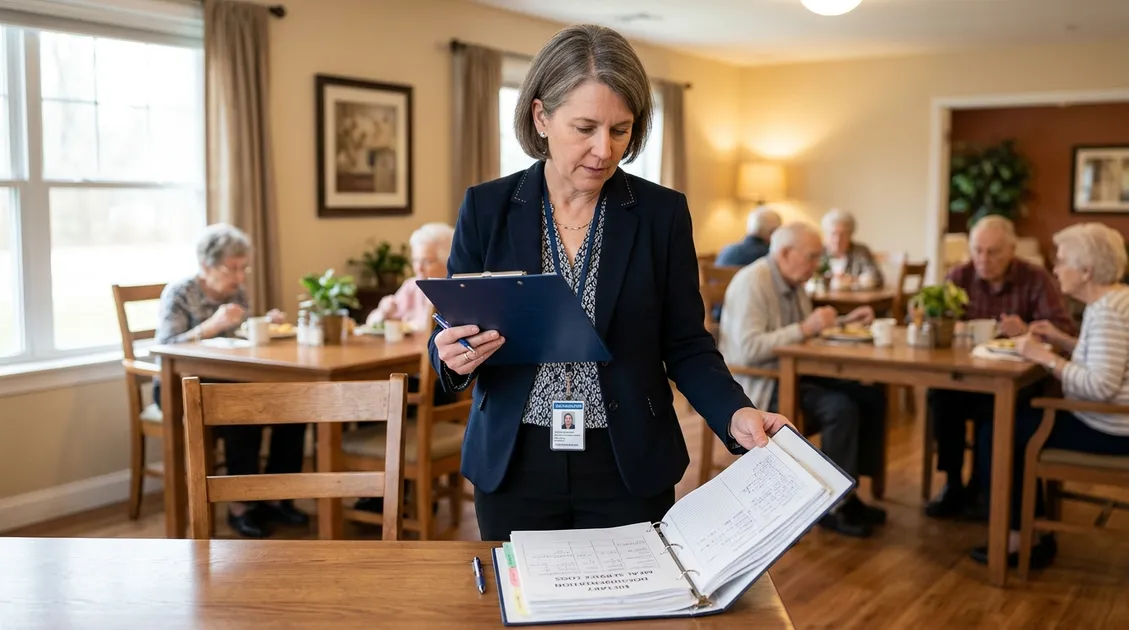
Survey-day equipment check
Tick what you could show a surveyor today.
Calibrated Thermometers and Temperature Logs
Food probes must read within ±2°F, and fridge air thermometers within ±3°F, under FDA Food Code sections 4-203.11 and 4-203.12. An ice-water bath at 32°F makes a quick calibration check. Keep a thin-tip probe for thin foods, as section 4-302.12 requires.
Dish Machine or Three-Compartment Sink Compliance
| Method | Reading to hit | Proof tool |
|---|---|---|
| Hot-water dish machine | 180°F final rinse at the manifold (165°F on stationary-rack, single-temperature units), reaching 160°F at the dish surface | Machine's rinse gauge, plus a heat label or maximum-registering thermometer for the 160°F surface check |
| Chemical dish machine | Manufacturer's sanitizer level | Matching test strips |
| Sink, hot water | 171°F for 30 seconds | Probe thermometer |
| Sink, chlorine | 50–100 ppm, 10-second contact | Chlorine test strips |
| Sink, quaternary ammonium | 150–200 ppm, contact time per label | Quat test strips |
Manual wash water stays at 110°F or above, and sink compartments must fit your biggest pans (section 4-301.12).
Hand Sink Placement and Sanitizer Test Kits
Hand sinks must stay accessible at all times and be used only for handwashing (section 5-205.11), with soap at each sink (section 6-301.11). The Food Code also requires 100°F hand sink water (section 5-202.12) and a sanitizer test kit (section 4-302.14).
Dietitian-Approved Cycle Menus
Get cycle menus built for the kitchen you already have
Talk to a specialist about RD-approved cycle menus from $15/mo, billed annually.
- 10-WkRotating menu cycle
- 40K+RD-reviewed recipes
- $15/moBilled annually, no per-bed fees
How Do Small Group Homes and Adult Day Programs Equip a Compliant Kitchen?
Small group homes and adult day programs equip a compliant kitchen by sizing equipment to their licensing rule, their local health department and the number of meals served each day.
In Utah, for example, the assisted living construction rule, R432-6, sets three facility sizes: limited capacity for up to 5 residents, small for 6–16 and large for 17 or more. A home feeding six residents runs a household kitchen with compliance duties attached. Even so, the state's assisted living rule, R432-270, requires three meals a day plus snacks, menus signed by a certified dietitian and a cycle of at least three weeks.
Adult day programs follow a different pattern, often one meal plus snacks per session. Hot holding matters more there than bulk cooking. The FDA Food Code's definition of a highly susceptible population covers older adults in assisted living and adult day care. That label tightens food safety rules for both. Group home and adult day rules often differ from assisted living rules, so compare them in our guide to group home and adult day menu rules.
Residential-Style Kitchens in 6–16 Bed Homes
Many 6–16 bed homes cook on residential appliances, which usually lack the NSF-type certification that Food Code section 4-205.10 recognizes. Ask your licensing agency and local health department before you buy. Our cycle menus for group homes (6–16 beds) are written for home-scale kitchens.
A scenario PantryTec's menu team plans around is the weekend call-out, when a caregiver covers an unfamiliar kitchen. PantryTec's Weekend Hybrid menu style shifts weekends toward premade items, so the cover cook reheats, holds and serves instead of cooking from scratch.
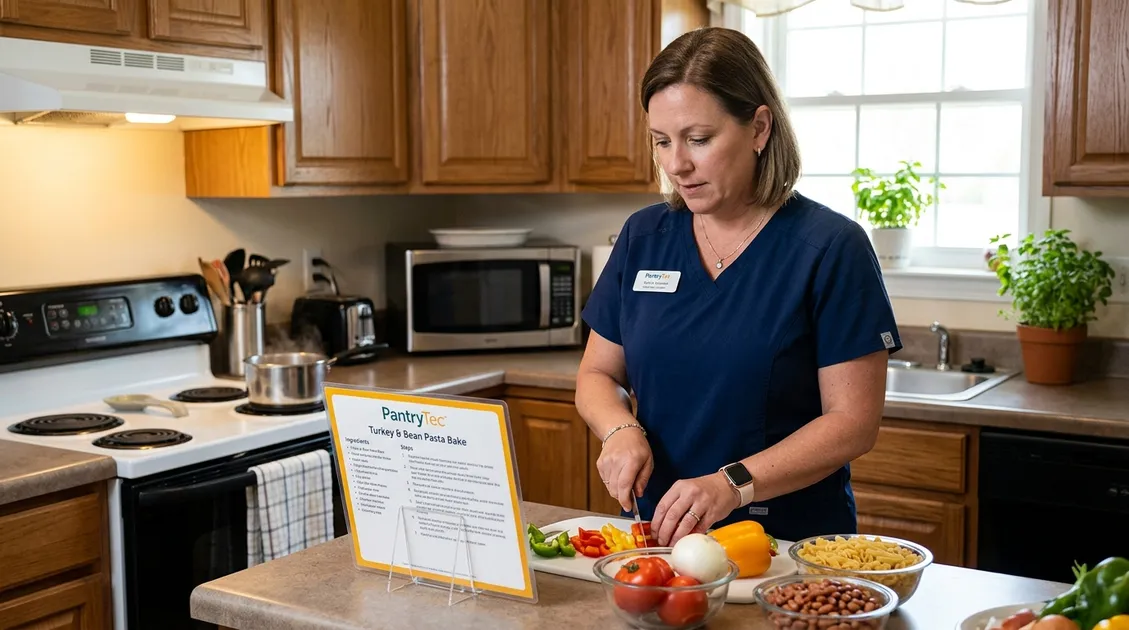
Adult Day Care Single-Meal Setups
Adult day kitchens often serve one hot meal plus snacks, or hold catered meals. A hot-holding cabinet, a reach-in refrigerator and a probe thermometer cover that pattern. Reject catered hot food below 135°F or cold food above 41°F. PantryTec also writes RD-approved cycle menus for adult day care programs.
Commercial Upgrades Worth the Cost
Conventional wisdom says a crowded menu needs a bigger kitchen. PantryTec's position is the opposite: fit the menu to your equipment first, then buy only what it still can't cover.
- A commercial dish machine, once hand washing can't keep pace
- A second reach-in, so the 3-day perishable supply fits with airflow
- A hot-holding cabinet for plated food when service runs long
How Do You Build and Maintain a Kitchen Equipment Inventory?
A kitchen equipment inventory records each unit's model, serial number, capacity, location and service history, building on the equipment details the FDA Food Code requests during kitchen plan review.
Section 8-201.12 of the Food Code asks for the intended menu, the expected food volume and each unit's type, model, dimensions and performance capacity. That pairing matters, because plan review links the menu to the equipment before a kitchen opens. Your inventory keeps that link alive after opening day. Update it whenever a unit is replaced or the menu changes.
The CMS kitchen pathway also asks whether the kitchen follows a cleaning schedule for its equipment. State rules can add more; Utah's assisted living rule, for example, requires preventive maintenance for facility equipment on a written schedule, with a record of the work performed. A current inventory speeds up repair calls and warranty claims.
Inventory Fields and Asset Tagging
| Field | What to record |
|---|---|
| Asset tag and unit | Tag number, type, brand, model and serial number |
| Capacity | Spec-sheet cubic feet, pan count or gallons |
| Location and dates | Station, install date and warranty end |
| Service interval | The manufacturer's recommended schedule |
| Menu dependency | Menu items that need this unit |
| Backup plan | What the kitchen does if the unit fails |
The menu dependency column is easy to skip, and it's the one you'll need first when a unit fails.
Preventive Maintenance Schedule
| How often | Task | Record in |
|---|---|---|
| Every shift | Read fridge, freezer and steam table temperatures | HACCP temperature log |
| Every dish run | Check rinse temperature or sanitizer strength | Warewashing log |
| Weekly | Ice-water check of each probe at 32°F | Calibration log |
| Monthly | Inspect gaskets; clean condenser coils per the manual | Maintenance log |
| Yearly | Professional refrigeration and dish machine service | Compliance binder |
Hood and fire-suppression systems follow your fire authority's schedule and are reviewed in the Life Safety Code survey for certified facilities.
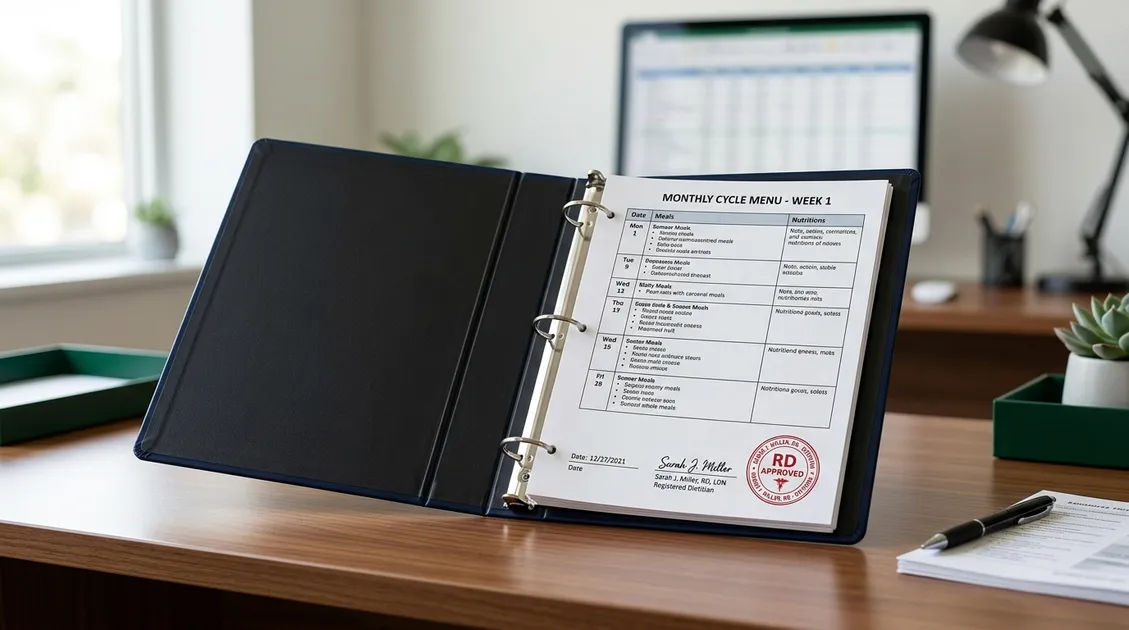
Backup Plans for Equipment Failure
Every unit needs a written fallback. PantryTec menus include a weekly safety-net alternative menu and an emergency pantry list for these moments.
- If the oven fails, cook range-top and steamer recipes from the alternative menu.
- If a cooler fails, move TCS food to a working unit and check temperatures.
- If the dish machine fails, wash, rinse and sanitize in the three-compartment sink.
What Equipment Supports an Efficient Tray Line for Multiple Diet Types?
An efficient tray line for multiple diets pairs a steam table at 135°F or above with a cold rail at 41°F or below, plus portion scoops, tray cards and covered carts.
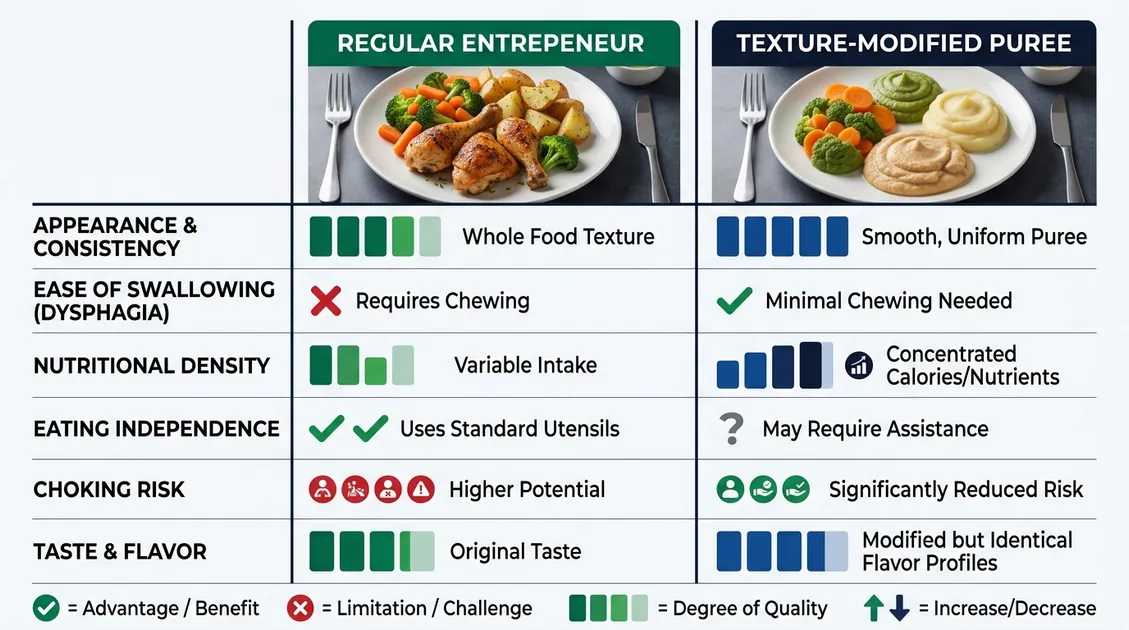
Portion control starts with scoop numbers. A #8 scoop holds 1/2 cup (118 mL), and a #16 holds 1/4 cup (59 mL). Standardized recipes name those sizes, which keeps the RD's nutrient analysis accurate on the plate. Texture-modified diets need their own staging. The IDDSI framework names eight levels, numbered 0 to 7, and each level carries a color code for tray cards.
A test tray audit shows whether the line meets F804's safe and appetizing temperature standard. Staff temp and taste the last tray on the cart, because that tray waits longest. Insulated bases, domes and heated carts protect it on the way to the room.
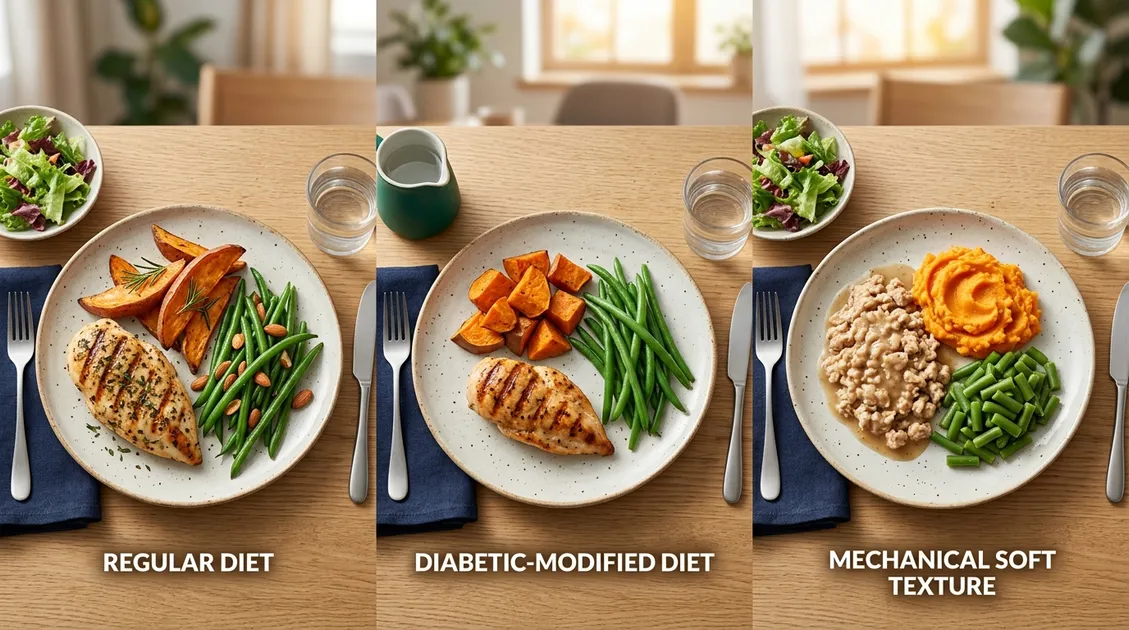
Steam Table, Tray Rails and Portioning Tools
A scoop's number tells you how many level scoops fill one quart.
| Scoop | Scoops per quart | Holds | Metric |
|---|---|---|---|
| #6 | 6 | 2/3 cup | 158 mL |
| #8 | 8 | 1/2 cup | 118 mL |
| #12 | 12 | 1/3 cup | 79 mL |
| #16 | 16 | 1/4 cup | 59 mL |
Scoops cover volume portions. Add a portion scale for items served by weight, such as a 3-ounce meat portion.
Insulated Bases and Domes for Temperature Hold
Insulated bases and domes slow heat loss on trays bound for resident rooms. Temp the first and last tray of each run and log both. If the last tray drops below 135°F, shorten the run or add a heated cart.
Tray Card Staging for Therapeutic Diets
Tray cards must match the physician diet order and current diet roster, so update them the same day an order changes.
| Level | Name | Color code | Kitchen check |
|---|---|---|---|
| 4 | Pureed | Green | Passes fork drip and spoon tilt tests |
| 5 | Minced & Moist | Orange | Particles fit 4 mm fork-prong gaps |
| 6 | Soft & Bite-Sized | Blue | Pieces 15 × 15 mm or smaller |
| 7 | Regular | Black | No texture limits |
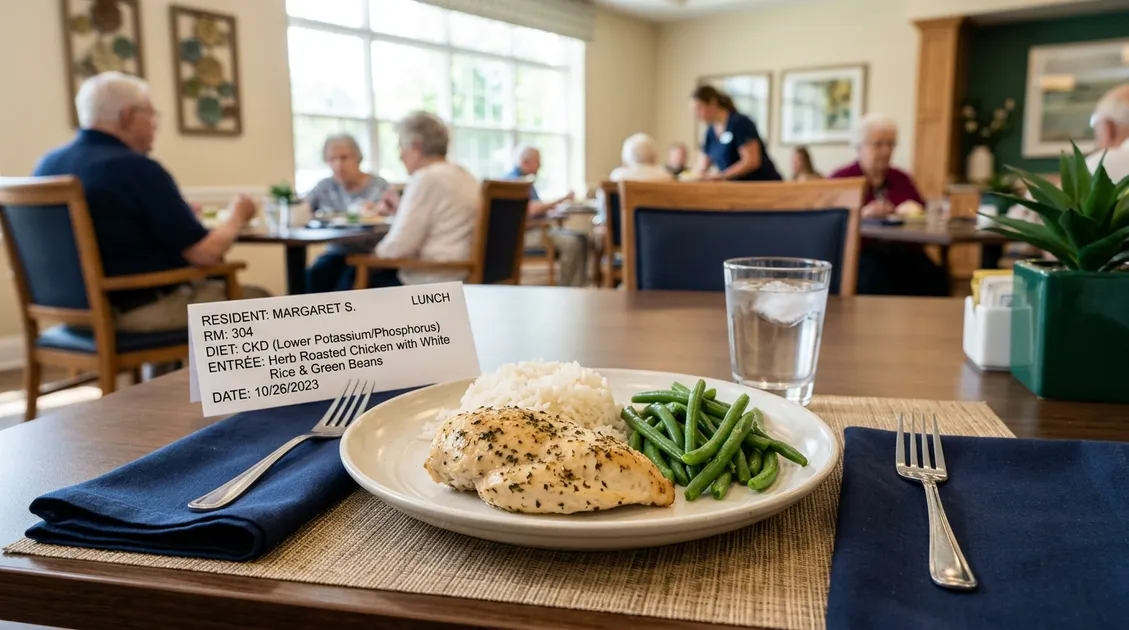
A step that's easy to miss is restaging tray cards the moment a texture order changes. PantryTec's therapeutic extensions, such as our pureed IDDSI Level 4 and minced and moist IDDSI Level 5 menus, arrive as complete menus. Cooks serve from them instead of a restriction list.
Kitchen staff training happens at onboarding plus once a year, with printed menus and IDDSI signage at the line. Check your state's food handler rules too; Utah, for example, requires a current food handler permit for anyone who prepares or serves food.
Adaptive Eating Equipment
Some residents need adaptive tools to eat on their own, and state rules can require them. Utah's R432-270, for example, requires adaptive eating equipment and utensils for residents as needed. Stock what residents' care or service plans call for, such as divided or scoop plates, plate guards, built-up or weighted utensils and two-handled cups. Note each item on the tray card so it reaches the right tray.
Key Takeaways: Your Cycle Menu Kitchen Equipment List
- Build your kitchen equipment list around five groups, sized to your busiest menu day.
- Hold cold food at 41°F or below and hot food at 135°F or above; surveyors verify both under F812 and F804.
- Keep your state's required food supply on hand; Utah, for example, requires one week of nonperishable food and three days of perishable food.
- Track each unit's capacity, service interval, menu dependency and backup plan.
- Fit the menu to your equipment before you buy more, and stock adaptive eating equipment for residents who need it.
Limitations and Considerations
- F-Tags bind certified nursing homes; assisted living follows state rules that vary.
- FDA published a 2026 Food Code in September 2026. States adopt new editions on their own schedules, so section numbers here follow the 2022 edition.
- Residential appliances need approval from your licensing agency and health department.
- Manufacturer manuals and fire authorities set final maintenance intervals.
- Equipment never replaces a current diet order, an accurate diet roster or trained staff.
Frequently Asked Questions About Cycle Menu Kitchen Equipment
What kitchen equipment do you need to run a full cycle menu?
A full cycle menu needs a range and oven, a fridge at 41°F or below, a freezer and hot holding at 135°F or above. Add a blender, calibrated thermometers and a dish machine or three-compartment sink.
Can a small assisted living home use residential kitchen appliances?
A small assisted living home can use residential appliances only where its licensing agency and local health department allow them. Get that answer in writing before you buy.
What temperatures do surveyors check in a senior care kitchen?
Surveyors check that fridges hold 41°F or below, freezers keep food frozen and steam tables hold 135°F or above. They also check cooling from 135°F to 70°F in 2 hours and to 41°F within 6 total, plus reheating to 165°F.
What equipment do IDDSI texture-modified diets need?
IDDSI texture-modified diets need a blender or food processor, portion scoops, and a metal fork and spoon for testing. A standard fork's 4 mm prong gaps check Level 5 Minced & Moist particle size.
Can PantryTec menus fit the kitchen equipment you already have?
Yes. PantryTec menus come in three styles: Homemade Focus, Premade Focus and Weekend Hybrid, so a kitchen with limited equipment can lean on premade items. The Premier plan ($40 a month, billed annually) also lets you customize menus within the dietitian's guidelines once each 10-week rotation. Plans start at $15 a month, billed annually.
Ensure Kitchen & Survey Readiness.
Get RD-approved cycle menus with cook-to-census instructions, starting at $15/month with no long-term contracts, no per-bed fees and an RD approval letter included.
Operating in Utah? Check the food service section of Utah's assisted living rule, R432-270, before your next survey. Elsewhere, start with how to find and read your state's menu rule.