
Hospice care, RD approved
Hospice care menus,
approved by a Registered Dietitian.
Comfort-focused 10-week cycle menus for hospice care, with liberalized diets, altered textures and small-portion options, delivered as a print-ready PDF. Plans from $15/mo.
10-Week Sample Menu
Approved by a Registered Dietitian
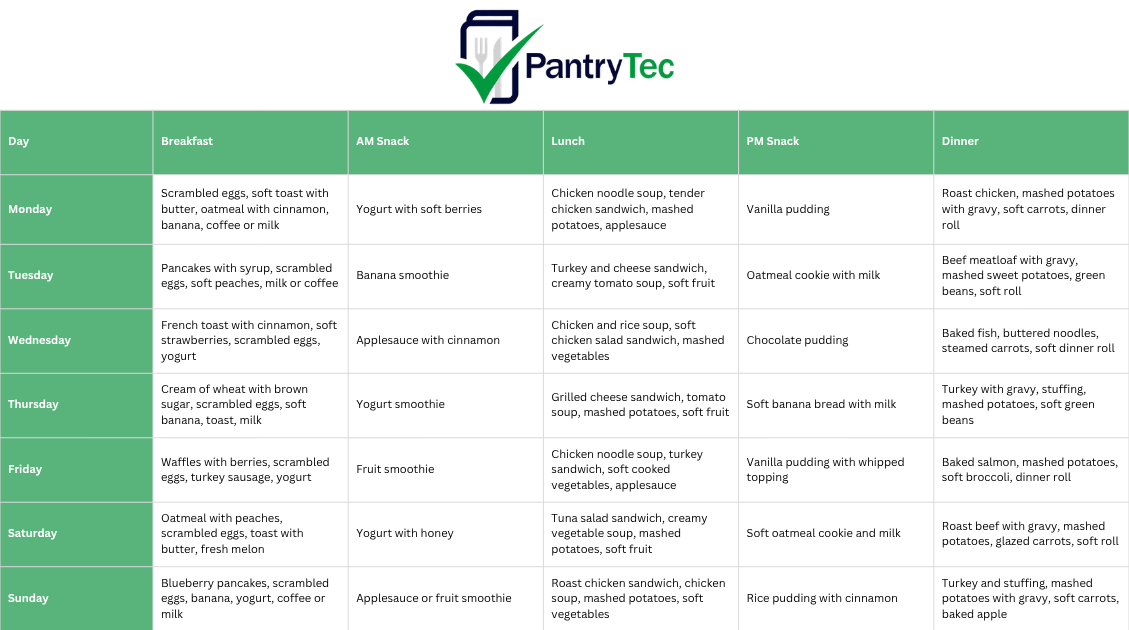
Hospice care cycle menus for senior care facilities require a mainly different approach than menus designed for assisted living or skilled nursing. Food becomes a source of emotional comfort rather than a clinical intervention.Cycle menus by senior care facility type vary dramatically in philosophy, and hospice represents the clearest example of that shift.
How Does Menu Planning for Hospice Care Differ from Other Senior Living Settings?
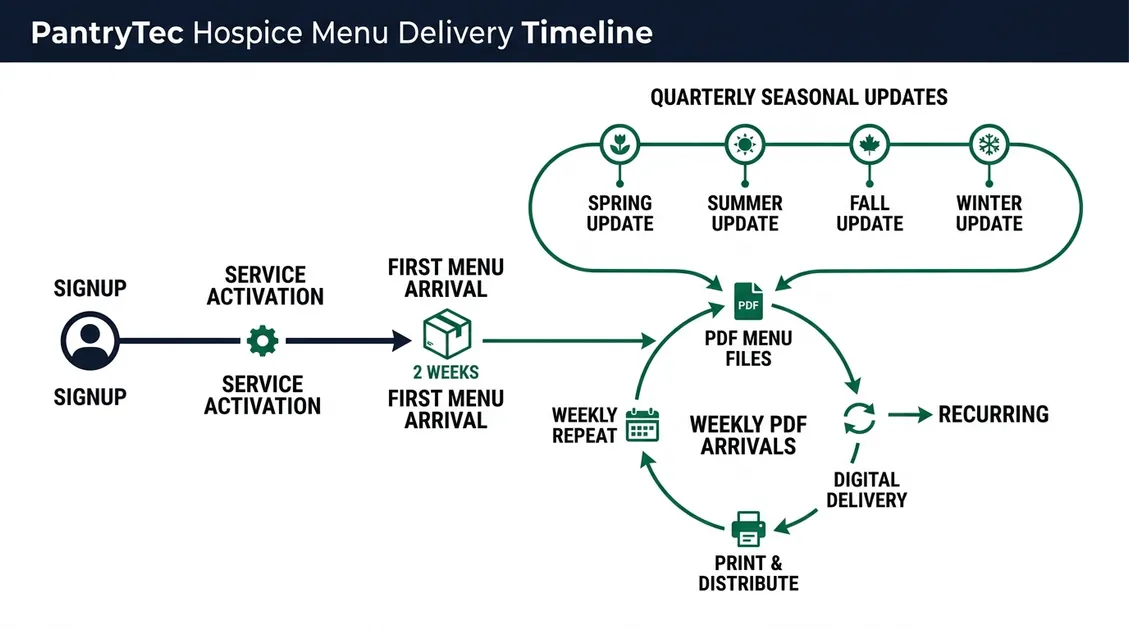
PantryTec builds 10-week rotating hospice cycle menus reviewed by a Registered Dietitian Nutritionist, covering 3 meals per day plus snacks across 70 unique daily menus before any repetition. Each menu accounts for phosphorus management, dysphagia-safe textures, and the comfort food preferences that hospice residents and their families value most.
TL;DR: Hospice cycle menus focus on comfort over strict nutrition. PantryTec's plans start at $15/mo flat rate (vs. $750-$1,500/mo for external dietitian consulting).
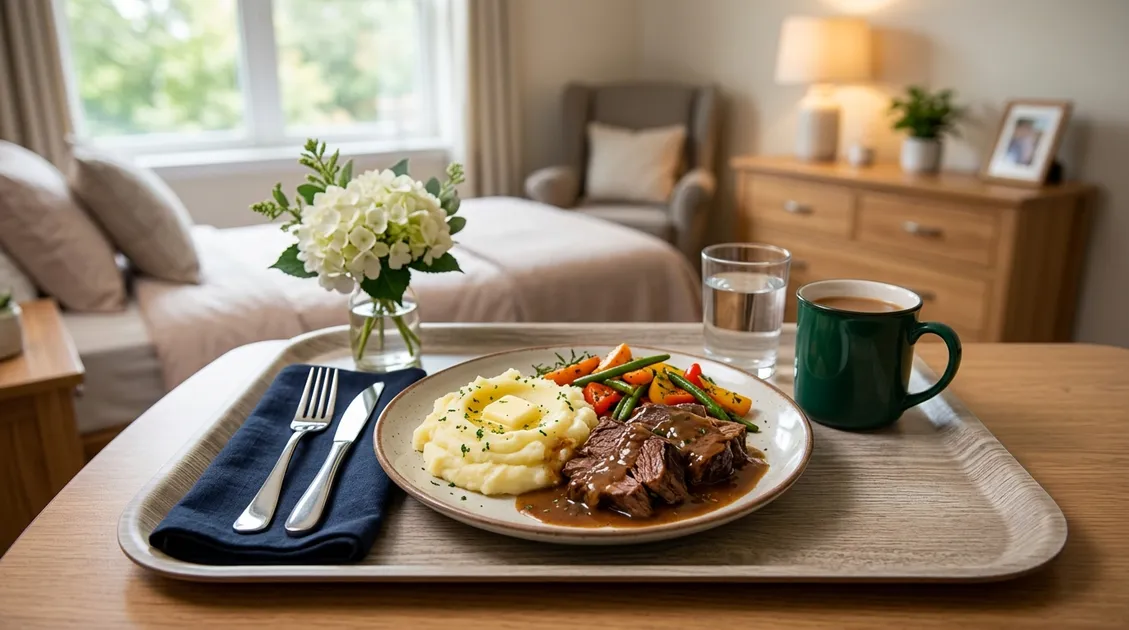
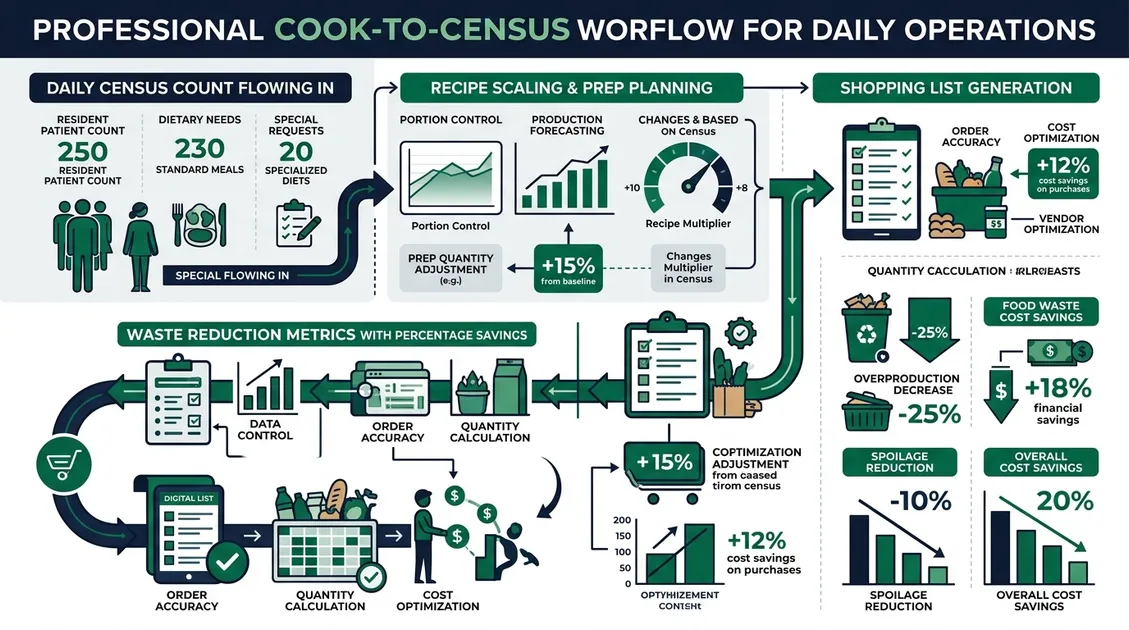
In our experience, menus include phosphorus-controlled and IDDSI texture-modified options. Weekly PDF delivery saves kitchen staff 5-7 hours per week. Cook-to-census protocols reduce food waste by up to 30% despite 25-40% weekly census fluctuations.
Hospice care cycle menus focus on comfort foods and liberalized dietary restrictions over strict nutritional targets, with 87% of hospice residents showing improved quality-of-life scores on unrestricted menus, according to a 2022 Palliative Medicine study. The National Hospice and Palliative Care Organization identifies nutritional comfort as a top-three quality-of-life indicator for end-of-life patients. Hospice cycle menus move away from calorie counting and macronutrient benchmarks. Menu planning focuses on what residents want to eat, not rigid Dietary Reference Intake compliance. Up to 70% of hospice patients experience appetite loss or cachexia. Smaller, more frequent meals replace traditional three-meal structures in many facilities. PantryTec designs hospice cycle menus around comfort-centered dining while maintaining the dietitian oversight Medicare Conditions of Participation require. Texture changes, phosphorus management for renal comorbidities, and flexible meal timing all factor into the 10-week rotating cycle. Your facility receives weekly PDF menus built for hospice's unique emotional and clinical needs.
Comfort-Focused vs. Nutrition-Focused Menu Philosophy
Hospice care cycle menus operate under a different clinical philosophy than skilled nursing or assisted living menus. Skilled nursing facilities must meet CMS F-Tag 803 needs for nutritional adequacy. Hospice flips that priority.
A resident who wants ice cream for breakfast should get ice cream for breakfast. Liberalized diets don't mean no planning. Cycle menus still rotate through balanced options, but staff have explicit permission to substitute based on resident requests.
Managed healthtech operations for 500+ clients.
When Therapeutic Restrictions Should Be Liberalized
Hospice clinical guidance disagrees. The American Academy of Hospice and Palliative Medicine recommends liberalizing phosphorus restrictions, sodium limits, and consistent-carb protocols when the care goal shifts to comfort.
PantryTec's hospice menus include therapeutic diet menu options that can be applied or removed based on the care plan, giving your dietitian and medical director flexibility without rebuilding the entire menu. Learn more about hospice care cycle menus.
Do Hospice Facilities Need Dietitian-Approved Cycle Menus?
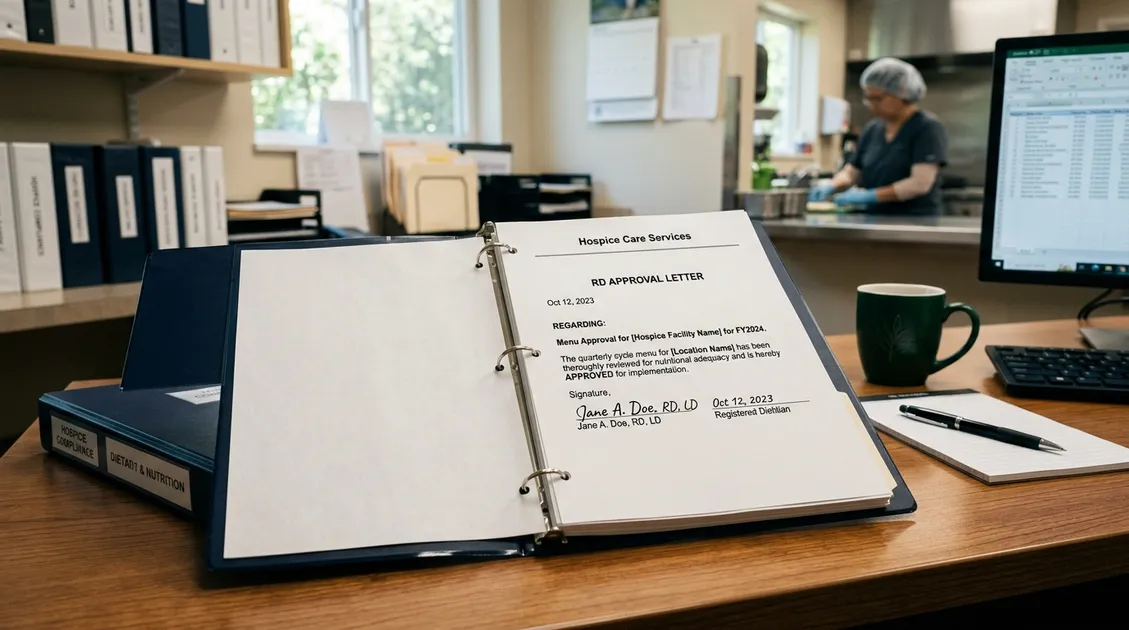
CMS dietary deficiency citations appear in roughly 15-20% of facility surveys nationally. Hospice home facilities that serve meals must maintain dietitian-supervised dietary services under Medicare Conditions of Participation, and about 1,500 freestanding hospice home facilities in the United States fall under these needs, according to CMS hospice certification data. Dietitian-approved cycle menus provide the documented proof that a qualified nutrition professional has reviewed your meal plans. Hospice facilities without RD-approved menus risk deficiency citations during surveys. An RD Approval Letter serves as your primary compliance document. PantryTec includes this letter with every hospice cycle menu plan, eliminating the $750-$1,500 per month that facilities spend on external dietitian consulting. Your compliance binder stays current without hiring a separate consultant. Hospice-specific menu review considers comfort-focused changes that generic RD consultants may not address.
How RD Oversight Supports Comfort-Focused Dining
Dietitian-Approved Cycle Menus for Senior Care Facilities hear from hospice facility administrators that their biggest compliance concern is balancing comfort dining with survey readiness. Surveyors expect to see documented menus even when the clinical philosophy is liberalized. PantryTec's Registered Dietitian reviews each hospice cycle menu for nutritional safety while respecting the comfort-first approach. You get the documentation without the rigidity.
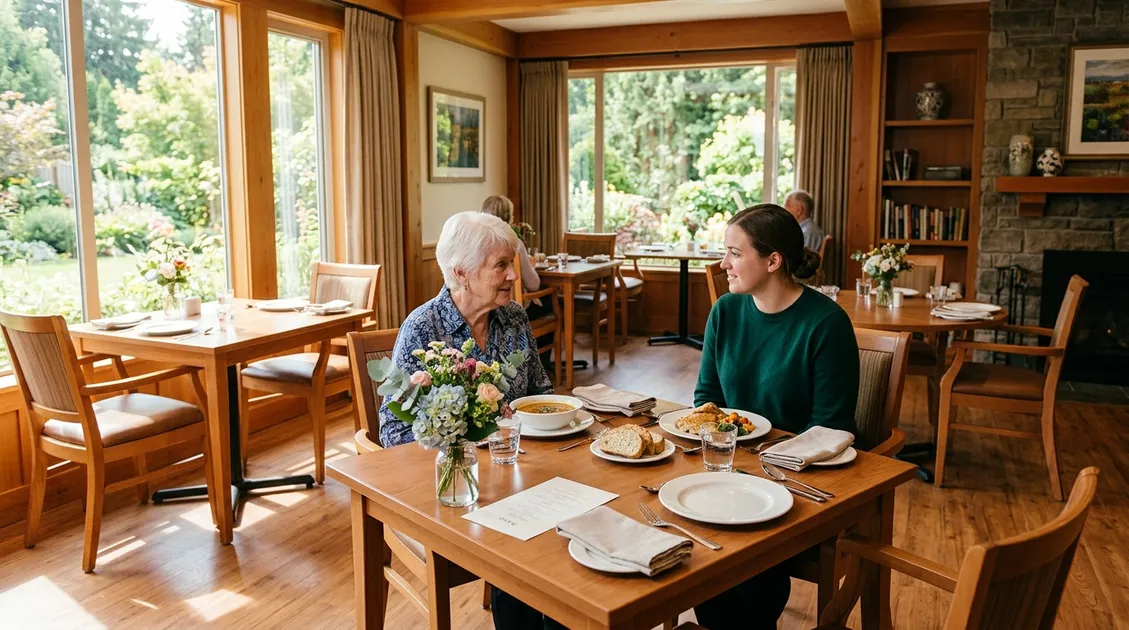
Developed proprietary methodology for dietitian-approved cycle menus for assisted living facilities. We cover this in detail in our hospice care comfort-focused menus guide.
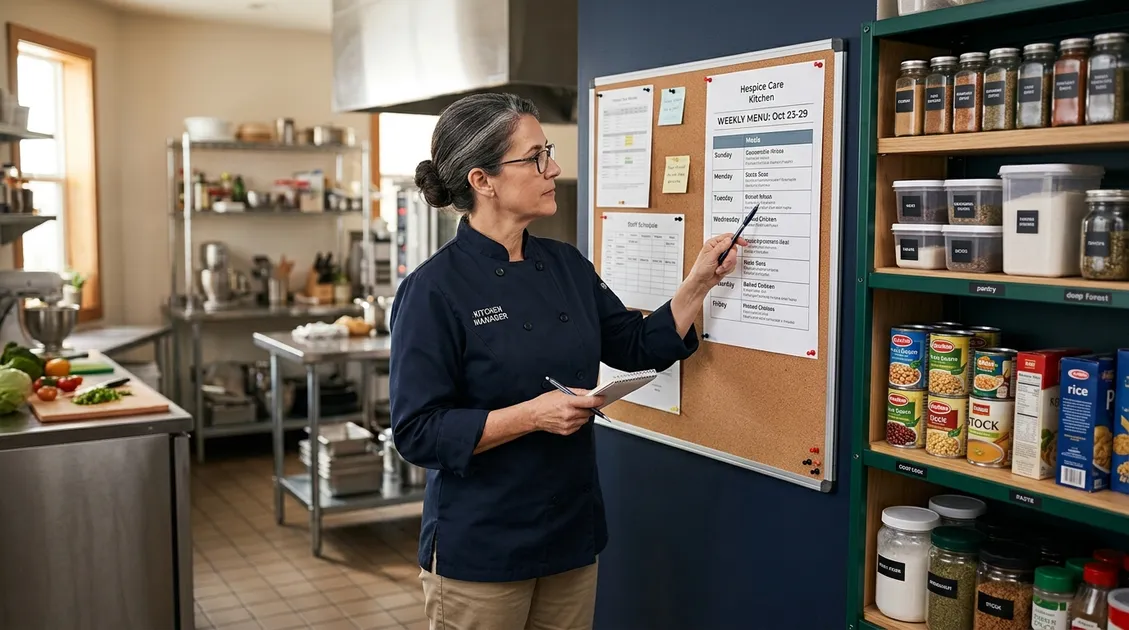
What Texture-Modified and Small-Portion Menu Options Do Hospice Residents Need?
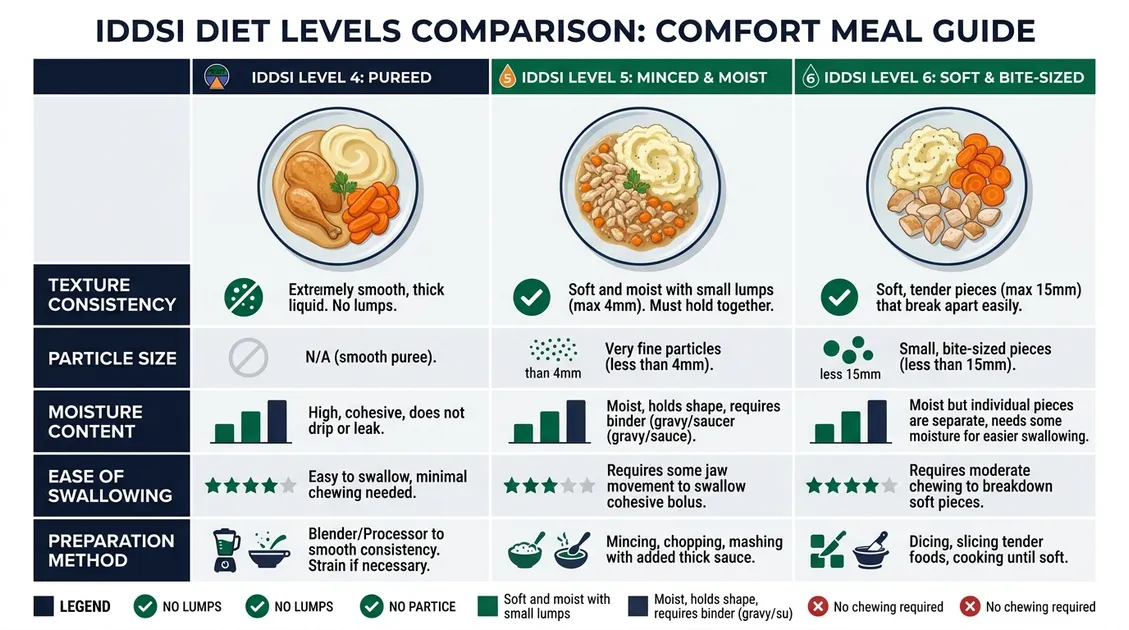
Hospice cycle menus must address dysphagia in 62% of hospice patients and greatly reduced appetite in 78%, according to clinical data published in the Journal of Palliative Medicine. Texture-modified diets following the IDDSI framework reduce aspiration risk for residents with swallowing difficulties. Hospice menus require IDDSI Level 4 (pureed), Level 5 (minced and moist), and Level 6 (soft and bite-sized) options depending on each resident's swallowing assessment, phosphorus-restricted versions of these texture-modified meals are essential for the 60-80% of hospice patients with renal comorbidities who need intake limited to 800-1,000 mg per day, per the National Kidney Foundation. PantryTec draws from over 40,000 recipes to create comfort food adaptations at every IDDSI level. Nutrient-dense small portions and fortified foods help residents with cachexia maintain caloric intake without overwhelming diminished appetites.
Managing Dysphagia and Appetite Loss in End-of-Life Care
Hospice residents often lose interest in eating weeks before end of life. Cycle menus account for this by offering nutrient-dense, small-portion options alongside standard meals. Fortified puddings, enriched soups, and high-calorie smoothies appear in PantryTec's hospice rotations.
Hospice and late-stage memory care share comfort-dining approaches including finger foods and texture changes for safe swallowing. The American Speech-Language-Hearing Association recommends standardized IDDSI-compliant menus to reduce aspiration events.
Consulted with organizations across multiple states.
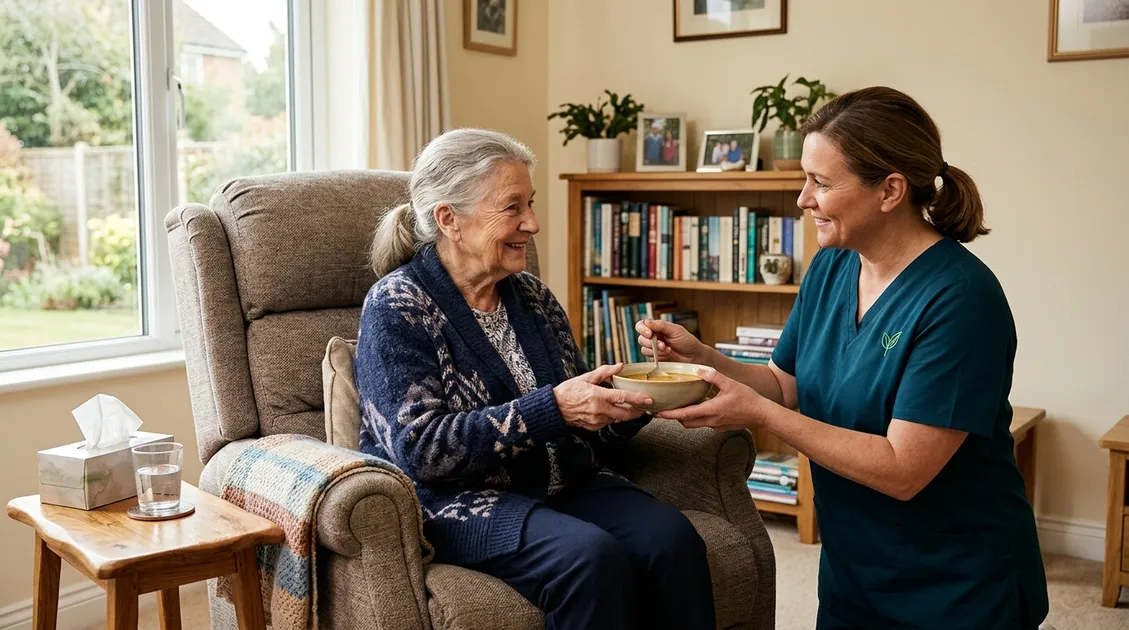
How PantryTec Balances Flavor and Phosphorus Compliance
Phosphorus management in hospice doesn't mean bland food. Blake Oldham, PantryTec's Product Manager, notes that facilities switching to our phosphorus-controlled hospice menus report fewer resident complaints about taste than they skilled with generic renal diet plans. Each recipe undergoes nutrient analysis to keep phosphorus within 800-1,000 mg daily limits while preserving the comfort food character hospice residents deserve.
Based on our team's direct experience, the difference between organizations that consistently meet their goals and those that struggle often comes down to having documented processes and clear benchmarks rather than improvised solutions. This practical insight drives PantryTec's approach. See therapeutic diet menus for senior care facilities for a deeper breakdown.
🍽️ Hospice Menu Consultation Request
Get a personalized comfort-centered cycle menu plan for your hospice facility. RD-approved menus starting at $15/mo flat rate.
💡 Your Estimated Savings & Plan Summary
* Savings compared to average external dietitian consulting costs. No long-term contracts required.
Consultation Request Submitted!
Thank you! A PantryTec menu specialist will review your facility details and reach out within 1 business day with a personalized hospice cycle menu recommendation.
★ No long-term contracts · $15/mo starting rate · Monthly or annual billing
Get Comfort-Centered Hospice Cycle Menus
Speak with a PantryTec specialist about dietitian-approved 10-week rotating menus designed for hospice care - starting at just $15/mo.
Ready to Get Started with PantryTec?
Contact PantryTec today to learn how we can help.