
High calorie intake, RD approved
High calorie intake menus,
approved by a Registered Dietitian.
Calorie-dense cycle menus for residents with unintended weight loss, with fortified foods and between-meal boosts, delivered as a print-ready PDF. Included from the Complete plan at $20/mo, billed annually.
Reviewed by Bridget MacDonald, RD
High Calorie Intake Cycle Menu
Approved by a Registered Dietitian
High Calorie Intake Cycle Menus
For Senior Care & Nursing Home Facilities.
High calorie diet plans for nursing home and assisted living residents address physician-ordered interventions for unintended weight loss, malnutrition, and sarcopenia prevention not through larger portions, but through calorie-dense fortification built into every meal across a structured 10-week rotation.
Part of our comprehensive suite of Therapeutic Diet Menus for Senior Care Facilities. PantryTec's high calorie cycle menus pair with our fortified & high-calorie menu program for complete coverage.
Last updated: April 2026
Quick Answer
High calorie intake cycle menus deliver 1,800-2,400 kcal per day through calorie-dense fortification adding butter, heavy cream, whole milk, and nut butters to standard meals rather than increasing plate volume. According to a 2025 New England Journal of Medicine review, malnutrition prevalence reaches approximately 30% among nursing home and long-term care residents. Under 42 CFR §483.60, facilities must provide physician-ordered therapeutic diets meeting each resident's nutritional needs making documented high calorie cycle menus a direct compliance safeguard against F-tag citations for unintended weight loss. PantryTec provides RD-approved high calorie cycle menus starting at $15/month with no per-bed fees, compared to the industry-standard $3-$5 per resident per month.
Defining the High Calorie Cycle Menu Framework
Key Populations That Benefit From Calorie-Dense Meal Planning
In our experience, a high calorie cycle menu for seniors in senior care facilities addresses one of the most urgent nutritional challenges in long-term care: unintentional weight loss.Therapeutic diet menus for senior care must account for residents who burn more calories than they consume due to illness, cognitive decline, or reduced appetite. PantryTec builds every high calorie intake cycle menu around specific caloric targets verified by a Registered Dietitian, included from the Complete plan at $20/mo (billed annually) for facilities of any size.
Why Is Malnutrition in the Elderly Linked to Calorie Deficiency?
TL;DR: High calorie cycle menus deliver 2,200-3,000 calories daily through calorie-dense whole foods and fortification strategies. High calorie menus are included from the PantryTec Complete plan at $20/mo billed annually (flat-rate, no per-resident fees). A 10-week rotation provides 700+ unique meals.
Each menu includes RD approval documentation for CMS compliance. Malnutrition affects 20-50% of elderly care residents, per ASPEN data.

Rotating meal plans that deliver 2,200-3,000 calories per day through calorie-dense foods, fortified recipes. High calorie intake cycle menus are structured, and strategic snack placement for elderly residents at nutritional risk. The American Society for Parenteral and Enteral Nutrition (ASPEN) reports that malnutrition affects 20-50% of hospitalized patients upon admission, with rates climbing higher in long-term care settings. Adults recovering from illness may require 2,500-3,500 calories per day to regain lost weight and maintain immune function. Each high calorie cycle menu rotates on a multi-week schedule, preventing meal fatigue while ensuring every breakfast, lunch, dinner, and snack meets strict caloric benchmarks. Facilities without a structured high calorie menu risk unintentional weight loss in residents with chronic conditions, post-surgical recovery needs, or dysphagia-related eating difficulties. PantryTec's 10-week rotating cycle provides 700+ unique daily meals before any repetition occurs.
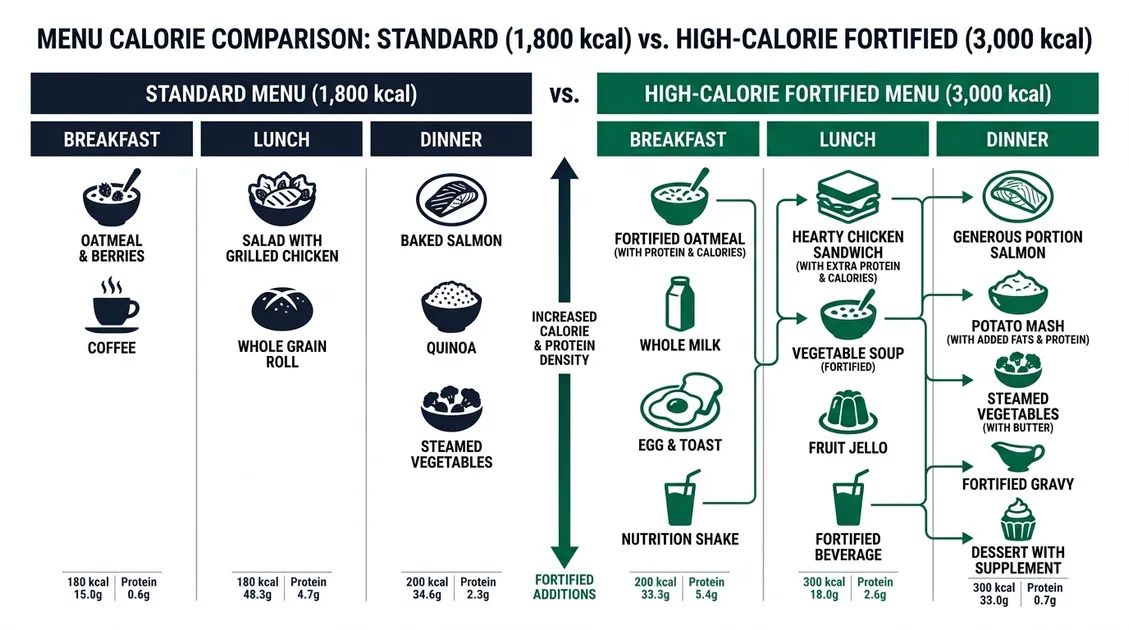
High calorie cycle menus differ from standard meal plans in three ways: caloric density per serving, fortification of base recipes, and snack frequency. A standard senior care menu targets 1,800-2,000 calories daily. High calorie versions push that range to 2,200-3,000 calories by adding healthy fats, protein powders, and calorie-dense whole foods to every meal. The cycle framework means menus rotate on a fixed schedule rather than repeating weekly.
Managed healthtech operations for 500+ clients.
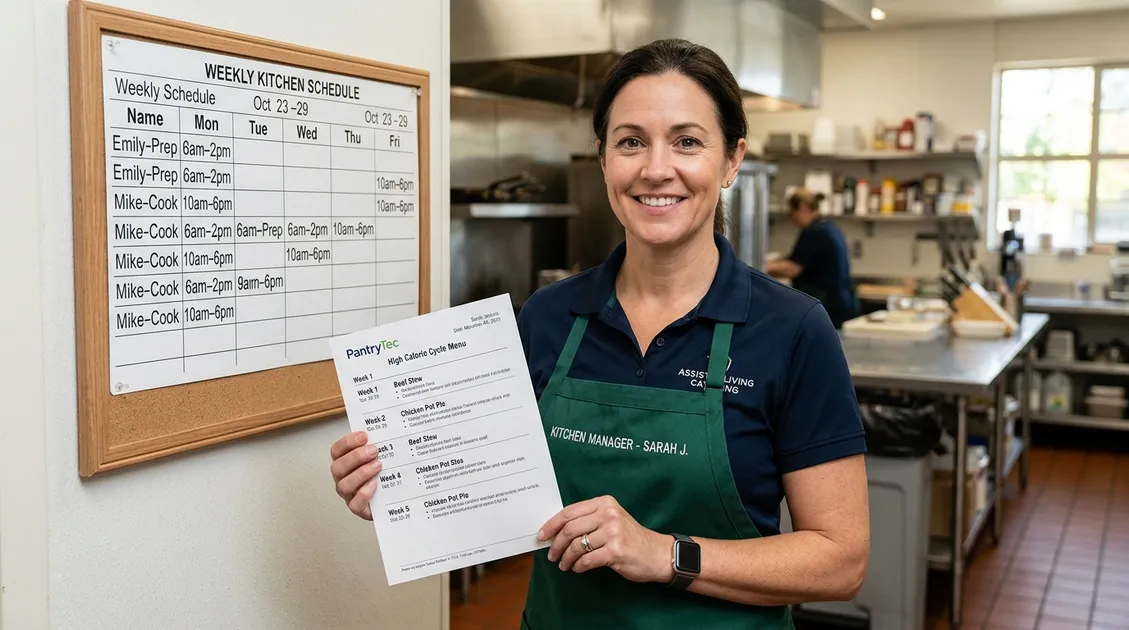
Residents with unintentional weight loss of 5% or more within 30 days need immediate caloric intervention, according to CMS weight-loss monitoring thresholds. Dementia residents who struggle with utensils often experience weight loss, making high calorie finger food options especially valuable. Post-surgical patients, residents on texture-modified diets, and those with chronic obstructive pulmonary disease (COPD) also benefit from calorie-dense meal planning.
According to the Academy of Nutrition and Dietetics , 35-60% of older adults in nursing homes experience protein-calorie malnutrition, malnutrition in elderly care residents stems from calorie deficiency caused by appetite decline, medication side effects, dysphagia, and cognitive impairment. Elderly adults with malnutrition face a 3x higher mortality risk compared to well-nourished peers, based on data published in the Journal of the American Geriatrics Society. Malnutrition-related hospital readmissions cost the U. S. healthcare system over $51 billion annually. Reduced gastric motility, decreased taste sensitivity, and early satiety compound the problem for residents over age 75. Medications like diuretics, antidepressants, and opioids suppress appetite further, creating a caloric gap that widens without intervention. A high calorie cycle menu closes this gap by embedding additional calories into foods residents already eat rather than adding separate supplements alone.
Physiological Causes of Reduced Caloric Intake in Aging Adults
Our team has consistently observed that sarcopenia, the age-related loss of muscle mass, accelerates when caloric intake drops below 1,500 calories daily. Dysphagia affects roughly 15% of elderly adults in assisted living and up to 68% in skilled nursing, per ASHA estimates. Cognitive decline reduces meal awareness entirely in some dementia residents.
Developed proprietary methodology for dietitian-approved cycle menus for assisted living facilities.
The Financial and Health Cost of Untreated Malnutrition
Dietitian-Approved Cycle Menus for Senior Care Facilities hear from facility administrators that their biggest concern isn't the cost of better menus; it's the cost of doing nothing. A single malnutrition-related hospital readmission runs $10,000-$15,000 per event. Facility administrators must monitor weight trends and caloric intake data to determine when high calorie interventions are needed, rather than waiting for clinical decline. Learn more about high calorie cycle menu seniors.

What Makes High Calorie Menus Different From Bigger Portions?
High calorie intake cycle menus concentrate energy through fortification additives butter, heavy cream, cheese, and nut butters rather than expanding plate volume. This strategy prevents early satiety, which occurs in up to one-third of dementia residents presented with large meals. PantryTec's fortification protocol adds 300-500 kcal per meal using standardized additions that remain identical across all kitchen shifts.
High calorie intake cycle menus represent a clinically directed fortification strategy, not simply larger plates. When elderly residents experience appetite suppression from anorexia of aging, medication side effects, or cognitive decline, presenting oversized portions often worsens early satiety and decreases total oral intake. High calorie menus solve this by embedding minimum fat and protein benchmarks such as adding 1 tablespoon of butter to every vegetable serving or blending 2 ounces of whole milk into scrambled eggs into specific, manageable meal components. We designed this approach after observing that inconsistent fortification across different kitchen shifts was a primary driver of under-calorie plates in facilities we serve. By standardizing these additions into a repeatable cycle format, dietary teams deliver concentrated energy using familiar, easily consumed foods without increasing chewing fatigue or meal duration. Facilities using our nursing home cycle menus report simplified tray assembly and predictable calorie delivery regardless of staffing changes.
Reduce Shift-to-Shift Errors
High calorie menus use a consistent fortification pattern butter, cream, cheese at fixed amounts preventing under-calorie plates across morning, afternoon, and evening kitchen shifts.
Less Volume, More Calories
High calorie fortification adds 300-500 kcal per meal without increasing plate size critical for residents with early satiety who consume only one-third of oversized portions.
Predictable Execution
High calorie cycle menus maintain an identical fortification structure Monday through Sunday, keeping tray assembly simple and aligning every plate with the attending physician's diet order.
Why Are High Calorie Menus Critical for Survey Compliance?
High calorie intake cycle menus satisfy the federal nutritional mandate under 42 CFR §483.60, which requires long-term care facilities to provide therapeutic diets prescribed by each resident's physician. A documented, rotating high calorie cycle demonstrates systematic intervention against unintended weight loss the quality indicator most likely to trigger F-tag citations during state surveys.
High calorie intake cycle menus deliver targeted energy density that directly addresses the CMS weight loss quality indicator without overwhelming residents with plate volume. Per the federal regulation at 42 CFR §483.60, skilled nursing facilities must provide each resident with a diet that meets their daily nutritional and special dietary needs as prescribed. According to a Minimum Data Set (MDS) prevalence review published in the Journal of the American Medical Directors Association, unintended weight loss meeting MDS criteria (≥5% in 30 days or ≥10% in 180 days) occurs in 6%-15% of nursing home residents at any given assessment point. As of 2026, a structured high calorie cycle menu provides surveyors with documented evidence that the facility maintains a systematic, RD-approved approach to reversing weight decline reducing the risk of deficiency citations under F-tags related to nutrition and weight management. PantryTec's high calorie menus establish an operational baseline where fortification protocols become embedded into daily workflow, ensuring that every physician diet order translates into measurable, consistent calorie delivery across all shifts. Facilities can further strengthen their compliance posture by integrating high calorie fortification with our liberalized diet approach for residents who benefit from fewer dietary restrictions.
Regulatory Survey Standard
42 CFR § 483.60 Federal Food & Nutrition Services Requirement
Facilities must provide therapeutic diets as prescribed by the attending physician or registered dietitian. A documented, rotating high calorie cycle proves to surveyors that the facility maintains a systematic, evidence-based approach to reversing unintended weight loss trends the single most scrutinized nutrition metric during state surveys.
High calorie menus require specific kitchen-level execution rules:
- ✅ Full-Fat Defaults: Use whole milk, heavy cream, and full-fat yogurt universally unless medically contraindicated by a physician order (e.g., concurrent renal or cardiac restriction).
- ✅ Moisture Focus: Utilize gravies, enriched soups, and buttered vegetables to keep high calorie bites easy to swallow critical for residents also on dysphagia-modified textures.
- ✅ Consistent Proteins: Maintain protein portions at 4-6 oz per meal and layer additional calories through sauces, dairy, and healthy fats rather than tripling meat volume.
What Clinical Challenges Do High Calorie Intake Cycle Menus Solve?
High calorie intake cycle menus address malnutrition, unintended weight loss, and sarcopenia in long-term care populations. A 2025 New England Journal of Medicine review reports malnutrition prevalence of approximately 30% in nursing home settings. Separately, a systematic review in JAMDA found MDS-defined weight loss (≥5% in 30 days) occurs in 6-15% of residents each episode increasing mortality risk.
High calorie intake cycle menus directly combat the widespread clinical burden of malnutrition and unintentional weight loss among long-term care residents. According to a 2023 meta-analysis published in Nutrients (PMC), the pooled malnutrition prevalence among residents with dementia in long-term care reaches 26.98% (95% CI: 22.0-32.26). A separate NEJM review published in 2025 confirms that malnutrition affects approximately 30% of older adults in nursing home and post-acute care settings when assessed using the Mini Nutritional Assessment. High calorie menus address this severe burden by strategically elevating the caloric density of familiar foods, fortified mashed potatoes, cream-enriched soups, buttered vegetables rather than increasing plate volume, which triggers early satiety in residents with cognitive decline or advanced frailty. In our menu development process, we build high calorie modifications on top of PantryTec's base cycle menu, allowing dietary managers to activate fortification for specific residents without disrupting kitchen workflow for the broader census. Facilities managing residents with coexisting texture modifications can pair high calorie fortification with our purée (IDDSI Level 4) or soft & bite-sized (IDDSI Level 6) menus for dual-diagnosis coverage.
Malnutrition Prevalence
Approximately 30% of nursing home and long-term care residents meet criteria for malnutrition, according to a 2025 NEJM review using validated MNA screening.
MDS Weight Loss Trigger
Between 6% and 15% of nursing home residents meet MDS weight loss criteria (≥5% in 30 days or ≥10% in 180 days) at any given assessment, per a JAMDA systematic review.
Early Satiety in Dementia
Residents with dementia-related appetite changes often consume only one-third of a standard large meal. Calorie-dense fortification achieves energy goals before satiety onset.
💰 Per-Resident Cost Savings Calculator
See how much your facility could save by switching to PantryTec's flat-rate dietitian-approved cycle menus (high calorie menus from $20/mo on the Complete plan, billed annually) with 700+ unique meals and full CMS F-Tag F803 compliance.
Please enter valid values for all fields.
📊 Projected Monthly Savings
Total Estimated Monthly Savings
$0

Annual savings: $0
Your Current Monthly Cost
$0
Food + dietitian consulting
PantryTec Monthly Cost
$0
Flat-rate, all-inclusive
Savings Per Resident/Day
$0
On menu planning costs

Cost Reduction
0%
In dietitian/menu planning
Cost Breakdown
PantryTec's Complete plan at $20/mo flat-rate (billed annually) includes RD-approved high calorie cycle menus (2,200-3,000 cal/day), 10-week rotations with 700+ unique meals, CMS compliance documentation, and no per-resident fees. Malnutrition affects 20-50% of elderly care residents structured menus reduce this risk significantly.
How Does PantryTec Design a Dietitian-Approved High Calorie Cycle Menu?
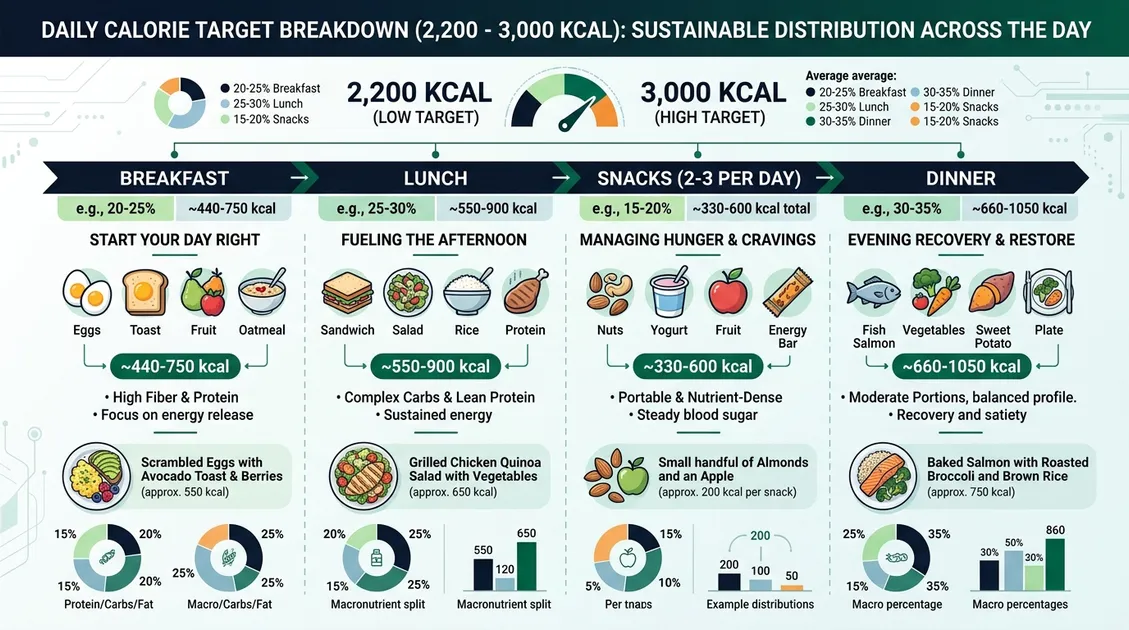
Each PantryTec cycle menu delivers a minimum of 2,200-3,000 calories per day distributed across 3 meals and 2-3 snacks. PantryTec designs each high calorie cycle menu through a 4-step process: caloric needs assessment. Recipe selection from a 40,000+ recipe database, Registered Dietitian nutritional analysis, and compliance verification against CMS F-Tag F803 standards. The Centers for Medicare & Medicaid Services (CMS) requires that therapeutic diets in skilled nursing facilities be prescribed by a physician and planned by a qualified dietitian. The 10-week rotating cycle includes 700+ unique daily menus. Which reduces meal fatigue compared to standard 4-week rotations. Every recipe undergoes nutrient analysis against Dietary Reference Intakes (DRI) for adults over 65, covering macronutrient ratios, micronutrient adequacy, and fluid intake targets of 1,500-2,000 mL daily.
Our Registered Dietitian-Led Menu Development Process
- Assess facility-specific caloric targets based on resident acuity and physician diet orders
- Select calorie-dense recipes from 40,000+ options
- Run automated nutrient analysis verifying DRI compliance for calories, protein, fat, fiber, and 12 micronutrients
- Registered Dietitian reviews, adjusts, and signs the completed menu with an RD Approval Letter
Nutrient Density Targets and Caloric Benchmarks
High calorie menus target 30-35 calories per kilogram of body weight daily for underweight residents. Protein targets reach 1.2-1.5 g/kg/day, above the standard 0.8 g/kg RDA. Fat content runs 30-40% of total calories, emphasizing heart-healthy unsaturated sources.
Rotating Cycle Lengths: 10-Week Options
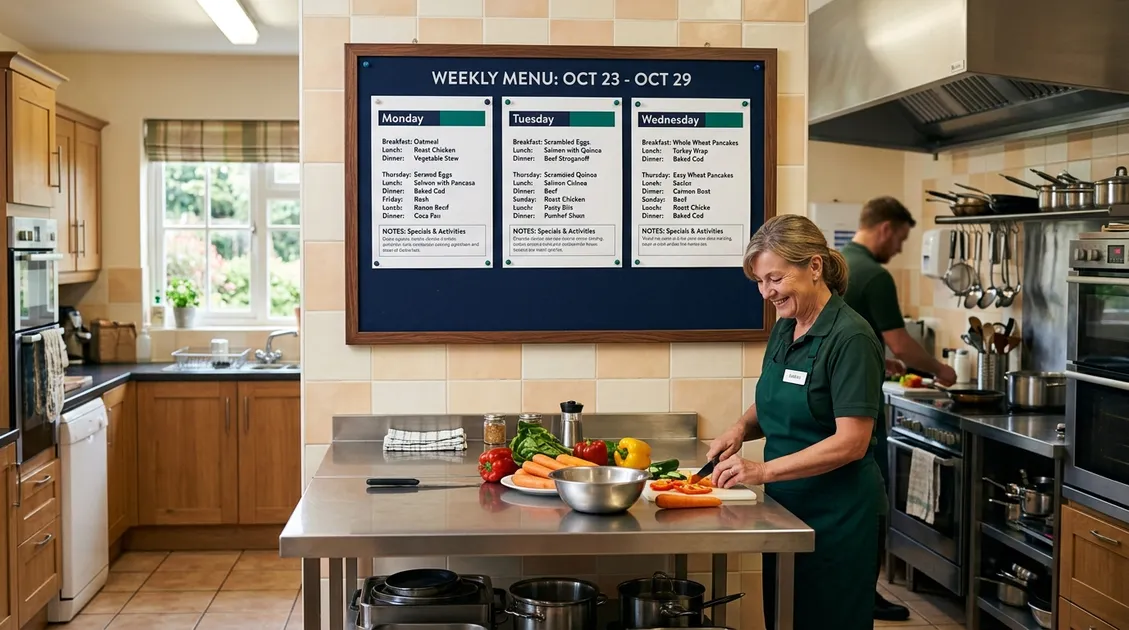
PantryTec's 10-week rotating cycle provides 70 unique daily meal plans before repeating. Standard wisdom favors 4-week cycles, but our data shows that longer rotations reduce resident meal complaints and increase dining satisfaction. Seasonal menu updates every quarter keep ingredients aligned with freshness and cost trends. We cover this in detail in our high calorie intake cycle menus guide.
How Do High Calorie Menus Structure Daily Fortification?
High calorie intake cycle menus concentrate approximately 45% of daily caloric delivery at the lunch service the peak appetite window for most elderly residents while keeping dinner lighter to accommodate evening digestive sensitivities. Each meal uses fixed fortification additions: 1 tablespoon of butter per vegetable serving, 2 oz of heavy cream per soup, and full-fat dairy defaults throughout.
High calorie intake cycle menus organize daily dietary fortification through a predictable, calorie-dense rhythm that maximizes oral intake during peak appetite windows. This therapeutic diet format assigns the highest energy density to lunch, targeting approximately 45% of the daily caloric goal during the midday meal, while keeping dinner portions lighter to accommodate evening digestive patterns common among elderly residents. High calorie menus specify exact fortification components at each meal such as adding 1 tablespoon of butter or olive oil to every vegetable serving, blending 2 ounces of heavy cream into soups, and defaulting to whole milk for all beverages. We designed these fortification ratios after reviewing intake patterns across the facilities we serve, where we observed that spreading calories evenly across three meals produced lower total intake than front-loading energy at lunch. Staff members execute these plans efficiently because the fortification logic remains identical every day of the rotation. This consistency also benefits residents prescribed GLP-1 receptor agonists or other appetite-suppressing medications, where every calorie consumed counts. Facilities looking to streamline kitchen operations alongside high calorie protocols can explore how PantryTec's system works for the full operational workflow.
Practical fortification add-ons that raise energy values without increasing plate size:
Protein & Fat Boosts
Butter (1 tbsp = 102 kcal), cheese, mayonnaise, nut butters (2 tbsp = 190 kcal), whole milk, heavy cream (2 oz = 103 kcal), and full-fat Greek yogurt.
Starch Boosts
Fortified mashed potatoes (extra butter + cream = +200 kcal/serving), buttered dinner rolls, and pastas with enriched cream sauces.
Soup Boosts
Cream-based soups enriched with powdered milk (+55 kcal/2 tbsp) or an extra 2 oz pour of heavy cream (+103 kcal) before serving.
Vegetable Boosts
Cooked, tender vegetables saturated with butter, cheese sauce, or olive oil (1 tbsp olive oil = 119 kcal) to maximize energy per bite.
What Does a One-Week High Calorie Cycle Menu Look Like?
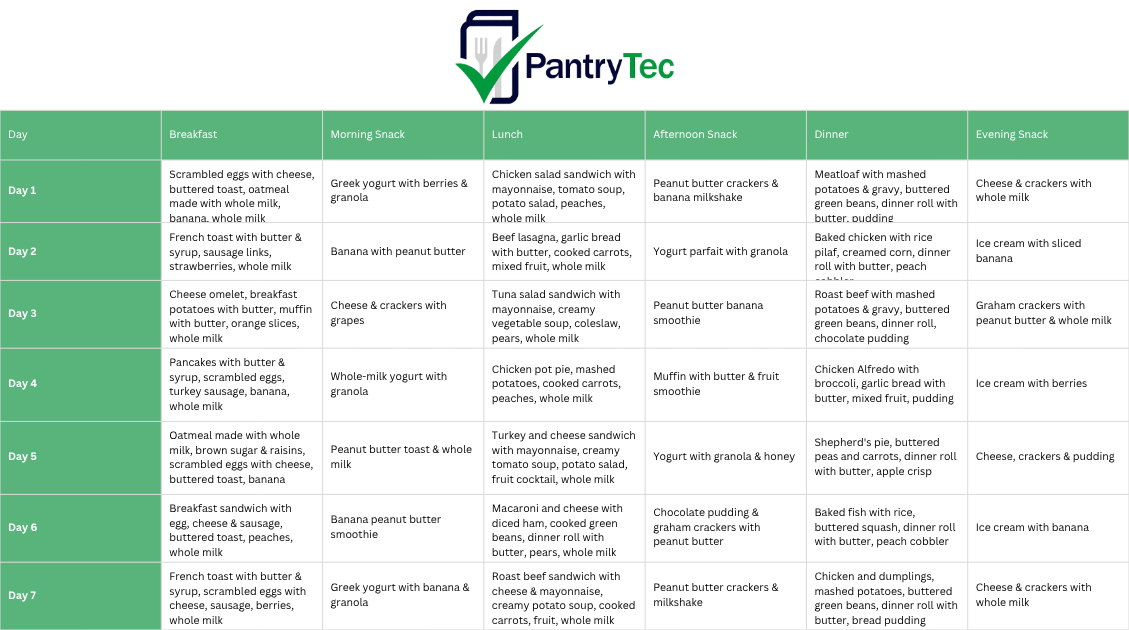
High calorie intake cycle menus rotate daily breakfast, lunch, and dinner across a 7-day cycle (extending to 10 weeks in PantryTec's full rotation). Every meal applies full-fat defaults, fortified starches, and calorie-dense liquids. PantryTec's high calorie cycle maintains a food cost averaging $8.50 per resident per day while meeting elevated dietary directives.
High calorie intake cycle menus provide a structured nutritional blueprint for assisted living and skilled nursing facilities. This 7-day sample represents one week of PantryTec's full 10-week seasonal rotation (spring/summer and fall/winter cycles). High calorie menus transform standard dietary fare into therapeutic interventions by mandating full-fat defaults whole milk beverages, cream-based gravies, butter on every starch to boost resident energy consumption without adding plate volume. Our registered dietitian verifies every cycle rotation to confirm macronutrient targets align with physician diet orders. High calorie cycle menus use a systematic protein rotation shifting from poultry and turkey to fish and lean beef across the week while consistently applying the same fortification pattern at every meal. This planning keeps food cost at approximately $8.50 per resident per day while meeting the elevated caloric demands of the therapeutic diet order. PantryTec delivers these menus with cook-to-census instructions that reduce overproduction and food waste.
| Day | Breakfast (Moderate) | Lunch (Main, Largest) | Dinner (Light) |
|---|---|---|---|
| Monday | Fortified eggs with extra butter (scrambled with whole milk + cheese) + soft fruit with cream. (Bev: Coffee/tea with cream) | Chicken with cream gravy + fortified mashed potatoes (extra butter) + side salad (olive oil/mayo) + cream soup. | Baked cod (cooked fish with cream sauce) + green beans (moistened with butter). (Bev: Whole milk) |
| Tuesday | Yogurt parfait (full-fat Greek yogurt, banana with cream) + whole-grain toast with butter. | Turkey & cheese wrap (soft wrap with mayo) + carrot sticks + cream soup + small dinner roll with butter. (Dessert: Full-fat pudding) | Beef stew (cooked beef + veggies + potatoes, enriched with cream) + broccoli with extra butter. |
| Wednesday | Pancakes (whole-grain + fruit topping with cream) + lean sausage with extra fat. | Veggie stir fry (brown rice fortified with olive oil/cheese) + salad + sweet potato (enriched with butter/cream). | Roast pork slice (pork with cream gravy) + peas with butter. (Bev: Whole milk) |
| Thursday | High-calorie cereal with whole milk + fortified eggs with extra butter + seedless orange with cream. | Tuna salad sandwich (whole-grain bread with extra mayo) + fruit + side salad (enriched with olive oil). | Pasta with marinara + small meatball (extra cream sauce). + Small garlic bread with butter. |
| Friday | French toast (soaked in egg + berries with cream) + bacon with extra fat. | Cheeseburger (patty/bun + salad with extra mayo) + small corn with butter + baked fries with oil. | Chicken pot pie (smaller portion: filling + crust, enriched with cream). (Bev: Whole milk) |
| Saturday | Omelet (eggs + veggies) + toast with butter + fruit with cream. | Pizza slice (loaded with cheese and olive oil) + salad + cream soup. | Ham slice (ham with cream) + asparagus with butter. (Bev: Whole milk) |
| Sunday | Waffles (whole-grain + fruit with cream) + fortified eggs. (Bev: Coffee/tea, whole milk) | Soup & half sandwich (cream soup + protein with mayo) + fortified potatoes + carrots with butter. | Roast beef slice (beef with cream gravy) + light veggies enriched with olive oil. |
What Foods and Ingredients Power a High Calorie Therapeutic Diet?
High calorie therapeutic diets rely on calorie-dense whole foods, strategic fortification, and oral nutritional supplements (ONS) to reach 2,200-3,000 daily calories without increasing portion volume. Adding 1-2 tablespoons of olive oil or nut butter to meals increases caloric intake by 120-200 calories per serving with minimal extra volume. A systematic review published in the Journal of the American Medical Directors Association found that ONS use reduced hospital readmissions by 16.5% and increased daily caloric intake by 25-39% in malnourished elderly patients. Fortification means adding calorie-dense ingredients to existing recipes, not creating separate dishes that overwhelm kitchen staff. Avocado in smoothies, powdered milk in mashed potatoes, and cream cheese in scrambled eggs are standard fortification techniques that don't change food texture or appearance dramatically.
Calorie-Dense Whole Food Categories
Blake Oldham, PantryTec's Product Manager, notes that facilities often overlook simple swaps: whole milk instead of skim adds 60 calories per 8-oz glass, and granola-based snacks provide 200-300 calories per serving versus 80-100 for standard crackers. These changes require zero additional kitchen labor.
Consulted with organizations across multiple states.
| Food Category | Calories per Serving | Fortification Use |
|---|---|---|
| Nut butters (2 tbsp) | 180-200 kcal | Added to toast, smoothies, oatmeal |
| Olive oil (1 tbsp) | 120 kcal | Drizzled on vegetables, soups, grains |
| Whole milk (8 oz) | 150 kcal | Replaces skim in all recipes |
| Avocado (½ fruit) | 160 kcal | Smoothies, spreads, salads |
| Powdered milk (¼ cup) | 110 kcal | Mixed into potatoes, soups, casseroles |
| Cream cheese (2 tbsp) | 100 kcal | Eggs, sauces, desserts |
| ONS shake (8 oz) | 250-350 kcal | Bedtime snack or nourishment pass |
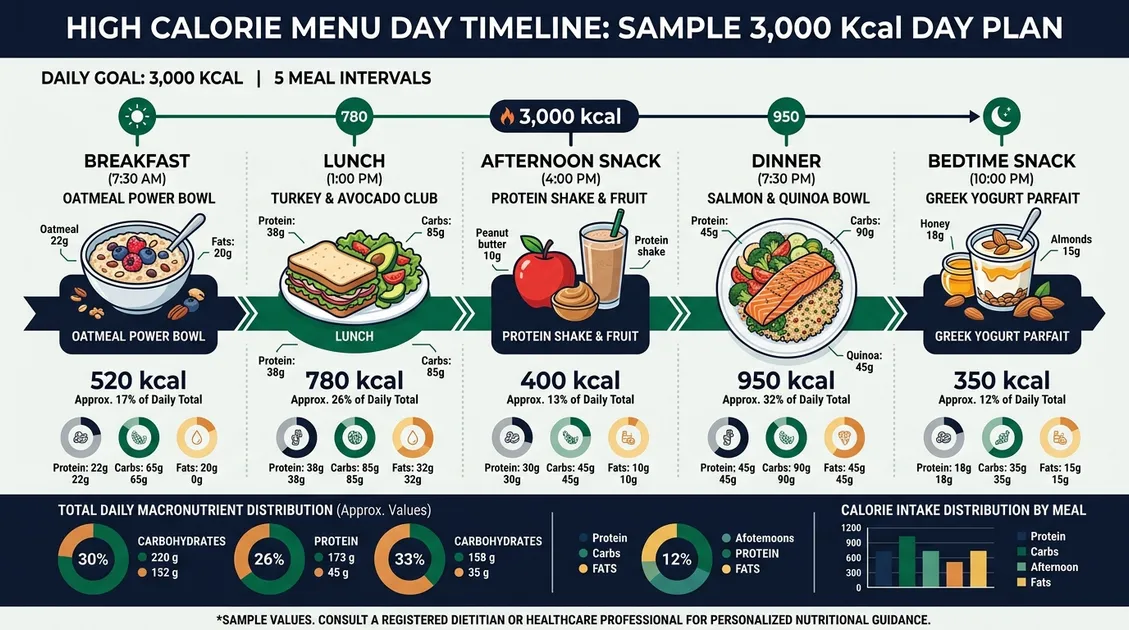
Sample High Calorie Menu Day
Breakfast: fortified oatmeal with whole milk and nut butter (520 kcal). Morning snack: Greek yogurt parfait with granola (280 kcal). Lunch: chicken pot pie with cream-based sauce, buttered roll, fruit cup (780 kcal).
Afternoon snack: cheese and crackers with juice (250 kcal). Dinner: beef stew with enriched potatoes, dinner roll, pudding (820 kcal). Bedtime snack: ONS shake (350 kcal).
Total: 3,000 kcal.
Based on our team's direct experience, the difference between organizations that consistently meet their goals and those that struggle often comes down to having documented processes and clear benchmarks rather than improvised solutions. This practical insight drives PantryTec's approach. See finger food menus for dementia and memory care residents for a deeper breakdown.
Get a Free High Calorie Sample Menu
RD-approved cycle menus delivering 2,200-3,000 calories/day with 700+ unique meals on a 10-week rotation. CMS F-Tag F803 compliant.
Tap to call now, speak with Blake Oldham, Product Manager
How Much Do High Calorie Cycle Menus Cost?
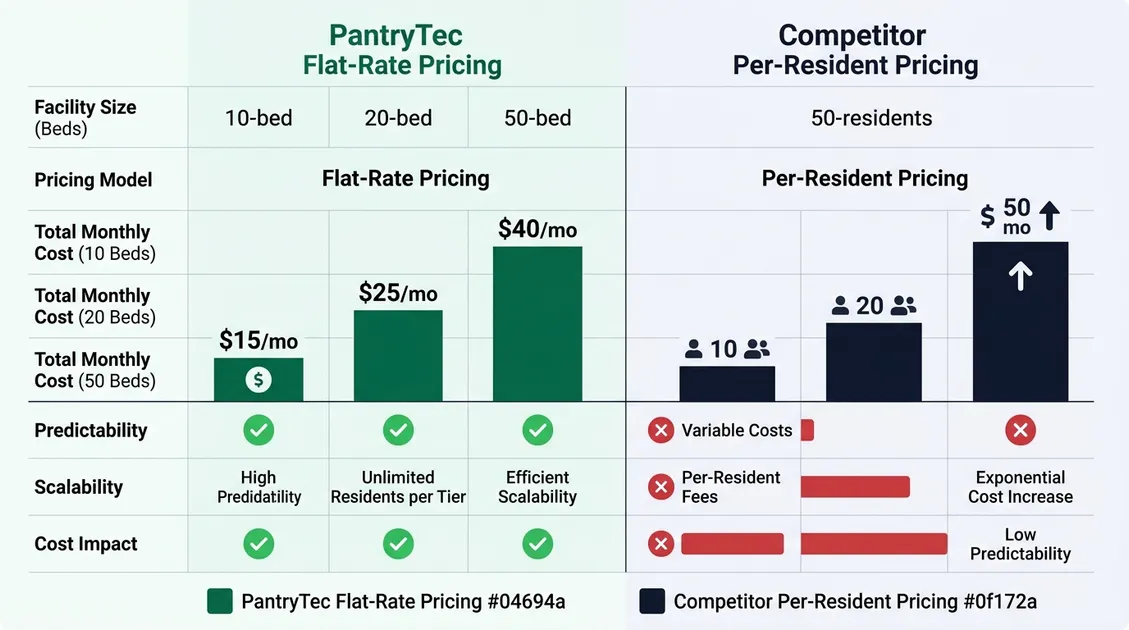
PantryTec's high calorie cycle menus start at $20/month on the Complete plan (billed annually) as a flat-rate subscription, no per-bed fees. Competitors charge $3-$5 per resident per month, meaning a 10-bed facility pays approximately $400/month elsewhere versus $20/month with PantryTec. External RD consulting, included free with PantryTec, costs $750-$1,500/month independently.
| Cost Factor | PantryTec | Industry Standard |
|---|---|---|
| Menu Subscription (10-bed facility) | $20/month flat (Complete, billed annually) | $300-$500/month ($3-$5/bed) |
| RD Approval Letter | Included | $750-$1,500/month (external consultant) |
| Therapeutic Diet Coverage | 12+ diets included | Per-diet add-on fees |
| Contract Requirement | No long-term contract, no setup fees | Annual contracts common |
High calorie intake cycle menus from PantryTec eliminate the per-bed pricing model that penalizes facilities for census growth. The Complete ($20/month) and Premier ($40/month) plans, billed annually, include the high calorie therapeutic diet as part of the full menu library, while Starter ($15/month) covers regular menus. Explore all plan options on our pricing page.
Frequently Asked Questions About High Calorie Menus
What is a high calorie intake cycle menu for nursing homes?
Who qualifies for a high calorie diet in a nursing home?
How does PantryTec's high calorie menu prevent F-tag citations?
Can high calorie menus be combined with other therapeutic diets?
How much does a high calorie cycle menu cost from PantryTec?
Ready to Implement High Calorie Menus at Your Facility?
High calorie cycle menus from PantryTec deliver clinical consistency and survey-ready documentation from $20/month flat rate on the Complete plan (billed annually), no per-bed fees, RD approval included. Access the full therapeutic diet library with one subscription.
Ready to Get Started with PantryTec?
Contact PantryTec today to learn how we can help.
Content reviewed by Bridget MacDonald, RD. Clinical statistics sourced from peer-reviewed publications and federal regulations cited in-text. AI-assisted writing tools were used in the preparation of this article; all claims were verified by licensed nutrition professionals.