
Tray line setup, survey ready
Tray Line Setup and Diet Roster Matching
for Senior Living Kitchens
Station layouts, disher sizes, tray card checks and test tray logs for CMS F808, with RD-approved PantryTec menus from $15/mo.
Sources: 42 CFR §483.60, FDA Food Code (2026), IDDSI
Tray Line Quick Reference
Checked every meal
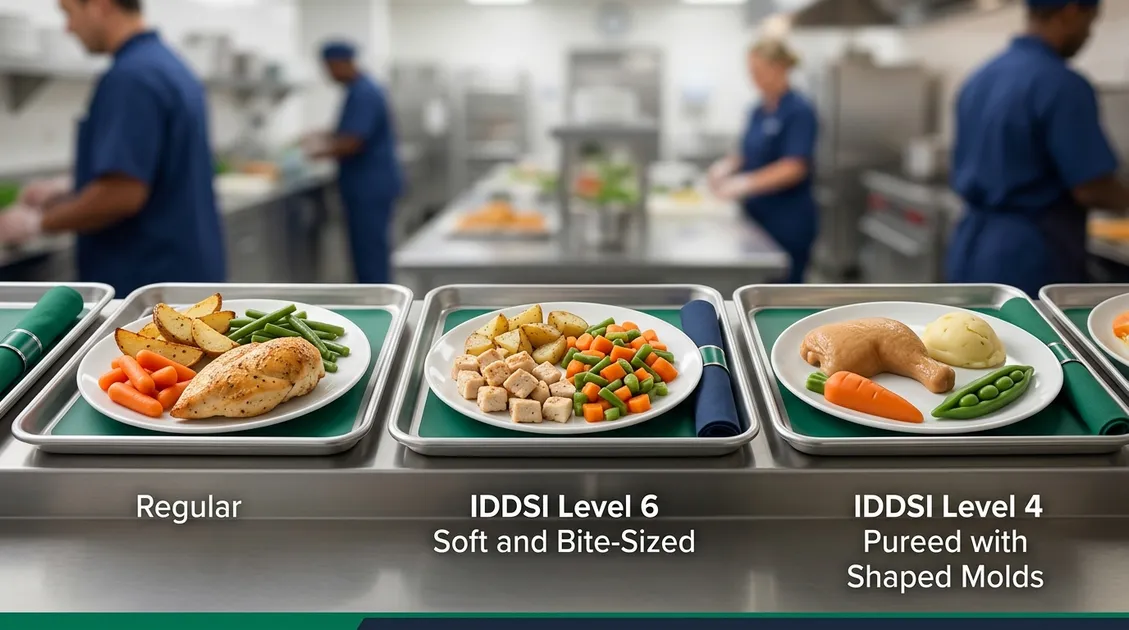
Tray line setup and diet roster matching confirm that every plate fits the resident's current diet order before it leaves the kitchen. The line holds hot food at 135°F (57°C) or higher, portions it with numbered dishers, and checks each tray card against the roster. PantryTec built this guide for kitchens serving 6 to 60 beds, alongside our CMS dietary survey compliance guide.
TL;DR
Reconcile the diet roster every 24 hours, hold hot food at 135°F (57°C) or higher, and name a checker for every tray.
What Is an Efficient Tray Line Setup for Senior Care Kitchens?
Tray line setup runs five stations in plating order, holding hot wells at 135°F (57°C) or higher and cold wells at 41°F (5°C) or lower. Those limits come from the FDA Food Code, which the FDA reissued as a 2026 edition in September 2026. CMS surveyors check those numbers on the steam table during the Kitchen Observation pathway (CMS-20055). Each station owns one job, so nobody reaches across the line or walks back for missing items. Cold items go on first and hot food goes on last, so plates leave hot. Two people cover all five stations in a 6–16 bed home when one runs the tray start and cold well. For larger communities, PantryTec recommends a second plater at the hot well over a plating screen. Here's what belongs at each stop.
Station-by-Station Equipment Layout and Plating Ergonomics
- Tray startTray, card, utensils and adaptive equipment within reach.
- Cold well41°F (5°C) or lower: salads, fruit, milk, thickened drinks.
- Hot well135°F (57°C) or higher, one color-coded disher per pan.
- Texture wellLabeled pans for IDDSI Levels 4 and 5.
- Checker and cartChecked, initialed, covered, loaded.
Disher Scoop Sizing and Standardized Portion Control
Disher numbers count level scoops per quart, so higher numbers mean smaller portions. According to Washington State's Senior Nutrition Program Standards, a Medicaid-funded meal cannot cost more than the same meal charged to other fund sources. Drifting portions make that hard to prove.

| Disher | Handle color | Level scoop |
|---|---|---|
| #8 | Gray | 1/2 cup |
| #10 | Ivory | 3/8 cup |
| #12 | Green | 1/3 cup |
| #16 | Royal blue | 1/4 cup |
How Do You Match Daily Tray Cards to an Active Diet Roster?
Diet roster matching compares every tray card with the current roster before each meal, checking diet, texture, liquids and allergens against the latest diet order. The roster is the kitchen's working copy of those orders, updated daily. Under 42 CFR §483.60(e), the attending physician prescribes therapeutic diets, or a dietitian does when the physician delegates and state law allows. Surveyors test that chain. CMS's Dining Observation pathway (CMS-20053) has them review tray cards and confirm residents receive the diets ordered for them. Fixed order channels help. ACL's Medical Nutrition Therapy Works for Seniors guide describes a nonprofit that moved referrals to an online portal. Its referrals grew from 200 (January to May 2019) to 300 by July. Your roster needs that kind of fixed channel, and the routine below runs it every 24 hours.
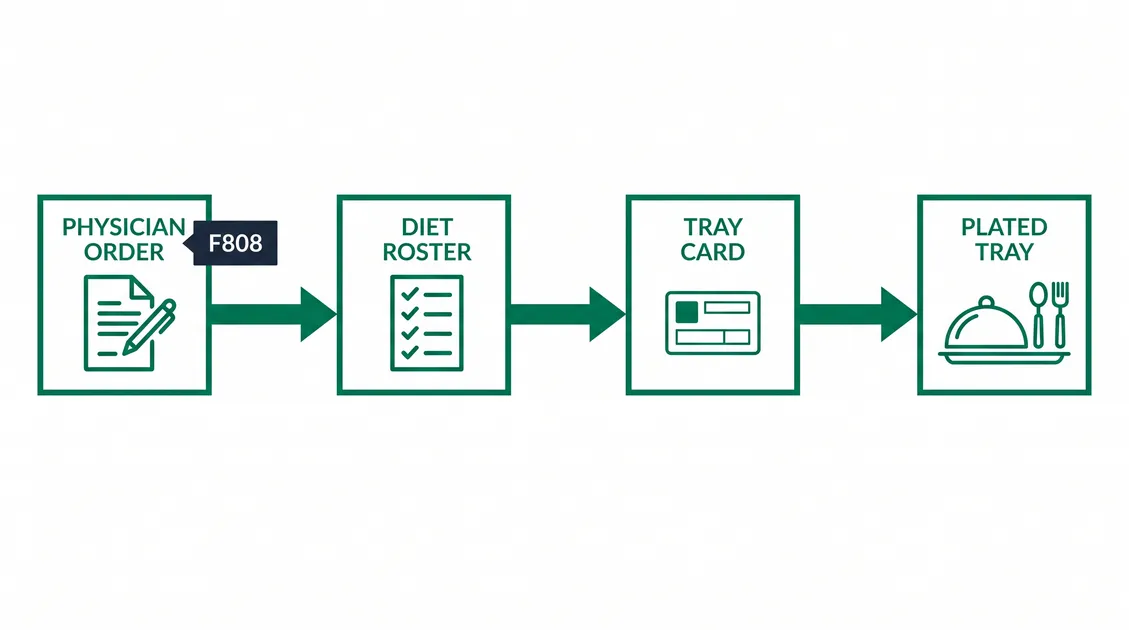
The 24-Hour Clinical Diet Order Reconciliation Routine
Nursing sends the past 24 hours of diet changes on a signed slip.
The Certified Dietary Manager (CDM) updates the roster and reprints changed tray cards.
The checker reads cards against the roster and holds any mismatch.
Late orders reach the kitchen by phone and paper before the next meal.
Allergen Alerts and High-Risk Texture Flagging
Tray card flags mark the highest-stakes orders: allergies, IDDSI levels, thickened liquids, fluid restrictions and consistent carbohydrate diets. Print allergens in red capitals on card and roster.
PantryTec's onboarding team often hears this: a resident moved to IDDSI Level 5 that afternoon, but dinner went out at Level 6.
Why Do Plating Errors Trigger CMS F808 Citations?
CMS F808 citations follow plating errors because federal rules require nursing homes to serve the prescribed therapeutic diet, and surveyors compare plates against those orders. F808 rests on 42 CFR §483.60(e) and covers mechanically altered textures as well as nutrient-controlled diets. A regular dinner roll on a pureed tray is a texture error and a choking hazard at once. Portion errors count too, because a consistent carbohydrate order depends on the carbohydrate grams served. Assisted living communities are not surveyed against F-tags. According to the California HealthCare Foundation's 2002 report on residential care, almost 800,000 Americans lived in licensed supportive housing, all under state rules. Many state licensing rules also require modified diets as ordered, so the same discipline protects you there. The cards below show where surveyors look and what they test.
Survey Inspection Pathways and Test Tray Audits
The Dining Observation pathway (CMS-20053) checks tray cards and served diets, and allows a test tray after food quality complaints. The Kitchen Observation pathway (CMS-20055) checks steam table temperatures and logs.
Dysphagia Hazards and IDDSI Texture Divergence
Wrong IDDSI levels carry choking and aspiration risk in dysphagia. IDDSI caps adult Level 5 Minced & Moist lumps at 4 mm and Level 6 Soft & Bite-Sized pieces at 15 mm. CMS-20053 also expects pureed foods served as separate items. See PantryTec's IDDSI Level 4 puree menus.
What Is the Role of the Tray Line Checker Before Cart Dispatch?
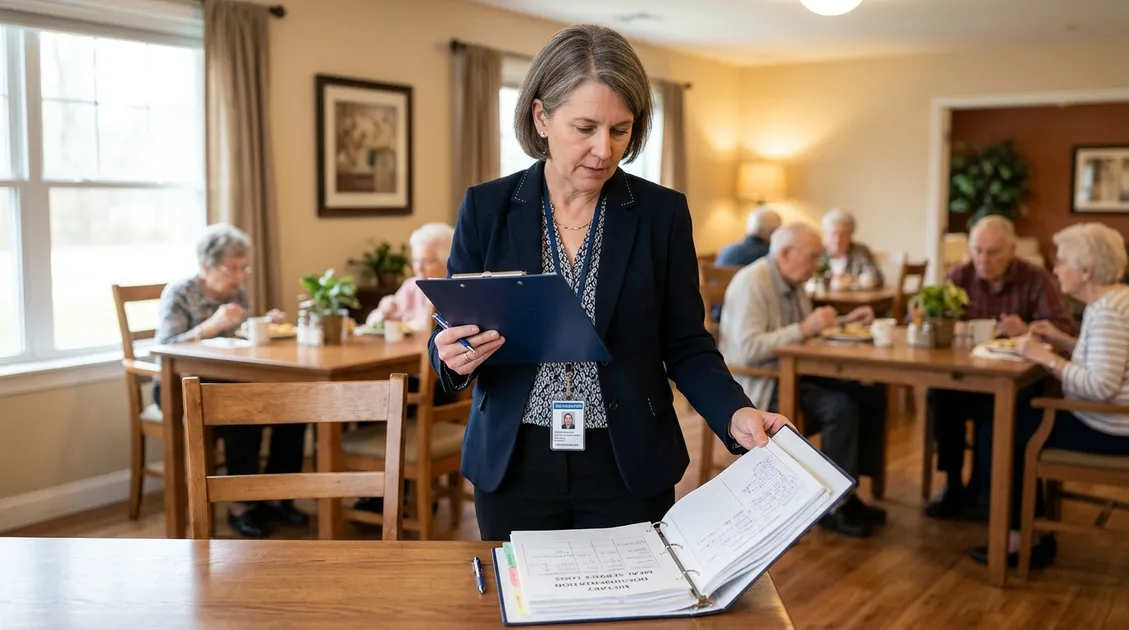
A tray line checker is the second person who compares each finished plate with its tray card, then initials the card before the cart leaves. Some kitchens call it the expediter. The checker never plates, because a cook who checks their own plates sees what they meant to serve. Diet, texture, liquids, allergens and portions all get a look, and any tray that does not match waits for nursing to confirm the order. Checkers also confirm temperatures and cover each plate. Staffing is the usual objection. The California HealthCare Foundation's 2002 assisted living profile assumed 0.48 FTEs per resident, about 19 full-time staff in a 40-resident community. Moving one of them to the line at meals is a scheduling choice, not a new hire. The checklist below is the checker's script for every tray.
The Secondary Verification Inspection Workflow
Steam Table Holding Temperatures and the 135°F Regulatory Floor
Take steam table temperatures at fill and mid-service, and log both. Any pan below 135°F (57°C) gets your policy's corrective action. The floor governs holding, so after plating, speed matters most.
How Can Small 6–16 Bed Assisted Living Facilities Plate Meals Without Software?
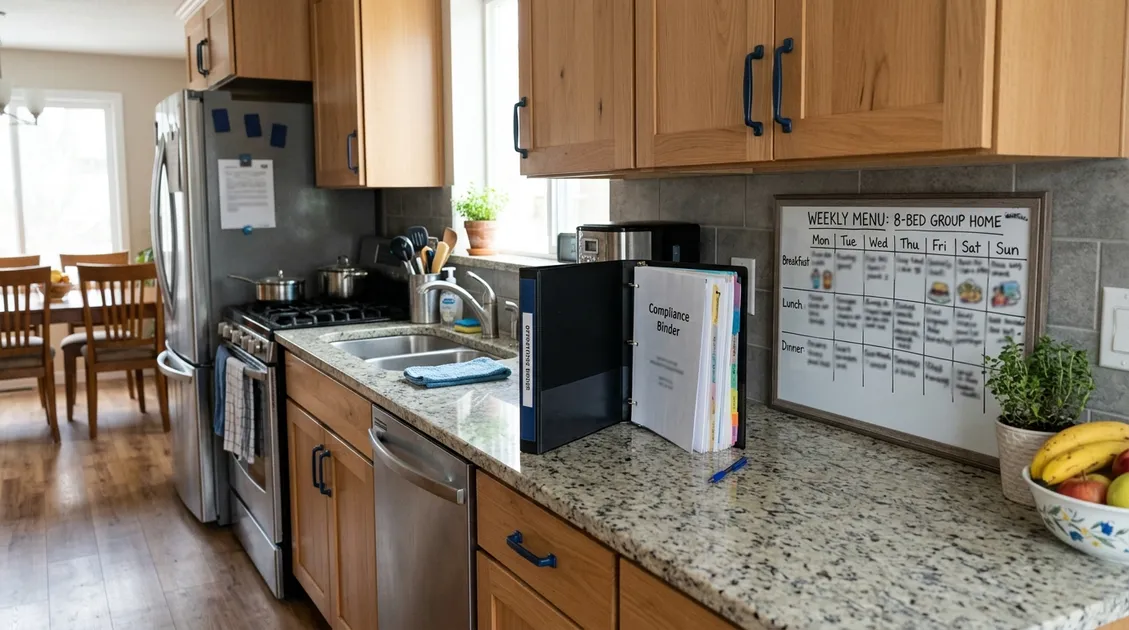
Small 6–16 bed assisted living homes plate without software by using printed diet rosters, color-coded tray cards, color-coded dishers and one checker at every meal. A home this size usually runs on a residential kitchen, one cook and one aide. Paper works here because every check stays visible: roster beside the line, card on the tray, logs in one binder. According to Future Market Insights, assisted living software is a $372.3 million market in 2025, headed for $1.01 billion by 2035. None of that spend checks a plate. PantryTec's flat-rate plans cost $15, $20 or $40 a month billed annually, with no per-bed fees, and every plan includes an RD approval letter. See how PantryTec plans menus for group homes with 6 to 16 beds. The steps below need no conveyor or screen.
Manual Pre-Printed Color-Coded Tray Card Systems
Tray cards print in room order, in IDDSI colors: green for Level 4, orange for Level 5, blue for Level 6. Reprint and shred a card on every order change.

Cook-to-Census Assembly for Small Plating Teams
Cook to census means prepping portions for that meal's residents, counted by diet and texture. PantryTec's Complete plan adds recipes and a portion and texture guide to our assisted living cycle menus.
| Factor | Manual line + checker | Automated (screens, POS) |
|---|---|---|
| Line speed | Paced by plating only | Paced by screen lookups |
| Error catch rate | Second person checks every plate | Flags order conflicts, not plates |
| Equipment cost | Printer, binder, dishers | Terminals, printers, per-resident fees |
| Setup footprint | One residential counter | Screens or a conveyor |
| Staffing needs | 2 to 3 people | 2 to 4 plus an admin |
What Documentation Proves Tray Plating Accuracy During a State Survey?
Tray line records prove plating accuracy with four dated logs: roster changes, signed checklists, steam table temperatures and test tray temperatures from the last cart. Add the RD-approved menu and extension sheets, and a surveyor follows one resident's order from chart to plate. Nursing home standard surveys come no later than 15 months apart, with a statewide average of 12 months or less, under 42 CFR §488.308. PantryTec recommends keeping tray line records for at least 15 months so a full survey interval stays on file. Assisted living retention rules vary by state, so confirm yours with your licensing agency. At the 50% annual resident turnover in the California HealthCare Foundation's 2002 assisted living profile, a 20-bed home replaces about 10 residents a year. PantryTec's dietary management guide covers the full paper trail.
Daily Diet Roster Change Logs and Retention Rules
Diet roster change logs capture every change on one sheet: date, time, resident, old order, new order, who sent it and who updated the roster. Keep replaced rosters behind the log.
Without a change log, a surveyor's question about Tuesday's texture change means digging through nursing notes. With one, the answer is a single dated line.
Test Tray Temperature Logs and Therapeutic Extension Sheets
Test tray audits run weekly, rotating meals and units. Plate the tray last, send it on the last cart to the farthest room, and log temperatures when the final resident is served. PantryTec targets 135°F (57°C) or higher for hot items.
Therapeutic extension sheets show each item's changes for renal, cardiac low sodium, consistent carbohydrate and texture-modified diets.
Key Takeaways for Flawless Tray Line Operations
Tray line setup comes down to eight habits every shift repeats.
- Reconcile the diet roster with nursing every 24 hours.
- Hold hot food at 135°F (57°C) or higher and cold food at 41°F (5°C) or lower.
- Match dishers to printed portions: #8 for 1/2 cup, #12 for 1/3 cup.
- Color tray cards by IDDSI level and print allergens in red.
- Name a checker for every meal who does not plate.
- Log a weekly test tray from the last cart.
- Keep tray line records for at least 15 months.
- File menus, logs and the RD letter in one binder.
Frequently Asked Questions About Tray Line Setup
What is a tray line setup in healthcare food service?
A tray line setup is the station-by-station line a kitchen uses to plate meals: tray card, cold well, hot well, texture well, checker and cart.
How do you match tray cards to a facility diet roster?
Diet roster matching prints the roster and tray cards from one order list, and a checker compares them before each meal.
What is the role of a tray line checker during meal assembly?
The tray line checker, or expediter, compares each finished plate with its tray card, initials it and pulls any tray that does not match.
What CMS F-Tags regulate tray line operations and therapeutic diets?
Nursing homes answer to F-tags under 42 CFR §483.60, chiefly F808 therapeutic diets, F803 menus, F804 palatability and temperature, F805 texture and F812 food safety.
How often must a senior care facility update its dietary roster?
Diet roster updates have no fixed federal schedule, but rosters must match current orders at every meal. PantryTec recommends reconciling every 24 hours.