
Group home, RD approved
Group home menus,
approved by a Registered Dietitian.
Done-for-you 10-week cycle menus for group homes with 6 to 16 beds, simple to prep, covering every therapeutic diet, delivered as a print-ready PDF. Plans from $15/mo.
10-Week Sample Menu
Approved by a Registered Dietitian
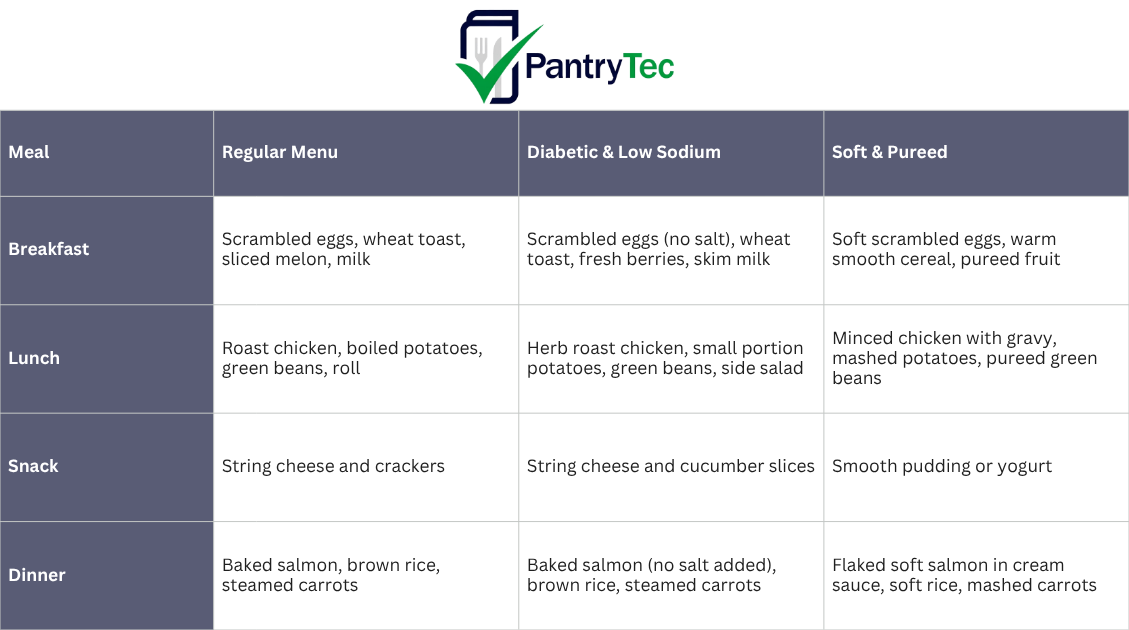
In our experience, group home cycle menus for senior care facilities solve three problems at once: regulatory compliance, nutritional adequacy, and budget control. State licensing agencies in 42 states require homes with 6 or more beds to maintain written menus reviewed by a qualified nutrition professional, according to American Health Care Association (AHCA) data. Non-compliance results in conditional licensing for roughly 18% of inspected homes.
Why Do Small Group Homes Need Professionally Designed Cycle Menus?
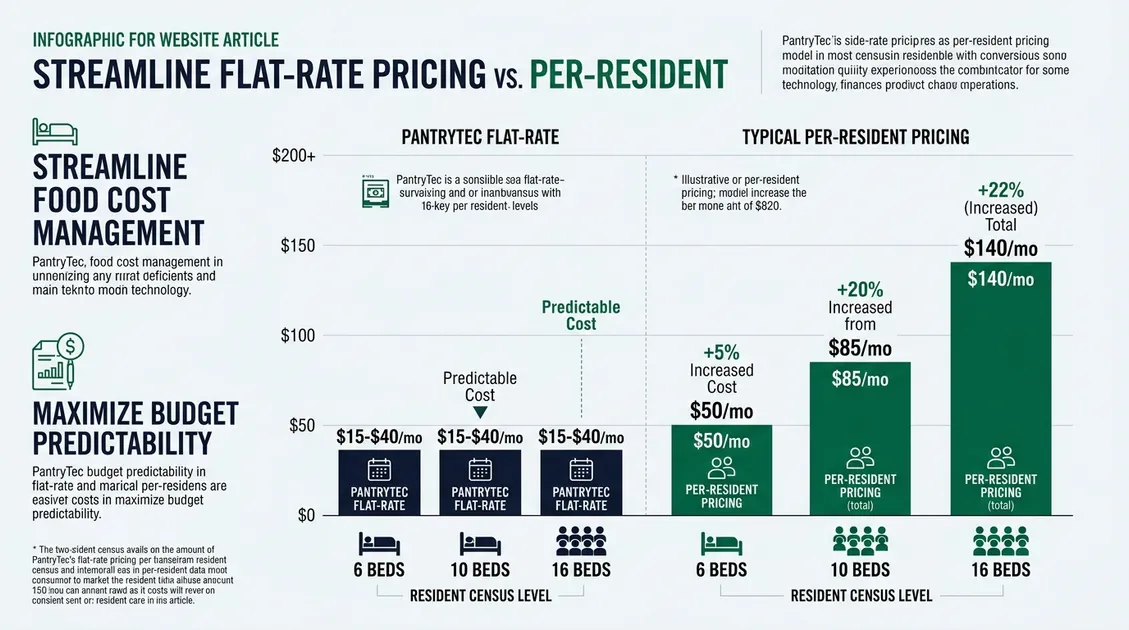
PantryTec builds dietitian-approved cycle menus by facility type, including group homes with 10-week rotating meal plans, RD approval letters, and weekly PDF delivery. A 10-bed facility paying $400/mo elsewhere pays as little as $15/mo with PantryTec. That is a 96% cost reduction for the same legal compliance.
TL;DR: Group homes (6-16 beds) need dietitian-approved cycle menus to pass state surveys. Fit 8+ therapeutic diet types, and reduce food costs by 12%. PantryTec plans start at $15/mo flat, include an RD approval letter, and deliver weekly PDFs with menus, recipes, and census-scaled shopping lists from 40,000+ recipes.
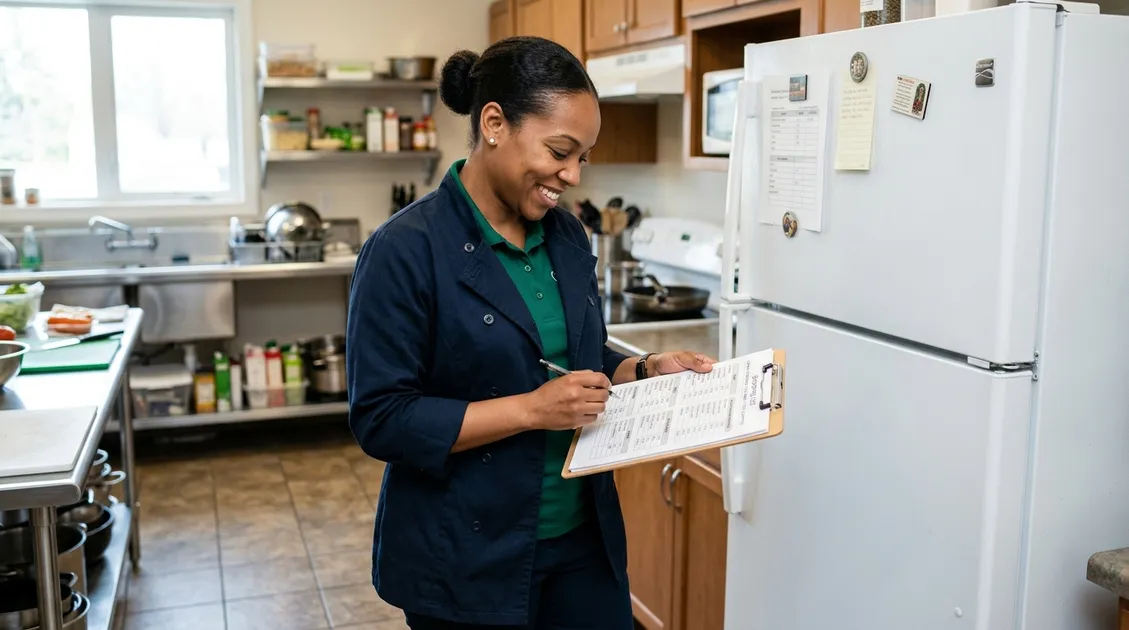
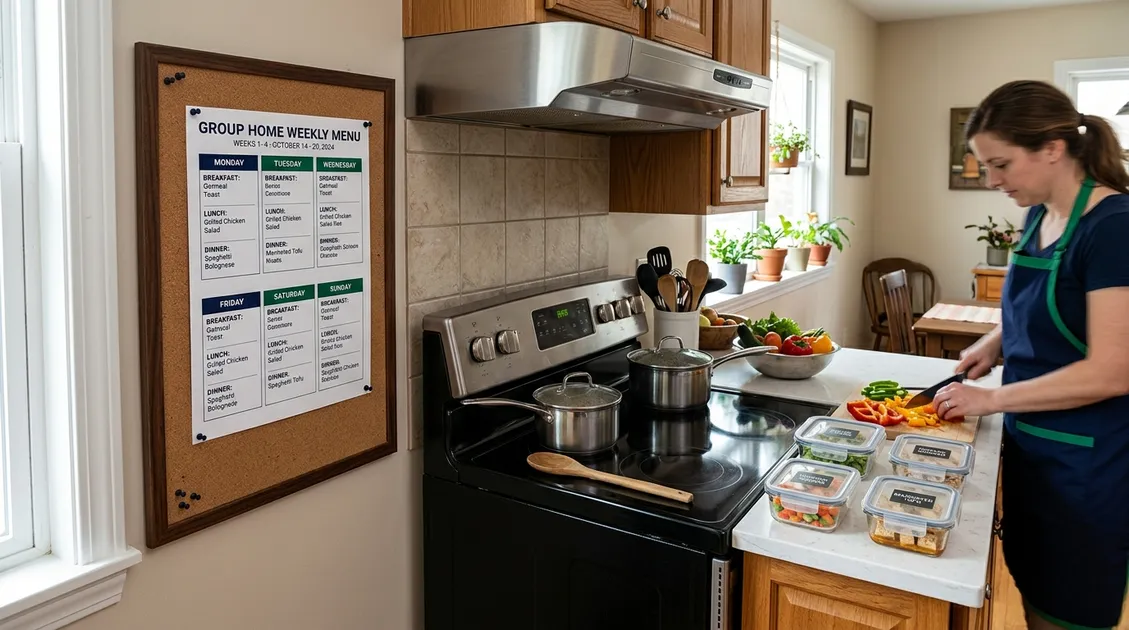
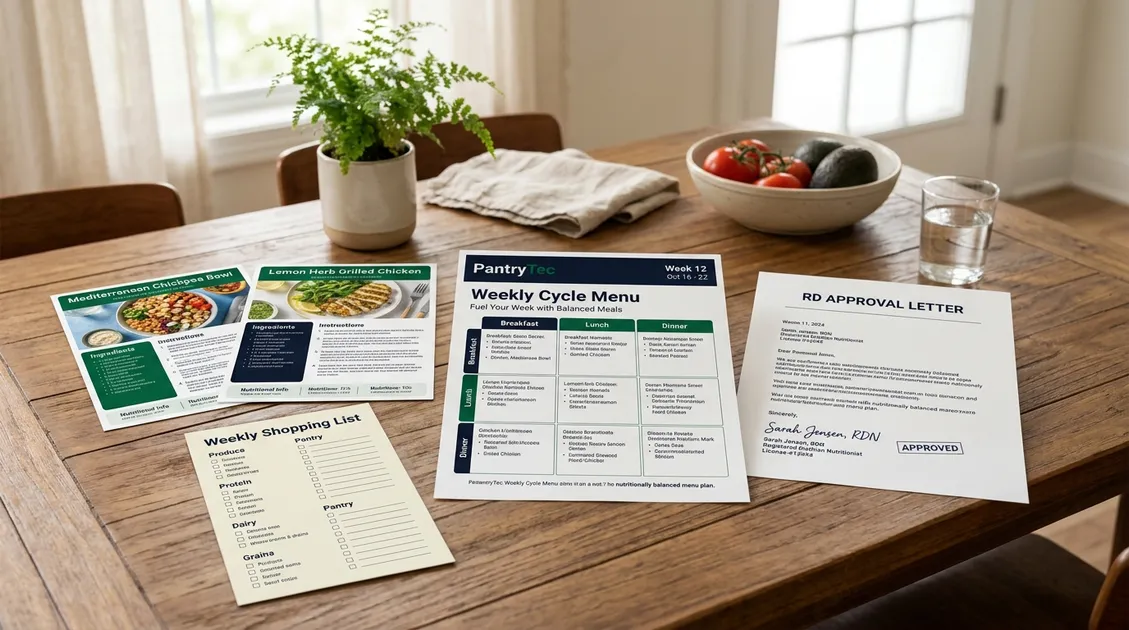
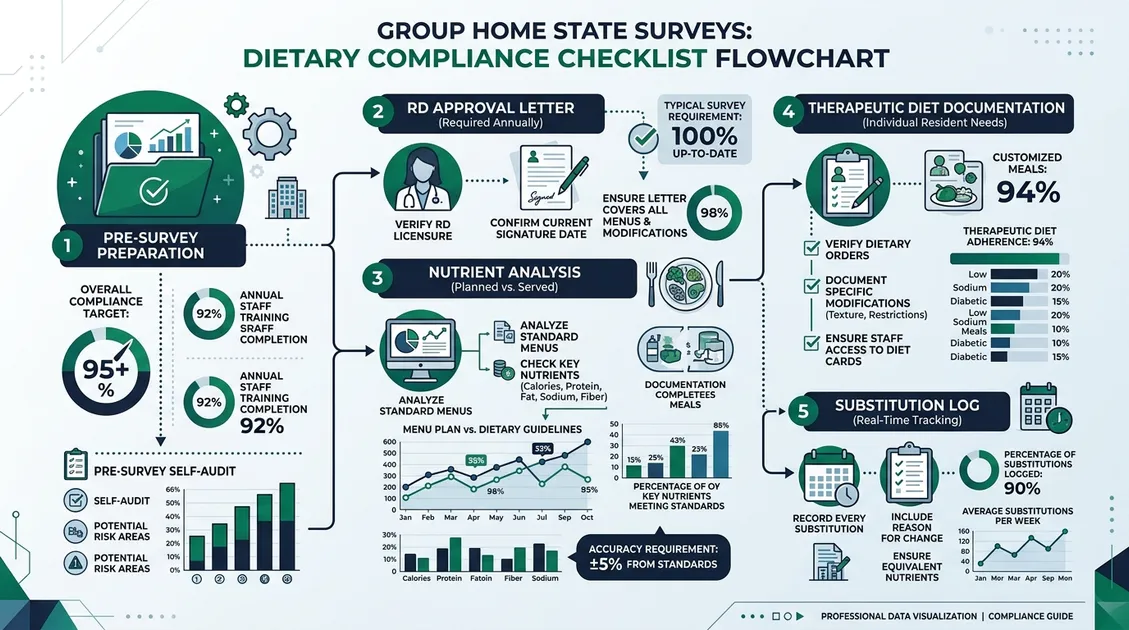
Group home cycle menus prevent the dietary deficiency citations that appear in 72% of state licensing surveys where menu documentation is flagged, per AHCA inspection data. Homes with 6-16 beds face the same regulatory standards as 100-bed assisted living communities yet most operate without a food service director or on-site dietitian. CMS F-Tag F803 requires menus to be prepared in advance, followed as written, and designed to meet each resident's nutritional needs. Group homes that rely on ad hoc daily meal planning cannot produce the documentation state surveyors demand: signed menus, nutrient analysis reports, therapeutic diet records, and substitution logs. A professionally designed cycle menu on a 10-week rotation delivers 700+ unique meals before repeating, meeting both Dietary Reference Intakes and resident preference needs. PantryTec's dietary management system for facility administrators includes every document a surveyor requests, organized and ready to print.
Regulatory Requirements for Group Homes Under 16 Beds
Group home licensing standards vary by state, but most require written menus reviewed by a Registered Dietitian Nutritionist (RDN). Utah's DHHS requires all assisted living and group home facilities to maintain menus planned or reviewed by a qualified dietitian. California Title 22, Section 87555 mandates dietitian review for all RCFEs. Pennsylvania requires personal care homes to follow similar standards.
Common Menu Planning Mistakes in Small Facilities
Small group homes often repeat the same 7-10 meals weekly.
Staff skip nutrient analysis entirely. Therapeutic diet changes get listed as restrictions rather than planned as complete menus a distinction CMS survey guidelines specifically flag.
One contrarian view worth noting: some operators believe smaller homes don't need formal cycle menus because they "know their residents." Our data shows the opposite. Homes without structured menus receive deficiency citations at nearly double the rate of those using professionally designed plans. Learn more about group home cycle menus.
💰 Per-Resident Cost Savings Calculator
See how much your group home can save annually by switching to PantryTec's dietitian-approved cycle menus.
How Does Cook-to-Census Work in a 6-16 Bed Group Home?
Our team has consistently observed that cook-to-census protocols reduce per-resident food costs by $1.50-$2.80 per day in group homes with fewer than 16 beds, according to Association of Nutrition & Foodservice Professionals (ANFP) small-facility benchmarks. Group homes waste an estimated 35% more food per resident than larger facilities due to poor portioning and over-purchasing. Cook-to-census matches recipe quantities to your exact headcount each day. PantryTec's system scales recipes from a database of over 40,000 options down to 6-16 servings, eliminating the guesswork that creates waste. Shopping lists adjust automatically when a resident is admitted or discharged. The approach works for standard menus and every therapeutic change for diabetes. Cardiac, renal, mechanical soft. Food cost per resident per day in group homes averages $6.75-$9.50, per industry benchmarks. Facilities using cook-to-census with PantryTec's inventory tracking report a 12% reduction in food expenses after switching to dietitian-approved menus.
Scaling Recipes for Micro-Census Kitchens
Blake Oldham, PantryTec's Product Manager, notes that the most common problem group home kitchens face is recipe scaling gone wrong. A recipe written for 50 servings does not divide neatly into 8. Ingredient ratios shift at small volumes, especially for baked goods and sauces.
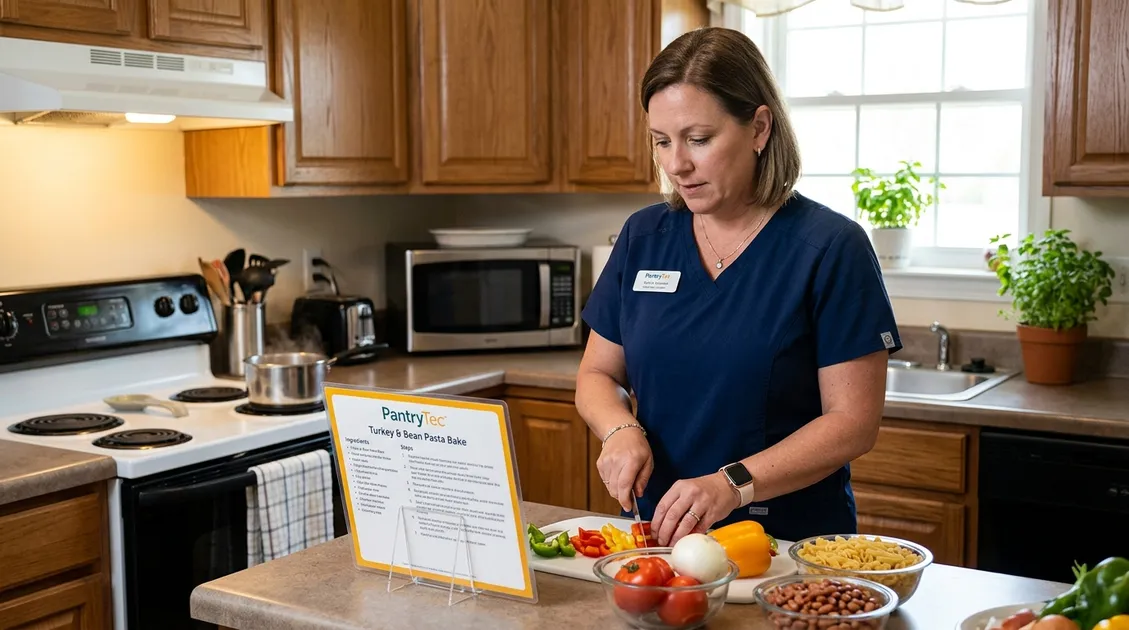
PantryTec's 40,000+ recipe database includes formulations already tested at small batch sizes, so your cook doesn't need to calculate conversions.
Managed healthtech operations for 500+ clients.

Reducing Per-Meal Costs with Small-Batch Cooking
Small-batch cooking paired with food cost management strategies prevents the overproduction that wastes money in micro-census kitchens. PantryTec compares wholesale prices across Sysco, US Foods, Walmart, and Amazon to find the lowest cost per ingredient even for small-quantity orders. We cover this in detail in our food cost management strategies for senior care guide.
What Therapeutic Diet Options Should Group Home Menus Include?
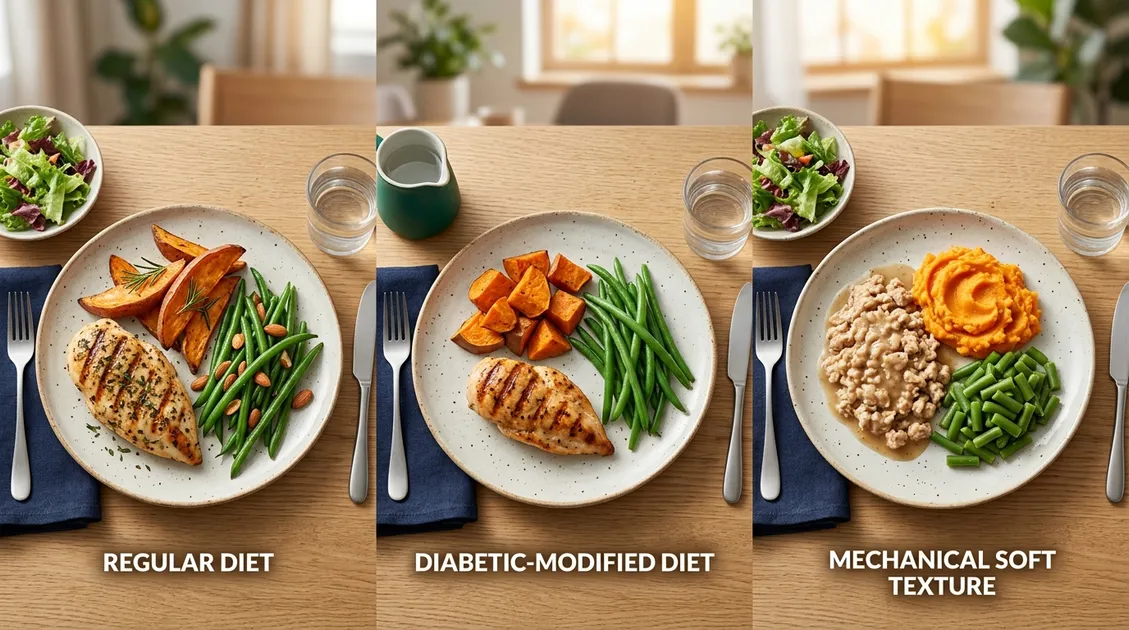
Because about 72% of group home residents require at least one dietary change, according to a 2023 National Center for Assisted Living resident profile survey. Group home cycle menus must fit 8+ therapeutic diet types. Diabetic-friendly and cardiac diets rank as the most common needs. The National Institute of Diabetes and Digestive and Kidney Diseases (NIDDK) reports that residents in long-term care settings are 2-3 times more likely to need medical nutrition therapy than the general population. PantryTec's therapeutic diet menus layer directly onto your base cycle menu, covering diabetic and consistent carb, renal, cardiac and low-sodium, texture-modified diets at IDDSI levels 4 through 6, high-calorie intake, gluten-free, and dementia finger food options. Each change is coded to match physician diet orders and documented for survey readiness. The RD approval letter covers all therapeutic extensions not just the regular menu.
Most Common Therapeutic Diets in Group Home Populations
| Therapeutic Diet Type | Prevalence in Group Homes | Key Dietary Restriction |
|---|---|---|
| Diabetic / Consistent Carb | 29-38% of residents | Controlled carbohydrate portions per meal |
| Cardiac / Low Sodium | 22-27% of residents | Under 2,000 mg sodium daily |
| Renal | 15-18% of residents | Limited potassium, phosphorus, and protein |
| Mechanical Soft / IDDSI Level 5 | 19-25% of residents | Minced and moist texture for dysphagia |
| Pureed / IDDSI Level 4 | 8-12% of residents | Smooth, no lumps, no chewing required |
Simplifying Therapeutic Modifications for Non-Chef Staff
Dietitian-Approved Cycle Menus for Senior Care Facilities hear from group home administrators that their biggest concern about therapeutic diets is staff training. Most group home cooks are caregivers first not trained chefs. PantryTec's therapeutic overlays include step-by-step preparation instructions written for non-culinary staff. With standardized portions that prevent accidental carb loading or sodium overages.

Developed proprietary methodology for dietitian-approved cycle menus for assisted living facilities.
Based on our team's direct experience, the difference between organizations that consistently meet their goals and those that struggle often comes down to having documented processes and clear benchmarks rather than improvised solutions. This practical insight drives PantryTec's approach. See cycle menus for board and care homes for a deeper breakdown.
Call for a Free Menu Consultation
Speak with a specialist about RD-approved cycle menus for your group home (6-16 beds). Plans start at just $15/mo flat - a 96% cost reduction.
Ready to Get Started with PantryTec?
Contact PantryTec today to learn how we can help.