
Kitchen policy, F812 ready
Batch cooking and leftover policy in licensed kitchens.
Two-stage cooling, 7-day date marking and 165°F reheating rules for assisted living and nursing facility kitchens, paired with cycle menus that cook to census so leftovers stay rare. Plans from $15/mo.
- FDA Food Code 2022
- CMS F812
- 42 CFR §483.60
- Cook-to-census
Batch cooking and leftover policy in licensed kitchens follows the FDA Food Code 2022: cool cooked food from 135°F to 70°F within 2 hours and to 41°F within 6 hours total, date-mark it for a 7-day shelf-life, and reheat it to 165°F for 15 seconds within 2 hours before hot holding. Nursing facilities answer to CMS F812 under 42 CFR §483.60, and most state assisted living codes adopt the same numbers. PantryTec production sheets pair these rules with cook-to-census quantities, part of our dietary operations hub.
Why Do Surveyors Scrutinize Batch Cooking and Leftovers in Senior Care?
Surveyors scrutinize batch cooking and leftovers because cooling and reheating are where Clostridium perfringens multiplies, and CDC estimates this one organism causes about 1 million foodborne illnesses in the United States each year, with nursing homes among its common outbreak settings. According to the North Dakota HHS fact sheet summarizing CDC data, spores germinate while food sits between 40°F and 140°F, and beef, poultry and gravies are the usual vehicles. Those are the proteins a senior care kitchen batch-cooks for lunch and repurposes for dinner. The FDA Food Code 2022 treats people receiving food in assisted living and nursing facilities as a highly susceptible population (HSP). CMS F812 then turns weak leftover practice into an F-Tag deficiency citation when a surveyor finds warm food cooling in a deep pot. The subsections below cover both.
Highly Susceptible Population Vulnerabilities
According to Residential Care for the Elderly: Supply, Demand, and Quality Assurance from the California Health Care Foundation, almost 800,000 Americans live in licensed supportive housing. Listeria monocytogenes in chilled ready-to-eat (RTE) foods drives the 7-day limit because it grows at refrigerator temperature.
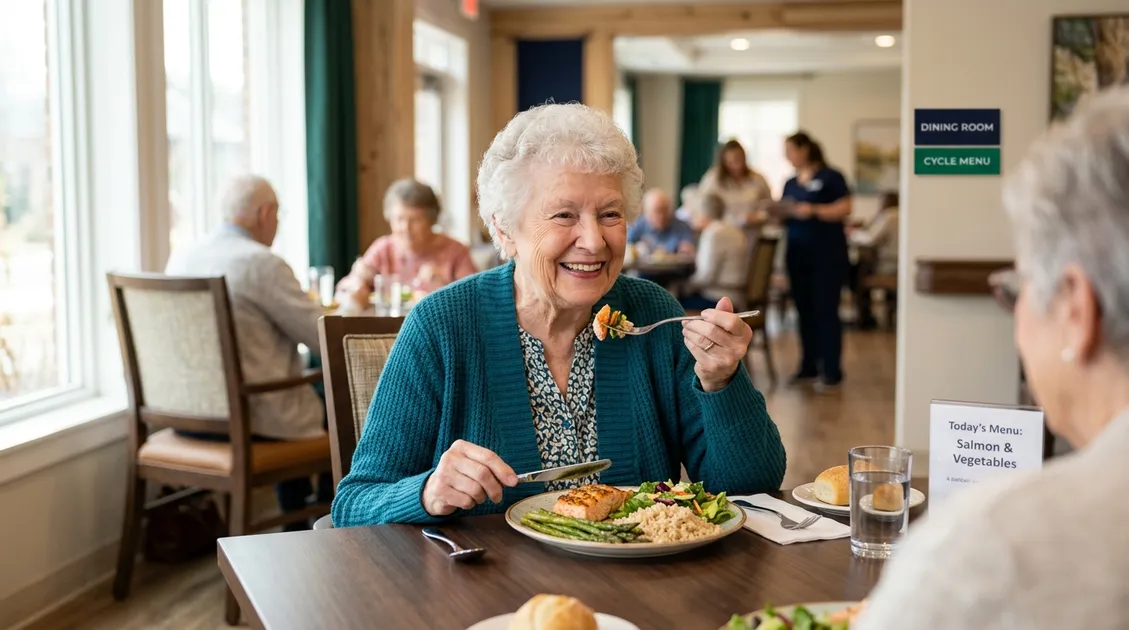
Common F812 Citations for Improper Storage and Cooling
Typical F812 gaps: no cooling temperature log, pans deeper than 3 inches, missing day-marking labels, and steam-table reheating. Our F-Tag menu compliance hub covers the related menu tags.
What Are the Exact FDA Two-Stage Cooling Rules for Licensed Facilities?
FDA Food Code 2022 §3-501.14 requires two-stage cooling: cooked time/temperature control for safety (TCS) food drops from 135°F to 70°F within 2 hours, then from 70°F to 41°F or below within 4 more hours, for a 6-hour total window. Stage one runs tighter because C. perfringens grows fastest near 109°F to 117°F. A pot of chili that reaches 70°F at 2 hours 20 minutes has failed stage one, even if it reaches 41°F well inside 6 hours. The accepted corrective action for that miss is to reheat to 165°F and restart cooling, or discard the batch. The CHCF assisted living industry profile counts 0.48 FTEs per resident across every role, so the cook checking a pan at the 2-hour mark is usually plating the next meal at the same time, and the log entry gets skipped.
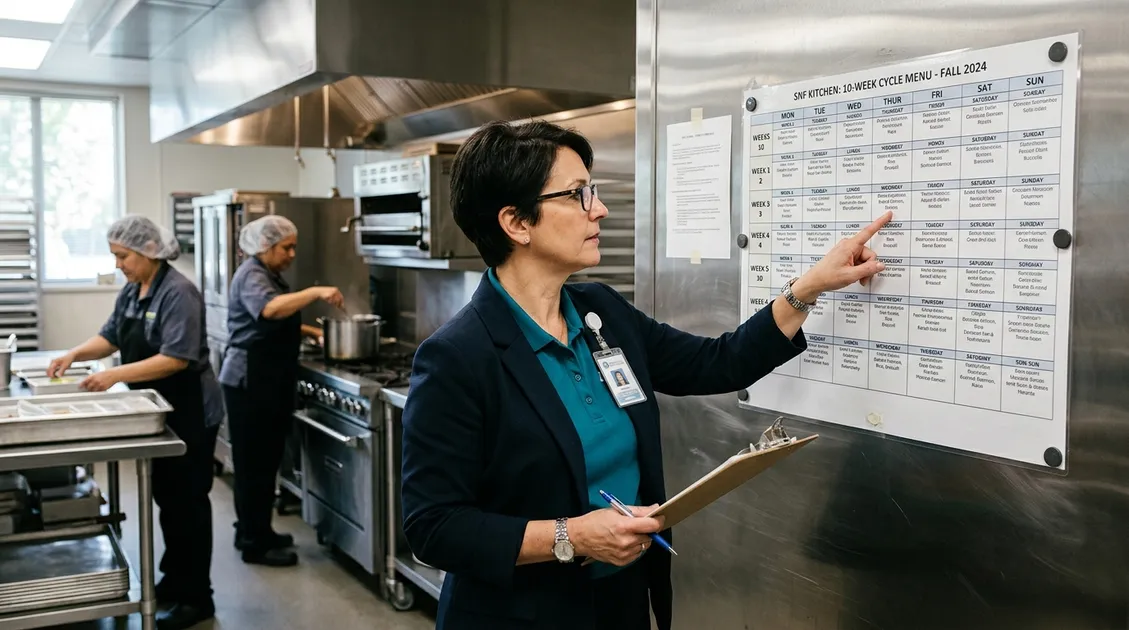
The 135°F to 70°F Two-Hour Window
The clock starts when food falls below 135°F, not when the burner shuts off. Cooks log calibrated probe thermometer readings at 0, 2 and 6 hours.
2-stage food cooling calculator
Deadlines follow FDA Food Code 2022 §3-501.14 and §3-501.17. Your state code governs where it differs.
Approved Rapid-Cooling Techniques: Shallow Pans and Ice Baths
Food Code §3-501.15 approves shallow pans, smaller portions, an ice bath with stirring, ice wands and a blast chiller. Common state guidance caps shallow pan cooling at 2 inches for dense foods and 3 inches for liquids.
A scenario our team encounters frequently in small assisted living kitchens is a 4-inch pan of mashed potatoes still above 70°F at dinner. Two 2-inch pans over an ice bath bring the same batch through stage one on time.
How Does the 7-Day Food Dating Rule Apply to Prepared Leftovers?
FDA Food Code 2022 §3-501.17 limits ready-to-eat TCS food held at 41°F or below to 7 calendar days, with the day of preparation counted as Day 1, so food made on Monday is discarded at the end of Sunday. The rule targets Listeria monocytogenes, which keeps multiplying at refrigerator temperature. Freezing pauses the clock, and the days a leftover spent refrigerated before freezing still count once it thaws. A combined dish takes the date of its earliest-prepared ingredient, so a Monday roast turkey that becomes Wednesday turkey à la king keeps Monday's date. Surveyors open walk-in containers and read the labels, so the 7-day shelf-life rule lives on the label. California Title 22 §87555 requires RCFE food to be selected, stored, prepared and served in a safe and healthful manner, and evaluators apply that standard to leftovers in the refrigerator.
Calculating the Day 1 Threshold
A batch cooked Tuesday, September 1, 2026 (Day 1) is discarded after Monday, September 7 (Day 7).
| Prepared on (Day 1) | Discard at end of (Day 7) |
|---|---|
| Monday | Sunday |
| Tuesday | Monday |
| Wednesday | Tuesday |
| Thursday | Wednesday |
| Friday | Thursday |
| Saturday | Friday |
| Sunday | Saturday |
Labeling Specifications That Pass State Inspection
A day-marking label shows the food name, preparation date, discard date and preparer's initials. RTE leftovers sit above raw proteins to prevent cross-contamination.
How Do You Safely Reheat and Repurpose Batch-Cooked Foods on a Cycle Menu?
Batch-cooked leftovers reheated for hot holding reach an internal temperature of 165°F for at least 15 seconds within 2 hours under FDA Food Code 2022 §3-403.11, then hold at 135°F or above until service. Steam tables and hot-holding wells keep hot food hot; they do not move a chilled pan through the danger zone fast enough, so reheating happens on the range, in the oven or in a combi unit first. A leftover served cold as an RTE item, such as chicken salad, skips reheating but keeps its original day-mark and its 41°F cold holding. Repurposing works best when the written cycle menu plans it ahead. PantryTec cycle menus schedule planned-overs, such as a lunch roast that becomes a dinner soup, so the cook knows the second use before the first batch is cooked.
Reheating to 165°F Within Two Hours
The probe reading from the thickest part of the pan goes on the log with the time. Food that misses 165°F inside 2 hours is discarded.
Protecting Therapeutic Diet Compliance When Serving Leftovers
Reduced gravy concentrates sodium past a cardiac low sodium menu target, and chilled purees thin or weep, drifting off IDDSI Level 4. According to the ACL Senior MNT Toolkit, one RDN program grew from 200 referrals (January to May 2019) to 300 by July. Therapeutic plates come from their own approved recipes, and the Premier Plan ($40/mo) covers renal diet menus, cardiac and pureed variations.
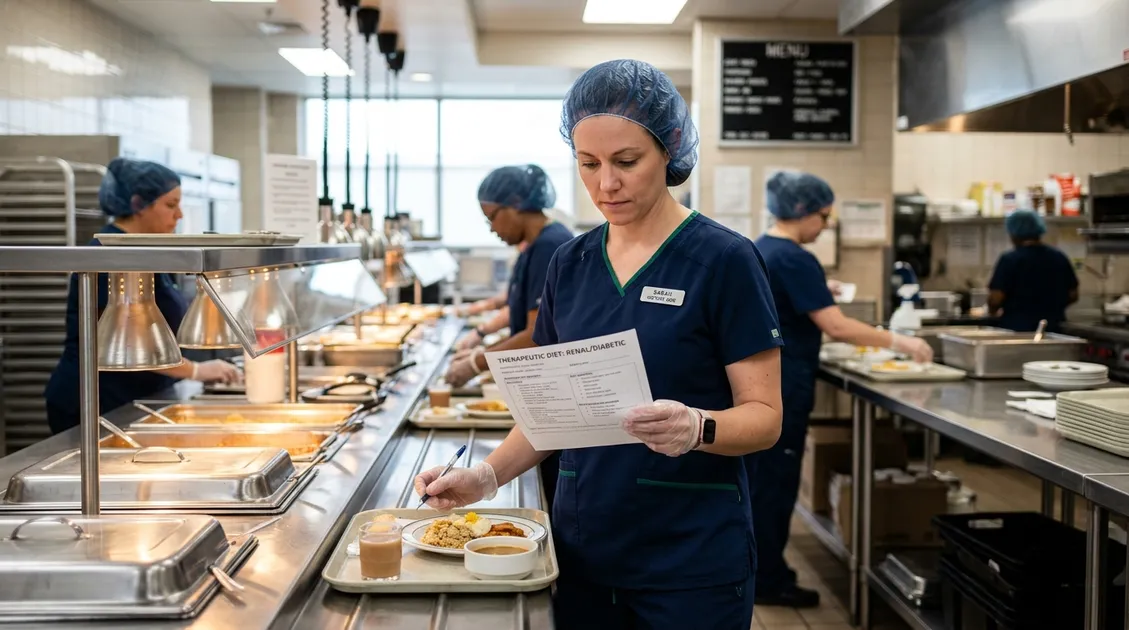
Blake Oldham, our Product Manager, notes that onboarding leftover errors rarely involve the regular menu; they involve reduced gravy on a renal plate. A printed therapeutic swap removes that judgment call.
How Does Cook-to-Census Batch Planning Eliminate Dangerous Food Backlogs?
Cook-to-census planning matches standardized recipe yield to the day's resident headcount, and PantryTec estimates it trims overproduction by 15% to 25%, keeping excess food out of multi-day cooling and storage cycles. Most small facilities over-prepare to avoid running short, and across 500+ senior care engagements we see that habit push food waste to 20% to 30% of total food spend. Every extra pan becomes a log entry, a label and a Day 7 disposal. The CHCF assisted living industry profile lists revenue of $1,831 per resident per month and an operating margin of 19.5%, so discarded food comes straight out of that margin. The same profile reports 50% annual resident turnover, so a production sheet written for last month's headcount overshoots, and weekend relief cooks who double a batch "to be safe" fill the walk-in. Our weekend and call-out kitchen coverage guide covers that shift.
Scaling Standardized Recipes to Exact Resident Headcounts
The conversion factor equals the new yield divided by the original yield. A 24-portion beef stew scaled to a census of 18 uses a factor of 0.75, so 6 lb of beef becomes 4.5 lb.
Controlling Raw Food Spend Without Accumulating Excess Inventory
Ordering follows the same census math, and a monthly plate waste audit flags items that return uneaten. See cutting food spend with a strict RD-approved cycle menu and plate waste reduction.
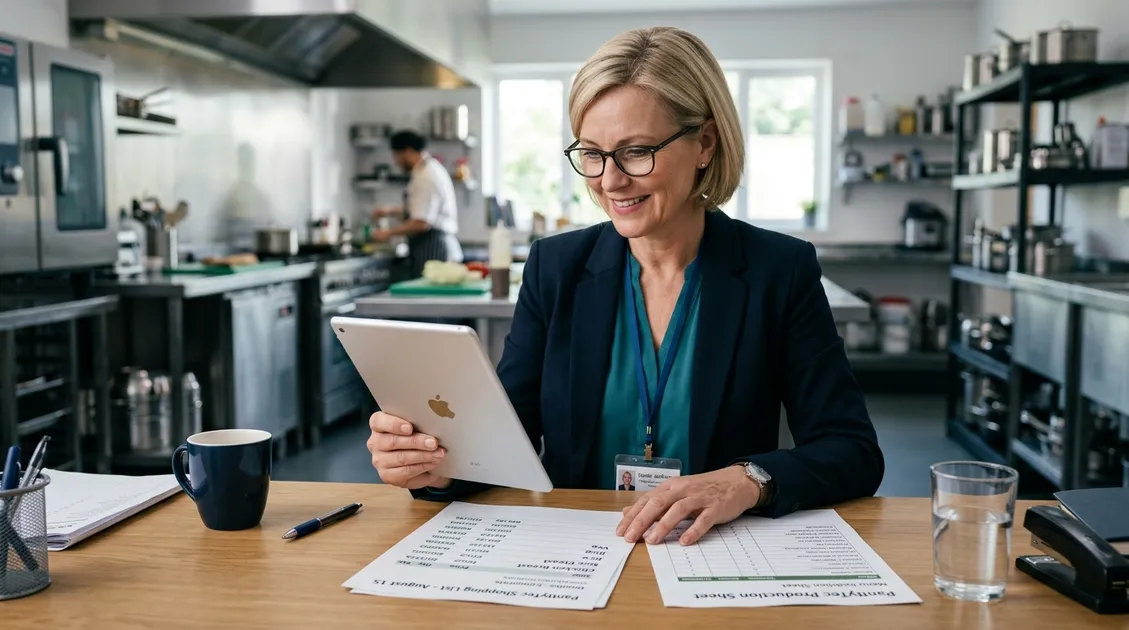
Production sheets scaled to your census
PantryTec cycle menus arrive weekly with production sheets, standardized recipes and cook-to-census instructions. Starter $15/mo, Complete $20/mo, Premier $40/mo, billed annually. No long-term contracts.
What Documentation Proves Your Kitchen Follows Approved Leftover Policies?
Surveyors look for a written cooling temperature log showing the start time, a 2-hour reading at or below 70°F and a final reading at or below 41°F within 6 hours, alongside thermometer calibration records and menu substitution notes. PantryTec takes a contrarian view on format. Dietary software priced at $3 to $5 per resident each month often lives on a tablet that grease and steam ruin within a season, while a printed production sheet with a two-stage cooling log clipped beside the walk-in gets filled in every shift. Records carry cost weight too. The Washington State Senior Nutrition Program Standards require the per-meal cost of Medicaid-funded meals to stay at or below the cost charged to other fund sources, and they count food preparation labor as a cost category. Production and waste records support those numbers.
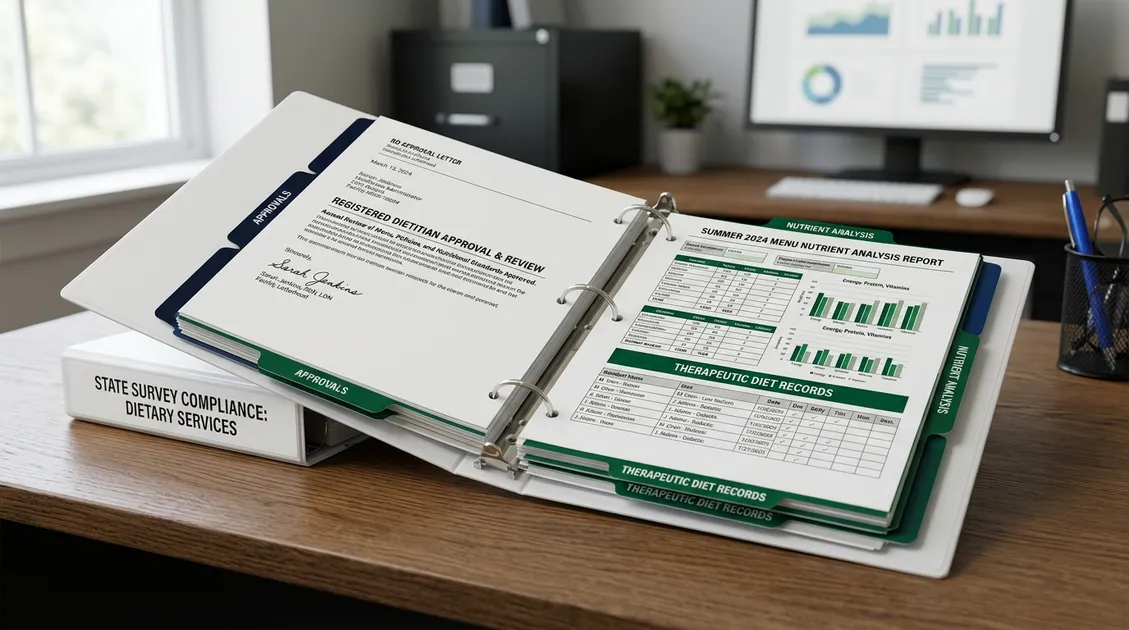
Cooling Verification Logs and Thermometer Calibration Logs
Each cooling entry lists food, pan depth, start time, 2-hour and 6-hour readings, corrective action and initials. Probe thermometers read 32°F in an ice-point slurry, within ±2°F, and the Person in Charge (PIC) signs the daily calibration line.
Menu Substitution Documentation for Repurposed Foods
When a leftover replaces a planned cycle item, the substitution log records the date, original item, replacement, diets affected and the Certified Dietary Manager (CDM) sign-off. That record links F812 practice to F803 nutritional adequacy; our guide to training kitchen staff on printed menus shows cooks how to fill it in.
Key Takeaways for Licensed Kitchen Batch Cooking and Leftovers
- Cool 135°F to 70°F in 2 hours and to 41°F in 4 more, in 2-inch pans, ice baths or a blast chiller.
- Day-mark RTE TCS leftovers: Day 1 is prep day; discard after Day 7.
- Reheat to 165°F for 15 seconds within 2 hours, off the steam table, then hold at 135°F.
- Build therapeutic plates from their own recipes, never regular-diet leftovers.
- Cook to census and keep paper cooling, calibration and substitution logs by the walk-in.
Frequently Asked Questions About Senior Living Leftover Policies
What is the two-stage cooling rule under the FDA Food Code?
The FDA Food Code 2022 two-stage cooling rule requires cooked TCS food to drop from 135°F to 70°F within 2 hours and from 70°F to 41°F or below within 4 more hours. The total window is 6 hours; a stage-one miss means reheating to 165°F and restarting, or discarding.
How many days can leftovers be kept in a licensed senior care kitchen?
Ready-to-eat TCS leftovers held at 41°F or below are kept a maximum of 7 calendar days, with the preparation day counted as Day 1. Food prepared on a Wednesday is discarded at the end of the following Tuesday.
Does CMS F812 allow assisted living and nursing facilities to serve leftovers?
CMS F812 permits leftovers in nursing facilities that follow food safety standards under 42 CFR §483.60(i): two-stage cooling, 41°F cold holding, 7-day date marking and 165°F reheating. Assisted living kitchens follow state codes, which mostly adopt the same FDA Food Code numbers.
What temperature must batch-cooked food reach when reheated for hot holding?
Batch-cooked food reheated for hot holding reaches 165°F for at least 15 seconds, and reheating is completed within 2 hours. It then holds at 135°F or above.
What information must be on a food storage label in a licensed facility?
A food storage label in a licensed facility shows the food name, the preparation date, the discard date 7 days out counting the prep day, and the preparer's initials. Many kitchens add the cooling start time to match the cooling log.
Keep leftovers small and survey-ready.
RD-approved cycle menus with census-scaled production sheets, from $15/mo with an RD Approval Letter included.