
North Carolina Adult Care Home Menu Rules:
What 13F and 13G Require
North Carolina menu rules require adult care homes to write menus at least one week ahead and serve three nutritionally adequate meals daily.
North Carolina menu rules require adult care homes to write menus at least one week ahead and serve three nutritionally adequate meals daily. Both duties sit in 10A NCAC 13F .0904, and family care homes follow matching language in 13G .0904. PantryTec, a dietitian-approved cycle menu service for senior care facilities, wrote this guide to show what the Division of Health Service Regulation (DHSR) checks. Comparing states? North Carolina adult care home rules are one entry in our state-by-state menu regulation guide.
TL;DR: North Carolina splits its menu needs by home size. 13F covers adult care homes with 7 or more residents, and 13G covers family care homes with 2 to 6. Regular menus follow the Dietary Guidelines for Americans and need no dietitian signature. Therapeutic menus need documented approval from a licensed dietitian/nutritionist. Menus as served, substitutions and food receipts stay on file for surveyors. Download a free dietitian-approved sample to see the format.
What Do North Carolina Menu Rules Require in an Adult Care Home?
North Carolina's 10A NCAC 13F .0904 requires adult care homes to keep written menus in the kitchen and stock a 3-day perishable and 5-day non-perishable food supply. Those duties appear in the rule text published by the NC Office of Administrative Hearings. The food reserve has to match the written menus for regular and therapeutic diets alike. Menus must also list serving quantities and mark the current menu day for kitchen staff. Substitutions need equal nutritional value and a kitchen record showing the foods residents received. Planning has to reflect the food preferences on each person's Resident Register, which is how the state writes resident choice into law. Regular daily menus rest on the USDA Dietary Guidelines for Americans 2020-2025, adopted with next editions. That clause pulls the 2025-2030 Dietary Guidelines for Americans into your planning baseline. Its daily minimum planning benchmarks, vegetable subgroups, whole grains, and limits on added sugars and sodium now define an adequate plate.
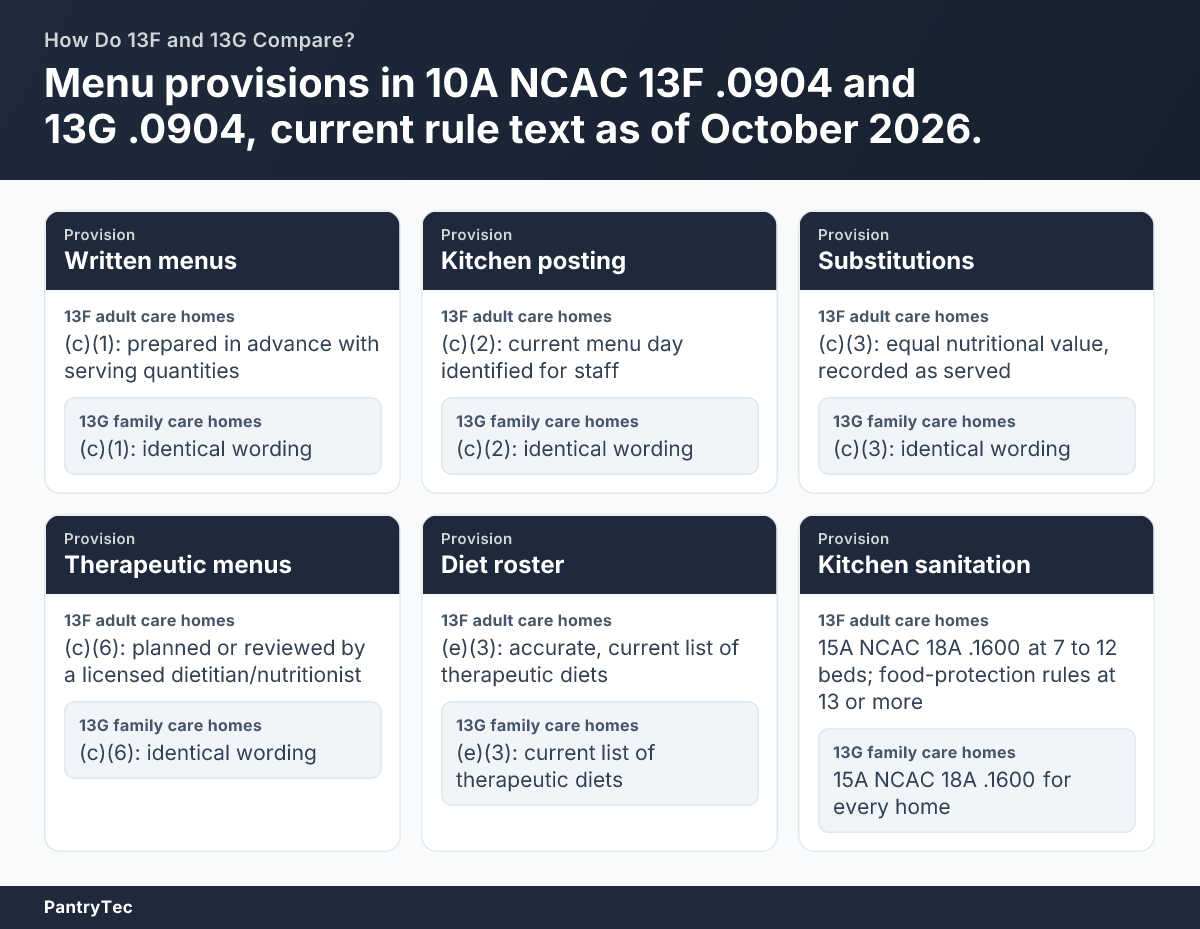
How Do 13F and 13G Compare?
| Provision | 13F adult care homes | 13G family care homes |
|---|---|---|
| Written menus | (c)(1): prepared in advance with serving quantities | (c)(1): identical wording |
| Kitchen posting | (c)(2): current menu day identified for staff | (c)(2): identical wording |
| Substitutions | (c)(3): equal nutritional value, recorded as served | (c)(3): identical wording |
| Therapeutic menus | (c)(6): planned or reviewed by a licensed dietitian/nutritionist | (c)(6): identical wording |
| Diet roster | (e)(3): accurate, current list of therapeutic diets | (e)(3): current list of therapeutic diets |
| Kitchen sanitation | 15A NCAC 18A .1600 at 7 to 12 beds; food-protection rules at 13 or more | 15A NCAC 18A .1600 for every home |
Home size changes less than most owners expect. 10A NCAC 13G .0904 copies the 13F menu, substitution and therapeutic diet language almost word for word. The real split is kitchen sanitation. Neither subchapter sets a training-hours threshold for the menu reviewer. Nursing homes are different. 900 hours of supervised dietetics practice is the minimum for a qualified dietitian reviewing nursing home menus, per 42 CFR 483.60 on eCFR (2026).
Adult day care centers sit outside both subchapters. North Carolina certifies them under separate adult day standards, and their meal pattern covers only the hours a participant attends. Daily census swings, so production has to flex. Some centers also join the USDA Child and Adult Care Food Program (CACFP), which adds its own adult meal pattern on top of state menu posting expectations.
Menu planning in adult care homes runs on lean food budgets. Adult care home kitchens rarely see waiver dollars, since Medicaid waivers served only about 59,000 supportive housing residents nationally, per CHCF's Residential Care for the Elderly report (2000 data). Price the food reserve from the written menu, not from guesswork.

Menu Survey-Readiness Self-Assessment (NC 13F / 13G)
Answer each item based on what a DHSR surveyor could see in your kitchen and files today. Your score updates as you go, and gaps are ranked so you know what to fix first. This is a self-check, not a DHSR determination or legal advice.
Must a Registered Dietitian Approve North Carolina Menus?
North Carolina requires a licensed dietitian/nutritionist to plan or review every therapeutic diet menu under paragraph (c)(6) of 13F and 13G, but regular menus need no dietitian signature. The facility must keep verification of that approval on file. A matching therapeutic menu must exist for each physician-ordered diet, so food service staff know what to serve. The North Carolina Assisted Living Association orientation manual states plainly that regular menus do not have to be signed by a registered dietitian. The latest readoption replaced the term registered dietitian with licensed dietitian/nutritionist to match Article 25 of Chapter 90 of the General Statutes. That wording change has a practical edge. An out-of-state RD signature does not automatically equal a North Carolina license. Therapeutic diet orders must come in writing from the physician and specify calories, grams or consistency where relevant, such as low sodium or thickened liquids. A physician assistant, nurse practitioner, or delegated licensed dietitian/nutritionist can also order a therapeutic diet.
How Often Should Therapeutic Menus Be Re-Verified?
Menu review timing is where North Carolina stays silent, since neither subchapter sets a re-review interval. Florida spells it out. Florida Rule 58A-5.020(2) requires annual review of regular and therapeutic menus, with the reviewer's signature, license number and date on file. Florida's Agency for Health Care Administration (AHCA) cites gaps under survey tag ST-A0093. We recommend North Carolina homes borrow that habit and re-verify therapeutic menus every 12 months and whenever the diet roster changes. Expanding south? Compare these rules with our Georgia personal care home and ALC menu rules.
Home operators sometimes treat dietitian involvement as optional overhead. Dietitian-led senior nutrition runs for years in some programs, including about seven years of RDN-staffed Medicare MNT at one meals-on-wheels provider, per ACL's MNT toolkit. The federal parallel for nursing homes appears in our F808 physician-ordered therapeutic diet guide.
Do You Need a Consulting Dietitian on Retainer?
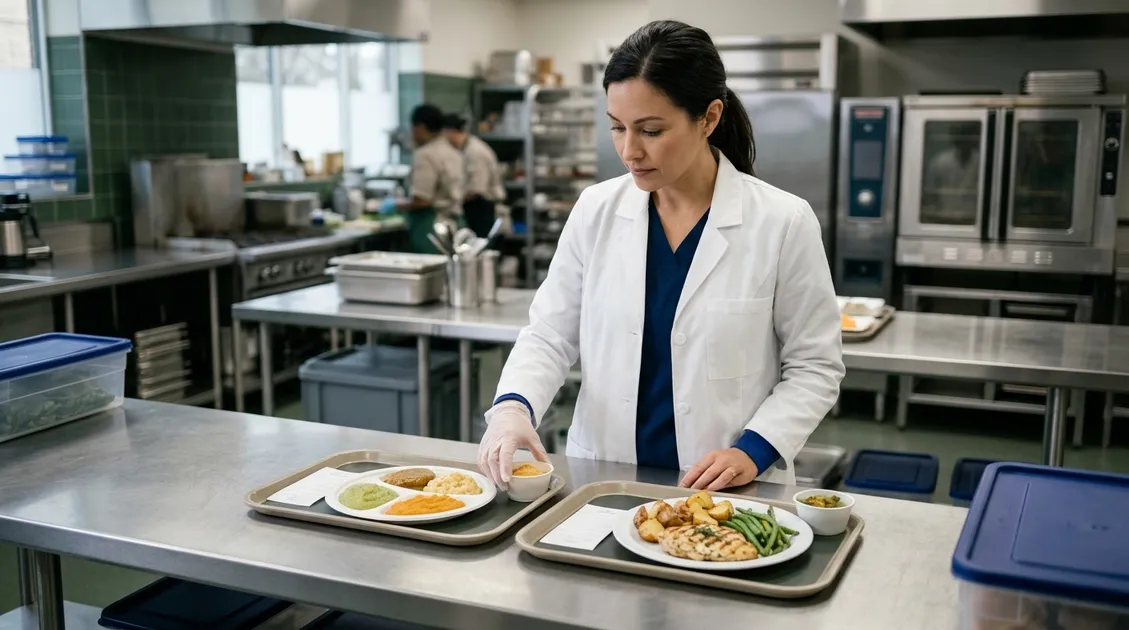
Standard wisdom says every North Carolina home needs a consulting dietitian on retainer. PantryTec takes a narrower view, because the rule demands licensed review of therapeutic menus only. In our experience, facilities come to us paying $800 to $1,200 per month to an external dietitian for quarterly menu reviews and signatures alone. That's $9,600 to $14,400 a year, and much of it buys regular-menu signatures North Carolina doesn't require. Keep clinical dietitian time for therapeutic diet menus and resident assessments.
We hear from clients that the numbers here match their day-to-day reality. One pattern we see is fewer dining complaints once a 10-week menu rotation is running. Residents get 70 days of menus, 210 breakfasts, lunches and dinners, before any day repeats. 75% of 7,094 U.S. norovirus outbreaks studied took place in long-term care and assisted living facilities, per the CDC journal Emerging Infectious Diseases (2020).
What Meal Spacing and Retention Rules Apply in North Carolina?
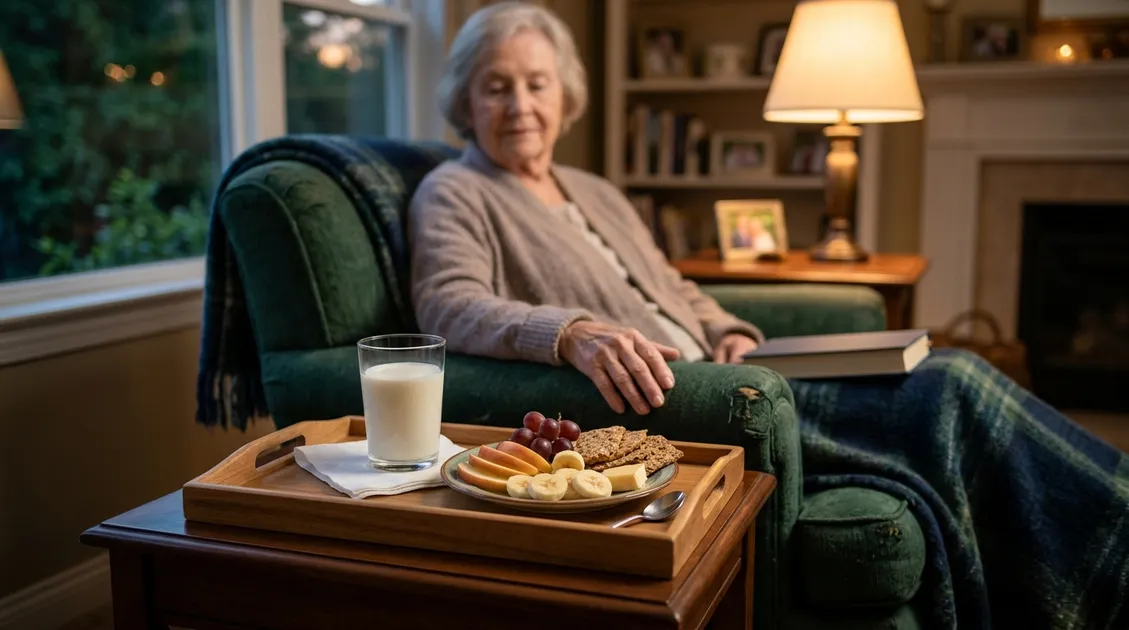
North Carolina requires at least 10 hours between breakfast and the evening meal, three daily snacks shown on the menu, and 30 days of menus-as-served records. That spacing rule sets a minimum daytime spread rather than a cap on the overnight gap. Federal nursing home rules work the other way. 14 hours is the federal maximum between a large evening meal and the next breakfast for nursing home residents, per 42 CFR 483.60 (2026). Adult care homes aren't bound by that cap, yet a 5:00 p.m. supper and an 8:00 a.m. breakfast still leave residents fasting 15 hours. Meals must also arrive at regular times comparable to normal community mealtimes. Snacks between each meal soften that overnight stretch, and each one belongs on the written menu. Menus as served, invoices and food receipts stay in the building for the full window, so a surveyor can match purchases to plates. Substitution records belong in the same file.
What Belongs in the Retention File?
Rules for record retention are short in North Carolina, so build the file tightly. Keeping menus as served on file for 6 months is the safer default for multi-state operators.
- Dated menus as served, with substitutions noted on the day of service
- Food and beverage invoices and receipts matched to the same service dates
- The current therapeutic diet roster naming each resident's ordered diet
- Snack offerings for every between-meal slot, written on the menu itself
- Licensed dietitian/nutritionist verification for each therapeutic menu in use
- Brand-specific supplement orders listing quantity and frequency, per 13G paragraph (e)(2)
Menu planning for dementia care draws on only 55 qualifying studies of 470 screened, per the integrative review Nutritional Care for Institutionalized Persons with Dementia. Snacks and hand-held foods carry real weight in memory care units for that reason. Our dementia finger food menus are built around portions residents can eat without utensils.
How Do DHSR Surveyors Audit North Carolina Menus?
North Carolina's DHSR inspects every adult care home annually under G.S. 131D-2.11, and county DSS adult home specialists add their own monitoring visits. The Chapter 131D statute lets the Division waive that annual visit for some homes under subsection (a1). Findings land on a Statement of Deficiencies, Form 2567, with citations on the left and your plan of correction on the right. County findings arrive as a Corrective Action Report instead. Food service citations reference 13F .0904 by paragraph and appear as D-tags. A 2021 DHSR report, for example, cited D 296 when a dietitian-approved therapeutic menu had not been put to use in the kitchen. Surveyors compare the menu day in the kitchen with the food served, then trace substitutions back to the record. DHSR posts penalties for 36 months on its public inspections, ratings and penalties.
What Documents Do Surveyors Request?
- The current regular menu, marked with today's menu day in the kitchen.
- Therapeutic menus matching every physician-ordered diet on the roster.
- Licensed dietitian/nutritionist verification for each therapeutic menu in use.
- Substitution records showing the foods residents received at each meal.
- Menus as served, invoices and receipts covering the full retention window.
- Written diet orders specifying calories, grams or consistency where relevant.
How Do You Write a Plan of Correction?
Menu citations call for a plan that names each rule violated, the steps to fix it, and a completion date. The county Corrective Action Report asks for steps that achieve and maintain compliance. An uncorrected Type B violation risks a civil penalty of up to $400 per day, per a DHSR Corrective Action Report. Tie every corrective step to a document a surveyor can pull on the follow-up visit.
Adult care administrators worry more about proof than recipes. In our work, the biggest stress isn't menu quality. It's proving compliance during unannounced state surveys. That's why we tell North Carolina clients to file documents in the exact order of the list above.
Care coordination with physician offices decides whether diet orders stay current. Clean intake pays off: one RDN program in ACL's toolkit logged 200 referrals from January to May 2019, then 300 by July, after adding a secure portal.
What Conventional Wisdom Gets Wrong
Conventional wisdom points the other way. Most facilities do not need to hire a dietitian for menus. In our work, here is why: a $15-40/month RD-signed cycle menu service replaces the $800-$1,200/month consulting fees on the invoices facilities bring us, a 95% to 99% cost reduction.
The misconception survives because the old math once held. Menu software makes your staff do the work. In our work, here is why: done-for-you PDF menus need zero training versus 4-8 weeks of software onboarding, and flat pricing beats $2-5 per resident per month.
On the other hand, every business weighs these trade-offs against its own situation. In contrast to one-size-fits-all advice, compare the options against your real numbers before deciding.
Key Takeaways: How Do You Build a North Carolina Menu Compliance File?
North Carolina menu compliance rests on four documents: dated menus with serving quantities, licensed approval for each therapeutic menu, a current diet roster, and substitution records matched to receipts. PantryTec supplies the menu side of that file through its dietitian-signed cycle menu service for senior care facilities. Every PantryTec cycle menu is reviewed by Registered Dietitian Bridget MacDonald, RD (more than 25 years in nutrition). Each plan ships with the RD Approval Letter she signs for your compliance binder. Menus arrive weekly on a 10-week rotation, in Homemade Focus, Premade Focus or Weekend Hybrid styles. Flat-rate plans cost $15, $20 or $40 per month billed annually, with no per-resident fees, setup fees or contracts. One caveat matters here: Bridget's North Carolina license application is pending, not yet granted. Until it is, have a North Carolina licensed dietitian/nutritionist verify therapeutic menus locally.
- Regular North Carolina menus need no dietitian signature, per the NCALA orientation manual, but must follow the Dietary Guidelines for Americans.
- Therapeutic menus need documented licensed dietitian/nutritionist approval under paragraph (c)(6) of both 13F and 13G.
- Plan the bedtime snack alongside supper so the overnight fast stays short, even without a federal-style cap.
- File menus, receipts, substitutions and the diet roster in survey order, since DHSR publishes penalties online.
- Re-verify therapeutic menus whenever the diet roster changes, borrowing Florida's annual review habit.
Menu cycle nutrient analysis is the other half of survey readiness. PantryTec checks every rotation against 100% of the Dietary Reference Intakes (DRIs), with tables hosted by the National Institutes of Health Office of Dietary Supplements. Ask vendors such as DiningRD, Approve My Menu and Tableside how they document that check, and whose North Carolina license backs their therapeutic signature.
Limitations and Considerations
- This guide summarizes 13F and 13G as published in October 2026; the rule text controls over any summary.
- County DSS practices vary, so confirm expectations with your adult home specialist.
- Memory care units and Medicaid-funded services add duties beyond .0904 that this page does not cover.
What is a cycle menu in senior living?
Menu cycles in senior living are planned rotations of breakfast, lunch, dinner and snacks that repeat after a fixed run of days. North Carolina sets no cycle length, but each menu must be written in advance with serving quantities. PantryTec's rotation delivers 70 daily plans before any day repeats.

How many weeks should an assisted living cycle menu be?
Rules in North Carolina set no minimum rotation length under 13F or 13G, so the choice is operational. Our team has seen fewer dining complaints once a 10-week rotation is running. Whatever length you choose, keep it dated and matched to the diet roster.
Do assisted living menus have to be approved by a dietitian?
North Carolina requires licensed dietitian/nutritionist approval only for therapeutic diet menus, with verification kept on file; regular menus need no signature. Florida requires annual review of both regular and therapeutic menus. Check each state in our state menu rule citation index before you expand.
What is F803 in a nursing home survey?
Menu adequacy is the focus of F803, the CMS survey tag tied to 42 CFR 483.60(c) for certified nursing homes. It requires menus that meet national guidelines, are prepared in advance, are followed and get dietitian review. Interpretive guidance sits in Appendix PP of the CMS State Operations Manual, and our F803 menu requirements explainer covers it in depth.
What does 42 CFR 483.60 require for menus?
North Carolina adult care homes are not bound by 42 CFR 483.60, which governs CMS-certified nursing facilities. For those facilities, paragraph (c) requires menus that meet nutritional needs, reflect resident input, are updated periodically and are reviewed by a dietitian or clinically qualified nutrition professional. Paragraph (f) separately sets meal frequency and the overnight limit.
One common pattern we encounter supports this. In our experience, most facility administrators don't realize their external dietitian bill exceeds their annual menu cost by 10x or more. We deliver a new facility's first menu PDF within 24 to 48 hours of sign-up, and fresh cycle menus then arrive in the facility inbox every week.
Get the Dietitian-Approved Sample Menu Packet
Tell us your facility type, licensed bed count and state. We will show which North Carolina menu rule applies to you, then take you to our request page to get the sample menu packet.
Your menu rule summary
Complete all three fields to continue. This tool does not send or store anything: the button opens our request page with your selections filled into the link so you can finish the request there. Rule summary based on 10A NCAC 13F .0904 and 13G .0904; it is general guidance, not legal advice.