
Cycle Menu FAQ for Administrators
This cycle menu FAQ answers what senior care administrators and dietary managers ask most about rotation length, dietitian sign-off, substitutions and surveys. Each answer links to the full guide.
By Blake Oldham, Product Manager at PantryTec. Updated November 2026.
Cycle menu basicsDietitian sign-offSubstitutions and meal timesSurveys and recordsDiets and texturesAbout PantryTec
Cycle Menu Basics
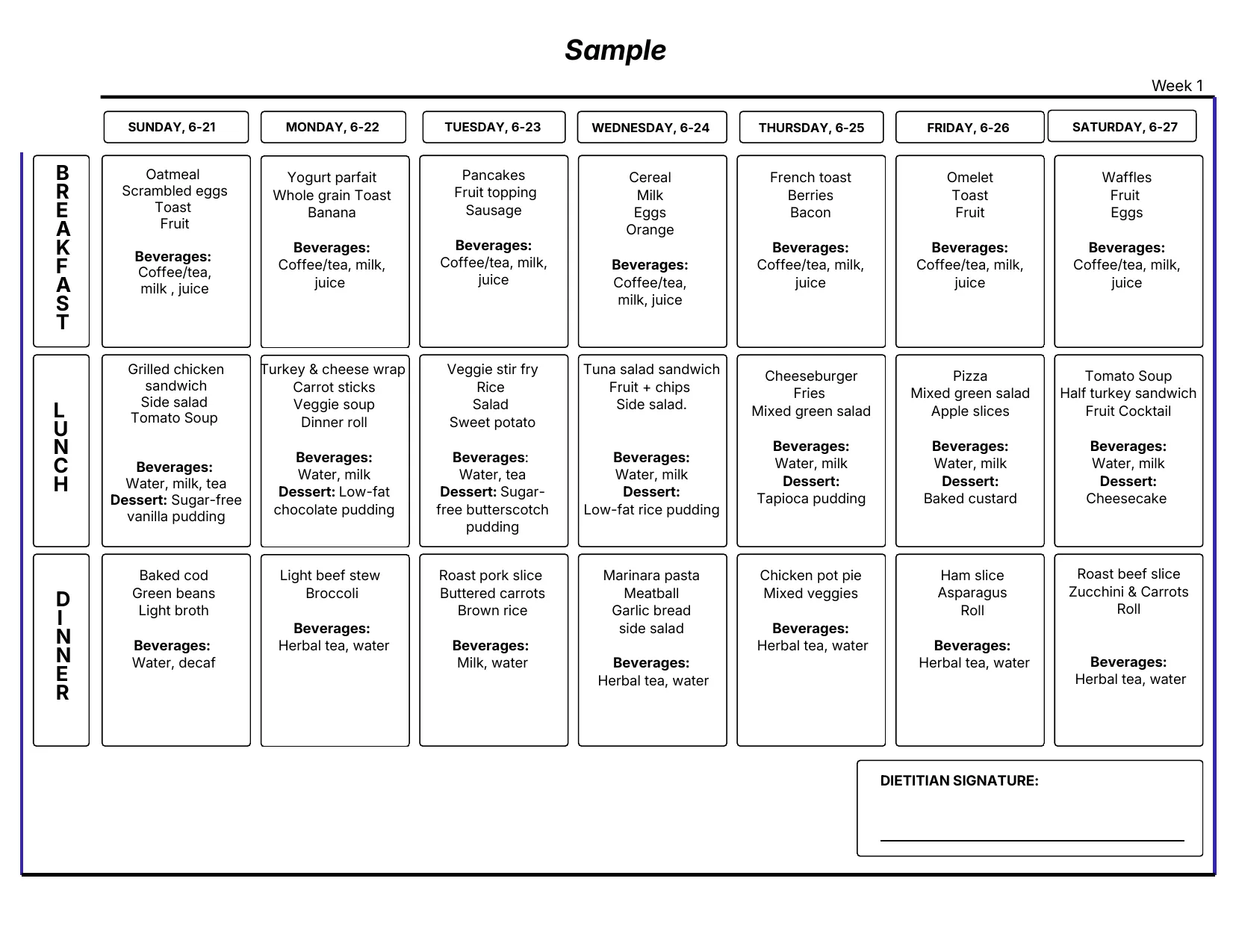
What is a cycle menu?
A cycle menu is a set of planned menus that repeats on a fixed schedule, such as every 4 or 10 weeks. It tells the kitchen what to cook weeks ahead, so meals can be reviewed, ordered and documented in advance. Read how to plan a senior living cycle menu.
What is a dietitian-approved cycle menu?
It is a cycle menu a Registered Dietitian has reviewed for nutritional adequacy and signed. The RD-signed menu is the proof you keep in your compliance binder. See our dietitian-approved cycle menus for senior care.
How many weeks should a cycle menu run before it repeats?
Federal rules for certified nursing homes say menus must be updated periodically but set no number of weeks, and state rules differ. Rotations of three to six weeks are common in long-term care, while PantryTec uses 10 weeks, which gives residents 70 daily menus before a day repeats. Check how to read your state's menu rule.
What is the difference between cycle, static, selective and non-select menus?
A cycle menu repeats on a schedule, and a static menu offers the same items every day. A selective menu lets residents choose between entrées, and a non-select menu lists one plate with substitutes on request. Our senior care menu glossary defines every term.
| Menu type | How it works | Common use |
|---|---|---|
| Cycle | Fixed rotation that repeats after a set number of weeks | Long-stay senior care dining |
| Static | Same items offered every day | Always-available alternates |
| Single-use | Written once for a date or event | Thanksgiving and Christmas meals |
| Selective | Residents choose between 2 or more entrées | Larger communities |
| Non-select | One planned plate, with substitutes on request | Small homes with one cook |
What is an always-available menu?
It is a short written list of simple items a resident can ask for instead of the posted meal. Writing it down before service means staff don't improvise at the tray line.
Where can administrators download a free sample cycle menu?
You can download free samples with no email required from our sample menu library, including a full 10-week assisted living cycle. Use one to see whether your cooks can follow the page and how it compares with your diet roster.
Dietitian Review and Sign-Off
Who must review, approve and sign the menu?
In certified nursing homes, 42 CFR §483.60 requires review by the facility's dietitian or another clinically qualified nutrition professional. Assisted living is licensed by each state, so who may review and sign depends on your state's rule. See who counts as qualified staff under F801 and menu requirements by state.
What should an RD-signed menu show?
At a minimum, it should show the dietitian's signature and credential, the review date and the menu cycle it covers. Some states ask for more, so check your state's rule. Our dietary binder guide shows where the signed menu belongs.
Do we still need our own dietitian if we use a menu service?
It depends on your license. Certified nursing homes must still employ or contract a qualified dietitian or other clinically qualified nutrition professional, and resident assessments and care plans stay with a clinician. Compare hiring a dietitian with a menu service.
Substitutions, Preferences and Meal Times
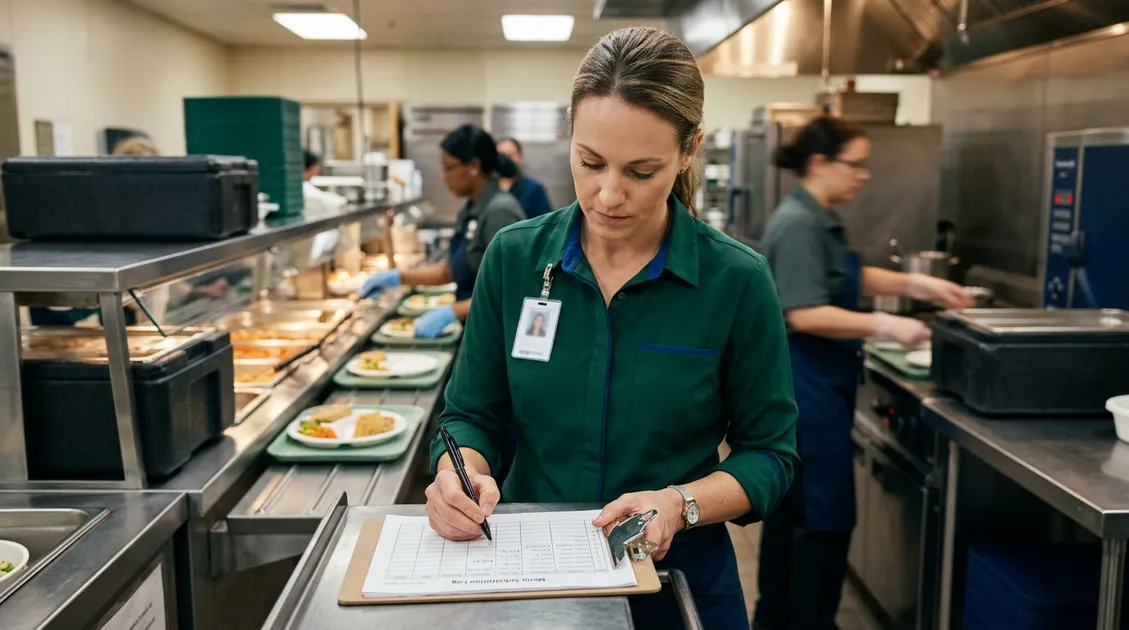
How do menu substitutions stay compliant?
Replace the item with one of similar nutritive value, then record it in a menu substitution log with the date, the meal, the planned item, what you served and why. Swapping baked chicken for a tuna salad plate works because both supply similar protein, while soup and crackers does not. See our menu substitution guide.
Do menus have to reflect resident preferences?
In certified nursing homes, yes. Menus must reflect the religious, cultural and ethnic needs of residents and input from resident groups, based on the facility's reasonable efforts. Residents also keep the right to make personal dietary choices, and must be offered appealing options of similar nutritive value when they decline a meal. See F806 and F807.
How long can residents go between dinner and breakfast?
In certified nursing homes, no more than 14 hours. Up to 16 hours is allowed when a nourishing snack is served at bedtime and a resident group agrees. Assisted living follows state rules, so check yours and see meal timing rules.
Surveys, Citations and Records

What does a surveyor ask for first?
Usually three things: the RD signature, the dated cycle menu for the current week and the menu substitution log. Keep them together in your binder so you can hand them over quickly. Read what surveyors look at in the kitchen.
What happens if a surveyor cites the menu?
In certified nursing homes, the finding goes on Form CMS-2567 with an F-tag and a scope and severity letter from A to L, and you have 10 calendar days to submit a plan of correction. Assisted living citations follow state forms and timelines, so read your agency's notice for the due date. See how to write a plan of correction and scope and severity levels.
Which F-tags cover menus?
F803 covers menus and nutritional adequacy, F804 covers food quality and temperature, and F806 covers preferences and substitutes. F808 covers therapeutic diet orders and F809 covers meal timing. Start with F803 or the full menu compliance guide.
How long do we keep menus as served?
It depends on your state, so check the rule that applies to your license. Keep the posted menu and any substitutions together, so you can show what was actually served. See menu retention periods by state.
What is a licensure menu packet?
It is the set of menu documents a state licensing agency asks to see when you apply for a license. What goes in it differs by state and license type. Start with menu requirements by state.
Therapeutic Diets and Textures
How do therapeutic diets fit into a cycle menu?
They are built from the same base menu, so the kitchen isn't planning a separate menu for each diet. Which resident gets which diet follows the physician's diet order. See therapeutic diet menus for senior care, including diabetic consistent carb menus.
What are IDDSI Levels 4, 5 and 6?
Level 4 is pureed: smooth, lump-free and able to hold its shape on a spoon. Level 5 is minced and moist, with pieces no wider than 4 mm and no longer than 15 mm for adults. Level 6 is soft and bite-sized, with pieces no larger than 15 mm for adults. See puree, minced and moist and soft and bite-sized menus.
What is a finger food menu?
A finger food menu offers meals residents can pick up and eat by hand. It helps residents living with dementia keep feeding themselves.
Questions About PantryTec
Is PantryTec menu software?
No. PantryTec is a done-for-you menu service, and your kitchen works from a printed menu. Read about PantryTec.
Who reviews PantryTec menus?
Our team of Registered Dietitians and nutritionists reviews every 10-week cycle, and a Registered Dietitian signs the menu. Meet Bridget MacDonald, RD.
How soon do we get our first menu?
Within 24 to 48 hours of sign-up, by email, signed by the RD. A new menu then arrives every week. See how PantryTec works from sign-up to your first menu.
How much does PantryTec cost?
A flat $15, $20 or $40 a month per facility billed annually, or $20, $25 or $50 billed monthly. There are no per-resident fees and no setup fees. See plans and pricing.
How do we ask about our own facility?
Call (385) 512-4731 or request a quote, and our team will answer questions about your license and diets.
Still Have a Question?
Talk to our team, or see the plans. Dietitian-approved cycle menus start at $15 a month billed annually, or $20 billed monthly.