
Menu compliance, real-time swaps
Legal menu substitution in real time,
logged and survey-ready.
A short delivery 20 minutes before service still needs a swap of similar nutritive value, a diet and texture check, and a log entry that holds up in a survey. Here's how to cover all three.
By Blake Oldham, Product Manager at PantryTec · Updated
What Makes a Real-Time Menu Substitution Legally Compliant?
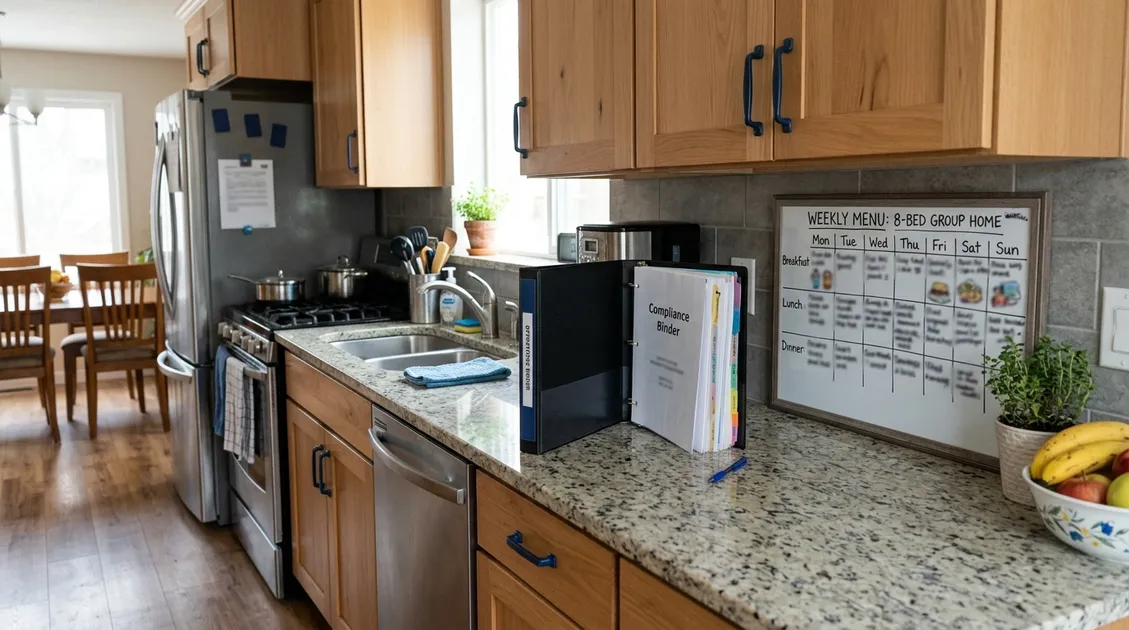
A legal menu substitution in real time replaces the planned item with food of similar nutritive value from the same food group, is noted on the posted menu, and is logged before service under 42 CFR §483.60(c) and (d)(5). Federal rules split that job across two F-tags. F803 governs unplanned kitchen deviations—mandating that menus are prepared in advance, followed, and kept nutritionally adequate—while F806 specifically governs offering appealing substitutes of similar nutritive value when individual residents refuse or dislike the planned item. When surveyors find a deviation from the planned menu, Appendix PP directs them to review your documentation and ask the dietary manager or dietitian why it happened. CMS never puts a number on similar nutritive value in senior dining, so your dietitian's substitution guide becomes the yardstick. Assisted living adds a state layer, such as Utah's three-month record of every substitution served. The subsections below show where each layer applies.
The CMS Similar Nutritive Value Mandate
A menu substitution is a formal deviation from the planned cycle menu. Similar nutritive value is F806 language from 42 CFR §483.60(d)(5), while the F803 menu substitution requirements come from §483.60(c): menus prepared in advance and followed. CMS State Operations Manual Appendix PP even lists an equally nutritious swap never noted on the menu as a low-severity F803 example.
State Licensing Differences for Assisted Living Versus SNFs
F-tags cover Medicare- and Medicaid-certified nursing homes; assisted living answers to state rules. A 2002 California HealthCare Foundation report counted almost 800,000 Americans in licensed supportive housing. Utah's R432-270-22 requires a dietitian-signed menu, a posted weekly menu and a record of every substitution served. Check the menu requirements by state guide before writing an assisted living menu substitution policy.
How Do You Choose an Equivalent Food Swap in Under 15 Minutes?
Legal menu substitutions take under 15 minutes when you match protein and calories within 10% to 15% of the planned item, keep entrées at 14 to 21 grams of protein, and hold 2-gram sodium entrées at or below 500 mg. Work the swap in four steps. First, pull a replacement from the same food group on your pre-approved substitution guide. Second, match the numbers: the exchange lists count 7 grams of protein per cooked ounce of meat, fish or poultry. Third, check every diet order, allergy and texture on today's census before plating. Fourth, log the swap and update the posted menu before the first tray leaves the line. That order protects residents first and paperwork second, and it fits a 20-minute window before service. The matrix and the three checks below give cooks the exact numbers.
| Planned item | Real-time swap | Nutritive match | Diet & texture check |
|---|---|---|---|
| 3 oz baked chicken (21 g protein) | 3 oz roast turkey, baked fish or pork loin | Same cooked portion, 21 g protein | 2 g Na: no deli or sodium-enhanced meat. IDDSI 4/5: puree or mince, retest |
| 3 oz chicken, batch scorched | 3 oz canned light tuna + 1 large egg | About 23 g protein (tuna alone: 16.5 g) | Allergens: Egg, Finfish. Use no-salt-added tuna for 2 g Na. IDDSI 5: 4 mm pieces |
| ½ cup mashed potatoes (15 g carb) | ⅓ cup cooked rice or a 1 oz roll | 15 g carb, 1 carb choice | CCHO: same choice count. Renal: rice is lower in potassium |
| ½ cup peaches in juice (15 g carb) | ½ cup unsweetened applesauce | 15 g carb, no added sugar | CCHO: no cake swaps. IDDSI 4: blend smooth, retest |
2 g Na = 2-gram sodium; CCHO = consistent carbohydrate. Protein: exchange lists (7 g per cooked ounce) and USDA FoodData Central.
Protein-for-Protein Gram Matching
Protein-for-protein matching starts from the planned portion: a 3-ounce chicken breast counts as 21 grams, so the swap belongs between about 18 and 24 grams. While the standard adult RDA remains 0.8 g/kg/day, clinical consensus guidelines (such as ESPEN and PROT-AGE) recommend 1.2 to 1.5 g/kg/day for older adults to prevent sarcopenia, making protein-short swaps harder to defend clinically and in survey reviews.
Carbohydrate and Sodium Threshold Safeguards
Consistent carbohydrate swaps keep the same number of 15-gram carb choices, which protects consistent carbohydrate menus. A 2-gram sodium order allows 2,000 mg a day, and the American Heart Association caps Heart-Check certified main dishes at 600 mg, so deli meat and canned soup rarely fit a cardiac low-sodium menu.
Cross-Checking Texture and IDDSI Requirements
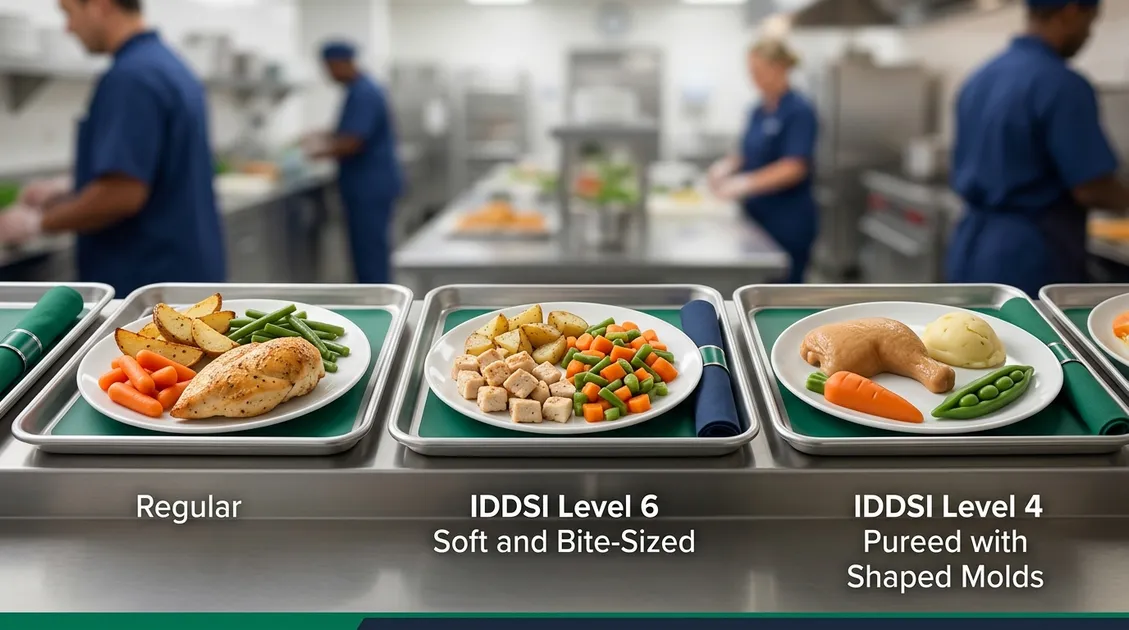
IDDSI-modified residents need every swap retested. A substitute on an IDDSI Level 4 puree menu needs to pass the fork drip test (it mounds above the prongs) and the spoon tilt test (it slides off cleanly). Level 5 minced and moist pieces stay at or under 4 mm wide for adults, and IDDSI's April 2026 update dropped pre-gelled soaked breads from Levels 5 and 6.
What Does a Menu Substitution Log Need to Record?
A menu substitution log needs eight fields for every swap: date, meal, planned item, item served with portion, reason, diets and textures checked, the time the posted menu changed, and the initials of the cook and supervisor. There's no federal form, so the senior living menu substitution log is yours to design. Expect surveyors to compare it with the planned cycle menu, the posted resident menu and the dietitian's approved substitution guide. Utah, Iowa and North Carolina rules require substitutions to be recorded, and Massachusetts requires the current week's posted menus to show them. Menus-as-served records then stay in a documentation binder for 30 days to two years, depending on the state. Keep the log on paper next to the substitution guide so each entry happens while the swap is fresh. Here's what belongs in it.
Picture a typical Tuesday: the 11:10 truck arrives without chicken for 40 residents. The cook pulls 3-ounce turkey portions from the guide, holds gravy off 2-gram sodium trays, spoon-tilt tests four purees, logs one line and updates the board before lunch.
Data Fields Surveyors Expect on the Log
Menu substitution logs work best as one line per swap, on paper in the kitchen binder, where nobody needs a software login at 11:40 a.m.
- Date
- Meal
- Planned item from the cycle menu
- Item served and portion
- Reason: vendor short, scorched batch, equipment failure or resident request
- Diets, allergies and IDDSI textures checked
- Time the posted menu changed
- Cook and supervisor initials
Retention Windows: 30 Days to Two Years by State
Menus-as-served records follow state clocks, because 42 CFR §483.60 sets no retention period. California RCFEs with 16 or more residents (22 CCR §87555), North Carolina adult care homes, and Iowa and Massachusetts nursing facilities keep them 30 days. Utah and Ohio keep substitution records three months, and Virginia assisted living keeps menus two years, so treat 90 days as your floor.
Why Do Unplanned Menu Changes Trigger F803 Survey Deficiencies?
Unplanned menu changes trigger F803 deficiencies when the meal served no longer matches the planned menu and nothing documents why, and CMS data shows F803 cited 2,966 times in recent nursing home surveys. F806, which covers substitutes of similar nutritive value, adds 1,613 citations. Together they make up about 12% of the 37,747 dietary citations in the CMS Health Deficiencies dataset (August 2026 release). The usual pattern runs like this: a protein item comes up short, the cook fills the plate with extra starch or a high-sodium convenience item, and the posted menu never changes. Diabetic and cardiac trays take the hit first because their orders leave the least room for error. Assisted living surveyors cite the matching state rule instead, and both paths usually end in a plan of correction. The two traps below show how that pattern starts.
The Trap of Unannounced High-Carbohydrate Swaps
High-carbohydrate swaps feel safe because the plate still looks full. When chicken runs short and pasta, a roll and pudding fill the gap, a consistent carbohydrate tray carries roughly double its planned carb choices while protein falls well short of 21 grams.
Failure to Update the Resident-Facing Menu Board
Resident-facing menu boards are the record residents and surveyors see first. A board that still says baked chicken while turkey is served shows the menu wasn't followed. Update it before service and log the posting time.

How Does PantryTec Prevent Last-Minute Substitution Chaos?
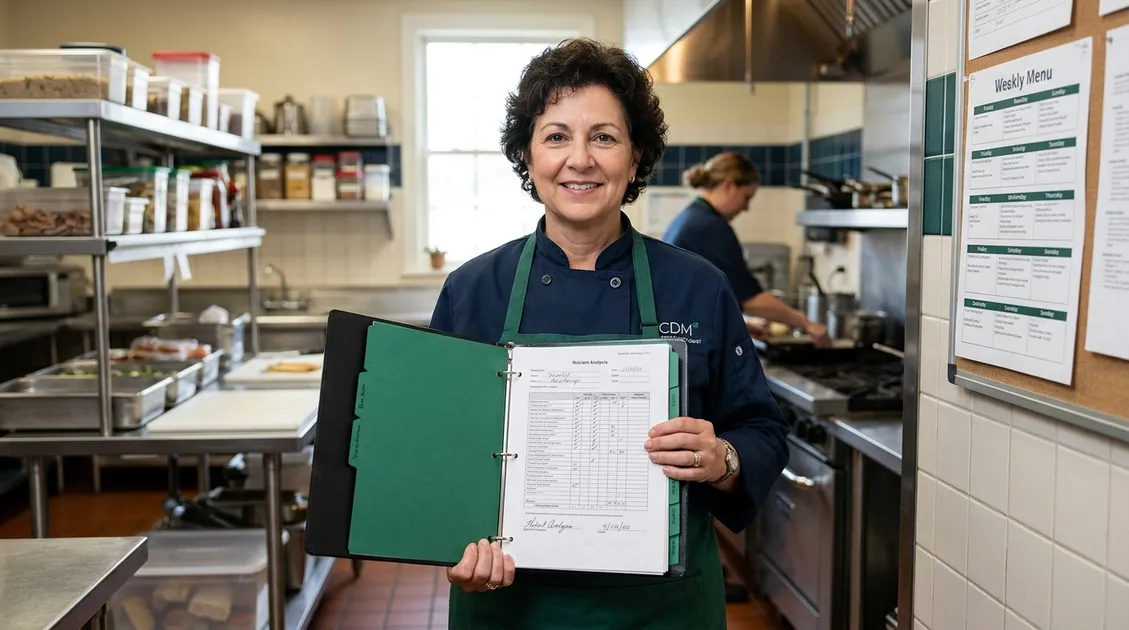
PantryTec prevents substitution chaos by including pre-approved, dietitian-signed substitution guides with its 10-week cycle menus, so assisted living kitchens make compliant swaps in minutes on flat-rate plans from $15 to $40 a month. Registered Dietitians credentialed by the Commission on Dietetic Registration review and sign the menus, and each cycle is checked against 100% of Dietary Reference Intake targets before sign-off. Every plan includes an RD Approval Letter for the survey binder. The substitution guide sits next to the menu, so a cook facing a short delivery works from a list the dietitian already cleared. That setup supports both the federal expectation of dietitian menu review and state rules like Utah's dietitian signature requirement. It also removes the guesswork behind protein-short, high-carbohydrate trays. The two subsections below explain how the lists work and what they cost.
Pre-Approved Dietitian-Signed Substitution Lists
Pre-approved substitution lists turn a judgment call into a lookup. Conventional wisdom says to phone a consulting dietitian, often at around $100 an hour, whenever a delivery comes up short. A signed list documents approval before the problem starts; off-list swaps still go to the dietitian.
Flat-Rate Compliance Without Hourly Dietitian Invoices
Flat-rate pricing keeps swap support off the hourly clock: Starter ($15/month) covers dietitian-approved menus, Complete ($20/month) adds common therapeutic diets, and Premier ($40/month) adds customized menus and expanded therapeutic diet menus, including renal, cardiac and IDDSI Level 4. Compare tiers on the flat-rate menu pricing page or browse RD-approved assisted living menus.
Across our 500+ senior care facility engagements, the before-and-after is consistent: scrap paper taped to the walk-in gives way to one laminated guide and one binder line per swap.
Key Takeaways for Making Legal Menu Substitutions
- Legal menu substitutions need similar nutritive value, an updated posted menu and a log entry before service.
- F803 and F806 govern certified nursing homes; assisted living follows state rules like Utah R432-270-22.
- Match protein and calories within 10% to 15%, keep carb choices equal, and hold 2-gram sodium entrées at or below 500 mg.
- Retest IDDSI Level 4 and 5 textures after every swap.
- Keep menus-as-served records 30 days to two years, as your state requires.
Frequently Asked Questions About Legal Menu Substitutions
What qualifies as a meal substitution of similar nutritive value under CMS rules?
CMS doesn't define similar nutritive value numerically. Under §483.60(d)(5) and F806, read it as a same-food-group substitute matching the planned item's protein, calories and key nutrients within a dietitian-set tolerance, such as 10% to 15%.
When must an emergency menu substitution be documented on the substitution log?
Emergency substitutions go on the log when the decision is made, before the meal is served, with a supervisor's initials the same day. Utah, Iowa and North Carolina require substitutions to be recorded.
Do state surveyors allow cooks to substitute menu items without consulting a dietitian?
Generally yes, if the cook picks from a substitution list the dietitian approved in advance. Utah, for example, requires a dietitian to sign any menu. Off-list and therapeutic diet swaps go to the dietitian first.
How long must assisted living facilities keep records of menu substitutions?
Retention depends on the state. California RCFEs with 16 or more residents keep menus as served 30 days, Utah assisted living keeps substitution records three months, and Virginia assisted living keeps menus two years.
What happens if a facility makes a menu substitution that violates a resident's therapeutic diet?
A diet-breaking swap is a safety problem first and a citation risk second. Nursing homes face F803 or F808 deficiencies, usually with a plan of correction; assisted living faces the state equivalent. Fix the tray, alert the charge nurse and document it.
Make Every Swap Survey-Ready.
Get RD-approved cycle menus with pre-approved substitution guides and an RD Approval Letter, from $15 a month.