
F804: Nutritive Value, Palatable Appearance
and Preferred Temperature at the Tray Line
Nutritive value, palatable appearance and preferred temperature are three separate obligations packed into one CMS tag.
Nutritive value, palatable appearance and preferred temperature are three separate obligations packed into one CMS tag. F804 findings usually start with a test tray pulled from the last hall served. Our guide to passing a CMS dietary survey covers the rest of the F800 series; this page stays on the tray line, and you can pair it with a free sample menu download to see how the paperwork looks.
TL;DR: F804 requires food that's attractive, palatable and served at the resident's preferred temperature. Hot food holds at 135°F or above and cold food at 41°F or below under the FDA Food Code 2022, while hot entrées read as hot to residents between 120°F and 140°F on arrival. Surveyors test-tray the last cart, read resident council minutes, and expect a plan of correction within 10 calendar days.
What Does F804 Actually Require at the Tray Line?
Nutritive value, palatable appearance and preferred temperature are three distinct demands of 42 CFR §483.60(d)(1)-(2), the federal rule surveyors cite as F804. The tag sits inside the food and nutrition services regulatory group, F800 through F814. Each obligation needs its own evidence. Nutritive value is objective, proven by a nutrient analysis. Palatability and food attractiveness are subjective, judged through resident interviews and surveyor observation of meal service. Preferred temperature gets measured with a thermometer. The interpretive guidance in Appendix PP of the State Operations Manual tells surveyors to weigh all three together, often with a test tray when residents complain about food.
How Surveyors Read "Preferred Temperature"
Preferred temperature is not a fixed number in the regulation. It's measured against what residents in that dining room say they want, which makes person-centered dining part of the compliance picture, not a nice-to-have. A resident who asks for cooler soup is a documented preference. Forty residents receiving 98°F entrées is a system failure.
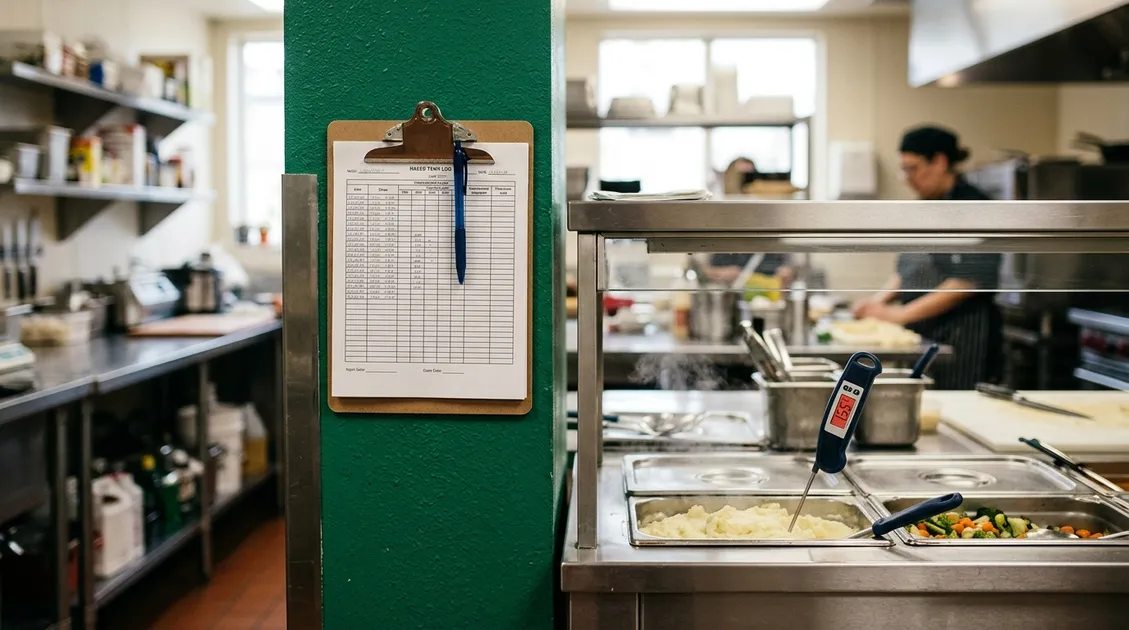
Test Tray Log: Hot, Cold and Beverage Temperature Check
Pull the last cart served, probe each item with a calibrated thermometer and enter the readings below. The log flags each item against the FDA Food Code 2022 safety floors and the palatability window surveyors use for F804, then exports as a CSV you can print or keep in your binder.
Acceptable ranges used by this log
Tray line details
Tray items
Log summary
Reference points: hot holding 135°F or above and cold holding 41°F or below per the FDA Food Code 2022; hot entrées reading as hot to residents between 120°F and 140°F on arrival; F804 sits under 42 CFR §483.60(d)(1)-(2), and surveyors expect a plan of correction within 10 calendar days. Hot beverages have no fixed regulatory number in the tag; palatability is judged against stated resident preference, and coffee poured at brewing temperature does not read as preferred. This tool records and checks your own readings only. It does not transmit or store data.
What Food Temperatures Do Surveyors Measure and Where?
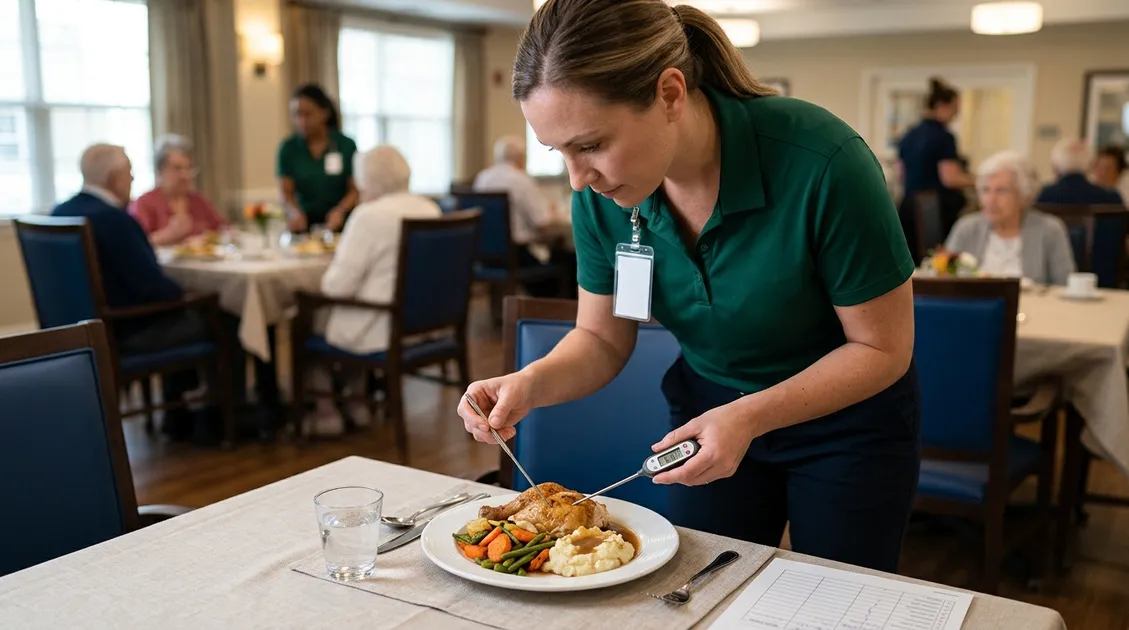
Temperature checks start where food is coldest, the last cart served: hot food must hold at 135°F or above and cold food at 41°F or below under the FDA Food Code 2022. Most state agencies adopt that safety floor. Palatable service is a different target. Hot entrées arriving between 120°F and 140°F read as hot to most residents. Coffee poured at brewing temperature does not. Surveyors measure with a calibrated probe thermometer, not by touch. They also record the time the tray left the tray line. A HACCP temperature log showing steam table holding at 145°F proves nothing if the plate reads 98°F in the dining room. That gap between holding and point-of-service temperature is where most F-804 tag findings live. Temperature loss like that's an equipment and timing problem more often than a cooking problem.
| Item | Safety threshold | Palatable service target | Where measured |
|---|---|---|---|
| Hot entrée | 135°F or above (hot hold) | 120°F to 140°F on arrival | Last hall, resident table |
| Soup | 135°F or above | 140°F to 160°F in the bowl | Dining room, after pour |
| Cold salad, milk | 41°F or below | 38°F to 45°F on the tray | Tray line and table |
| Coffee, tea | Brewed at 195°F to 205°F | Served well below brew temperature | Beverage cart and cup |
Test Tray Protocol on the Last Hall Served
- Plate a full tray with the last cart, not the first.
- Calibrate the probe thermometer by the ice-point method before you start.
- Record the tray line departure time and the arrival time.
- Probe each hot item, each cold item, and the beverage.
- Taste it, then log appearance, palatability and temperature on one sheet.
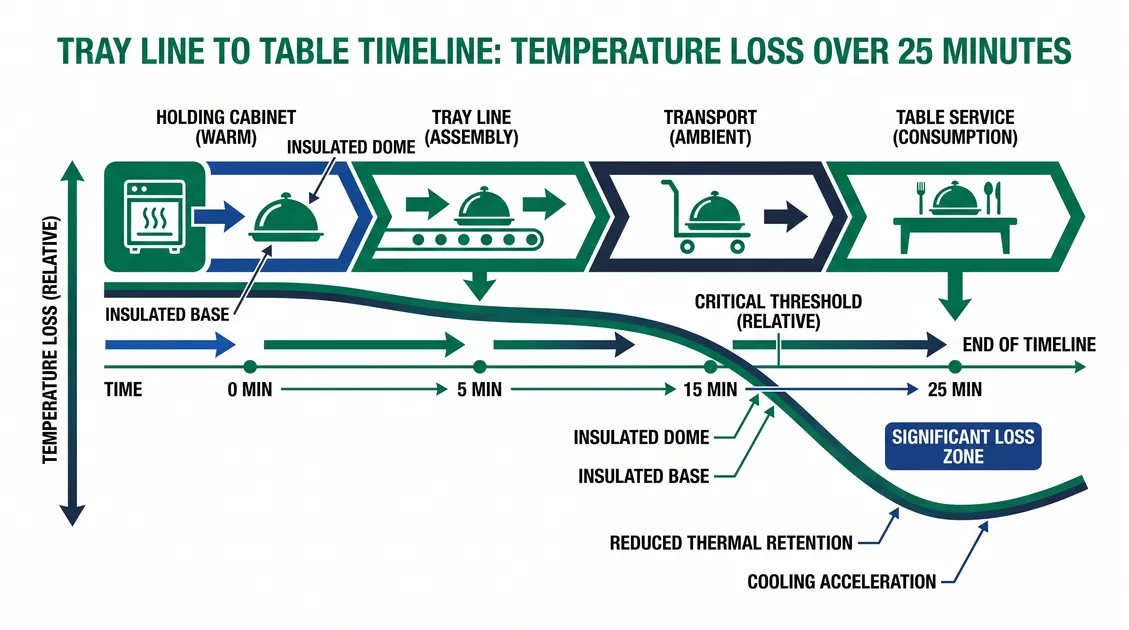
Food temperature drops fastest in the 15 to 25 minutes between the tray line and the far hall, so insulated dome and base systems and pre-heated bases matter more than a hotter steam table. Meal timing compounds the problem, which is why meal frequency and the 14-hour overnight and holding windows sit next to this tag in survey findings.
Hot Beverage Temperature Monitoring and Burn Risk
Palatable coffee and scalding coffee are separated by a narrow band. Most adults suffer a third-degree burn after about 6 seconds of exposure to 140°F water and after about 5 minutes at 120°F, per the Consumer Product Safety Commission's Tap Water Scalds safety alert (Document 5098). Older skin is thinner and burns faster. That is why beverage service draws F804 findings for temperature, and an accident-hazard citation under F689 when a resident is actually burned.
How Do You Prove Nutritive Value Was Retained From Menu to Tray?
Nutritive value is proven on paper before it is proven on the plate: a nutrient analysis of the cycle menu against the Dietary Reference Intakes for adults 51 and older across the full day of meals and snacks. Cooking and holding erode that analysis. Boiled vegetables retain about 50% to 70% of their vitamin C, per USDA's nutrient retention factor tables, and folate behaves the same way. Nutrient loss from prolonged storage, light and air exposure begins in the walk-in, not the kettle. Surveyors don't run lab tests. They compare the posted menu against the menus-as-served record, the substitution log and the tray in front of a resident. A substitute of similar nutritive value, documented the day it happens, closes that loop.
Batch cooking in smaller pans is the practical fix, because it protects vitamin content, texture and appearance at once.
The RDN Sign-Off Documentation Trail
Value on a menu means little without a signature behind it. A registered dietitian's review, an approval letter with the dietitian's credential and review date, and a current diet manual give the director of food and nutrition services something to hand a surveyor. Dietitian-approved cycle menus with an RD Approval Letter cover that paperwork.
F804 Survey Readiness Self-Assessment
F804 packs three separate obligations into one tag: nutritive value, palatable appearance and preferred temperature. Rate each documentation item below (Yes, Partial or No) and add two spot temperatures from your last cart. Your gap list updates as you go. Surveyors usually start with a test tray from the last cart served.
Weighted across 14 items in the three F804 obligations plus survey response.
This self-assessment is an internal planning aid, not a compliance determination. Nothing you type is sent or stored anywhere. The email button prefills a draft in your own mail application so you can send the summary to yourself or your dietary manager. Temperature thresholds shown are the FDA Food Code 2022 figures cited on this page and your state agency rules may differ.
How Do Resident Interviews and Council Minutes Trigger F804?
Palatability complaints become deficiency citations when they repeat: surveyors review resident council meeting minutes, commonly the last 3 months, alongside resident interviews and intake records, per the CMS State Operations Manual Appendix. One resident saying the eggs are cold is a preference. Six residents saying it across two council meetings, with no response documented, is a pattern. From there the surveyor pulls meal intake percentages, weight records and hydration status to corroborate. Refusal documentation cuts both ways. A signed right-to-refuse note with a care plan entry defends you; a blank tray card doesn't. Food committee follow-up is the piece most facilities skip, and it is the cheapest evidence in the building.
- Resident council minutes: food complaints and the facility response
- Group interview notes: temperature, taste and appearance comments
- Meal intake records: sudden drops on specific menu days
- Weight and hydration records: corroboration for poor intake
- Tray cards: diet order, preferences, dislikes and allergies
Palatability also gets judged on modified textures, so appearance standards under F804 apply to F805 food form and individual resident needs, including IDDSI Level 4 pureed, Level 5 minced and moist, Level 6 soft and bite-sized, transitional foods and finger foods for residents with dementia. A pureed plate still has to look like food and arrive at a temperature the resident prefers.
What Does a Defensible F804 Plan of Correction Look Like?
Preferred temperature findings get corrected with systems, not apologies: a plan of correction is due within 10 calendar days of receiving the Form CMS-2567, per Chapter 7 of the CMS State Operations Manual. Scope and severity is scored on a grid from A through L; findings at G or above mean actual harm or immediate jeopardy, which raises enforcement remedies and civil money penalty exposure. A retraining-only response fails because it corrects people, not process. Root cause is usually tray line sequencing, a failing holding cabinet, or a cart that sits 20 minutes waiting for staff. Name that cause. Then name the monitoring: who probes trays, how often, and where the numbers go. Temperature data that lands in QAPI minutes reads as a system; a signed in-service sheet does not.
- Immediate correction for the residents identified in the finding
- Identification of all other residents affected by the same practice
- Systemic change: equipment, sequencing, recipe or staffing fix
- Monitoring: test tray audits with defined acceptable ranges
- Completion date and the title of the responsible person
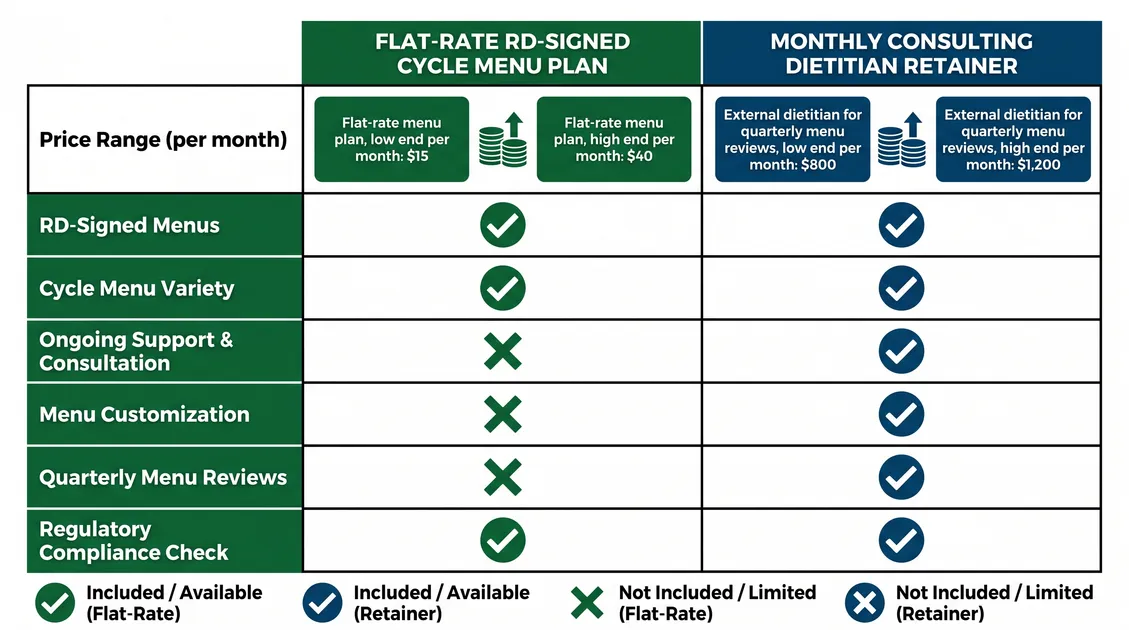
Palatability problems are rarely solved by buying software; they are solved at the tray line. PantryTec's flat-rate menu plans cost $15, $20 or $40 a month billed annually ($20, $25 or $50 billed monthly), the same at any census, and every plan includes an RD Approval Letter for the compliance binder.
Limitations and Considerations
- A menu cannot fix broken equipment; holding cabinets and insulated bases still need capital.
- F-tags bind Medicare and Medicaid certified nursing facilities. Assisted living answers to state rules such as Utah Administrative Code R432-270, California Title 22 §87555 and Washington WAC 388-78A-2300.
- RD menu approval does not replace a physician diet order or a Certified Food Protection Manager on staff.
- Temperature outcomes depend on staffing at service; a thin evening shift undoes good production planning.
Key Takeaways
- Nutritive value, palatable appearance and preferred temperature need three separate evidence sets, not one log sheet.
- Test-tray the last hall served weekly, and calibrate probe thermometers in an ice bath at 32°F before each audit.
- Document every substitution the same day; a substitute with no paper trail reads as an unfollowed menu.
- Build correction around monitoring: a 90-day audit schedule reported into QAPI survives scrutiny; one-time retraining does not.
- Therapeutic diet menus are covered by plan tier rather than sold as per-diet add-ons; the pricing page shows what each tier includes.
What is a cycle menu in senior living?
A cycle menu is a fixed set of daily menus that repeats on a schedule. PantryTec builds 10-week rotations, which gives 70 unique daily plans covering breakfast, lunch, dinner and snacks before any day repeats.
How many weeks should an assisted living cycle menu be?
Most state licensing agencies accept a minimum 3-week or 4-week rotation. Longer cycles of 5 to 10 weeks reduce repetition complaints in resident council minutes and spread seasonal produce across the year.
Do assisted living menus have to be approved by a dietitian?
Many states require review by a Registered Dietitian Nutritionist at least annually, and rules differ by state. Certified nursing facilities must involve a qualified dietitian under 42 CFR §483.60. Check your state licensing rule for the signature requirement.
What does 42 CFR 483.60 require for menus?
Menus must meet residents' nutritional needs, reflect established national guidelines such as the Dietary Reference Intakes, be prepared in advance, be followed as written, and be reviewed by the facility dietitian. Section 483.60(d) adds the F804 palatability and temperature standard.
How far in advance must menus be posted in a care facility?
Federal rules require menus prepared in advance and followed. State licensing rules commonly require posting one week ahead in a place residents can read, plus retention of menus as served, often for 30 days to 3 years.
Temperature and palatability evidence is easier to defend when the menu behind it already carries a nutrient analysis and an RD signature. Explore the parent guide on CMS dietary survey F-tag menu requirements for the rest of the F800 series, including procurement, storage and sanitary service under F812.