
Free RD-approved sample menu
Dietary management, done for you.
Skip the spreadsheets and the outside dietitian bill. PantryTec delivers RD-approved cycle menus, therapeutic diets and IDDSI textures as print-ready PDFs.
Free download. Print-ready PDF you can put straight into your survey binder.
10-Week Sample Menu
Approved by a Registered Dietitian
- 10-week rotating cycle
- Breakfast, lunch, dinner and snacks
- Meets 100% of DRI for older adults
- Print-ready PDF, no email required
Dietary Management ALF Guide:
A Playbook for Assisted Living Administrators
Dietary management for ALF administrators covers menu planning, therapeutic diets, food safety, and Registered Dietitian oversight under 42 CFR §483.60.
Dietary management for ALF administrators covers menu planning, therapeutic diets, food safety, and Registered Dietitian oversight under 42 CFR §483.60. This dietary management ALF guide walks owners and dietary managers through compliance, malnutrition risk, cycle menus, food cost, and documentation. PantryTec builds dietitian-approved menus for assisted living kitchens, so the guidance here reflects daily food service reality. You’ll find concrete numbers: per-resident-day food costs, malnutrition prevalence, and the $27,000-plus daily fines that dietary deficiencies can trigger.
Small facilities feel the pressure most. A 16-bed group home carries the same compliance burden as a 100-bed community, with a fraction of the staff and budget. We wrote this guide for that operator.
TL;DR: Roughly 70% of ALFs employ a Certified Dietary Manager (CDM) to run food service. Federal rule 42 CFR §483.60 requires three meals daily, a 14-hour overnight gap limit, and RDN menu review. Up to 50% of older adults in care are malnourished or at risk. Raw food runs $7-$12 per resident per day. PantryTec dietitian-approved cycle menus start at $15/month flat, versus $750-$1,500/month for a standalone consulting dietitian.
What Does Dietary Management Involve in an Assisted Living Facility?
Dietary management in an assisted living facility covers five core functions: menu planning, therapeutic diet oversight, food procurement, food safety, and Registered Dietitian review, and roughly 70% of facilities employ a Certified Dietary Manager to run daily operations, according to the Association of Nutrition & Foodservice Professionals. The dietary department plans cycle menus, scales shopping lists to census, and prepares texture-modified diets for residents with dysphagia. Administrators stay accountable for compliance even when a CDM handles the kitchen. Federal rules under 42 CFR §483.60 require three meals daily and a dietitian to review menus for nutritional adequacy. Most small ALFs run on tight margins of $6 to $10 per resident per day for raw food, so every ordering decision matters. This dietary management ALF guide maps each responsibility, from diet order to served plate, so you can pass surveys and control food cost.
Core Responsibilities of the Dietary Department
The dietary department owns the full workflow. Staff select standardized recipes, build daily meal patterns, construct a multi-week cycle menu, apply therapeutic and texture modifications, and add snacks plus a bedtime nourishment. A dietary aide plates and serves; the kitchen manager orders against census.
- Plan a 5-week or 10-week rotating cycle menu with 3 meals daily plus snacks.
- Extend one base menu into Diabetic, Renal, Cardiac, and IDDSI texture diets.
- Scale shopping lists to actual census to cut over-ordering waste.
- Maintain food safety logs, holding hot foods at 135°F and cold at 41°F.
- Keep RD-approved menus and nutrient analysis on file for state survey.
Regulatory Compliance Requirements
Compliance sits at the center of dietary management. The administrator must produce signed menus, nutrient analysis reports, and diet-order records on demand. Meeting CMS standards under 42 CFR §483.60 is part of broader dietary program management that this hub frames in detail.
Per-Resident Cost Savings Calculator
Estimate your potential monthly and annual savings with PantryTec dietitian-approved cycle menus (from $15/month flat, billed annually) versus a standalone consulting dietitian ($750-$1,500/month). Enter your facility numbers below.
e.g. 16-bed group home to 100-bed community
Raw food typically $7-$12 per resident/day
Staff time spent building & scaling menus
Loaded labor rate for planning time
$0
$0
$0
$0
Why Is Malnutrition Such a Risk for Senior Residents?
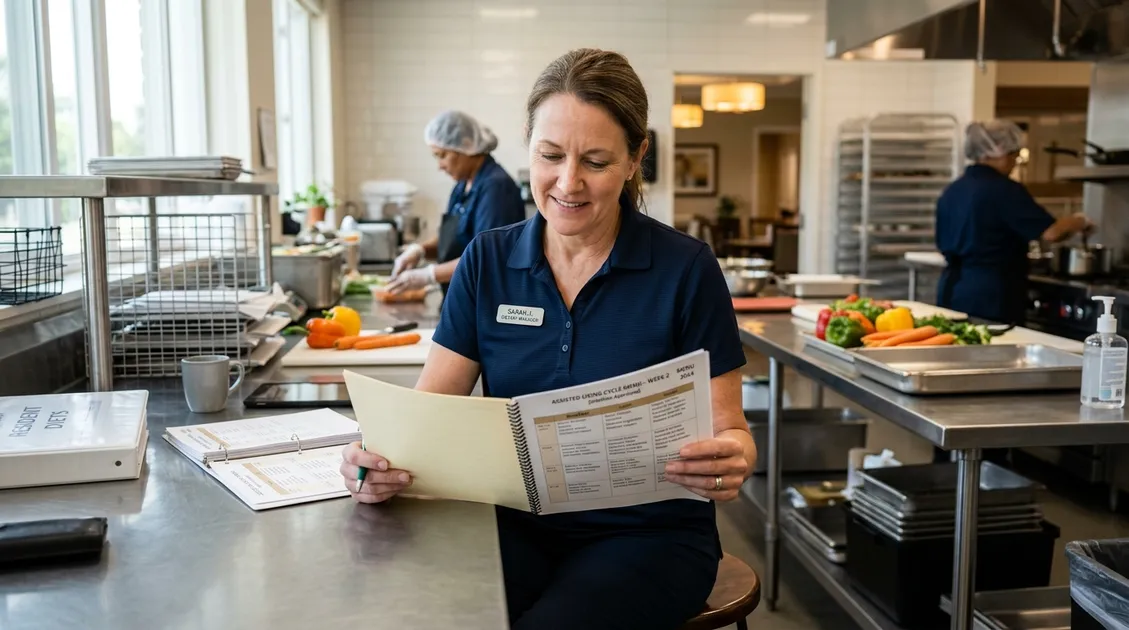
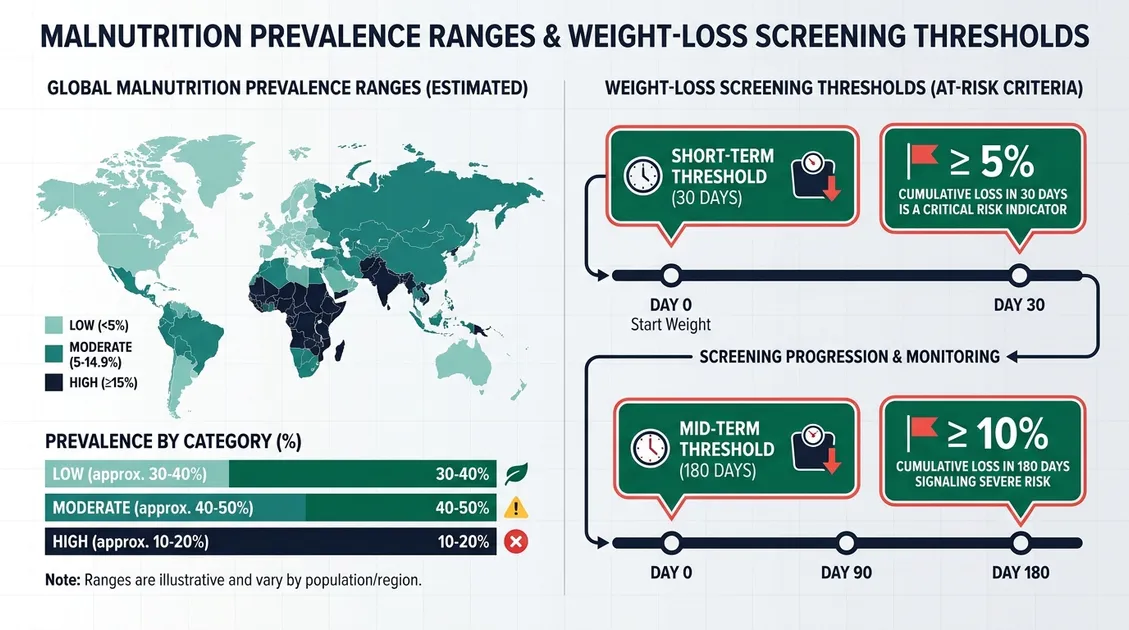
Malnutrition affects roughly 20% of nursing home residents, with individual study estimates ranging from 1.5% to 66.5%, according to a PubMed review of malnutrition in the nursing. Across all care settings, up to 50% of older adults are malnourished or at risk, per a 2025 review in the Journal of Post-Acute and Long-Term Care Medicine. Unintentional weight loss is the warning sign administrators cannot ignore. A drop of 5% in 30 days or 10% in 180 days triggers an RD review and often a fortified diet. Malnutrition raises fall risk, slows wound healing, and drives hospital transfers that hurt census and survey scores. Veterans, who make up about 7 to 8 percent of U.S. adults, post lower overall diet-quality scores than non-veterans, according to the USDA Economic Research Service, underscoring how vulnerable older populations need planned nutrition rather than ad-hoc meals.
Prevalence of Malnutrition in Elderly Populations
Prevalence climbs with cognitive impairment and swallowing difficulty. Depression, dementia, and dysphagia consistently associate with malnutrition in residents, per the same PubMed review. Memory care directors see it firsthand: residents who wander or forget they’ve eaten lose weight fast. Finger foods and calorie-dense plating help recover intake.
Screening and Early Intervention
Screening turns risk into action. Facilities monitor weight monthly, run the MNA-SF, and flag a BMI under 22 for assessment. Food fortification and oral nutrition supplements are the two interventions repeatedly recommended for at-risk residents. PantryTec’s fortified diets for underweight seniors address exactly this gap, and this hub introduces the nutrition challenge that spoke develops.
How Do Dietitian-Approved Cycle Menus Improve Compliance?
Under 42 CFR §483.60, menus must be reviewed by a qualified dietitian for nutritional adequacy and prepared in advance, and a cycle menu satisfies both at once. PantryTec delivers 5-week or 10-week rotations as weekly PDFs, each carrying an RD Approval Letter for your compliance binder. A 10-week cycle serves 70 unique daily menus before repeating, which prevents menu fatigue while holding food cost predictable. In our experience building menus across senior care kitchens, the facilities that switch from improvised weekly planning to a signed cycle clear dietary deficiency tags far faster, because the paper trail already exists. The standalone alternative, hiring a consulting dietitian at $750 to $1,500 monthly just for signatures, costs far more than a $15-per-month menu subscription. Therapeutic diet menus are included from the Complete plan ($20/mo billed annually).
Cycle Menu Structure and Rotation
Cycle menus rotate on a fixed 4-to-10-week interval, then restart. Quarterly seasonal updates keep produce fresh and costs in line. PantryTec includes a safety-net alternative menu every week. Choosing between formats is its own decision, and our guide on comparing cycle menus and static menus breaks down the trade-offs.
Dietitian Sign-Off and Documentation
The RD sign-off is the deliverable surveyors want. A Registered Dietitian Nutritionist reviews the menu, confirms it meets Dietary Reference Intakes, and signs an approval letter dated for your binder. That single document answers the F-tag F803 question of whether menus meet resident needs and were prepared in advance.
Which State and Federal Regulations Govern ALF Food Service?
Federal rule 42 CFR §483.60 governs nursing home food service, and most states mirror it for assisted living with their own dietary manuals. The rule requires three meals daily, no more than 14 hours between a substantial evening meal and breakfast (16 hours with a bedtime snack and resident-group agreement), and dietitian menu review. A qualified dietitian must hold a degree plus at least 900 hours of supervised practice, or the facility designates a Certified Dietary Manager as food service director with regular RDN consultation, according to the eCFR text of §483.60. Penalties are steep: dietary and care deficiencies can exceed $27,000 per day and jeopardize Medicare and Medicaid funding, per CMS enforcement data summarized by LegalClarity. State oversight is uneven; industry officials estimate that 10 to 50 percent of supportive elder-care facilities operate unlicensed, according to the California HealthCare Foundation, which makes documented compliance your clearest defense.
State Surveyor Requirements
Surveyors ask for menus as served, nutrient analysis, and proof that special diets were planned in advance. They also check the 14-hour overnight gap and texture orders. A state inspection readiness checklist is a core dietary management responsibility, and this hub points you to that working tool.
RD Consultation Mandates
When no dietitian works full-time, §483.60 requires a designated CDM director who receives frequent RDN consultations. That structure lets a small ALF stay compliant without a salaried dietitian, the exact gap a managed menu service fills.
How Much Does ALF Food Service Cost Per Resident Per Day?
ALF food service costs $7 to $12 per resident per day for raw food, with labor and overhead adding 40% to 60% on top, based on senior living industry budgets. A 20-bed facility at $9 PPD spends about $65,700 a year on food alone. PantryTec dietitian-approved cycle menus start at $15 per month flat, not per resident, so a 16-bed group home pays the same as a 6-bed home. Standardized recipes and census-scaled shopping lists trim waste by 15% to 20% through portion control and cook-to-census instructions, based on our work reducing overproduction in client kitchens. Compare that to per-resident pricing models at $3 to $5 per resident monthly, where a 30-bed facility could pay $90 to $150 for the same menus. The math favors flat-rate hardest for small operators, the segment most competitors ignore.
Raw Food Cost Benchmarks
Per Resident Day food cost is the budget KPI administrators track. PantryTec displays estimated PPD on every sample menu so you can forecast before you buy. See current plans on our flat-rate menu pricing.
Labor and Overhead Allocation
Labor is the hidden line item. A kitchen manager who spends 5 to 10 hours weekly planning menus and checking regulations burns 250 to 500 hours a year. At $18 an hour, that is $4,500 to $9,000 in labor recovered when a service hands you a print-ready PDF with zero software training.
| Approach | Monthly Cost | RD Signature | Staff Training |
|---|---|---|---|
| PantryTec Starter Plan | $15 flat, billed annually ($20 monthly) | Included | None (print & post) |
| PantryTec Complete Plan | $20 flat, billed annually ($25 monthly) | Included | None |
| PantryTec Premier Plan | $40 flat, billed annually ($50 monthly) | Re-verified as needed | None |
| Per-resident software (30 beds) | $90-$150 | Often add-on | Staff operates software |
| Standalone consulting dietitian | $750-$1,500 | Included | N/A |
What Documentation Connects Diet Orders to the Plate?
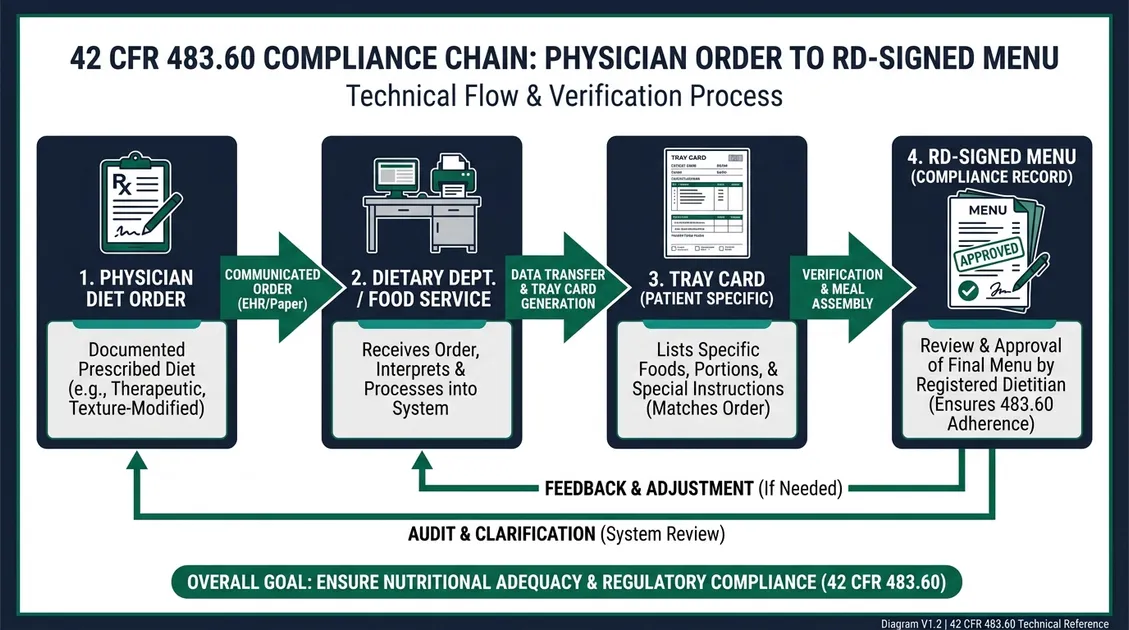
Documentation connects a physician diet order to the served plate through three linked records: the diet order, the tray card, and the menu as served. A physician or delegated dietitian prescribes the diet order, the kitchen translates it onto a per-resident tray card that flags allergens and texture, and the dietary aide serves the matching meal. Broken communication anywhere in that chain creates meal errors and survey citations, which is why tray card accuracy is a control point our team audits first. Facilities keep menus-as-served on file for at least six months and maintain a 3-day emergency food supply based on census, plus documented substitution forms. Surveyors expect to trace any resident’s order to the food that reached the table. PantryTec generates standardized recipes and shopping lists that feed this chain, and the RD Approval Letter caps the binder with proof of dietitian oversight.
Diet Orders and Tray Cards
A diet order drives the therapeutic menu; the tray card carries it to the line. Each tray card lists the resident’s diet order, texture level, allergens, and preferences. Our spoke on Managing Diet Orders traces this workflow order by order.
Audit Trail for Surveyors
The audit trail is your survey insurance. Keep signed menus, nutrient analysis, substitution logs, and weight-monitoring records together. Our checklist on Dietary Documentation details every record a surveyor may request.
What Therapeutic Diets Must Senior Living Kitchens Support?
Senior living kitchens must support 8 or more therapeutic diet types, including Diabetic/Consistent Carbohydrate, Renal, Cardiac/Low-Sodium, and IDDSI texture-modified levels 4 through 7. Each diet order is physician-prescribed and flows from one base cycle menu, which keeps prep manageable. PantryTec extends its base menu into these therapeutic diets as $5-per-month add-ons, so a facility does not rebuild menus from scratch for each restriction. A recently admitted resident with chronic kidney disease, for example, needs potassium and phosphorus limits the same week a diabetic resident needs a steady-carb plan with a bigger midday meal. In our experience onboarding mixed-acuity facilities, the operators who struggle most are the ones listing restrictions on a standard menu rather than serving complete, planned therapeutic menus, which surveyors flag under F-tag F803. Texture-modified diets carry the highest safety stakes because of aspiration risk.
Common Diet Orders by Prevalence
Diabetic and cardiac diets top the order list in most ALFs, followed by renal and texture-modified. PantryTec’s therapeutic diet menu extensions cover the full range, and renal cases need especially close management, which our renal menu handles for potassium, phosphorus, and protein.
Fortified and Texture-Modified Diets
Texture-modified diets follow the IDDSI Framework, using the Spoon Tilt, Fork Drip, and Fork Pressure tests to verify consistency. Level 4 is pureed, Level 5 is minced and moist, Level 6 is soft and bite-sized. Our minced and moist (IDDSI Level 5) menus show how texture work coordinates across the care team.
Who Should Lead Your Dietary Program?
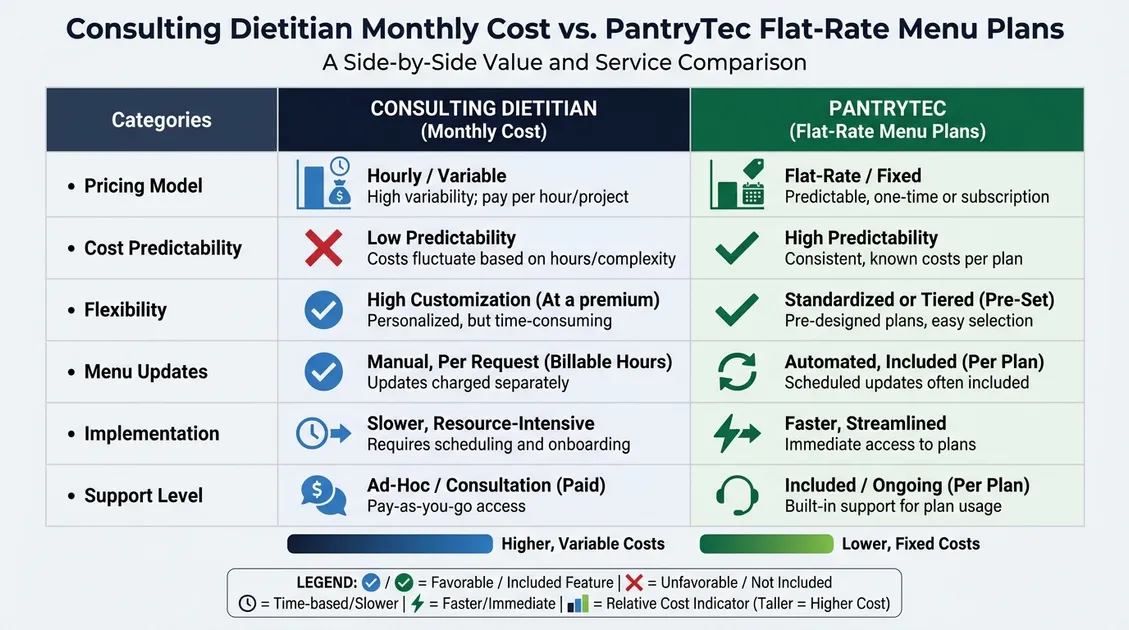
A Certified Dietary Manager (CDM) should lead daily food service, supported by a consulting Registered Dietitian for clinical oversight, an arrangement 42 CFR §483.60 explicitly permits. The CDM holds a recognized food service management and safety credential and runs ordering, menus, and staff. The consulting RDN, billing $75 to $150 hourly or $750 to $1,500 monthly, reviews menus, signs approvals, and assesses high-risk residents. Building that relationship pays off over time. According to the ACL’s Senior MNT Toolkit, one Area Agency on Aging reached breakeven on its Medicare medical nutrition therapy program only after six years, as referrals grew, and another program climbed from 200 referrals in early 2019 to a projected 500-plus by year-end after opening an online referral portal. The lesson for administrators: dietitian-led nutrition compounds, but you do not need a salaried RDN when a managed menu service supplies the signatures and analysis.
Certified Dietary Manager Credentials
The CDM credential, offered through the Association of Nutrition & Foodservice Professionals, qualifies a manager to direct food service under federal rule. Some operators add virtual-reality staff training; one long-term-care supplier described VR as the best tool for rehearsing situations too costly to stage in real life, according to a 2023 PMC study on emerging long-term care technologies.
Consulting Dietitian Partnerships
Conventional wisdom says every facility needs its own dietitian on payroll. Some industry experts disagree, arguing that small ALFs over-spend on consulting hours they barely use. A managed menu service with built-in RD approval often delivers the same compliance at a fraction of the cost, which our comparison on hiring a dietitian versus a menu service quantifies.
How Does Dining Quality Affect Resident and Family Satisfaction?
Families judge a community by the meal they see and smell on the walkthrough, so a strong dining program converts tours to move-ins and lifts occupancy. The ACL’s Senior MNT Toolkit reports that clients receiving dietitian-guided nutrition felt empowered and supported in managing their own health, the kind of outcome families notice. PantryTec menus aim at that experience with restaurant-style independent living options, dignity-focused memory care finger foods, and seasonal holiday menus for Thanksgiving and Christmas. In our work with assisted living operators, dining shows up in family referrals more than almost any amenity, because a daily meal is the most visible promise a facility keeps. A bland, repetitive menu quietly costs census the same way a poor survey does. Therapeutic diet menus are included from the Complete plan ($20/mo billed annually).
Dining as an Occupancy Driver
Dining is an admissions asset, not just an expense. A varied, photographed cycle menu becomes a tour decision factor. Our spoke on impressing touring families with your dining program develops this for the sales conversation.
Measuring Satisfaction Scores
Satisfaction is measured through resident and family surveys, plate-waste tracking, and weight stability. Falling plate waste and steady weights signal a menu that residents actually eat. Pair those metrics with the menu style decision in our guide on choosing the right menu style for your kitchen.
Key Takeaways for ALF Administrators
- Dietary management spans menu planning, therapeutic diets, food safety, and RDN review under 42 CFR §483.60, with about 70% of ALFs running a CDM-led department.
- Up to 50% of older adults in care are malnourished or at risk, so monthly weight monitoring and fortified diets are non-negotiable, per the 2025 Journal of Post-Acute and Long-Term Care Medicine review.
- Dietitian-approved cycle menus prepay your survey defense; standalone consulting dietitians cost $750-$1,500 monthly versus PantryTec from $15 flat.
- Raw food runs $7-$12 PPD; census-scaled shopping lists cut waste 15%-20% through portion control, based on PantryTec client kitchens.
- Dietary deficiencies can exceed $27,000 per day, so the diet order, tray card, and menu-as-served chain must be documented and retrievable.
Ready to simplify compliance? Get a free sample dietitian-approved cycle, or request a custom menu for your facility. See training staff on therapeutic diet preparation to round out your dietary program.
How do assisted living facilities plan menus?
Assisted living facilities plan menus by building a 5-week or 10-week rotating cycle menu of 3 meals plus snacks, then extending it into therapeutic diets. A dietitian reviews the cycle for nutritional adequacy under 42 CFR §483.60, and the kitchen scales shopping lists to census.
What is a cycle menu in senior living?
A cycle menu is a set of meals that repeats on a fixed interval, usually 4 to 10 weeks, before starting over. A 10-week cycle serves 70 unique daily menus before repeating, reducing planning workload and stabilizing food cost while keeping variety high for residents.
Do assisted living menus need to be approved by a dietitian?
Yes. Under 42 CFR §483.60, menus must be reviewed by a qualified dietitian or clinically qualified nutrition professional for nutritional adequacy. Most states require a Registered Dietitian signature, which PantryTec supplies through an RD Approval Letter included with every plan for your compliance binder.
What are the dietary requirements for assisted living facilities?
Facilities must provide 3 meals daily, keep no more than 14 hours between the evening meal and breakfast (16 with a bedtime snack), accommodate allergies and therapeutic diets, and maintain hydration. Hot foods hold at 135°F and cold at 41°F, per §483.60 food safety standards.
How often should assisted living menus be reviewed?
Menus should be reviewed by a dietitian at each cycle change and at least annually, with seasonal updates every quarter. New therapeutic diet orders trigger an immediate review. PantryTec re-verifies menus as needed and delivers fresh PDFs weekly to keep documentation current.
Free Sample Cycle Menu Request
Get a dietitian-approved rotating cycle menu PDF for your ALF. Enter your details below - we’ll estimate your per-resident-day (PPD) raw food cost instantly.
Explore Topics
8 related pages in this section
Which Menu Style Is Right for Your Kitchen?
The hub introduces menu planning decisions that this spoke explores in detail.
Learn More →
Cycle Menus vs Static Menus, Which Is Better?
Cycle menu vs static menu for senior care facilities: compare food cost, satisfaction, and Title 22 §87555 compliance. Get a free sample menu from PantryTec.
Training Staff on Therapeutic Diet Prep
The hub covers operational management which includes staff training for therapeutic diets.
Learn More →
Impressing Touring Families With Dining
The hub addresses dining as a marketing asset that this spoke develops for tours.
Learn More →
How Do Diet Orders Get to the Kitchen?
The hub outlines dietary workflows that this spoke traces from order to kitchen.
Learn More →
Fortified Diets for Underweight Seniors
Fortified high-calorie diets for underweight seniors: calorie targets, fortification methods, and dietitian-approved cycle menus from PantryTec. Get a free samp
How to Measure Resident Dining Satisfaction
The hub frames quality outcomes that this spoke measures via satisfaction metrics.
Learn More →
Gluten-Free Menu Planning for Senior Living
The hub covers special diets including gluten-free menu planning detailed in this spoke.
Learn More →
Browse Related Topics
comparing cycle menus and static menus
training your staff on therapeutic diet preparation
impressing touring families with your dining program
how diet orders reach the kitchen
fortified diets for underweight seniors
complete resident dining satisfaction resource
gluten-free menu planning for senior living
guide to dietitian-approved cycle menus
what is therapeutic diet menus?
Ready to Get Started with PantryTec?
Contact PantryTec today to learn how we can help.