
Meal span rule, CMS F809
What is the 14-hour meal span rule in daily practice?
No more than 14 hours between a substantial evening meal and breakfast, or up to 16 with a nourishing bedtime snack and resident group agreement. PantryTec cycle menus plan snacks with every day's meals. Plans from $15/mo.
- CMS F-Tag F809
- 42 CFR §483.60(f)
- 16-hour snack exception
- State rules compared
CMS F809
Meal span gap calculator
Enter the times from your trayline log to check the overnight gap.
Overnight gap14 h 45 min
Over 14 hours
Allowed only when a nourishing snack is served at bedtime and a resident group agrees to this meal span.
- Standard limit, 14 hours
- Breakfast by 7:15 AM
- With bedtime snack and resident agreement, 16 hours
- Breakfast by 9:15 AM
Federal rule for certified nursing facilities. State assisted living limits differ, compare them below.
TL;DR: Under CMS F809 (42 CFR §483.60(f)(2)), no more than 14 hours may pass between a substantial evening meal and breakfast in a certified nursing facility, or up to 16 hours when a nourishing snack is served at bedtime and a resident group agrees. State assisted living rules set their own limits: Florida 14 hours with no snack extension, California 15 hours, Utah 14 hours unless a nutritious evening snack is available, and Texas 16 hours. Small homes stay inside the window with pre-staged bedtime snacks and a simple early breakfast setup.
The 14-hour meal span rule governs daily kitchen schedules across licensed senior living communities and skilled nursing facilities. Adhering to strict dining intervals protects resident nutritional health and prevents severe regulatory citations during state surveys. Facilities must maintain compliant operations by reviewing our dietary survey compliance guide to understand survey tags.
Federal inspectors under CMS Tag F809 audit the exact duration between the substantial evening meal and the following morning breakfast. When kitchen teams mismanage this interval, licensing bodies issue deficiencies that harm facility reputations and trigger costly correction plans.
What Is the 14-Hour Meal Span Rule in Daily Practice?
The 14-hour meal span rule limits the elapsed time between the substantial evening meal and morning breakfast to 14 hours, set for certified nursing facilities by 42 CFR §483.60(f)(2). According to CMS State Operations Manual guidance for Tag F809, the clock runs from the substantial evening meal to breakfast, so the time dinner is actually served sets the latest time breakfast can start. Facilities that conclude dinner trayline at 5:00 PM must begin breakfast delivery no later than 7:00 AM the following day.
The rule protects older adults from long overnight fasts, which can contribute to poor intake and weight loss. Most meal span problems come from the gap between posted dining hours and when trays actually go out, so the measurement that matters is real service time.
Federal CMS F809 Mandates vs State Assisted Living Standards
The 14-hour meal span rule applies directly to Medicare and Medicaid certified skilled nursing facilities under federal F-tag guidelines. Assisted living communities operate under state-specific administrative codes that frequently adapt federal language. State inspectors enforce comparable time thresholds to ensure residents receive regular nutritional sustenance.
- Florida Rule 59A-36.012(2)(f) allows no more than 14 hours between the end of the evening meal and the start of the morning meal, and snacks do not count as meals when the gap is calculated.
- California Title 22 §87555(b)(1) allows no more than 15 hours between the third and first meal in residential care facilities for the elderly, and §87555(b)(3) requires between-meal nourishment or snacks to be available.
- Utah Administrative Code R432-270-22(1)(c) requires no more than a 14-hour interval between the evening meal and breakfast in assisted living, unless a nutritious snack is available in the evening.
- Texas 26 TAC §553.261(e)(2) allows no more than a 16-hour span between a substantial evening meal and breakfast in assisted living; exceptions need HHSC approval.
Check your own state's licensing rule before setting meal times; these limits are not interchangeable.
The Mathematical Calculation Between Dinner and Breakfast Traylines
The 14-hour meal span rule relies on trayline completion times rather than posted dining room doors opening. If your evening dinner trayline completes at 5:15 PM, the morning breakfast trayline must deliver its first tray by 7:15 AM. Calculating this interval requires kitchen supervisors to monitor real-time departure logs. Misjudging service by fifteen minutes places the entire community in non-compliance.
Check your own times with the meal span gap calculator at the top of this page.
How Does a Facility Legally Qualify for the 16-Hour Meal Span Exception?
Under 42 CFR §483.60(f)(2), up to 16 hours may pass between a substantial evening meal and breakfast when a nourishing snack is served at bedtime and a resident group agrees to the meal span. Both conditions should be in place before the schedule changes and documented: the snack in your menu and delivery records, and the agreement in the resident council or resident group minutes.
CMS interpretive guidance describes a nourishing snack as items from the basic food groups, alone or in combination, so a cookie and a cup of punch is a weak answer. Pairing a protein with a carbohydrate, such as cheese and crackers, half a sandwich with milk, or yogurt with fruit, is a practical house standard. With both conditions met, a 5:30 PM dinner can be followed by breakfast as late as 9:30 AM.
Documenting Resident Council Assent and Meeting Minutes
Get the resident group's agreement before the longer schedule starts and record it in the minutes. CMS doesn't prescribe a format, but clear minutes make the agreement easy to show a surveyor.
- Record who attended and that the group agreed to the proposed meal span.
- Document the agreed dinner conclusion time and breakfast start time in the official minutes.
- Keep a copy of the minutes in the facility dining policy binder.
- Revisit the agreement when the schedule or the resident group changes, and at least once a year as good practice.
A common miss: breakfast is posted for 8:00 AM, so the kitchen assumes it's compliant, but dinner trays went out at 5:15 PM the night before. That's 14 hours 45 minutes.
Defining a Compliant Nourishing Bedtime Snack Under CMS Guidelines
CMS guidance for F809 describes a nourishing snack as items from the basic food groups, either alone or in combination. Plain water, coffee or a single cookie is hard to defend as a nourishing snack during a survey.
| Jurisdiction / Rule | Standard Meal Span | Extended Span Limit | Snack Composition Standard | Resident Agreement |
|---|---|---|---|---|
| CMS F809, 42 CFR §483.60(f)(2) (certified nursing facilities) | 14 hours | 16 hours with a nourishing bedtime snack | Items from the basic food groups, alone or in combination | A resident group must agree to the 16-hour span |
| Florida Rule 59A-36.012(2)(f) | 14 hours | No extension; snacks don't count as meals | Snacks at least once a day for residents without kitchen access | Not applicable |
| California Title 22 §87555(b)(1) | 15 hours (third to first meal) | None stated | Between-meal nourishment or snacks available to all residents | Not specified |
| Utah R432-270-22(1)(c) | 14 hours | Longer allowed if a nutritious evening snack is available (no cap stated) | Nutritious evening snack | Not specified |
| Texas 26 TAC §553.261(e)(2) | 16 hours | Exceptions need HHSC approval | Not specified in this section | Not specified |
Why Do Early Dinner Shifts Trigger Frequent Survey Deficiencies?
Early dinner traylines scheduled between 4:30 PM and 5:00 PM create a squeeze because they force breakfast to go out by 6:30 to 7:00 AM. Kitchen managers often move dinner earlier so evening staff can clock out sooner, which saves labor at night and pushes the risk into the morning.
This short-sighted scheduling backfires whenever morning cooks encounter equipment preheat delays or call out sick. If dinner concludes at 4:45 PM, breakfast delivery that finishes at 7:05 AM officially breaches federal standards by twenty minutes. State licensing inspectors review time-stamped trayline departure sheets rather than printed resident activity calendars. Operating on razor-thin morning margins exposes the facility to immediate survey tags when a cook arrives twenty minutes late. The operational buffer vanishes, leaving resident care staff scrambling to assemble cold cereal trays while surveyors calculate elapsed minutes on their clipboards.
The 4:45 PM Trayline Trap and Kitchen Labor Short-Shifts
Serving dinner at 4:30 PM can look cheaper on the labor schedule, but it leaves no margin in the morning. A 4:45 PM dinner wrap-up means breakfast must be served by 6:45 AM, and most residents don't want to eat that early.
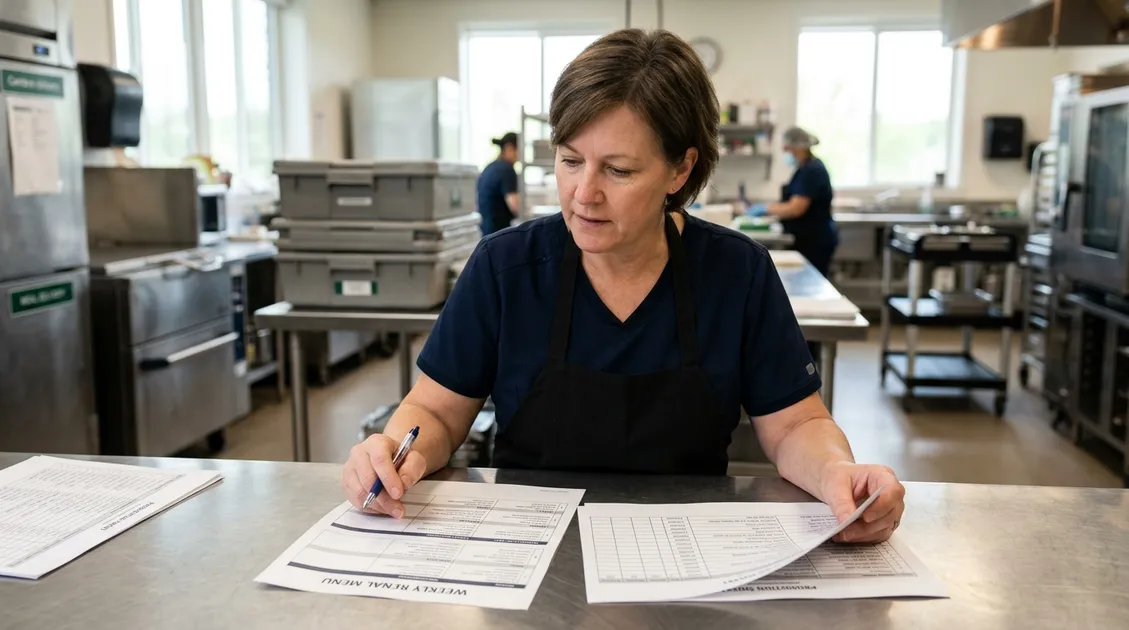
Pushing dinner service to 5:30 PM provides a natural buffer, shifting the 14-hour morning deadline to 7:30 AM.
Morning Cook Call-Outs and Cascading Breakfast Delays
Morning staffing shortages directly compromise meal span compliance. When a primary cook fails to arrive for a 5:30 AM shift, breakfast production halts while supervisors locate replacement staff. Learn how to organize a resilient rota by reviewing our guide on weekend kitchen coverage protocols. If replacement workers arrive late, breakfast service slips past the 14-hour mark, generating a clear survey violation.
What Snacks Meet the Nourishing Bedtime Criteria for Therapeutic Diets?
Bedtime snacks for residents on therapeutic diets must follow the diet order. For diabetes, a consistent-carbohydrate snack such as whole-wheat crackers with an ounce of cheddar or peanut butter is a common choice; the carbohydrate and protein amounts should come from the resident's dietitian and physician. For dysphagia, the snack has to match the ordered IDDSI level.
For individuals diagnosed with dysphagia, the evening snack must align with exact International Dysphagia Diet Standardisation Initiative standards. Giving a regular graham cracker to a resident ordered an IDDSI Level 4 pureed diet is a texture error cited under F805, and it can rise to immediate jeopardy if it leads to choking or aspiration. Kitchens must stock pre-portioned pureed fruit puddings, Greek yogurts, and thickened dairy beverages that match physician diet orders. Standardizing therapeutic snack recipes ensures night caregivers distribute compliant portions without altering nutrient composition or texture safety.
Diabetic Consistent-Carb and Renal Nighttime Offerings
Diabetic residents require calibrated bedtime snacks to prevent blood sugar spikes and nocturnal crashes. Managing specialized nutrition plans is straightforward with our diabetic consistent carb cycle menu designed for senior communities. Many facilities plan a diabetic evening snack around 15 to 30 grams of carbohydrate with some protein, as set by the resident's dietitian. Suitable combinations include half an apple with peanut butter or low-fat cottage cheese with whole-grain toast.
Renal diet orders demand strict limits on potassium, phosphorus, and sodium. Kitchens should avoid offering bananas, chocolate milk, or processed cheese spreads to renal residents. Safe renal bedtime snacks include toasted white pita wedges with honey, rice pudding, or unsalted crackers with hard-boiled egg whites.

IDDSI Level 4 Pureed and Dysphagia-Safe Evening Items
Dysphagia residents face acute choking and aspiration hazards when caregivers hand out standard evening snacks. Kitchen managers should review our IDDSI pureed menu guidelines to ensure evening items pass standardized testing. Caregivers distributing evening snacks must verify texture orders on resident tray cards before delivery.
- IDDSI Level 4 Pureed: Smooth chocolate pudding cups, pureed fortified vanilla yogurt, or pureed peaches with zero lumps.
- IDDSI Level 5 Minced and Moist: Finely minced egg salad moistened with mayonnaise or softened pumpkin mousse.
- IDDSI Level 6 Soft and Bite-Sized: Steamed banana slices under 15 mm or soft, drained canned pears diced to 15 mm.
- Thickened Liquids: Pre-thickened milk or nectar-thick fruit nectar packaged in individual portion cups.
How Do Small Assisted Living Homes Manage Meal Spacing With One Cook?
Small assisted living homes licensed for 6 to 16 beds manage meal spacing by using pre-staged evening snack stations and simple continental breakfast setups that direct-care staff can execute without a full culinary crew. One cook can't cover both a late dinner and an early breakfast every day without long shifts or overtime.
Effective small facilities resolve this constraint by preparing bedtime snack caddies during the daytime shift. Evening caregivers pass out pre-portioned cottage cheese cups, fortified muffins and whole milk before bed. In the morning, caregivers open a continental breakfast station stocked with chilled juice, oatmeal packets and hard-boiled eggs by 7:30 AM, so residents who sleep in can eat when they wake while the posted schedule stays within the meal span limit.
6–16 Bed Evening Snack Stations and Continental Breakfast Setups
Pre-portioned evening snack packs can remove the need for a split kitchen shift. Our flat-rate cycle menu plans plan snacks with every day's meals, starting at $15 per month billed annually. The cook prepares the evening snack during normal afternoon prep, labeling each item with resident names and diet textures.
The morning crew handles the breakfast opening without cooking from scratch. Caregivers set out fresh fruit, warm oatmeal from slow cookers, and poured juices. This simple system ensures residents eat within 14 hours while keeping payroll expenses predictable.
Balancing Person-Centered Late Sleepers with Regulatory Compliance
Person-centered care allows residents to choose their waking times. Surveyors recognize that forcing a resident out of bed at 6:30 AM solely to meet a 14-hour meal interval violates resident rights under federal guidelines. Facilities bridge this gap by documenting resident sleeping preferences and offering an always-available continental tray whenever the resident wakes.
What Documentation Proves Meal Span Compliance During an Annual Survey?
Documenting meal span compliance during an annual state survey requires maintaining daily trayline departure logs, dated bedtime snack distribution tallies, and resident group minutes showing agreement to any 16-hour schedule. State Operations Manual survey procedures instruct inspectors to verify actual meal service times against the facility's posted dining schedule. Surveyors inspect kitchen production sheets to identify when the last hot dinner plate left the steam table and when the first morning breakfast cart reached resident rooms.
A posted 8:00 AM breakfast doesn't help if dinner trays went out at 5:00 PM and no bedtime snack program is in place. If a resident refuses an evening snack, document the refusal and offer an alternative. Keeping recent trayline logs, bedtime snack records and the resident group minutes together in your survey binder makes the schedule easy to defend.
Trayline Time Logs vs Stated Dining Room Schedules
Surveyors compare posted meal hours against kitchen operational logs. If your dining room sign states breakfast begins at 8:00 AM, but dinner concludes at 5:00 PM, inspectors note a 15-hour interval on their initial walkthrough. Kitchens must keep real-time trayline departure binders recording exact completion minutes for every meal service.

- Log the departure time of the final dinner tray leaving the kitchen line.
- Log the arrival time of the first breakfast cart on the residential wing.
- Maintain completed daily logs inside the dietary compliance binder for twelve months.
- Audit logs weekly to identify recurring interval creep before survey teams arrive.
Bedtime Snack Cart Tracking and Refusal Documentation
When you use the 16-hour span, keep proof that the bedtime snack was offered. Night shift aides must carry a physical snack roster through residential corridors every evening. The roster documents whether the resident accepted the snack, requested a substitute, or refused food entirely. Documenting refusals proves the facility actively made nourishment available in full accordance with regulatory standards.
Bedtime Snack Compliance Checklist
0 of 10 in place
Tick what your community already does. Anything left unticked is a gap to close before survey.
10 gaps to close before survey.
Key Takeaways for Managing the 14-Hour Meal Span Rule
- CMS F809 caps the gap between a substantial evening meal and breakfast at 14 hours in certified nursing facilities; state assisted living limits run from 14 to 16 hours.
- Going to 16 hours under F809 requires a nourishing bedtime snack and a resident group's agreement, both documented.
- Early dinner traylines leave little margin: a 4:45 PM finish means breakfast by 6:45 AM, and one late cook breaks the window.
- Therapeutic diet orders must extend to bedtime snacks, providing controlled carbohydrates for diabetic residents and verified IDDSI Level 4 textures for dysphagia diets.
- Small care homes avoid expensive split shifts by using afternoon cook prep, pre-staged snack stations, and caregiver-assisted morning continental breakfast setups.
Put the bedtime snack on the menu every night
PantryTec cycle menus cover breakfast, lunch, dinner and snacks on a 10-week rotation, with therapeutic diet versions and an RD approval letter for your survey binder. Flat rate from $15/mo, no long-term contracts.
Frequently Asked Questions About the 14-Hour Meal Span Rule
What is the 14-hour meal span rule in senior care facilities?
It's the federal rule at 42 CFR §483.60(f)(2), cited as F809, that allows no more than 14 hours between a substantial evening meal and breakfast the next day in certified nursing facilities. Many states set similar limits for assisted living. It protects residents from long overnight fasts.
How can a care facility extend the meal interval to 16 hours?
Under 42 CFR §483.60(f)(2), up to 16 hours may pass between a substantial evening meal and breakfast when a nourishing snack is served at bedtime and a resident group agrees to the meal span. Document both: the snack in your menu and delivery records, and the agreement in the resident group's minutes.
What qualifies as a nourishing bedtime snack under CMS F809?
CMS guidance describes a nourishing snack as items from the basic food groups, alone or in combination, such as half a sandwich with milk, cheese and crackers, or yogurt with fruit. A single cookie or a cup of punch is hard to defend as nourishing.
Does the 14-hour rule apply if a resident chooses to sleep late?
The 14-hour rule mandates that breakfast must be available within 14 hours, but facilities cannot force residents to wake or eat against their wishes. When a resident chooses to sleep late, the facility maintains compliance by documenting their personal waking preferences. Staff must offer a substantial breakfast or continental tray as soon as the resident awakens.
How do state assisted living meal span rules differ from federal nursing home rules?
State assisted living rules set their own limits. Florida's 59A-36.012 allows 14 hours and doesn't count snacks as meals, California's Title 22 §87555 allows 15 hours between the third and first meal, Utah's R432-270-22 allows 14 hours unless a nutritious evening snack is available, and Texas's 26 TAC §553.261 allows 16 hours.