
Puree menus for IDDSI Level 4, RD approved
Puree menus for IDDSI Level 4,
approved by a Registered Dietitian.
Smooth, fully pureed cycle menus that meet IDDSI Level 4, shaped and portioned for dignity at the table, delivered as a print-ready PDF. Included from the Complete plan at $20/mo, billed annually.
Reviewed by Bridget MacDonald, RD
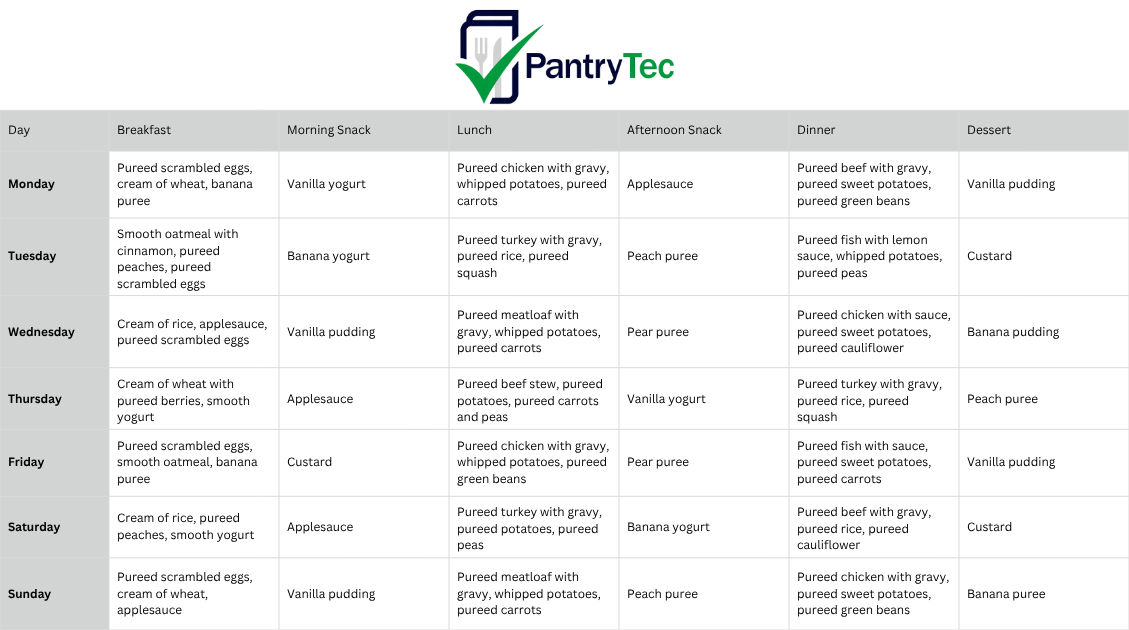
10-Week Sample Menu
Approved by a Registered Dietitian
Understanding the IDDSI Framework Level 4 Standard
Who Benefits from Puree Diet Menus?
In our experience, puree IDDSI Level 4 menus for senior care facilities address one of the highest-risk dietary needs in long-term care: safe swallowing. Up to 68% of nursing home residents experience some form of dysphagia, according to the American Speech-Language-Hearing Association (ASHA).
How Does PantryTec Design Dietitian-Approved Puree Cycle Menus?
Puree IDDSI Level 4 menus are a critical component of the facility's comprehensive therapeutic diet offerings, and PantryTec builds every puree cycle menu to meet both IDDSI texture standards and CMS nutritional adequacy needs. Your kitchen staff receives weekly PDF menus ready to print and post - no software training required.
TL;DR: Puree (IDDSI Level 4) menus must be smooth, spoonable, and lump-free per IDDSI standards. PantryTec's Complete Plan ($20/mo billed annually, $25 billed monthly) includes dietitian-approved 10-week puree cycle menus, RD approval letters for your compliance binder, and weekly PDF delivery. The Premier Plan adds menus customized to resident specifics.
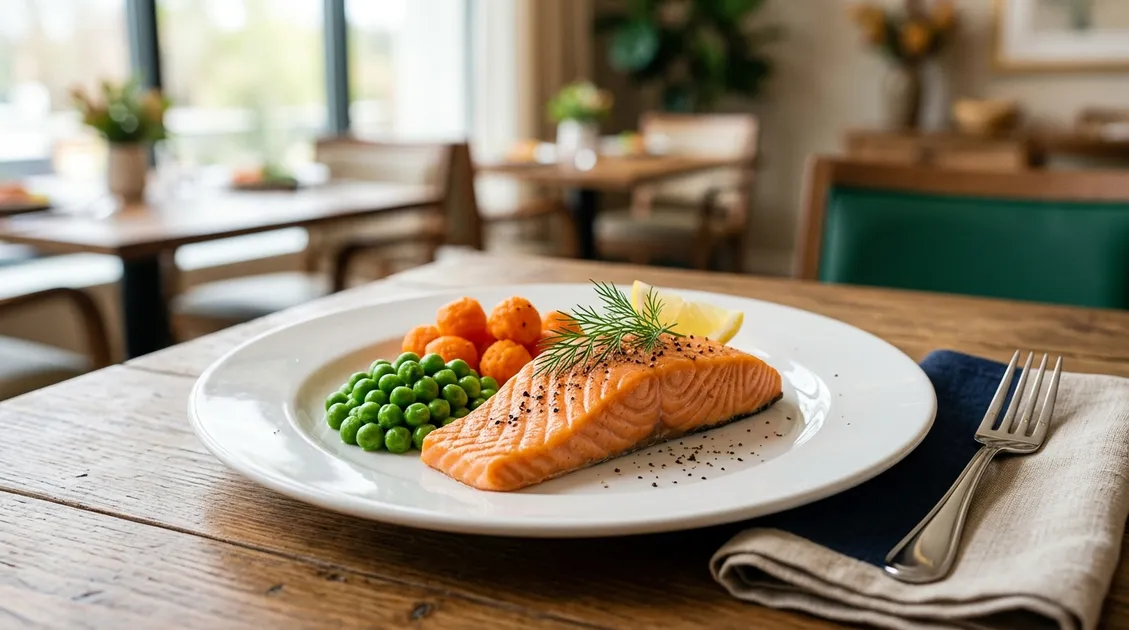
Aspiration pneumonia costs $4.4 billion annually in the U.S., compliant texture-modified diets reduce that risk by up to 50%.

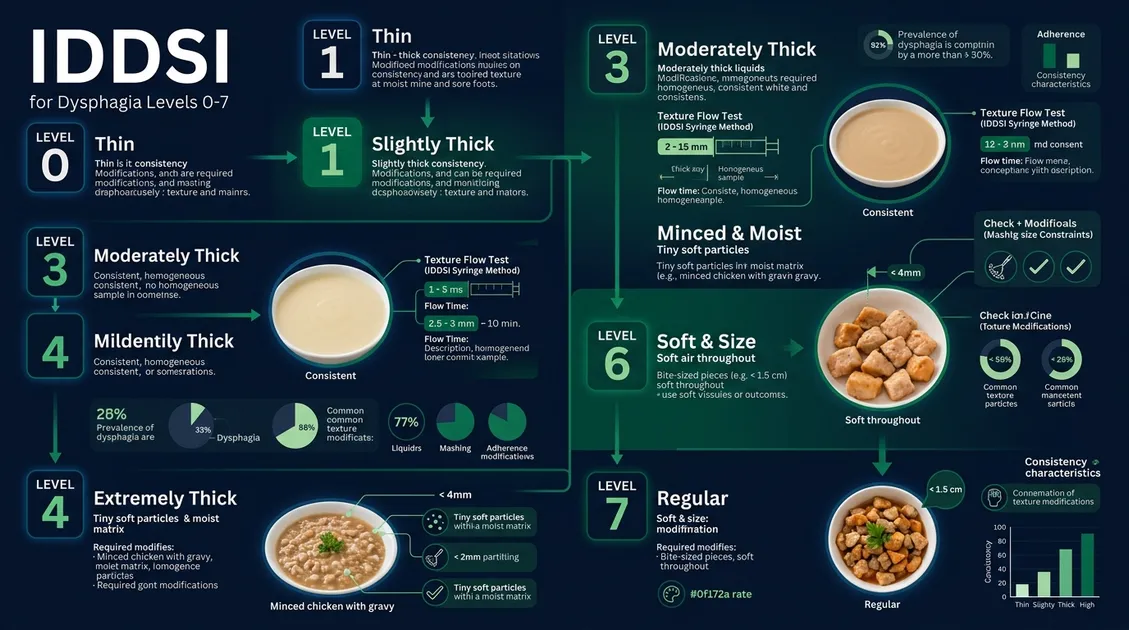
The International Dysphagia Diet Standardisation Initiative defines 8 levels (0-7) covering both drink thickness and food texture. Puree IDDSI Level 4 menus are texture-modified meal plans where every food item is processed to a smooth, lump-free consistency that holds its shape on a spoon, per the IDDSI Foundation's framework. Level 4 specifically requires food that does not drip through fork tines in a continuous stream and passes the spoon-tilt test without sticking. Aspiration pneumonia, the primary risk of non-compliant textures, accounts for about $4.4 billion in annual U.S. healthcare costs, per the National Foundation of Swallowing Disorders. Senior care facilities need puree menus that meet these standards at every meal, across breakfast. Lunch, dinner, and snacks. An estimated 590 million people worldwide experience swallowing difficulties, making standardized puree menus a frontline safety intervention rather than an optional dietary preference.
IDDSI Level 4 puree must meet three measurable criteria. First, the food sits in a mound on a spoon and falls off cleanly when tilted. Second, it does not flow through fork tines as a continuous drip.
Third, no lumps remain after processing, even small granules fail the standard. These tests aren't subjective. Kitchen staff can verify compliance in under 30 seconds per dish.

Residents recovering from stroke, living with Parkinson's disease, managing head and neck cancer treatment, or having age-related oropharyngeal dysphagia all require IDDSI Level 4 puree diets. Memory care residents with advanced dementia often need puree textures as swallowing reflexes decline. ASHA clinical guidelines identify texture-modified diets as the frontline intervention for managing oropharyngeal dysphagia safely.
The Academy of Nutrition and Dietetics reports that dietitian oversight in therapeutic menu planning reduces malnutrition risk by up to 38% in long-term care populations. PantryTec designs puree IDDSI Level 4 cycle menus through a Registered Dietitian-led process that draws from a database of over 40,000 recipes, each analyzed against Dietary Reference Intakes for adults 65 and older. Every puree menu follows a 10-week rotating cycle, that's 70 unique daily meal plans before any repetition. PantryTec's team handles all IDDSI compliance testing internally using spoon-tilt and fork-drip methods, so your kitchen staff receives verified menus. Residents may transition between puree and minced-moist textures as their swallowing ability changes, requiring both menu options. Each cycle covers breakfast, lunch, dinner, and two snacks daily. With estimated per-resident-day food costs displayed on every menu. Learn more about puree IDDSI level 4 menus.
Registered Dietitian-Led Development
A Registered Dietitian Nutritionist reviews every puree menu for nutritional adequacy before it reaches your inbox. Nutrient analysis confirms 100% of the Dietary Reference Intakes for key micronutrients including calcium, vitamin D, iron, and B12. The RD approval letter ships with your menu cycle, ready for your compliance binder.
Blake Oldham, PantryTec's Product Manager, notes that facilities replacing external dietitian consultants with PantryTec's built-in RD approval save $750-$1,500 per month on average, while receiving menus verified against both CMS standards and IDDSI texture needs in a single weekly PDF delivery.

IDDSI Level 4 Compliance Testing
PantryTec's standardized recipes include preparation notes specifying blending times, liquid ratios, and garnish options that maintain Level 4 compliance. Cook-to-census instructions prevent overproduction, and each recipe card shows which IDDSI level it satisfies. We cover this in detail in our minced and moist IDDSI Level 5 menus guide.
What Are the IDDSI Framework Requirements for Level 4 Puree?
IDDSI Level 4 puree requires food that is smooth with no lumps. Holds its shape on a spoon, and does not separate or drip through fork tines as a continuous stream, according to the IDDSI Foundation's 2019 descriptors. Level 4 sits between Level 3 (liquidised, which pours easily) and Level 5 (minced and moist, which allows particles up to 4mm). The distinction matters clinically, serving food one level too textured increases aspiration risk dramatically. Facilities using standardized IDDSI-compliant menus report a 40% reduction in diet-related survey deficiencies, per a 2023 Provider Magazine analysis. PantryTec's puree recipes remove guesswork by specifying exact blending durations, liquid-to-solid ratios, and visual benchmarks for each dish.
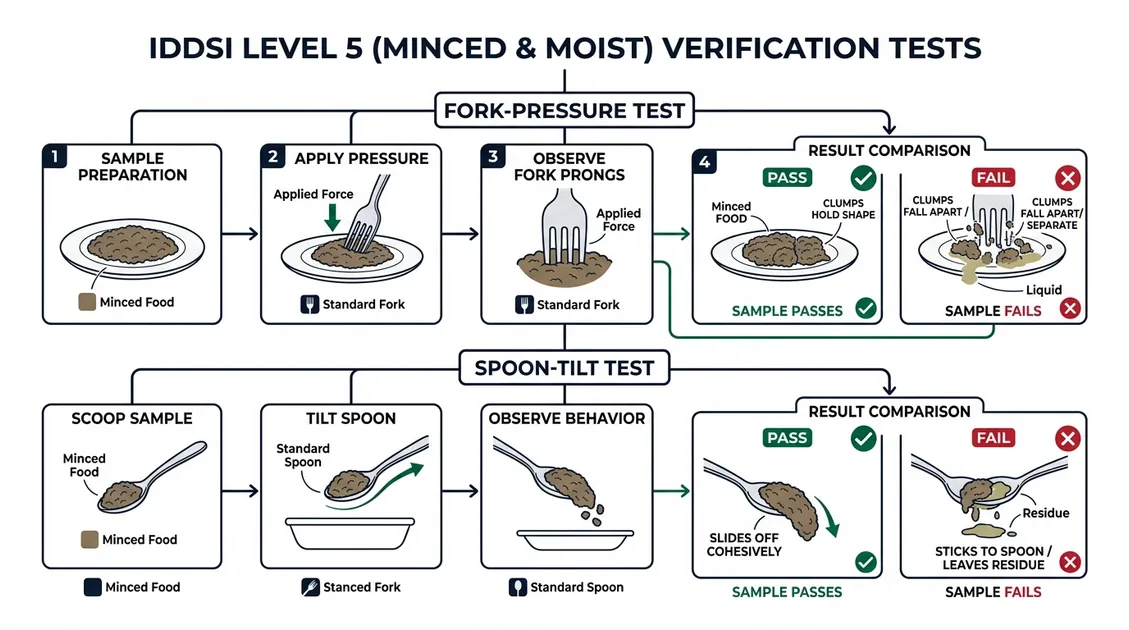
| IDDSI Test | Level 4 Puree Requirement | Common Failure Point |
|---|---|---|
| Spoon-tilt test | Falls off spoon in a single scoop, doesn't stick | Too thick or adhesive, add liquid gradually |
| Fork-drip test | Sits between tines, does not flow through continuously | Over-blended to liquid (drops to Level 3) |
| Fork-pressure test | No lumps when pressed flat with fork | Fibrous vegetables not strained after blending |
| Visual check | Smooth, no visible particles or graininess | Seeds, skins, or grain husks remaining |
The difference between facilities that consistently pass survey and those that struggle often comes down to documented processes and clear benchmarks rather than improvised solutions. See high calorie intake cycle menus for a deeper breakdown.
Frequently Asked Questions
What Are Puree (IDDSI Level 4) Menus and Why Do They Matter?
How Does PantryTec Design Dietitian-Approved Puree Cycle Menus?
What Are the IDDSI Framework Requirements for Level 4 Puree?
Which Therapeutic Conditions Require Puree (IDDSI Level 4) Menus?
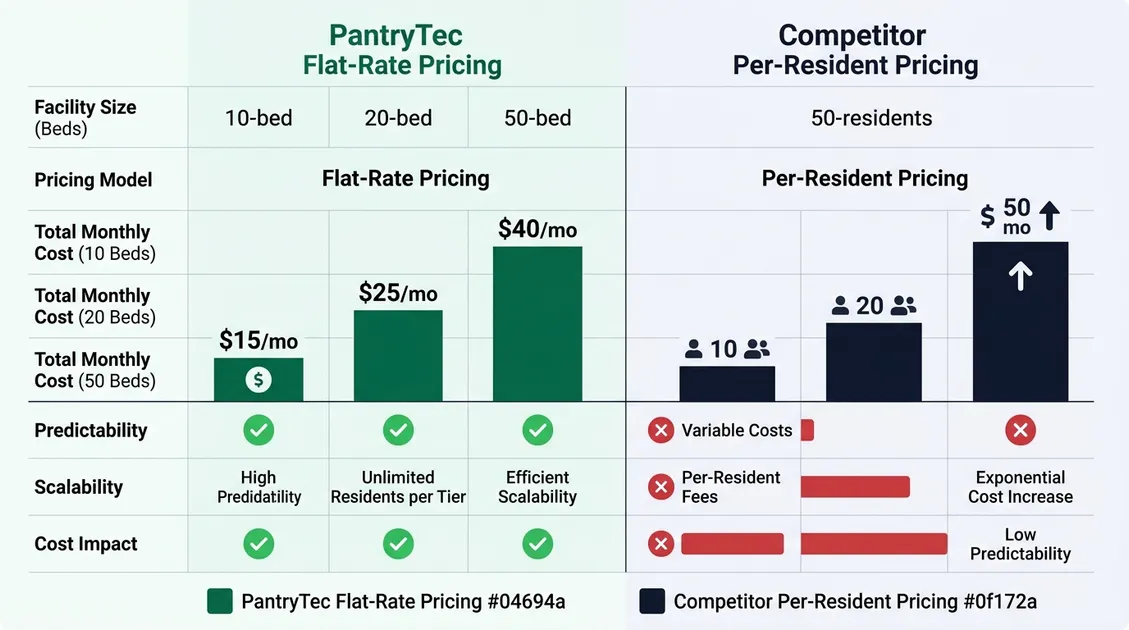
How Much Does PantryTec's Puree Menu Service Cost?
Why Choose PantryTec for Puree (IDDSI Level 4) Menus?
Ready to Get Started?
Contact PantryTec to learn how we can help bring dietitian-approved puree menus to your community.