
Weekend coverage with RD-approved menus
Weekend kitchen coverage, planned before the cook calls out.
A written call-out plan, a Friday prep routine and print-ready cycle menus a trained backup cook can follow, so Saturday, Sunday and Thanksgiving run like any Tuesday. Plans from $15/mo.
- RD-approved
- CMS F-Tag F809
- Holiday menus
- Print-and-post PDF
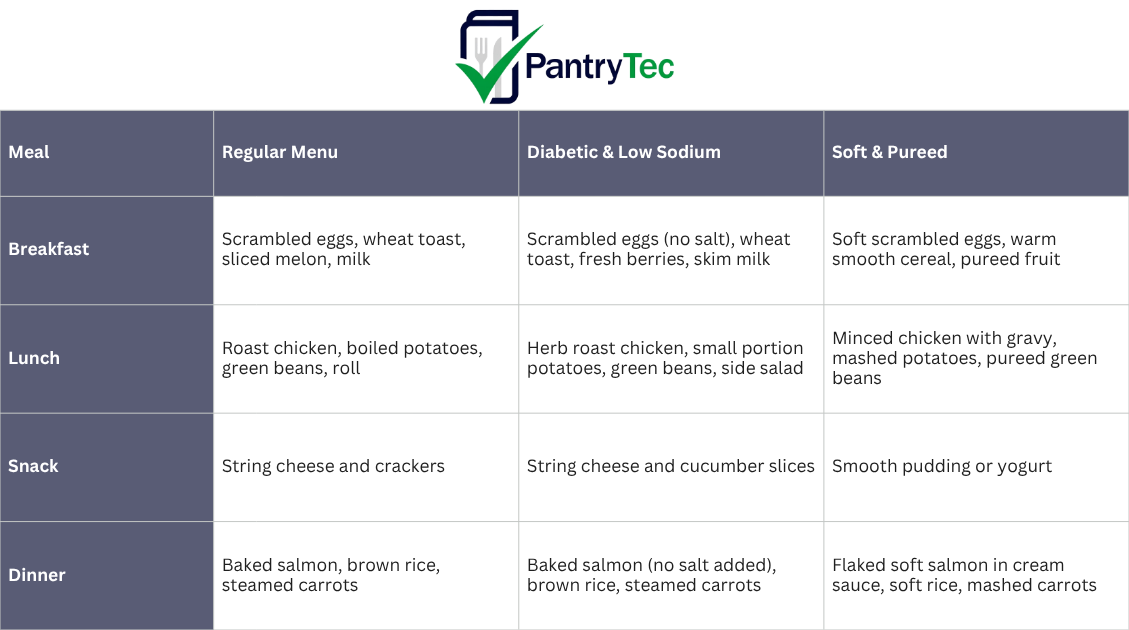
Weekend kitchen coverage is the written plan that keeps a senior care kitchen serving the posted, dietitian-approved menu when the regular cook is off, sick or away for a holiday. The plan names who covers each meal, what gets prepped on Friday, and which records prove it. Coverage planning is part of everyday dietary management, so the Tuesday menu and the Sunday menu come from the same page.
TL;DR: Nursing homes must serve at least 3 meals daily, with no more than 14 hours between dinner and breakfast, under 42 CFR §483.60(f). Maryland's assisted living rule requires meals 7 days a week. Weekend kitchen coverage meets both with a named call-out chain, Friday pre-prep, date-marked backups and a substitution log. PantryTec's Weekend Hybrid menu style is built for lighter weekend crews.
Why Do Weekend and Holiday Shifts Raise Dietary Survey Risk?
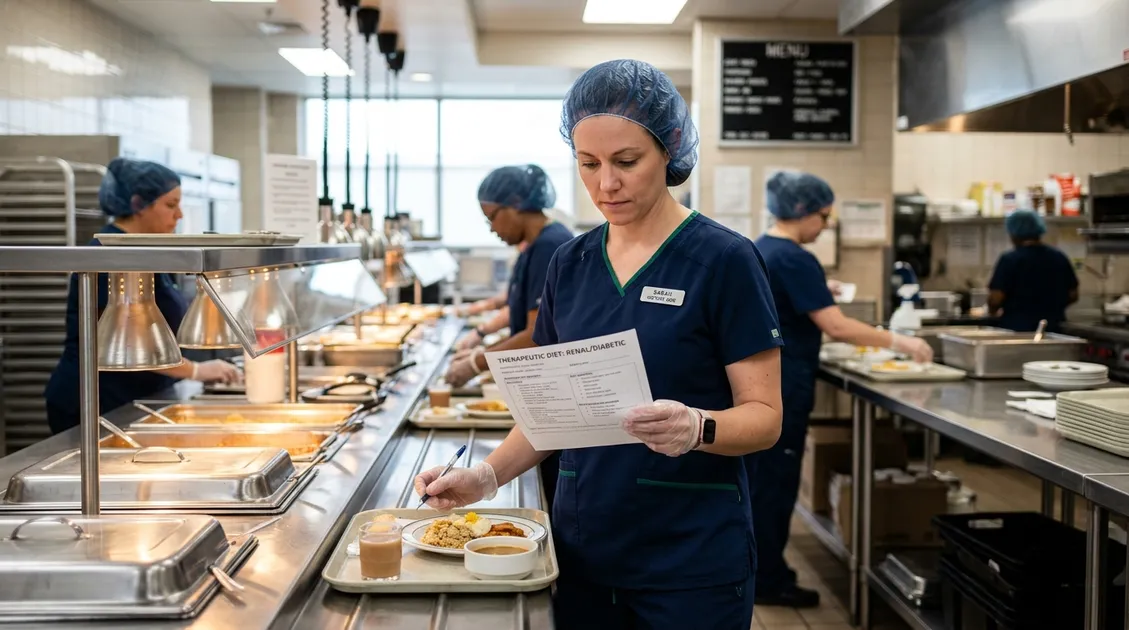
Weekend and holiday shifts raise dietary survey risk because the rules never pause: nursing homes still owe 3 meals daily and a 14-hour maximum between dinner and breakfast, per 42 CFR §483.60(f). CMS watches weekends on purpose. CMS memo QSO-19-02-NH requires states to hold at least 50% of required off-hours surveys on weekends at nursing homes with low weekend staffing. Assisted living follows the same calendar. Maryland's COMAR 10.07.14.30 requires three meals plus snacks in every 24-hour period, 7 days a week. Weekend surveys still include CMS's Kitchen/Food Service Observation, and surveyors compare plated meals with the posted menu. Residents notice gaps first, and families hear about them by Monday. Holidays add a second risk because the menu itself changes that day. Every gap in weekend kitchen coverage shows up on the plate, the posted menu or the log.
What thin kitchen crews get cited for
Thin weekend crews put four F-tags at risk. F802 covers dietary support staff, and F803 covers menus prepared in advance and followed. F804 covers palatable food at safe, appetizing temperatures, while F812 covers sanitary food handling. A February 2023 complaint survey at an Indiana nursing facility shows how they stack up. Surveyors found a 19-day gap in dietary leadership and cited F802, F803 and F812 for untrained staff, menus without RD approval, diets defaulted to regular when staff weren't sure, and refrigerators running at 49–50°F. A cover cook without the diet roster faces the same risks on a Sunday.
Holiday menu deviations that trigger citations
Thanksgiving and Christmas replace a full cycle day, so the posted menu and production sheet change at once. Therapeutic diets still follow the physician's order under 42 CFR §483.60(e), and yes, that includes Thanksgiving. PantryTec's holiday menus include those therapeutic adaptations.
What Should a Weekend Kitchen Coverage Plan Include?
A weekend kitchen coverage plan includes four parts: a named call-out chain, a cross-trained backup roster, a pre-approved simplified menu day, and a record of who cooked each meal. File the plan in your Dietary Policies and Procedures Manual and keep a signed copy by the kitchen phone. Minnesota's assisted living food rules require menus prepared at least one week in advance and advance notice to residents about menu changes. A simplified menu day written in advance is planned food; one improvised at 6 a.m. isn't. Your administrator owns the plan, and your certified dietary manager (CDM) keeps the roster current. Budget the cover shifts too. The FLSA requires no weekend or holiday premium, but nonexempt staff earn 1.5 times their regular rate after 40 weekly hours. Assisted living employers may instead use the 8 and 80 overtime system with a prior staff agreement.
Call-out chain of contact
The call-out chain fixes the order of calls, so whoever reads the 5 a.m. text knows who to try next. A no-show, a failed walk-in cooler and a power outage all start the same chain.
| Step | Who to call | Move on after | What they cover |
|---|---|---|---|
| 1 | Scheduled backup cook | 15 minutes without a reply | Full production from the posted menu |
| 2 | Cross-trained aide on shift | 30 minutes | Reheats, portions and plates prepped food |
| 3 | CDM or kitchen manager | No backup confirmed | Cooks on site or directs by phone |
| 4 | Administrator or owner-operator | Any meal at risk | Activates the simplified menu day |
Cross-trained backup staff roster
List at least two trained people for every kitchen shift, with food handler card dates and the diets each has plated.
Emergency simplified menu day
Keep one pre-approved simplified menu day on file, built from shelf-stable and frozen items. PantryTec menus include an emergency pantry list and a weekly safety-net alternative menu for it.
How Do You Pre-Prep a Cycle Menu So Weekend Staff Can Execute It?
Pre-prepping a cycle menu for the weekend means cooking, portioning, labeling and staging Saturday and Sunday components on Friday, so the backup cook reheats and plates instead of cooking from scratch. The FDA Food Code sets the guardrails for that handoff. Food reheated for hot holding must reach 165°F within 2 hours, then hold at 135°F or above, under the FDA Food Code 2026. Cold components stay at 41°F or below until service. Your thermometer is part of the recipe. PantryTec's Weekend Hybrid menu style is built around this gap, with weekend meals that lean on premade and batch-cooked components. The production sheet tells the cover cook what to pull, how many portions to plate for the day's census, and which temperatures to log. Cook-to-census instructions keep Friday's batch from becoming next Tuesday's leftovers.
Prepping Friday for a two-day weekend
- Print Saturday's and Sunday's production sheets with the diet roster attached.
- Batch-cook, then cool from 135°F to 70°F within 2 hours and to 41°F within 6 hours total.
- Portion every diet, including IDDSI Level 4 pureed and Level 5 minced and moist.
- Label each container with item, diet, prep date and discard date.
- Stage the refrigerator by day and meal, with production sheets taped to each shelf.
- Walk the backup cook through Saturday breakfast before you leave.
Unlabeled Friday prep is a weekend failure our team sees during onboarding: the Sunday cook has to guess which pan holds the renal batch. What we've found works best is one rule: nothing enters the weekend refrigerator without a label naming the diet.
Freezer backup meals and date-marking rules
Ready-to-eat TCS food held past 24 hours needs a date mark, per FDA date-marking guidance. It keeps 7 days at 41°F or below, counting prep day as Day 1. Freezing pauses that clock without resetting it, so label freeze and thaw dates too, per Tennessee's date-marking fact sheet.
Who Can Legally Cover the Kitchen When the Cook Does Not Show Up?
Federal nursing home rules don't license the cook: 42 CFR §483.60(a) requires staff with the competencies to run food service, plus enough support personnel to do it safely. That support-staff rule is F802. Leadership has stricter terms. A facility without a full-time dietitian must designate a director of food and nutrition services. Qualifying paths include a CDM or certified food service manager credential, or a degree in food service management. The experience-based path only covers directors who completed a food safety course by October 1, 2023, per CMS Transmittal 207. Section 483.60(a)(2)(iii) also requires frequently scheduled consultations with a qualified dietitian. Health department rules add a third layer. Where a kitchen holds a food establishment permit, the FDA Food Code 2026 expects a person in charge on site during all hours of operation. A trained, supervised weekend cook fits these rules; an untrained cook left alone on Sunday doesn't.
F801 qualified staff expectations
F801 sets the qualifications for your dietitian and food service director; the cook covering Sunday falls under F802's competency rule. Our guide to passing a CMS dietary survey walks through the full F800 series. A health department kitchen plan review approves equipment and layout, not your Sunday roster.
Using caregivers and aides in the kitchen
Small homes often use universal workers who move between care and cooking. ANFP's 2022 Food Code summary counts assisted living and adult day residents as a highly susceptible population. Handwashing between care tasks and food tasks is mandatory.
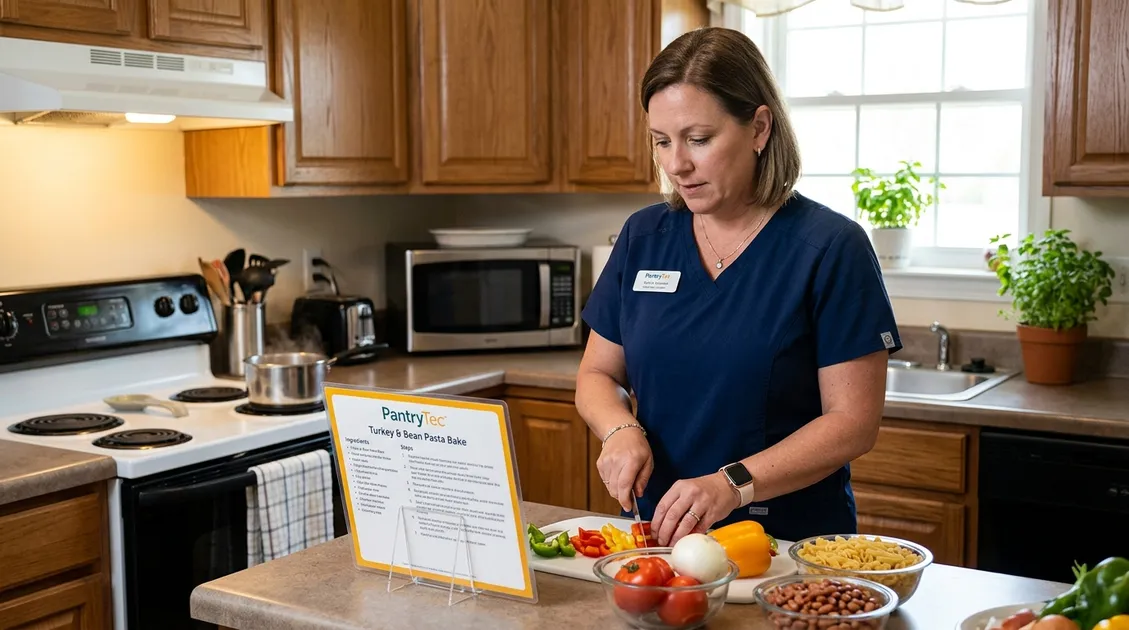
CDM consultant phone availability
Put a weekend phone number for the CDM or consulting dietitian on the plan. A cover cook with a texture question at 4:30 p.m. needs an answer before dinner, not on Monday.
How Do Small Group Homes and Adult Day Programs Handle Weekend Kitchen Coverage?
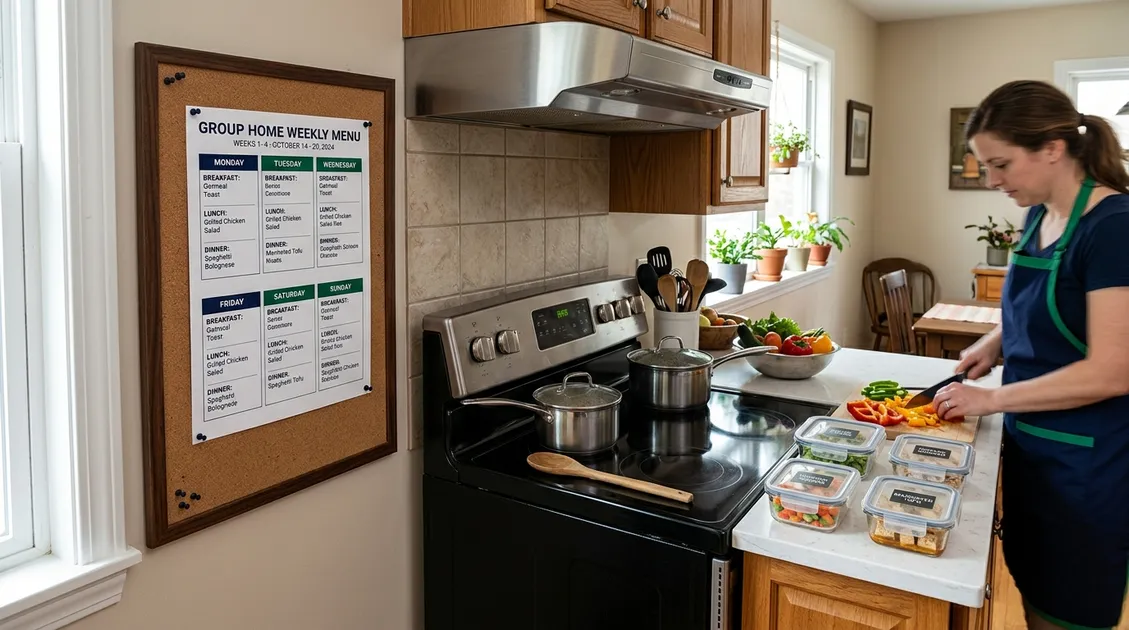
Group homes licensed for 6 to 16 beds handle weekend kitchen coverage with fewer people, so the menu itself does more of the supervising. In many of these homes, the owner-operator or a caregiver cooks weekend meals between care tasks. Residential-scale equipment limits batch size, and a household refrigerator fills fast on a Friday prep day. Arizona's assisted living food rule requires every facility to be able to store, refrigerate and reheat food to meet residents' dietary needs. That rule also requires a copy of the vendor's food establishment license if a caterer delivers meals. A print-and-post kitchen workflow fits these homes: the PDF goes on the wall, the production sheet on the counter. The caregiver follows both. PantryTec's Starter Plan costs $15/month flat, billed annually, and fits small assisted living homes, group homes and adult day programs.
6–16 bed coverage without a full kitchen crew
Small-home operators ask our team a version of the same question: what happens when the owner is the cook and the owner is sick? Our answer is a second trained person and a menu they can run without you. See our cycle menus for group homes with 6 to 16 beds.
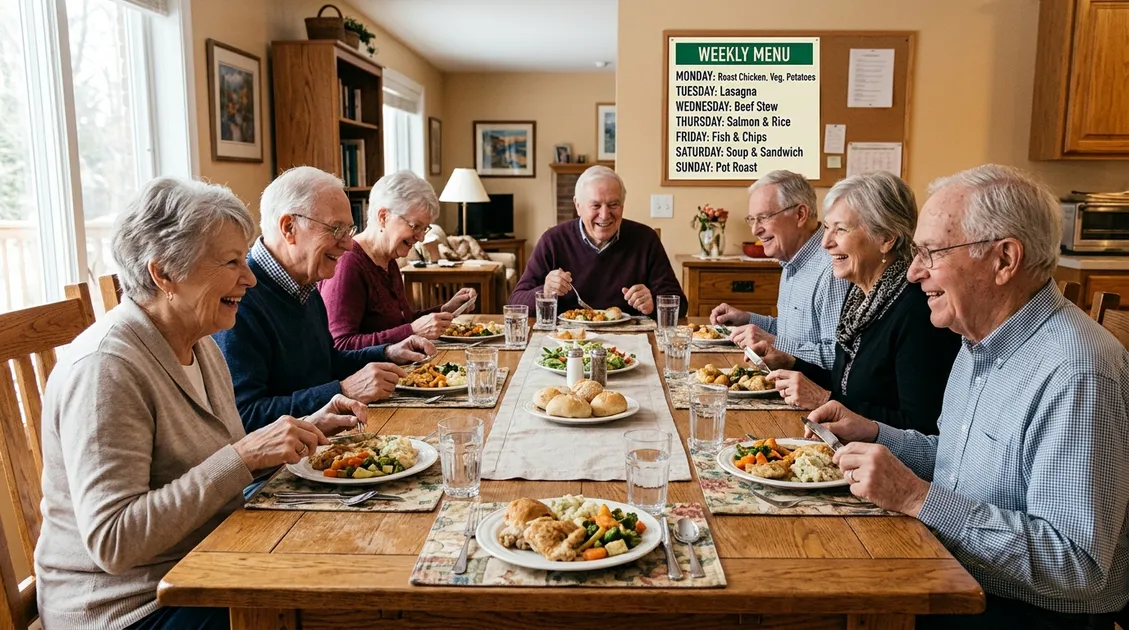
Adult day care half-day meal coverage
Adult day programs that run weekdays face call-outs more than weekend gaps. Many serve one meal plus snacks per session, so a Tuesday call-out needs a cold backup lunch that matches each diet order. Our cycle menus for adult day care programs include a weekly safety-net menu.
What Documentation Proves Coverage Was Adequate During a Survey?
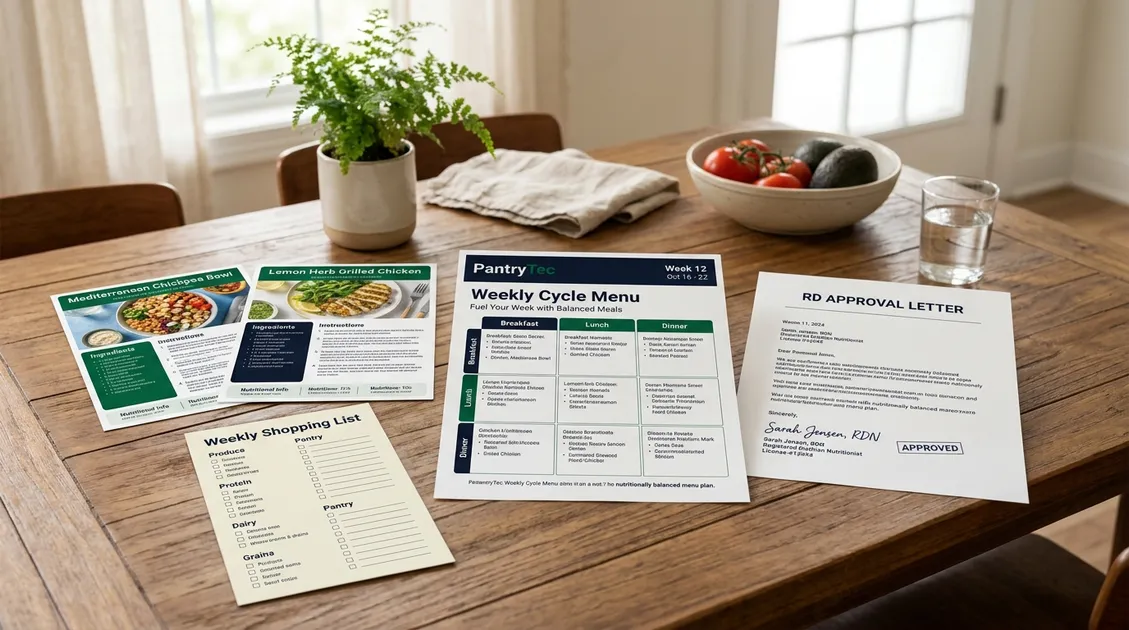
Weekend kitchen coverage is proven on paper by four records that agree: the dated staffing schedule, the menu as served, the temperature log and the substitution log. Retention rules decide how far back a surveyor can look. Maryland requires menus as served on file for 6 months under COMAR 10.07.14.30. Arizona requires posted menus kept at least 60 calendar days, with any substitution added by the morning of that meal, under R9-10-817. Nursing home menus must be followed under 42 CFR §483.60(c)(3), so each kitchen swap needs a note showing what replaced what. The F809 file matters too: up to 16 hours between dinner and breakfast is allowed only with a nourishing bedtime snack and resident group agreement. Missing initials on a Sunday log read like a missing cook. Keep all four records in one compliance binder beside the RD approval letter.
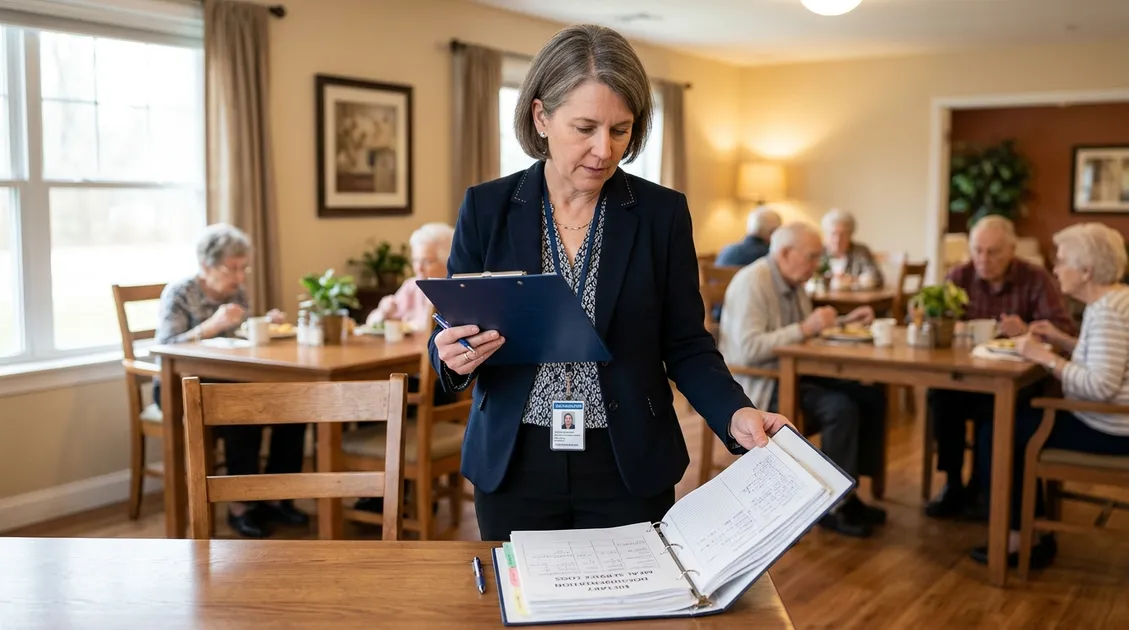
Staffing logs tied to meal times
- Shift schedule showing who cooked each meal
- Call-out log with call times and the backup reached
- Temperature log for every meal, initialed by the cook
- Production sheet with census and portions served
- Menu as served, dated, with substitutions written in
- Current RD approval letter for the cycle in use
Menu substitution records for holiday meals
Treat a holiday meal as a planned substitution for a full cycle day. Record the date, the cycle day replaced and each diet version served.
Limitations and Considerations
- State assisted living rules differ; Maryland, Arizona and Minnesota are examples, not a national standard.
- CMS rules bind certified nursing homes, not state-licensed assisted living.
- The FDA Food Code applies only where your state or county adopted it.
- A menu service doesn't replace trained staff who cook, check temperatures and sign the log.
- Premade weekend components can raise per-plate food cost versus scratch cooking.
Key Takeaways for Weekend Kitchen Coverage
- Name two trained backups for every kitchen shift, and post the call-out chain where cooks can see it.
- Prep Friday for the weekend and label every container with its diet and discard date.
- Keep one pre-approved simplified menu day and a frozen backup meal for each diet.
- File menus as served with temperature and substitution logs; Maryland requires 6 months of menus as served.
Frequently Asked Questions About Weekend Kitchen Coverage
What should a kitchen do when the cook calls out?
Start the call-out chain: the scheduled backup cook first, then a cross-trained aide, then the CDM or kitchen manager. If no one is confirmed and a meal is at risk, the administrator activates the pre-approved simplified menu day, and the swap goes on the menu as served.
Can a caregiver cook in an assisted living kitchen?
Often, yes, if your state's licensing rules allow it. Many small homes use universal workers who move between care and cooking. The caregiver should hold a food handler card where your state requires one, cook from the posted menu and recipe cards, and wash hands between care tasks and food tasks. The FDA Food Code counts older adults in assisted living as a highly susceptible population.
How long can food prepped on Friday be served?
Through Thursday. Ready-to-eat TCS food held more than 24 hours keeps up to 7 days at 41°F or below, counting the prep day as Day 1. Time in the freezer doesn't count, so mark freeze and thaw dates on the label.
Do state surveyors inspect nursing homes on weekends?
Yes. CMS requires states to run at least 10% of standard surveys off-hours, meaning weekends, before 8 a.m. or after 6 p.m. For nursing homes CMS flags for low weekend staffing, QSO-19-02-NH requires at least half of those off-hours surveys to fall on weekends.
Do weekend or holiday kitchen shifts require premium pay?
Not under federal law. The FLSA doesn't require extra pay for weekend or holiday work, but nonexempt staff earn 1.5 times their regular rate after 40 hours in a workweek, or after 8 hours in a day or 80 hours in two weeks under the 8 and 80 system, if staff agreed to it in advance. State law or your own policy may require more.