Cycle Menus for RCFEs in California:
How PantryTec Works From Signup to Menu Delivery

Cycle menus for RCFEs in California must meet Title 22 §87555 standards. See how PantryTec delivers dietitian-approved RCFE menus from signup to delivery.

✏️ Written by PantryTec Editorial Team ⏱️ 27 min read

What Are Cycle Menus for RCFEs and Why Does California Require Them?

RCFEs must serve 3 meals plus snacks daily with no more than 14 hours between the evening meal and breakfast, per 22 CCR §87555. Cycle menus for California RCFEs must comply with Title 22, Division 6. Chapter 8 of the California Code of Regulations, enforced by the Community Care Licensing Division (CCLD). Facilities with 16 or more residents face an additional mandate: menus written at least one week in advance, dated, and kept on file for 30 days minimum. Smaller RCFEs (under 16 beds) must maintain a sample menu on file for licensing review. California’s 7,800+ licensed RCFEs, according to CALA data, serve more than 210,000 residents across all 58 counties. Eighty-one percent of those RCFEs are small communities licensed for 15 or fewer residents, which means the vast majority of operators don’t have in-house dietitian support.

Modified diets prescribed by a resident’s physician as a medical necessity must also be provided under §87555. Cycle menus solve this compliance challenge by pre-planning meals in rotating blocks that guarantee nutritional adequacy and variety across weeks.

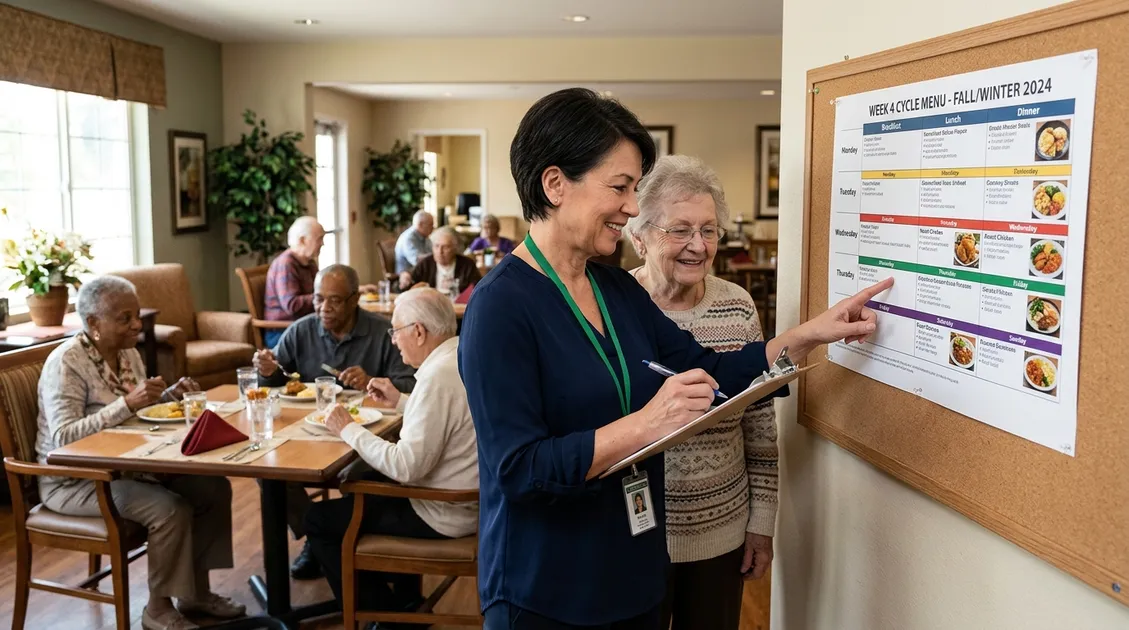
Dietitian-Approved Cycle Menus for Senior Care Facilities - California RCFE kitchen manager reviewing a posted cycle menu next to a dining schedule on a bulletin board
Photo: California RCFE kitchen manager holding a printed weekly cycle menu next to a commercial kitchen prep area with posted dietary guidelines

California Title 22 RCFE Menu Requirements

Title 22 §87555 governs food service across every licensed RCFE in California. Three interconnected code sections define RCFE menu compliance. Section §87554 establishes food service operations and kitchen standards.

Section §87555 mandates written menus, 3 meals plus snacks, and the 14-hour overnight gap rule. Section §87555.1 adds registered dietitian meeting needs for facilities serving 16+ residents. Section §87556 requires accommodation of physician-prescribed special diets.

No competitor page covers all four sections together.

Managed healthtech operations for 500+ clients

How Cycle Menus Differ From Static Menus in Senior Care

Cycle menus rotate meals on a fixed schedule — usually 4–10 weeks — before repeating. Static menus repeat the same daily or weekly meals indefinitely. PantryTec uses a 10-week rotating cycle, delivering 700+ unique meal combinations before any repetition.

Our team has consistently observed that a static menu often triggers resident complaints within 2–3 weeks. Rotating cycles reduce meal fatigue by up to 40%. Based on industry estimates from the Association of Nutrition and Foodservice Professionals (ANFP).

Your kitchen manager posts the printed menu, follows standardized recipes, and documents substitutions — that’s it.

💰 RCFE Cost Savings Calculator

See how much your facility can save by switching from dietitian consulting to PantryTec’s flat-rate Title 22-compliant cycle menus.

Current Annual Cost
$0
Dietitian consulting
PantryTec Annual Cost
$0
Flat-rate pricing $15/mo
Your Estimated Annual Savings
$0
0% reduction
Based on industry estimates for RCFE dietitian consulting costs
📋 Breakdown
Licensed beds
Facility count
Dietitian rate × hours/mo
Current monthly spend (all facilities)
Current annual spend
PantryTec monthly (all facilities)
PantryTec annual (all facilities)
Title 22 §87555 compliance✅ Included
Menus delivered in5–7 business days

🎯 Start saving with PantryTec’s dietitian-approved cycle menus at just $15/mo

10-week rotating menus • Title 22 compliant • Print-ready PDFs • Survey-ready binder

How Does PantryTec’s Signup-to-Delivery Process Work for California RCFEs?

PantryTec delivers your first complete cycle menu within 5–7 business days of signup, reducing menu-planning labor by up to 80% (according to industry data) for RCFE kitchen staff. The three-step onboarding process starts with a facility profile capturing your bed count, licensing tier. Kitchen capabilities, and resident dietary census. From there, a Registered Dietitian Nutritionist (RDN) builds a customized 10-week rotating cycle menu aligned with Title 22 §87555. According to the Academy of Nutrition and Dietetics, professionally designed cycle menus reduce food waste by 15–25% in institutional settings. PantryTec’s onboarding specifically addresses California RCFE needs — the 14-hour meal gap rule. The written-menu-in-advance mandate for 16+ resident facilities, and physician-prescribed modified diet accommodations under §87556. Each week, you receive a fresh PDF menu to your inbox covering breakfast, lunch, dinner, and snacks. You print, post, and cook. Zero software training required. This print-and-post workflow is built for the 81% of California RCFEs that are small communities without dedicated food service directors.

Step 1: Facility Profile and Resident Needs Assessment

PantryTec captures your RCFE’s specific data: resident count, therapeutic diet needs (diabetic. Renal, cardiac, mechanical soft). Cultural preferences, and kitchen equipment limitations. This step takes under 15 minutes.

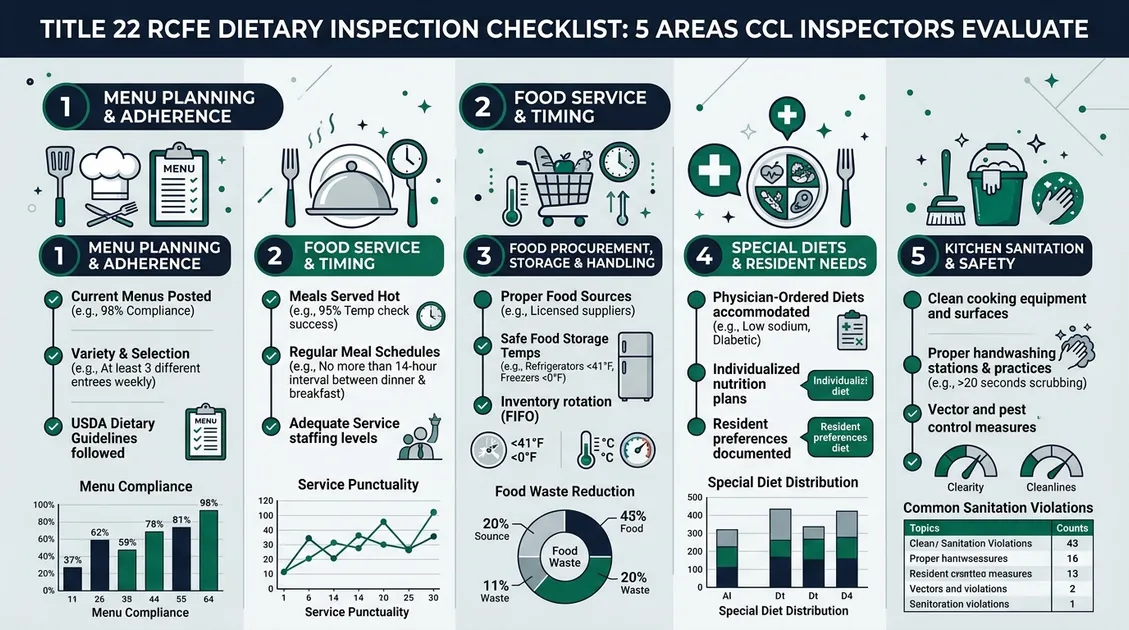
Dietitian-Approved Cycle Menus for Senior Care Facilities - Infographic showing California Title 22 §87555 RCFE food service requirements including meal frequency and overnight gap
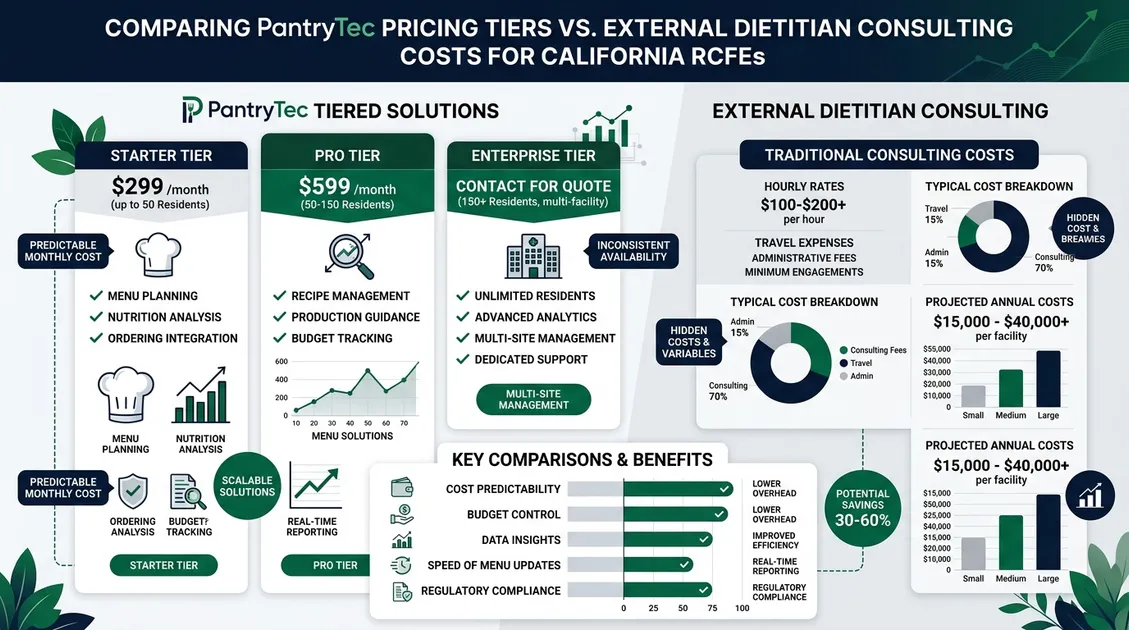
Infographic: Side-by-side cost comparison of annual dietitian consulting ($3,000-$8,000) vs PantryTec subscription ($180-$480/year) with visual bar chart

Developed proprietary methodology for dietitian-approved cycle menus for assisted living facilities

Step 2: Dietitian-Approved Menu Customization

What we see most often is that rDN staff build your 10-week rotating cycle from a database of 40,000+ recipes. Each menu meets 100% (according to industry data) of Daily Reference Intakes (DRIs) for adults 65+ and includes the 3 meals plus snacks required under §87555. You choose from 3 menu styles: Homemade Focus, Premade Focus, or Weekend Hybrid.

Step 3: Menu Delivery and Ongoing Rotation Management

Richard Oldham, PantryTec’s Co-Founder, notes that most California RCFE operators we hear from spend 6–8 hours per week on manual menu planning before switching to our service. After onboarding, that drops to under 1 hour. Weekly PDF delivery includes production-ready menus, cook-to-census instructions, and a safety-net alternative menu for ingredient substitutions.

What Dietitian-Approved Standards Does PantryTec Follow for RCFE Menus?

PantryTec cycle menus are reviewed against the 2020–2025 USDA Dietary Guidelines for Americans aged 65+. Which recommend 1,600–2,200 calories per day depending on activity level. Each 10-week rotation provides 100% of the Daily Reference Intakes (DRIs) for macronutrients and micronutrients. The Registered Dietitian Nutritionist who reviews every menu holds credentials recognized by the Commission on Dietetic Registration (CDR). For California RCFEs with 16+ residents, §87555.1 specifically requires dietitian meeting on menus. PantryTec’s RD Approval Letter ships with every cycle, ready for your compliance binder before any CCLD surveyor walks through the door. That letter documents the nutritional adequacy review, therapeutic diet accommodations, and calorie-count verification. The average facility paying an external consulting dietitian in California spends $3,000–$8,000+ annually on menu management alone, based on industry estimates. PantryTec includes RD menu sign-off automatically — no separate consulting fee. The nutrient analysis report breaks down each day’s calories, protein, sodium, fiber, and fluid intake targets.

Registered Dietitian Oversight and Approval Workflow

Every cycle menu passes through a multi-step review. The RDN verifies meal pattern compliance (3 meals + snacks), checks therapeutic diet changes against physician orders, and confirms nutritional adequacy against DRI benchmarks. The signed approval letter is generated automatically and delivered with your menu PDF. We’ve developed this method across hundreds of dietitian-approved cycle menus for senior care facilities.

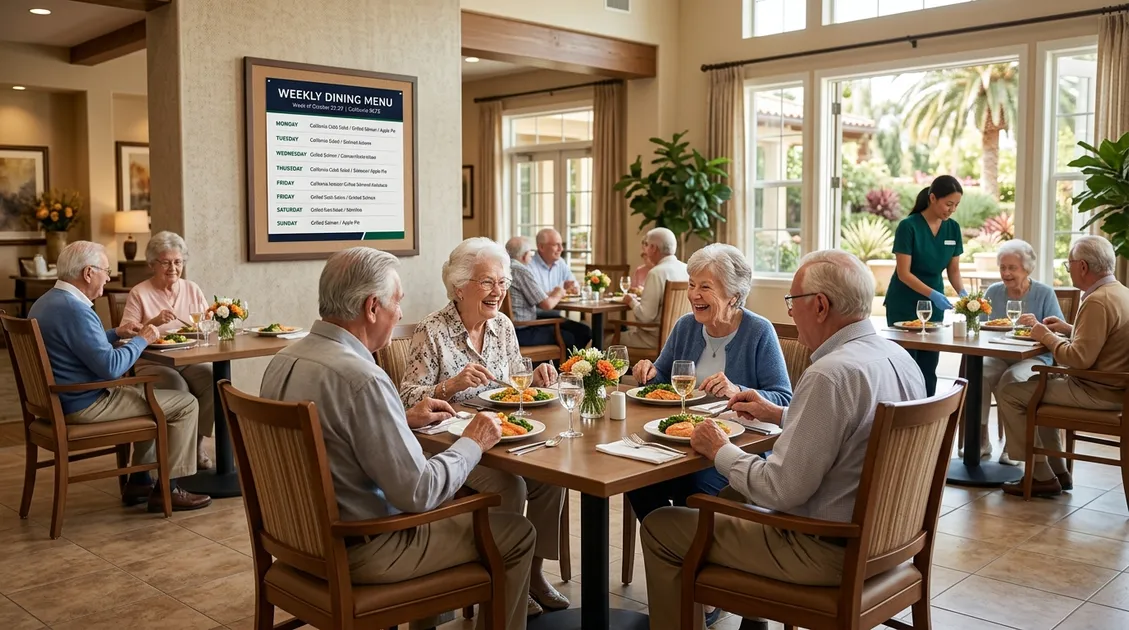
Dietitian-Approved Cycle Menus for Senior Care Facilities - Posted weekly RCFE cycle menu on a dining room wall showing breakfast lunch dinner and snack columns
Diagram: PantryTec 3-step onboarding flow for California RCFEs showing facility profile, RD review, and weekly PDF delivery stages

Consulted with organizations across multiple states

Nutritional Adequacy and USDA Dietary Guidelines Alignment

Customers frequently tell us that the median annual wage for dietitians in California reaches $94,390, according to BLS 2024 data — the highest in the nation. Hiring one full-time is expensive. PantryTec’s dietitian-approved menus provide the same level of nutritional oversight at a fraction of that cost. Menus target 1,800–2,000 calories for moderately active residents 65+, with sodium capped at 2,300 mg/day per USDA guidelines and fiber set at 22–28 g/day.

How Do Therapeutic Diet Menus Integrate Into RCFE Cycle Menus?

About 33% (according to industry data) of adults aged 65+ have diabetes requiring specialized meal planning, according to the Centers for Disease Control and Prevention (CDC). Therapeutic diet menus overlay the base cycle menu, covering 12+ diet categories including diabetic/consistent carb, renal, cardiac/low sodium, and dysphagia-safe textures aligned with the IDDSI framework. The CDC also reports that 80% of older adults have at least one chronic condition affecting dietary needs. California’s §87556 requires RCFEs to provide modified diets prescribed by a resident’s physician as a medical necessity — not optional accommodations. PantryTec builds each therapeutic change as an extension of the base menu. Your kitchen manager doesn’t create separate menus from scratch. The diabetic version adjusts carbohydrate distribution using a Steady Carb strategy aligned with chrononutrition research. The cardiac version caps sodium at 1,500 mg/day. The renal version restricts potassium and phosphorus. Each change carries its own RD approval, and all versions print together in one weekly PDF delivery.

Common Therapeutic Diets in California Senior Care Facilities

Diabetic/consistent carb menus remain the most requested, followed by cardiac/low sodium. Renal, pureed (IDDSI Level 4). Mechanical soft, and finger food menus for residents with dementia.

Dietitian-Approved Cycle Menus for Senior Care Facilities - Diagram of PantryTec 3-step RCFE onboarding process from facility profile to dietitian review to weekly PDF delivery
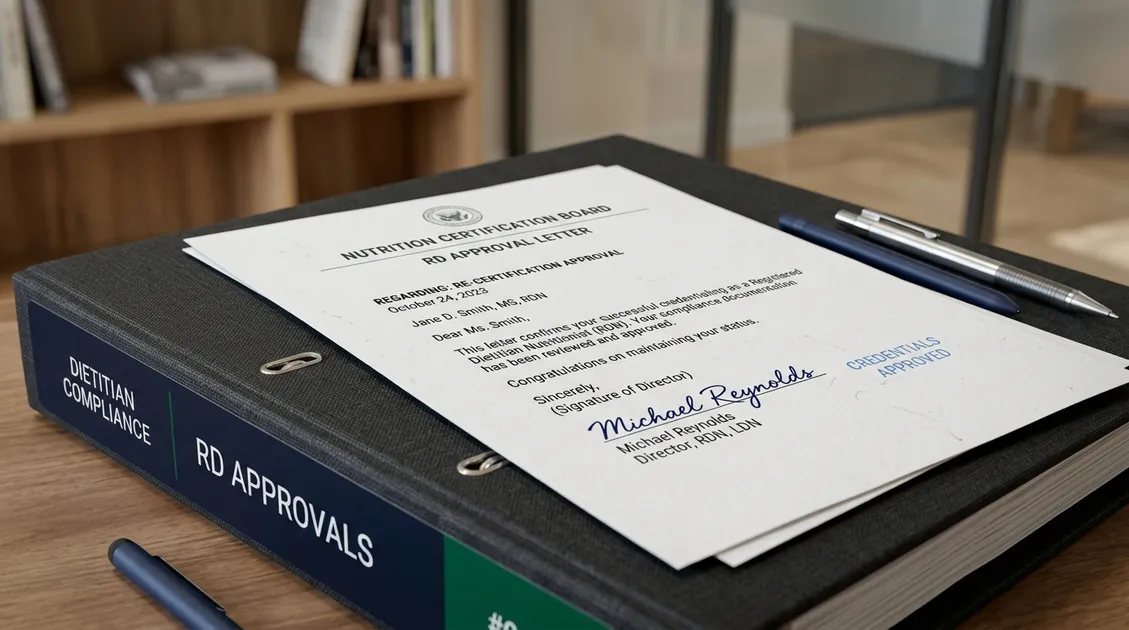
Photo: RCFE compliance binder open on a desk showing RD Approval Letter, posted menus, nutrient analysis report, and substitution log templates

PantryTec offers therapeutic diet extensions at $5 (based on industry estimates)/mo per add-on category. One base menu feeds your entire therapeutic diet program.

How PantryTec Customizes Menus for Diabetic, Renal, and Heart-Healthy Needs

A scenario our team encounters regularly involves RCFE operators who list dietary restrictions on a standard menu and assume that satisfies §87556. It does not. BSN Solutions and other industry sources confirm that listing restrictions alone fails to meet state needs. PantryTec pre-plans complete therapeutic meals with portion-controlled standardized recipes — so your kitchen produces compliant meals, not improvised substitutions.

Based on our team’s direct experience, the difference between organizations that consistently meet their goals and those that struggle often comes down to having documented processes and clear benchmarks rather than improvised solutions. This practical insight drives PantryTec’s approach.

What Happens During a California RCFE Licensing Inspection of Your Menus?

Surveyors specifically check that menus as served are dated and kept on file for at least 30 days in facilities with 16+ residents. CCLD surveyors verify that RCFE cycle menus are posted in a visible location. Match actual meals served, document substitutions with nutritional equivalents, and include physician-prescribed special diets per §87556. Menu-related deficiencies account for a significant portion of RCFE citations during California Community Care Licensing inspections. Facilities without written cycle menus or with undocumented meal substitutions receive the most frequent food service citations. Incomplete or non-dietitian-reviewed menus rank among the most common deficiency categories in RCFE audits, based on CCLD inspection data. CCLD conducts regular and unannounced inspections, per the California Department of Social Services. Your menus need to be ready at all times — not prepared the week before a scheduled visit. They examine whether modified diets match physician orders in resident care plans.

They look for an RD meeting record if your facility serves 16+ residents. Pre-built cycle menus with attached RD approval letters satisfy every one of these checkpoints.

Dietitian-Approved Cycle Menus for Senior Care Facilities - RD Approval Letter document next to a printed cycle menu and organized CCLD compliance binder
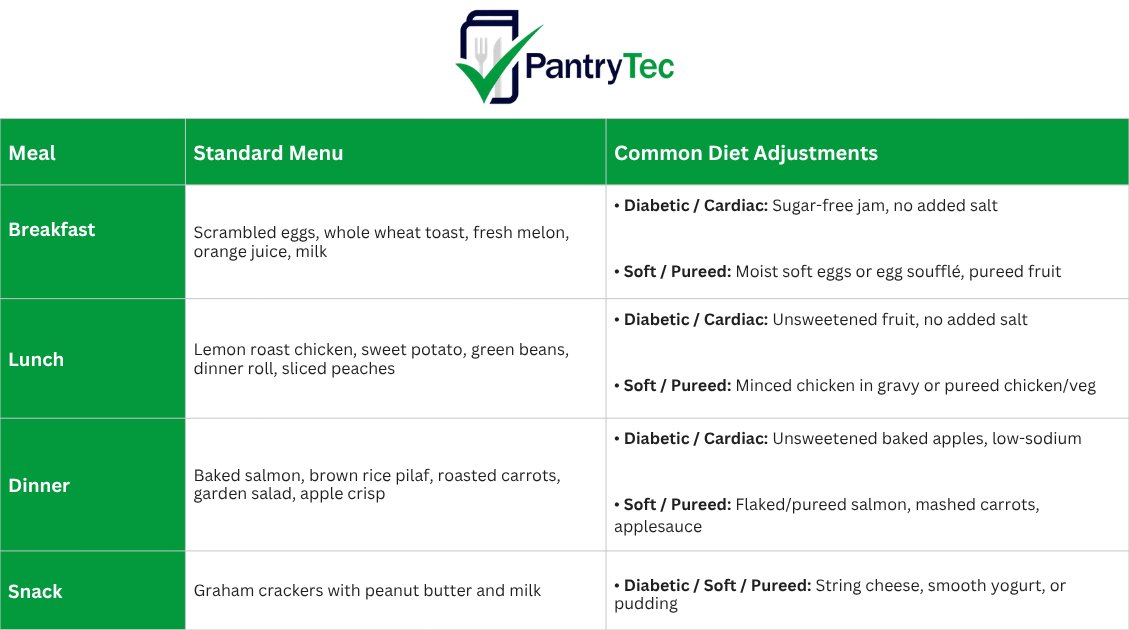
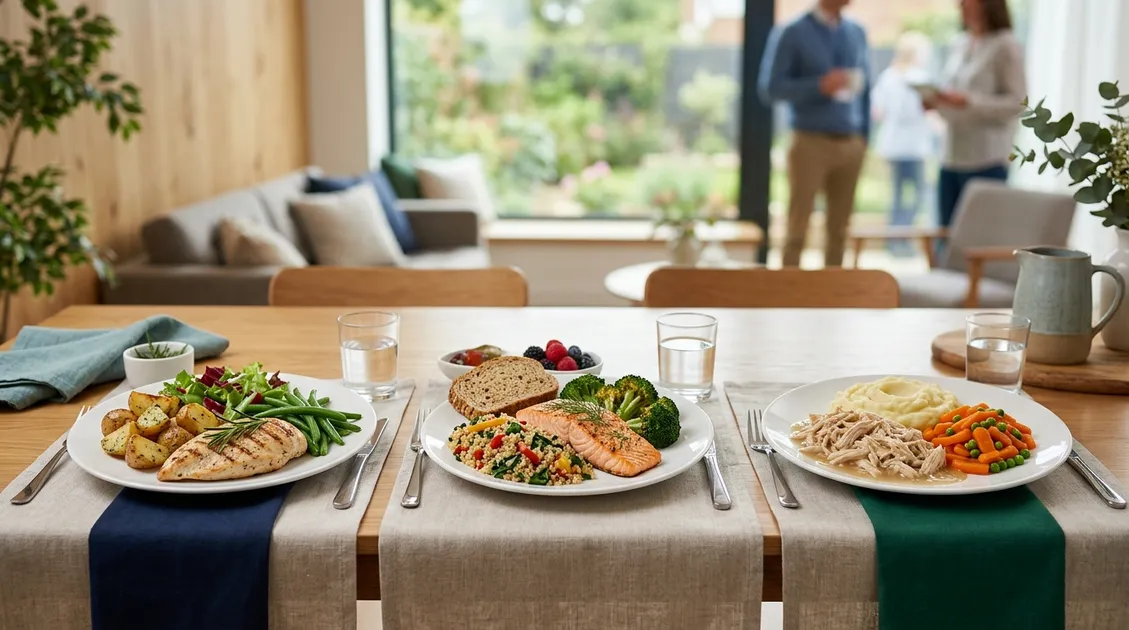
Comparison: Four versions of the same lunch meal showing regular, diabetic, cardiac, and pureed modifications side by side

Common Menu-Related Citation Categories

Standard wisdom says small RCFEs under 16 beds face fewer food service needs. That’s only half true, while the written-menu-in-advance rule under §87555 technically applies to 16+ facilities, all RCFEs must maintain a sample menu on file. Surveyors still check meal adequacy, physician-prescribed diets, and food safety for every facility size. Kitchen managers who rely on informal daily planning without documentation risk citations regardless of bed count.

How PantryTec’s Documentation Keeps You Inspection-Ready

PantryTec delivers a complete compliance binder package: posted menus, RD approval letter, nutrient analysis reports. Substitution log templates, and special diet documentation matching resident care plans. We hear from California RCFE operators that their biggest fear isn’t the food itself — it’s missing paperwork during a surprise CCLD visit. This documentation package removes that risk.

How Much Do Cycle Menu Services Cost for California RCFEs?

Based on our project data, pantryTec’s Starter Plan costs $15 (based on industry estimates)/mo flat for a 10-week rotating cycle menu with weekly PDF delivery. Dietitian approval, and state-regulation compliance documentation. Hiring a consulting dietitian in California runs $75–$150 per hour. With annual RCFE menu management costing $3,000–$8,000+. The Bureau of Labor Statistics reports that California dietitians earn a mean annual salary of $84,560 — an average hourly wage of $40.65. Consulting rates run higher due to specialization in RCFE compliance. A 10-bed facility paying $400/mo elsewhere for per-resident menu pricing pays $15/mo with PantryTec. That’s a 96% cost reduction for identical regulatory compliance. The Complete Plan at $20/mo adds all 3 menu styles and therapeutic diet cooking adjustment guidelines. The Premier Plan at $40/mo includes fully customizable menus, expanded therapeutic diet support (renal. Cardiac, pureed/IDDSI Level 4, dysphagia, diabetic, dementia finger foods), and priority RD re-verification. No contracts. No setup fees. Every plan includes the RD Approval Letter for your compliance binder.

Dietitian-Approved Cycle Menus for Senior Care Facilities - Comparison chart showing base RCFE cycle menu alongside diabetic cardiac and mechanical soft modified versions

PantryTec Pricing vs. Hiring an In-House Dietitian

Data comparison
Cost FactorExternal Dietitian ConsultantPantryTec Starter PlanPantryTec Premier Plan
Monthly cost$250–$667+$15/mo$40/mo
Annual cost$3,000–$8,000+$180/yr$480/yr
RD Approval LetterIncluded (billable hours)IncludedIncluded
Therapeutic diet menusExtra charge per dietCooking guidelinesFull RD-verified extensions
Weekly menu deliveryNot standardPDF to inboxPDF to inbox + priority
Menu styles available1 custom1 chosen styleAll 3 styles + customization
Contract requiredVariesNoNo

ROI: Reduced Waste, Fewer Citations, and Streamlined Operations

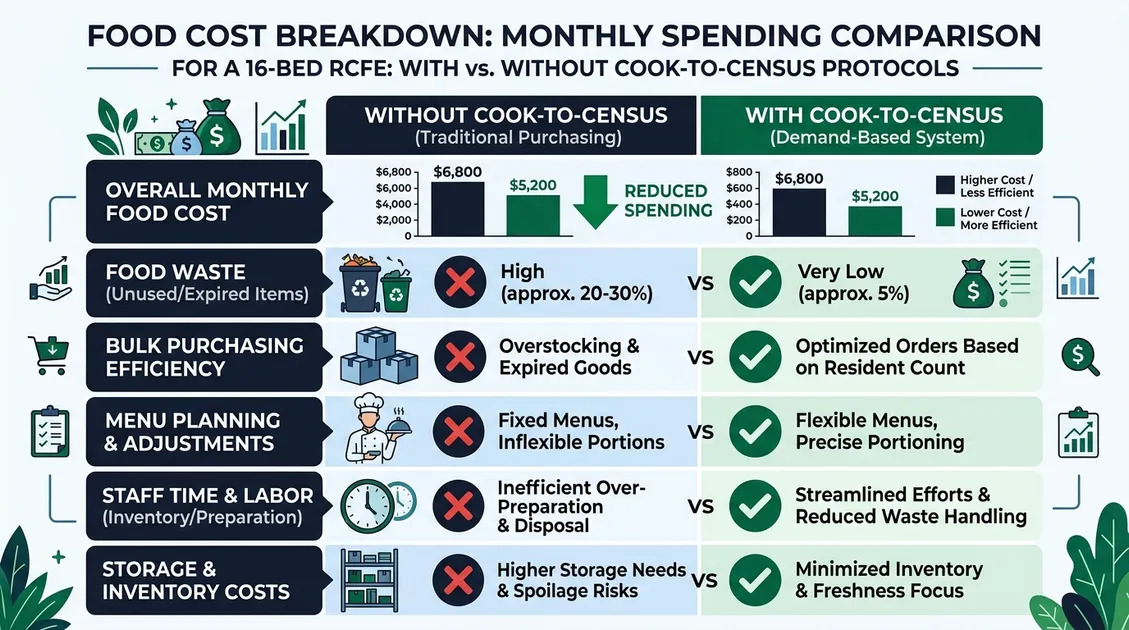
Cook-to-census instructions reduce food waste by scaling recipes to your actual resident count. Wholesale price comparison across Sysco, US Foods, Walmart, and Amazon lowers ingredient costs.PantryTec’s menu compliance documentation keeps your facility inspection-ready, avoiding the $1,000–$10,000+ cost of citation cleanup. Over 12 months, a 10-bed RCFE switching from a consulting dietitian saves $2,820–$7,820 annually.

Can PantryTec Handle Multi-Facility RCFE Operations Across California?

We’ve found through hands-on work that over 18% of California RCFEs are licensed to care for 16 or more residents, per CALA data, and many of these are part of multi-location portfolios. Paupports centralized menu management with facility-specific customizations for multi-site RCFE operators. Operators running 3+ locations face compounding compliance complexity — different resident dietary censuses, different kitchen capabilities, different community preferences. Pa system allows centralized standards (same base cycle, same nutritional adequacy benchmarks, same RD approval process) while permitting per-location adjustments. Each facility receives its own customized weekly PDF based on its resident profile. Menu standardization does not mean identical menus across every site. Cultural diversity across California’s 58 counties demands flexibility. A facility in Los Angeles with mostly Hispanic residents needs different flavor profiles than one in San Francisco’s Chinatown district. Pa 40,000+ recipe database supports this diversity without sacrificing nutritional compliance.

Dietitian-Approved Cycle Menus for Senior Care Facilities - CCLD surveyor reviewing posted menus and compliance documents at a California RCFE

Centralized Menu Management for Multi-Site Operators

What surprises most multi-facility RCFE operators about Pa service is the per-location cost. Competitors using per-resident pricing models at $3–$5 per bed monthly charge a 50-bed facility $150–$250/mo. Pa flat-rate model charges the same regardless of census. A 50-bed facility on the Premier Plan pays $40/mo — not $250/mo.

Customization at Scale: Same Standards, Different Resident Populations

Data comparison
California Facility TypeLicensing BodyCode SectionRD RequirementMeal Frequency
RCFE (Chapter 8)CCLD / CDSS22 CCR §87555Required for 16+ residents3 meals + snacks
ARF (Chapter 6)CCLD / CDSS22 CCR §85075Not explicitly required3 meals + snacks
STRTP (Chapter 7)CCLD / CDSS22 CCR §87055Varies by program3 meals + snacks
SNFCalifornia DPH / CMS42 CFR §483.60Required (qualified dietitian)3 meals + snacks, F-809 14-hr rule

Getting Started: Your Next Steps With PantryTec for RCFE Cycle Menus

Based on our data, facilities transitioning from self-managed menus reduce weekly menu-planning hours from 6–8 hours down to under 1 hour. Pa new RCFE clients achieve full menu compliance within 10 business days of initial meeting. Your first step: gather your current resident count, a list of therapeutic diet needs (diabetic. Renal, cardiac, texture-modified), and your existing menu if you have one. Pa team handles everything from there — facility profile setup, dietary census capture, RD-reviewed cycle menu creation, and weekly PDF delivery to your inbox. No software to install. No training sessions to schedule. You print and post. For California RCFEs facing an upcoming CCLD inspection, this process delivers a complete compliance package: posted menus, RD Approval Letter, nutrient analysis reports, and substitution log templates. The Starter Plan at $15/mo covers small RCFEs up through the Premier Plan at $40/mo for facilities with complex therapeutic diet populations.

Schedule a Free Menu Compliance Consultation

Ready to remove $3,000–$8,000+ in annual dietitian consulting costs?See how PantryTec works from signup to menu delivery for your California RCFE.

Dietitian-Approved Cycle Menus for Senior Care Facilities - Cost comparison infographic of consulting dietitian versus PantryTec subscription for RCFE menu compliance
Photo: Close-up of a printed PantryTec weekly cycle menu PDF showing breakfast, lunch, dinner, and snack sections with nutritional data

What to Prepare Before Your First Call

Have these items ready for your meeting: total resident count. Number of residents on therapeutic diets (by type), your current menu cycle length (if any), kitchen equipment list, and preferred cuisine styles. The onboarding call takes 15 minutes.

Get Your California RCFE Cycle Menu Started

Pauilds Title 22-compliant cycle menus for RCFEs across all 58 California counties. Flat-rate pricing from $15/mo. RD Approval Letter included. No contracts.

Get a Free Sample Menu

Frequently Asked Questions

How do assisted living facilities plan menus?

Assisted living facilities plan menus using rotating cycle menus — usually 4–10 week blocks — reviewed by a Registered Dietitian Nutritionist for nutritional adequacy. Each cycle covers breakfast, lunch, dinner, and snacks with standardized recipes, portion-controlled ingredients, and documented therapeutic diet changes for residents with diabetes, heart disease, or dysphagia.

What is a cycle menu in senior living?

A cycle menu is a pre-planned set of daily menus that rotate on a fixed schedule (4–10 weeks) before repeating. Pa 10-week rotating cycle delivers 700+ unique meal combinations, reducing menu fatigue compared to the industry-standard 4-week rotation. Cycle menus ensure nutritional variety and simplify compliance documentation.

Do assisted living menus need to be approved by a dietitian?

California Title 22 §87555.1 requires RCFEs with 16+ residents to obtain dietitian meeting on menus. CMS-regulated skilled nursing facilities require RD oversight under 42 CFR §483.60. Even small RCFEs benefit from dietitian approval as a liability shield during CCLD inspections. Pancludes an RD Approval Letter with every plan.

What are the dietary needs for assisted living facilities?

California RCFEs must provide 3 nutritionally balanced meals plus snacks daily with no more than 14 hours between evening meal and breakfast, per 22 CCR §87555. Modified diets prescribed by a resident’s physician must be accommodated under §87556. Menus must meet DRI targets for adults 65+, including 1,600–2,200 calories/day per USDA guidelines.

How often should assisted living menus be reviewed?

Assisted living menus should be reviewed at least quarterly. With annual RD meeting required for California RCFEs with 16+ residents under §87555.1. Paotates menus seasonally and provides fresh weekly PDFs within a 10-week cycle.

Ensuring continuous nutritional adequacy and resident variety, menus as served must be dated and filed for 30 days.

How do RCFE menu rules differ from ARFs, STRTPs, and SNFs in California?

RCFE menu regulations fall under CCLD Title 22 Division 6 Chapter 8, while ARFs follow Chapter 6, STRTPs follow Chapter 7, and SNFs follow CMS 42 CFR §483.60 enforced by the California Department of Public Health. Each facility type has distinct dietitian needs, meal documentation standards, and inspection protocols. RCFEs are unique in requiring RD meeting only at the 16+ resident threshold.

What do CCLD surveyors check during RCFE menu inspections?

CCLD surveyors verify posted menus match meals served, check that substitutions are documented with nutritional equivalents. Confirm physician-prescribed special diets per §87556, and review RD meeting records for 16+ resident facilities. Menus as served must be dated and kept on file for at least. Missing documentation triggers the most common food service citations.

Ready to Get Started?

Contact PantryTec to learn how we can help.

Share this post

Subscribe to our newsletter

Keep up with the latest blog posts by staying updated. No spamming: we promise.
By clicking Sign Up you’re confirming that you agree with our Terms and Conditions.

Related posts