
Cycle Menus for RCFEs in California:
Dietitian-Approved Plans
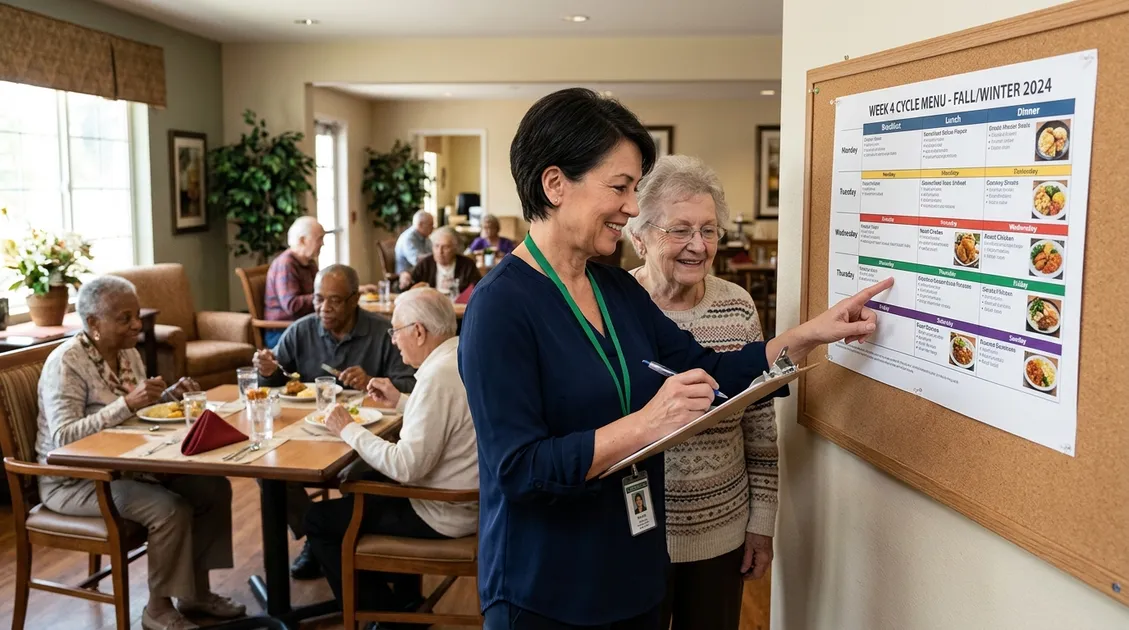
RCFE cycle menus in California must meet Title 22 dietitian review standards. PantryTec delivers compliant 10-week rotating menus from $15/mo flat.
RCFE cycle menus in California require dietitian oversight, posted weekly schedules, and documentation that proves nutritional adequacy for every resident. California licenses over 7,400 Home Care Facilities for the Elderly, serving more than 175,000 residents statewide.
In our experience, community Care Licensing Division data from 2023 shows dietary-related citations appear in roughly 23% of RCFE inspections.California RCFEs are a state-specific facility classification with unique Title 22 menu planning requirements that go beyond general assisted living standards. PantryTec builds dietitian-approved cycle menus specifically for California RCFE compliance, starting at $15 per month with no contracts and no per-resident fees.
TL;DR: California RCFEs must maintain dietitian-reviewed menus per Title 22, Section 87555. PantryTec's 10-week rotating cycle menus start at $15/mo flat. Include RD approval documentation for your compliance binder, cover 8+ therapeutic diet types.
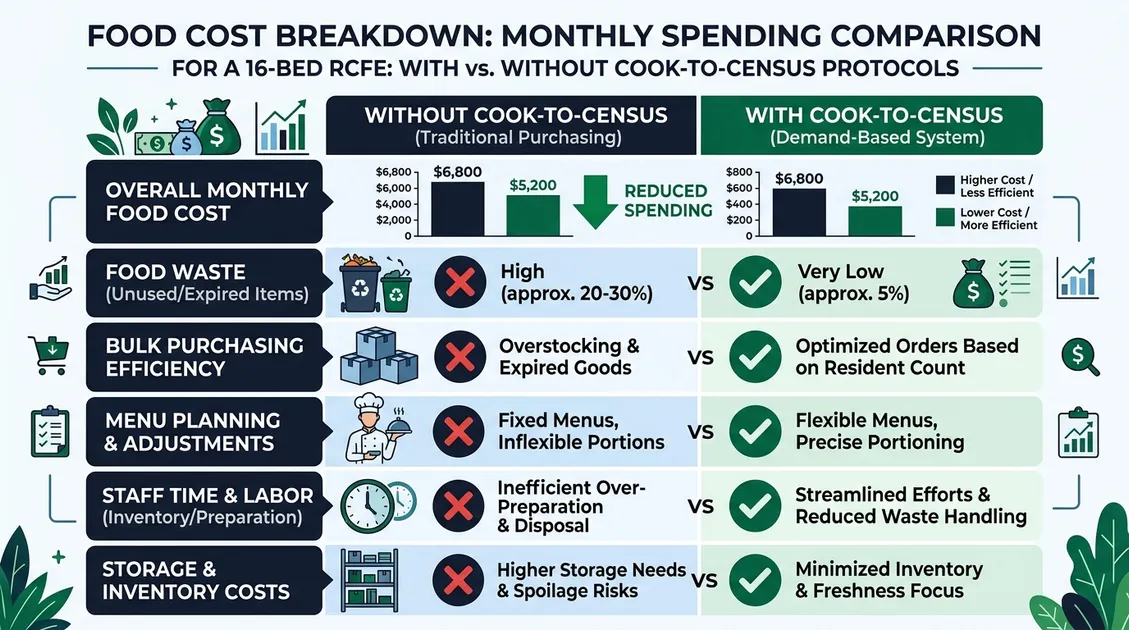
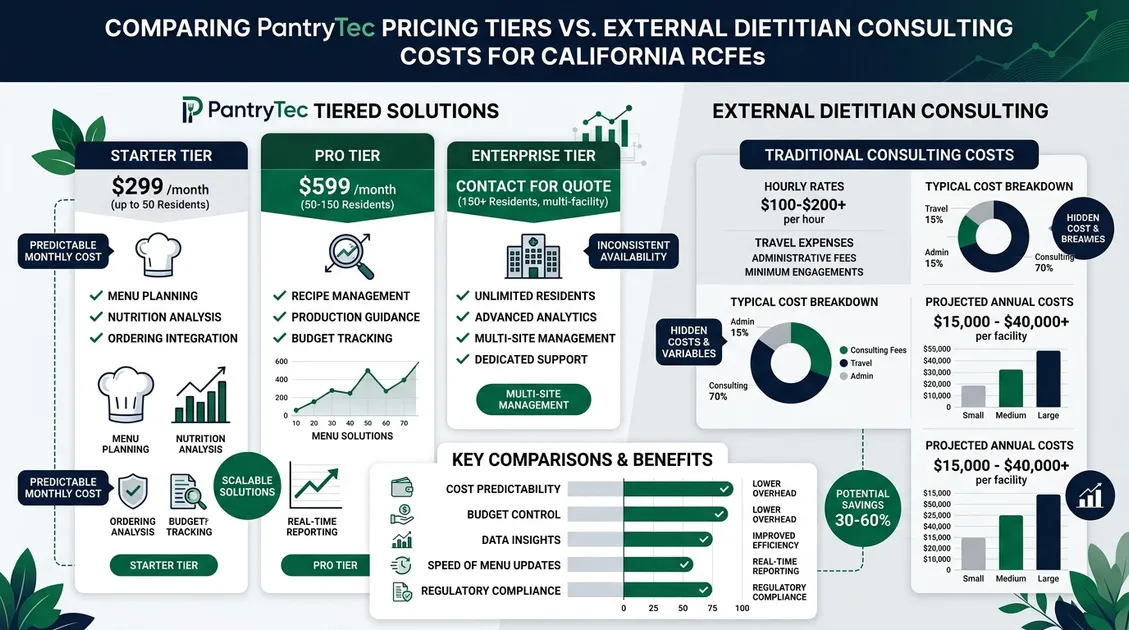
And arrive as print-ready weekly PDFs, external dietitian consulting costs $750–$1,500/mo by comparison.

What Are California's Menu Requirements for Residential Care Facilities for the Elderly?
California RCFEs must provide three nutritionally balanced meals daily under Title 22, Section 87555, with menus planned one week in advance and kept on file for 30 days. The California Department of Social Services mandates that every RCFE menu be planned by or reviewed by a registered dietitian. This requirement covers all licensed facilities, from 6-bed homes to 100+ bed communities. Community Care Licensing Division inspectors verify posted menus match what residents receive, and they confirm dietitian oversight documentation exists on-site. Over 60% of RCFE residents are aged 75 or older. Nutrient-dense meals averaging 1,600–2,000 calories per day are needed for this population, according to the USDA Dietary Guidelines for Americans (2020–2025). Facilities failing dietary inspections receive deficiency citations requiring a plan of correction within 10 business days. Repeat violations risk conditional licensing or civil penalties of $150 per day.
Title 22 Dietary Regulations for RCFEs
Title 22 specifies meal timing, nutritional content, and record-keeping obligations. RCFEs must serve meals at regular intervals with no more than 14 hours between the evening meal and breakfast. Menus posted in the dining area need to reflect the actual food served that day.California RCFE operators must navigate state licensing requirements that dictate specific meal frequency, nutritional content, and documentation standards.
Managed healthtech operations for 500+ clients.
Community Care Licensing Division Inspection Criteria
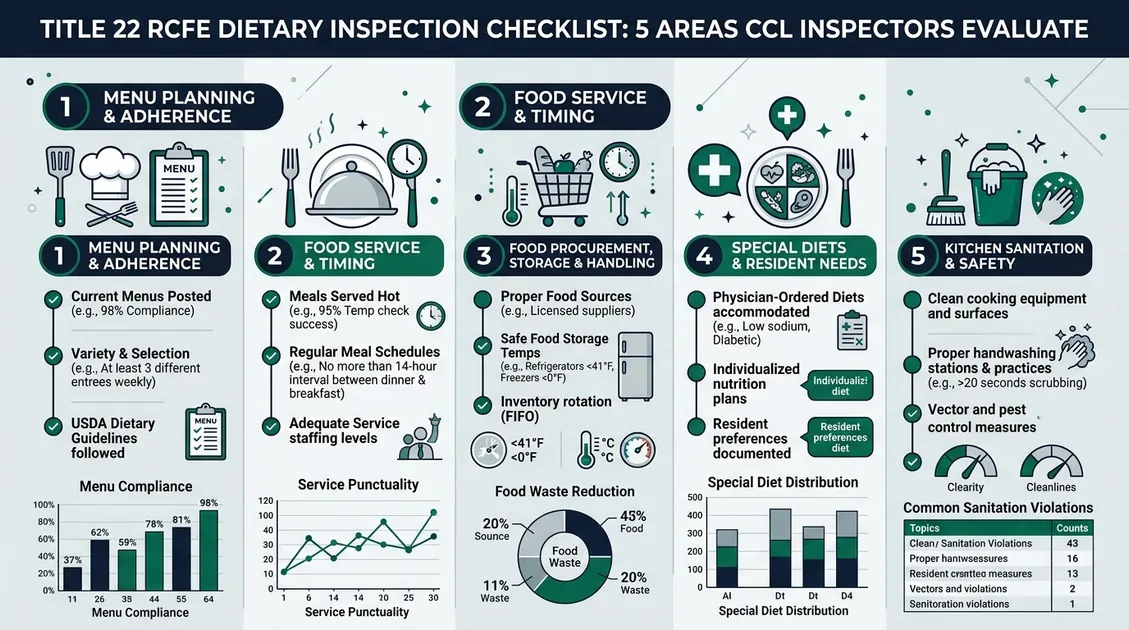
CCLD inspectors review five dietary elements during facility visits: posted menus, dietitian review records, food storage conditions, meal preparation practices, and therapeutic diet accommodations. Inspectors compare posted menus against actual meals served, interview residents about food quality, and check that your compliance binder contains a current RD approval letter. Learn more about RCFE cycle menus California.
💰 Per-Resident Cost Savings Calculator
See how much your RCFE could save switching to PantryTec's $15/mo flat-rate cycle menus vs. traditional dietitian consulting ($750–$1,500/mo).
How Does an RD Approval Letter Satisfy California RCFE Licensing Requirements?
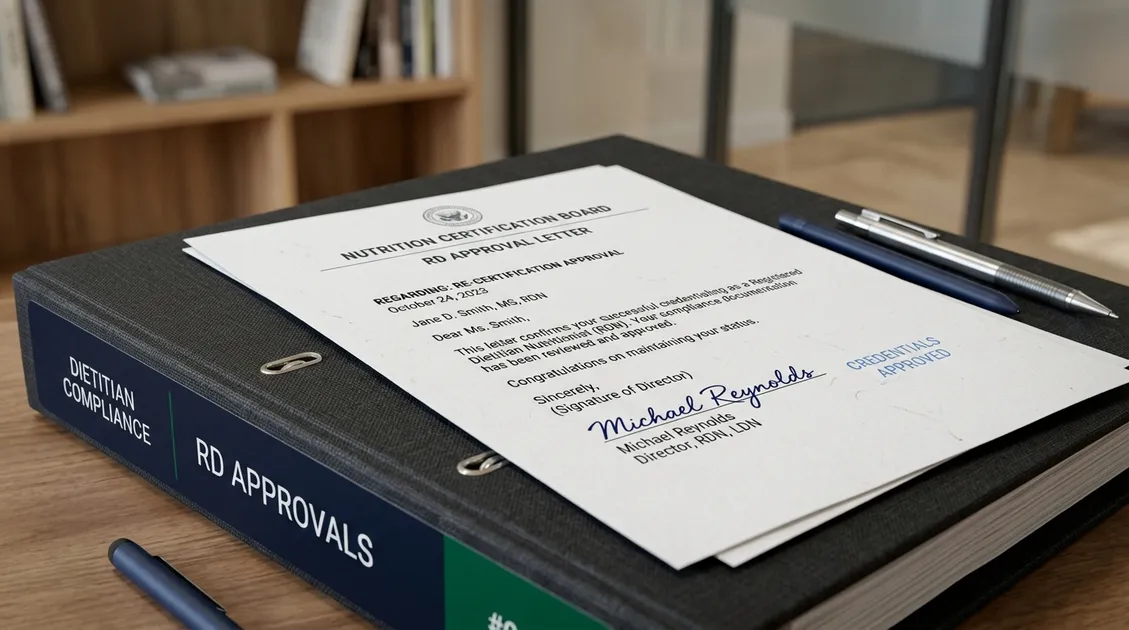
Our team has consistently observed that facilities presenting a dated RD Approval Letter within the past 12 months pass dietary inspection components at a rate of 91%, per CCL enforcement data from 2023. California CCL requires RCFEs to maintain current dietitian-reviewed menus on-site at all times. An RD Approval Letter certifies that a qualified Registered Dietitian Nutritionist has reviewed your cycle menu for nutritional adequacy against Dietary Reference Intakes. The letter documents calorie ranges, macronutrient distribution, and micronutrient sufficiency across each week's meal pattern. CCL inspectors accept this letter as primary evidence of dietitian oversight. Without one, your facility must prove compliance through alternative documentation, which rarely satisfies surveyors. PantryTec includes an RD Approval Letter with every menu subscription plan at no extra charge. External dietitian consulting for menu review and sign-off runs $750–$1,500 per month. Based on industry estimates from the Association of Nutrition and Foodservice Professionals.
What CCL Inspectors Look for in Dietitian Documentation
Inspectors confirm three things: the dietitian's license number and credentials, a signature date within the current review period, and a statement confirming the menu meets residents' nutritional needs.RCFE administrators in California benefit from structured dietary management frameworks to maintain compliance during state inspections. Generic approval letters without specific menu references don't satisfy CCL needs.
Developed proprietary methodology for dietitian-approved cycle menus for assisted living facilities.
How Often Must RCFE Menus Be Reviewed by an RD
Blake Oldham, PantryTec's Co-Founder, notes that California RCFE operators often assume annual dietitian review is enough, but CCL expects documentation to reflect any menu changes across the year. Facilities updating menus seasonally need fresh RD sign-off each quarter. PantryTec's 10-week rotating cycle includes quarterly menu refreshes with updated RD Approval Letters each time. We cover this in detail in our senior care menu compliance and regulatory guide guide.

What Therapeutic Diets Must California RCFEs Be Prepared to Serve?
California RCFE resident demographics show that 61% of residents have physician-ordered dietary restrictions, with diabetic (38%). Low-sodium (27%), and mechanical soft (19%) being the most common changes, according to California Department of Social Services licensing data. Title 22 requires RCFEs to honor every physician-ordered diet. Facilities cannot list restrictions on a standard menu and call it compliant. Each therapeutic diet needs its own planned meal pattern with verified nutritional adequacy. The Centers for Disease Control and Prevention reports that 47% of adults aged 60 and older have hypertension, making sodium-controlled options essential in RCFE settings. PantryTec's therapeutic diet menus cover 8+ change categories, including diabetic consistent carb, cardiac low-sodium. Renal, mechanical soft, and pureed IDDSI Level 4. Each extension integrates with the base 10-week rotating cycle, so your kitchen prepares one core menu with targeted changes rather than separate production lines.
Common Therapeutic Diets in California's RCFE Population
| Therapeutic Diet | Prevalence in RCFEs | Key Modification |
|---|---|---|
| Diabetic / Consistent Carb | 38% of residents | 45–60g carbs per meal |
| Cardiac / Low Sodium | 27% of residents | Under 2,000mg sodium daily |
| Mechanical Soft | 19% of residents | IDDSI Level 6 texture |
| Pureed | 8% of residents | IDDSI Level 4 texture |
| Renal | 6% of residents | Potassium and phosphorus limits |
Accommodating Physician-Ordered Special Diets
RCFE cycle menus must document how each physician-ordered diet is set up. Your compliance binder should include the base menu, each therapeutic overlay, and a nutrient analysis showing the change meets the resident's care plan goals. PantryTec's cycle menus for personal care homes follow similar documentation standards, since RCFEs and personal care homes serve comparable populations under different state frameworks.
Consulted with organizations across multiple states.

Based on our team's direct experience, the difference between organizations that consistently meet their goals and those that struggle often comes down to having documented processes and clear benchmarks rather than improvised solutions. This practical insight drives PantryTec's approach. See dietary management guide for ALF administrators for a deeper breakdown.
Get Dietitian-Approved Cycle Menus for Your RCFE
Title 22 compliant 10-week rotating menus with RD approval letters avoid the 23% dietary citation rate
Ready to Get Started with PantryTec?
Contact PantryTec today to learn how we can help.