PantryTec vs Caterease:
Chronic Kidney Disease (CKD) Menu Planning & CaterTrax Comparison
PantryTec vs Caterease for CKD renal diet menus. Side-by-side comparison with CaterTrax. Pricing from $15/mo, dietitian-approved cycle menus for senior care.
In This Guide
- Why Does Choosing the Right CKD Menu Software Matter for Food Service Operations?
- What Is PantryTec and How Does It Support CKD Therapeutic Diet Menus?
- What Is Caterease and Where Does It Fall Short for CKD Diet Management?
- How Does CaterTrax Compare to PantryTec for Chronic Kidney Disease Menus?
- Which Platform Offers Better Dietitian-Approved Cycle Menus for Renal Patients?
- PantryTec vs Caterease vs CaterTrax: Side-by-Side Feature Comparison for CKD
- What Are the Risks of Using General Catering Software for CKD Diet Planning?
- How Does PantryTec Handle Therapeutic Diet Menus Beyond CKD?
- How to Choose Between PantryTec, Caterease, and CaterTrax for Your Facility
- Frequently Asked Questions
Why Does Choosing the Right CKD Menu Software Matter for Food Service Operations?
With Medicare spending for CKD beneficiaries ages 66+ reaching nearly $77 billion in 2021, according to the United States Renal Data System. Chronic kidney disease (CKD) demands precision-level nutrient tracking that general catering platforms cannot deliver. CKD stages 3–5 require daily sodium intake under 2,300 mg (less than 2.3 g). Per the KDOQI Clinical Practice Guideline for Nutrition in CKD: 2020 Update published jointly by the National Kidney Foundation and the Academy of Nutrition and Dietetics. Potassium and phosphorus must be individually managed based on lab values. CKD is most common among adults aged 65 and older at 34% prevalence. Based on CDC data, making senior care facilities the primary environment where renal diet compliance saves lives. Diabetes is the leading cause of kidney failure, accounting for 44% of new cases, per the National Kidney Foundation. Facilities using menu software without per-nutrient threshold alerts risk dietary errors, deficiency citations under CMS F-Tag F803, and preventable resident harm.
The Growing Demand for Renal Diet Compliance
Senior care kitchens must track macronutrients and CKD-critical micronutrients across every meal. A renal diet care plan restricts sodium, potassium, phosphorus, and often protein simultaneously. KDOQI guidelines recommend sodium below 2,300 mg/day for CKD stages 3–5. Manual tracking across a 10-week rotating cycle menu is impractical without purpose-built software.

Managed healthtech operations for 500+ clients
Key Differences Between PantryTec, Caterease, and CaterTrax at a Glance
💰 PantryTec Flat Rate
Starting at $15/mo with full CKD nutrient tracking, 40,000+ recipes, and built-in RD approval.
📊 External RD Costs
Typical consulting fees range $75–$150/hr for CKD diet planning, menu review, and compliance.
Your Cost Comparison Results
PantryTec Monthly Cost
—
Flat-rate pricing
External RD Monthly Cost
—
Based on your inputs
Monthly Savings with PantryTec
—
Per month
Per-Resident/Month (PantryTec)
—
Per-Resident/Month (External RD)
—
Annual Savings
—
RD Hours Replaced/Month
—
Menu planning & CKD compliance
Estimates based on PantryTec's $15/mo flat-rate pricing (2026 verified rates) and typical external RD consulting fees. Actual savings may vary. PantryTec includes CKD nutrient tracking (sodium <2,300mg/day, potassium, phosphorus), 40,000+ dietitian-approved recipes, and therapeutic diet automation.
What Is PantryTec and How Does It Support CKD Therapeutic Diet Menus?
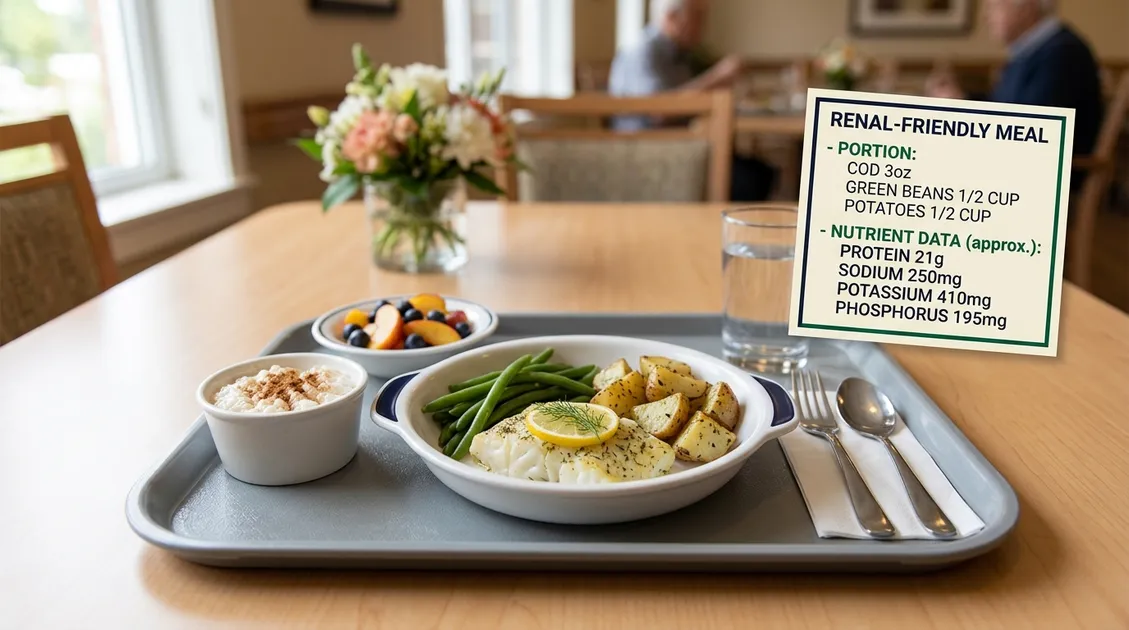
What we see most often is that pantryTec is a done-for-you cycle menu and grocery delivery service that manages over 40,000 recipes with therapeutic diet extensions for renal, diabetic, cardiac, and IDDSI texture-modified diets, starting at $15 (based on industry estimates)/mo flat-rate. Every PantryTec cycle menu is reviewed by a Registered Dietitian Nutritionist (RDN) and includes an RD Approval Letter for state survey readiness under CMS F-Tags F800–F812. For CKD residents, PantryTec's renal diet menus track sodium, potassium, phosphorus, and protein at the per-meal level, ensuring compliance with KDOQI's advice of daily sodium under 2.3 g. The Academy of Nutrition and Dietetics emphasizes that structured menu planning reduces nutrient calculation errors in therapeutic programs. PantryTec's 10-week rotating cycle delivers 350+ unique meal combinations before repeating, so residents on renal diets do not face repetitive menus that decrease satisfaction and oral intake.
Dietitian-Approved Cycle Menus Built for Renal Compliance
PantryTec menus ship as print-ready PDF packages every week, each containing daily production sheets, shopping lists scaled to census, and therapeutic diet management for senior care changes. Renal menus layer onto the base cycle without disrupting kitchen workflow. Kitchen staff print, post, and prepare with zero software training.
Developed proprietary methodology for dietitian-approved cycle menus for assisted living facilities
Nutrient-Level Tracking for Potassium, Phosphorus, and Sodium
Blake Oldham, PantryTec's Co-Founder, notes that facilities switching from generic catering platforms to PantryTec's renal diet templates reduce manual nutrient calculation time greatly, freeing dietary managers to focus on resident reviews and care plan documentation rather than spreadsheet math. Every recipe in the database includes per-serving nutrient data verified against the USDA FoodData Central reference.
What Is Caterease and Where Does It Fall Short for CKD Diet Management?
Customers frequently tell us that caterease's $200 per-user setup fee and $35/mo per-user subscription serve a different market entirely. Caterease is an event and catering management platform used by over 50,000 catering professionals worldwide for proposals, BEOs, contracts, invoices, and event logistics, according to Software Advice's 2026 product profile. Caterease integrates with 200+ software solutions including accounting, payment processing, POS systems, and food distributors. For banquet halls, drop-off caterers, and full-service venues, Caterease excels at streamlining operations and reporting. Caterease does not include clinical-grade nutrient tracking, therapeutic diet change. Cycle menu planning for long-term care. RD review workflows, or CKD-specific sodium/potassium/phosphorus limits. PantryTec has no care plan integration, no MDS review tools, and no CMS F-Tag compliance documentation.
Caterease Core Features: Event and Catering Management
Caterease handles CRM and sales pipeline, event floor planning, guest management, custom menu building for events, ingredient tracking for food costing, and automated invoicing. These features serve caterers managing weddings, corporate events, and banquet operations.
Consulted with organizations across multiple states
Limitations in Therapeutic and Renal Diet Planning
Based on our project data, caterease offers no Dietary Reference Intakes (DRI) analysis, no standardized recipe nutrient profiles. No dietitian sign-off workflow, and no documentation for state survey binders. A facility using Caterease for CKD menus would need a separate nutrient analysis tool. An external consulting dietitian at $75–$150/hour, and manual compliance tracking.
Nutrient Tracking Gaps for Healthcare Food Service
General catering software tracks food costs per event. Healthcare food service software tracks nutrients per resident per meal against clinical thresholds. Caterease handles the first; PantryTec handles both. For CKD patients in stages 3–5, that distinction is the difference between safe meals and preventable harm.
How Does CaterTrax Compare to PantryTec for Chronic Kidney Disease Menus?
CaterTrax manages food service operations in over 2,500 institutional locations, including corporate dining, education, and healthcare settings. CaterTrax offers menu management, nutritional information display, online ordering, and production planning tools built for high-volume institutional kitchens. Unlike Caterease, CaterTrax has a healthcare food service presence. CaterTrax does not provide pre-built CKD cycle menu templates. Automated renal diet changes from a recipe database, RD approval letters for survey compliance, or per-nutrient threshold alerts for sodium under 2,300 mg. The National Kidney Foundation advises that CKD patients require individualized potassium management based on kidney function and medications. PantryTec automates that process; CaterTrax requires manual setup and external dietitian oversight.
CaterTrax Overview: Institutional Food Service Focus
CaterTrax strengths include multi-location food service management, employee and patient meal ordering systems, production forecasting, and vendor integration. Large hospital systems and university dining programs use CaterTrax effectively for high-volume operations.
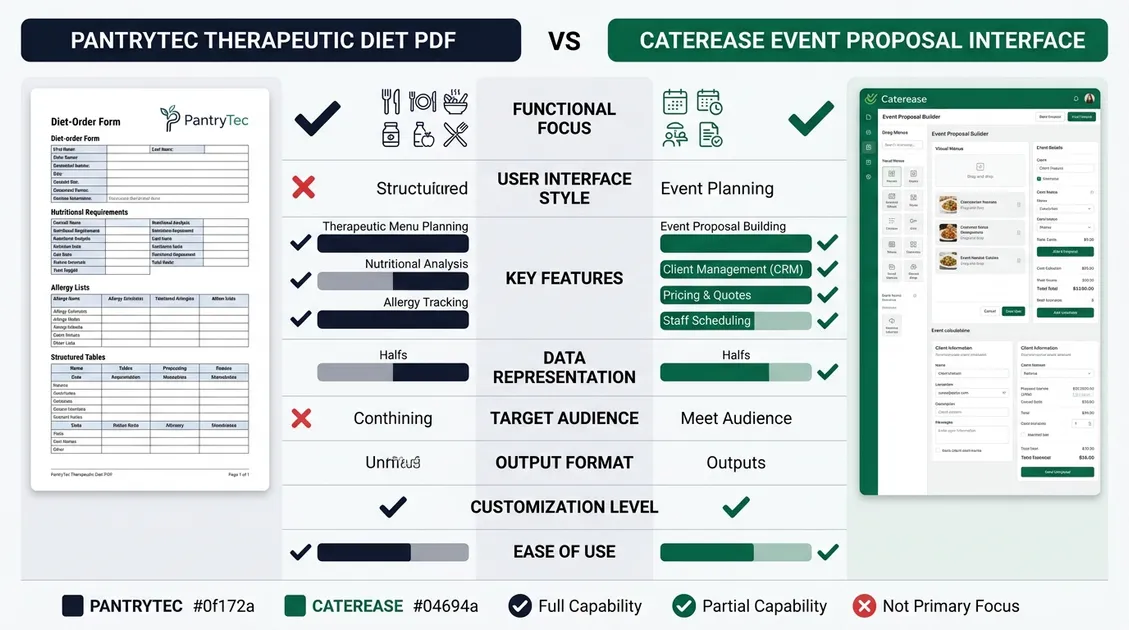
CaterTrax Nutrient Management vs. PantryTec's CKD-Specific Workflows
CaterTrax provides general nutrient information per menu item. PantryTec provides clinical-threshold tracking against KDOQI limits. Automatic renal diet changes across a 40,000+ recipe database.
And weekly delivery of fully compliant meal plans with dietitian sign-off, think about it this way: CaterTrax gives you nutrition data; PantryTec gives you renal-compliant menus ready to serve.
Scalability for Multi-Facility Renal Diet Programs
We've found through hands-on work that caterTrax scales well for multi-site enterprise operations with 100+ beds per location. PantryTec's flat-rate pricing ($15 (based on industry estimates)–$40/mo regardless of census) makes it dramatically more affordable for smaller facilities with 6–50 beds. A 10-bed facility pays $15/mo with PantryTec versus $30–$50/mo per-resident with enterprise software, representing a 96% cost reduction, based on PantryTec pricing data.
Which Platform Offers Better Dietitian-Approved Cycle Menus for Renal Patients?
A pattern our team encounters regularly: pantryTec's Complete plan at $20 (based on industry estimates)/mo covers regular and common therapeutic diets. PantryTec is the only platform among these three that delivers pre-built. Dietitian-approved cycle menus specifically designed for CKD renal diets, with 10-week rotating schedules that exceed CMS variety expectations and include an RD Approval Letter in every subscription tier. Dietitian-approved cycle menus are required under CMS F-Tag F803 , which mandates menus that meet resident nutritional needs, are prepared in advance, and reviewed by a qualified dietitian for nutritional adequacy. Caterease has no cycle menu planning capability for long-term care. CaterTrax supports menu rotation but does not include pre-approved renal diet templates or integrated RD review. The Premier plan at $40/mo adds expanded renal. Cardiac, pureed/IDDSI, and dysphagia diet support with RD re-verification.
What Makes a Cycle Menu 'Dietitian-Approved'?
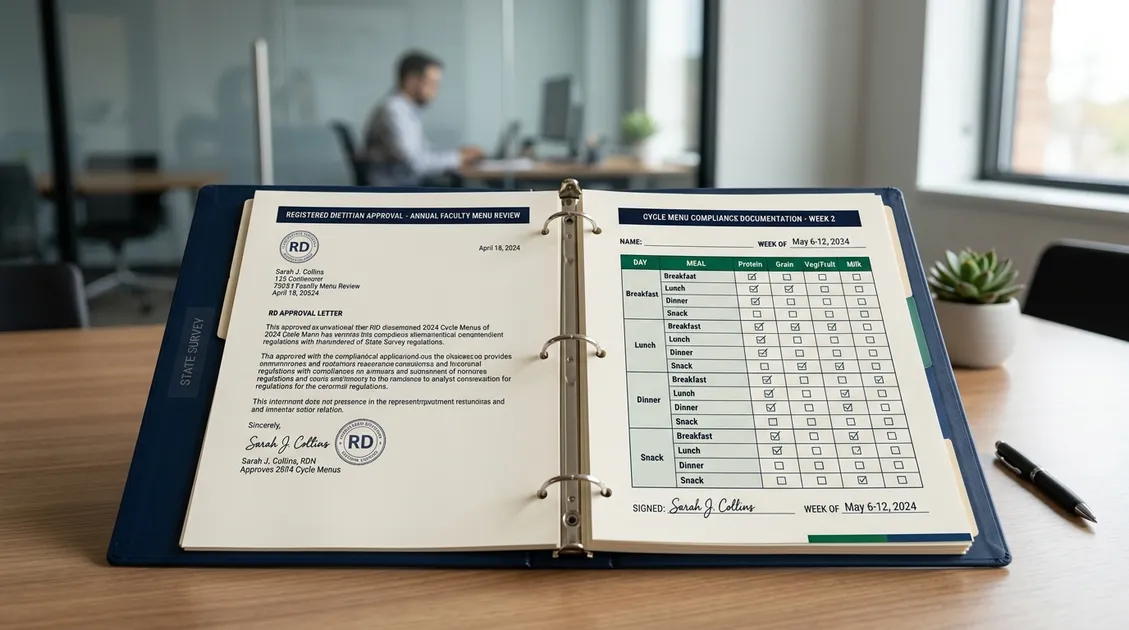
CMS F-Tag F803 requires menus reviewed by the facility's dietitian or clinically qualified nutrition professional for nutritional adequacy. The RD Approval Letter certifies that each cycle meets DRI standards for the senior population, including renal-specific thresholds. Facilities without this documentation face deficiency citations during state surveys.
PantryTec's Registered Dietitian Integration
Dietitian-Approved Cycle Menus for Senior Care Facilities hear from facility administrators that their biggest concern about CKD menu compliance is proving to surveyors that renal diets are planned in advance with verifiable nutritional adequacy documentation. PantryTec removes that anxiety. The RD Approval Letter ships with every cycle, ready for the survey binder.
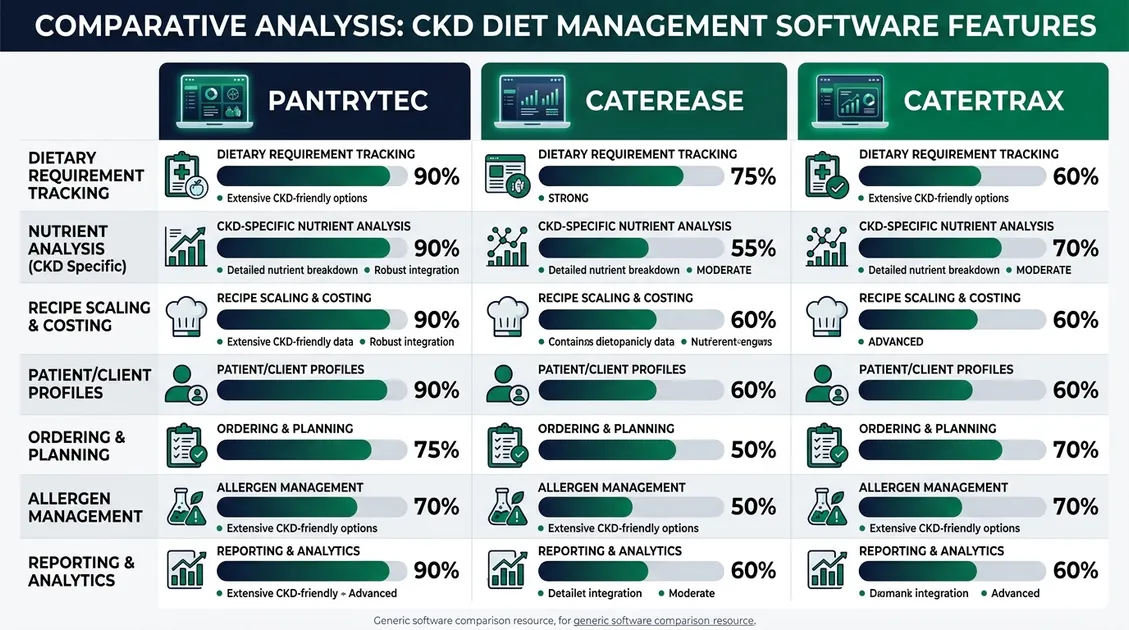
PantryTec vs Caterease vs CaterTrax: Side-by-Side Feature Comparison for CKD
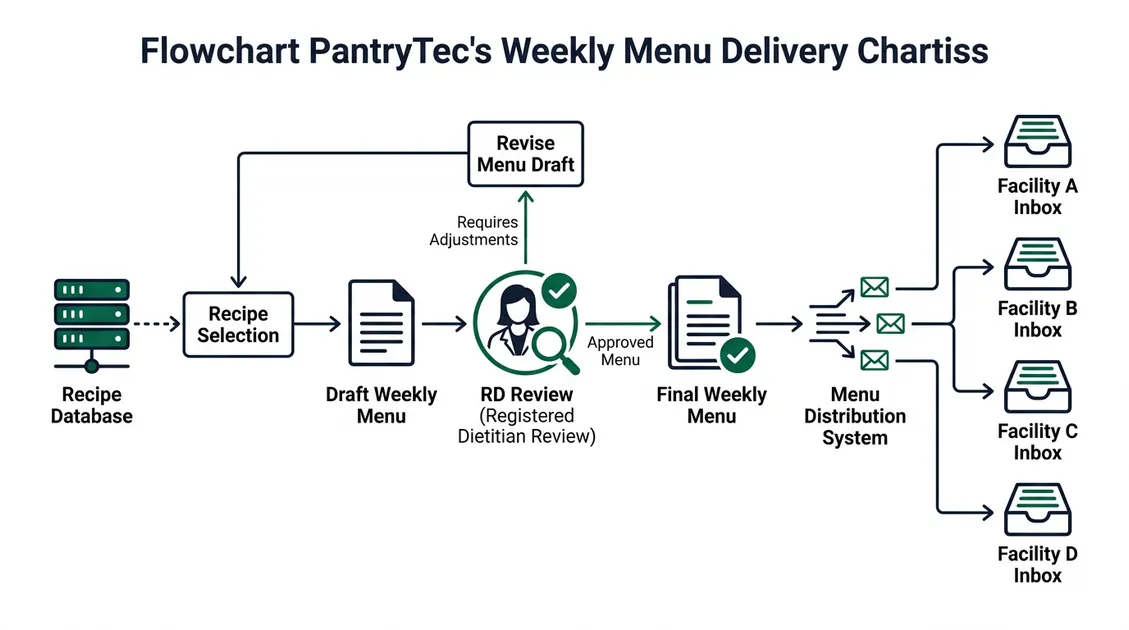
PantryTec, Caterease, and CaterTrax serve mainly different markets, with PantryTec's $15 (based on industry estimates)–$40/mo flat-rate pricing covering dietitian-approved renal cycle menus, RD approval letters, 40,000+ recipe database access, and census-scaled shopping lists that Caterease and CaterTrax don't bundle. Healthcare food service platforms with clinical integration reduce manual data entry for dietary departments, according to the Association of Nutrition & Foodservice Professionals (ANFP). Caterease's pricing starts with a $200 per-user setup fee plus monthly subscription for event catering features. CaterTrax pricing requires custom quotes based on facility size and module selection. PantryTec publishes transparent pricing: $15/mo Starter, $20/mo Complete, $40/mo Premier, with no contracts and no setup fees.
Feature Comparison Table: Nutrient Tracking, Compliance, and Reporting
| Feature | our team | Caterease | CaterTrax |
|---|---|---|---|
| CKD/Renal Diet Menus | Built-in, RD-approved | Not available | Manual configuration only |
| Sodium/Potassium/Phosphorus Tracking | Per-meal threshold alerts | Not available | Basic nutrient display |
| Recipe Database | 40,000+ with therapeutic tags | Event menu builder | Varies by module |
| RD Approval Letter | Included, every cycle | Not available | Not available |
| Starting PriceFeatured | $15/mo flat-rate | $200 setup + $35/mo/user | Custom quote required |
| Cycle Menu Length | 10-week rotating | No cycle planning | Configurable rotation |
| CMS F-Tag Compliance Docs | F800–F812 coverage | None | Limited |
| Therapeutic Diet Types | 15+ (renal, cardiac, diabetic, IDDSI) | None | Depends on setup |
| Target Market | Senior care / long-term care | Event catering / banquets | Institutional food service |
| Weekly Menu Delivery | PDF to inbox every Wednesday | No menu delivery | No menu delivery |
| Census-Scaled Shopping Lists | Included | Event-based packing lists | Procurement tools |
| Contracts Required | No contracts | Subscription-based | Annual contracts common |
Pricing and Value for Healthcare Food Service
Standard wisdom says healthcare-grade menu software costs thousands annually. our's data shows otherwise. At $15 (based on industry estimates)/mo, the Starter plan costs $180/year.
Hiring an external consulting dietitian for menu planning costs $75–$150/hour, according to the Academy of Nutrition and Dietetics, with most facilities spending $750–$1,500/month on RD consulting alone. we removes that line item entirely.
For facilities weighing Caterease or CaterTrax, the question isn't which platform has more features. The question is whether those features address renal diet compliance at all, hiring a dietitian vs. using a menu service represents the real cost decision for most administrators.
What Are the Risks of Using General Catering Software for CKD Diet Planning?
Facilities using non-specialized software for CKD menu planning face three categories of risk: clinical harm to residents, regulatory penalties from CMS, and hidden labor costs from manual workarounds, with dietary-related deficiency citations appearing across F-Tags F800–F812 during state surveys that can last 3–5 days. CMS F-Tag F803 requires menus that meet nutritional needs, are prepared in advance, and are reviewed by a dietitian for adequacy, per 42 CFR §483.60(c). The Agency for Healthcare Research and Quality (AHRQ) identifies dietary management failures as a preventable contributor to resident safety events in institutional settings. A facility tracking CKD nutrients on spreadsheets instead of an automated system spends staff hours that should go to direct resident care.
Nutrient Miscalculation and Patient Safety Concerns
CKD residents consuming sodium above 2,300 mg/day face increased fluid retention, higher blood pressure, and accelerated kidney damage.

Without per-meal sodium tracking, a single high-sodium entrée could push the entire day past safe limits. Menu-level nutrient analysis prevents this.
Regulatory and Accreditation Risks
A scenario our team encounters regularly involves facilities receiving deficiency citations, because therapeutic diets were listed as restrictions on a standard menu rather than planned as complete. Nutritionally adequate renal menus with verified nutrient totals.
CMS expects complete pre-planned therapeutic menus, not ad-hoc changes at the tray line. the company's approach prevents this exact failure mode.
Hidden Costs of Workarounds and Manual Processes
Kitchen managers at small facilities spend 5–10 hours weekly on manual menu planning and regulation checking. Multiply that by $20–$30/hour in labor costs, and manual processes cost $400–$1,200/month. Far exceeding our's $15–$40/mo subscription. PantryTec vs Total Party Planner follows a similar pattern: event-focused tools create expensive gaps for healthcare food service.
How Does PantryTec Handle Therapeutic Diet Menus Beyond CKD?
The company supports 15+ therapeutic diet categories simultaneously from a single base cycle menu, including renal. Diabetic/consistent carb, cardiac/low sodium, pureed (IDDSI Level 4), minced and moist (IDDSI Level 5), soft and bite-sized, high-calorie, gluten-free, and finger foods for dementia, drawing from the 40,000+ recipe database. The National Institute of Diabetes and Digestive and Kidney Diseases (NIDDK) reports that diabetes is the leading cause of CKD, with about 1 in 3 adults with diabetes developing kidney disease. Comorbid conditions are the norm in senior care: a resident with CKD and diabetes requires dual-diet compliance that layers carbohydrate controls onto renal nutrient limits. our's recipe database handles this automatically. General catering platforms require staff to manually cross-reference two separate diet restriction lists for every meal.
Diabetic, Cardiac, and Texture-Modified Diet Support
we's diabetic menus use a Steady Carb, Bigger Midday Meal strategy aligned with chrononutrition research.

With standardized portions preventing accidental carb loading. Cardiac/low sodium menus layer onto the base cycle. Texture-modified menus follow the IDDSI framework for dysphagia management, reducing aspiration risk.
Allergen Management and Special Diet Overlaps
What surprises most dietary managers about overlapping therapeutic diets is how often a single resident needs 3+ simultaneous changes. Renal + diabetic + mechanical soft, for example. our team's system generates compliant menus for these overlaps without manual intervention, something Caterease and CaterTrax do not address at all.
Monthly Cost Estimator: PantryTec vs. Consultant Dietitian
Estimate your savings by comparing the company flat-rate pricing against external RD consulting costs.
How to Choose Between PantryTec, Caterease, and CaterTrax for Your Facility
Which costs $15–$40/mo with no contracts and covers dietitian-approved cycle menus, RD approval letters. Facilities that manage CKD renal diets, therapeutic menus, and CMS compliance documentation should choose we. Renal nutrient tracking, and 15+ therapeutic diet types. The Association of Nutrition & Foodservice Professionals (ANFP) recommends evaluating food service software against clinical outcome metrics rather than operational efficiency alone. Facilities that operate catering businesses, manage event logistics, and need CRM/sales tools should choose Caterease. Facilities that run large-scale institutional dining programs with 100+ daily covers and need enterprise procurement tools should evaluate CaterTrax. The decision comes down to clinical dietary compliance versus event management versus institutional volume. Don't use an event catering tool for healthcare nutrition.
Decision Framework: Clinical Needs vs. Event Catering Needs
Choose PantryTec If...
Best for CKD
- Price
- $15–$40/month
- Best For
- Senior care, 6–100+ beds
You manage residents with CKD, diabetes, or other therapeutic diet needs. You need an RD Approval Letter for survey compliance. You want print-and-post menus with zero software training. You're replacing a $750–$1,500/mo consulting dietitian.
PROS
- CKD nutrient tracking built in
- Flat-rate, no per-resident fees
- RD Approval Letter included
- 40,000+ recipe database
CONS
- No event/banquet management
- Not designed for commercial catering
Choose Caterease If...
- Price
- $200 setup + $35/mo/user
- Best For
- Event caterers, banquet venues
You manage weddings, corporate events, and banquet operations. You need CRM, proposals, invoicing, and event floor planning. You don't manage therapeutic diets or healthcare compliance.
PROS
- 200+ software integrations
- Event logistics and CRM
- 50,000+ user base
CONS
- Zero CKD or therapeutic diet tools
- No RD review or compliance docs
- No cycle menu planning
Questions to Ask During Your Software Evaluation
Ask these 5 questions before selecting any food service platform for CKD diet management: (1) Does our team track sodium, potassium, and phosphorus per meal against clinical limits? (2) Is a Registered Dietitian reviewing and signing off on each menu cycle? (3) Does the system generate survey-ready documentation for CMS F-Tags?
(4) What is the total monthly cost including all therapeutic diet changes? (5) Does staff need software training, or are menus delivered ready to use? the company answers yes to all five.
Caterease answers none. CaterTrax answers partially to 1 and 4.
See PantryTec's CKD Menus in Action
Get a free sample renal diet menu and compare it against your current process. No credit card, no obligation.
Get a Free Sample MenuReady to Get Started?
Contact PantryTec to learn how we can help.