
Minced & Moist (IDDSI Level 5) Cycle Menus
For Senior Care Facilities.
Minced and moist cycle menus provide IDDSI Level 5 texture-modified meals with a strict 4 mm particle size limit for residents with oropharyngeal dysphagia in nursing homes, assisted living facilities, and memory care communities. PantryTec delivers RD-approved minced and moist menus across a 10-week seasonal rotation starting at $15/month with no per-bed charges and no external dietitian fees.
Part of our therapeutic diet menus for senior care facilities, covering all 8 IDDSI framework levels.
Last updated: April 2026
Defining IDDSI Level 5 Within the IDDSI Framework
Who Needs Minced & Moist Texture-Modified Diets?
| IDDSI Level | Texture Name | Max Particle Size | Key Test |
|---|---|---|---|
| Level 4 | Pureed | No lumps | Spoon tilt (flows off) |
| Level 5 | Minced & Moist | 4 mm | Fork pressure (squashes easily) |
| Level 6 | Soft & Bite-Sized | 15 mm | Fork pressure (breaks apart) |
| Level 7 | Regular / Easy to Chew | No restriction | No specific test |
Minced moist IDDSI Level 5 menus for senior care facilities address one of the most common texture-change needs in long-term care dining.Minced and moist menus are part of the IDDSI-aligned therapeutic diet framework used across senior care settings, bridging the gap between fully pureed foods and soft, bite-sized options. PantryTec builds these menus with Registered Dietitian oversight, fork-pressure testing documentation, and flat-rate pricing that removes per-resident fees.
TL;DR — Minced & Moist (IDDSI Level 5) Menus
Minced and moist menus restrict all food particles to ≤4 mm, bind proteins with cohesive sauces to eliminate separate thin liquids, and satisfy 42 CFR §483.60 requirements for individualized nutrition care. Dysphagia affects an estimated 40–60% of nursing home residents, and aspiration pneumonia accounts for up to 86.7% of pneumonia cases in elderly populations. PantryTec's IDDSI Level 5 cycle menus give dietary managers a turnkey compliance tool RD-approved, 10-week rotation, from $15/month replacing the $750–$1,500/month external consultant model.
How Do Minced & Moist Menus Ensure Survey Compliance?
Minced and moist menus fulfill the federal mandate under 42 CFR §483.60, which requires long-term care facilities to provide therapeutic diets that meet each resident's assessed nutritional needs. As of 2026, survey teams actively verify that texture-modified meals match physician orders and Speech-Language Pathologist (SLP) evaluations and facilities that serve unstandardized "soft food" without documented particle-size controls face F-tag deficiency citations. Minced and moist menus eliminate this operational gap by replacing subjective kitchen instructions with repeatable culinary protocols: every protein is tenderized, minced to ≤4 mm, and bound with pureed vegetable sauces or low-fat gravies that prevent thin liquid separation. We designed PantryTec's IDDSI Level 5 menus so dietary aides and CNAs never have to estimate particle size during service — each recipe specifies exact processing steps, moisture ratios, and plating instructions that kitchen staff can execute with confidence during unannounced inspections.
Federal Regulatory Requirements
Minced and moist menus address the explicit regulatory directive that care facilities must accommodate individualized texture modifications prescribed by a physician or SLP. Surveyors compare served meals directly against the resident's care plan during inspection.
42 CFR §483.60 — Food & Nutrition Services
Federal regulation requires therapeutic diets meeting each resident's specific nutritional and texture-modification needs, verified against physician orders and SLP evaluations.
IDDSI Level Positioning
Minced and moist menus occupy the middle tier of the IDDSI framework, bridging pureed (IDDSI Level 4) and soft & bite-sized (IDDSI Level 6). Staff must understand the moisture and particle differences between adjacent levels to prevent unsafe upward transitions.
How Does PantryTec Design Dietitian-Approved IDDSI Level 5 Cycle Menus?
TL;DR: IDDSI Level 5 minced and moist foods must be ≤4 mm, fork-pressure soft, and moist across. PantryTec's Premier plan ($40/mo) includes IDDSI Level 5 menus with RD approval. About 8% of the global population has dysphagia.
In our experience, aspiration pneumonia accounts for up to 30% of pneumonia cases in long-term care. Proper texture change reduces choking incidents by up to 60%.
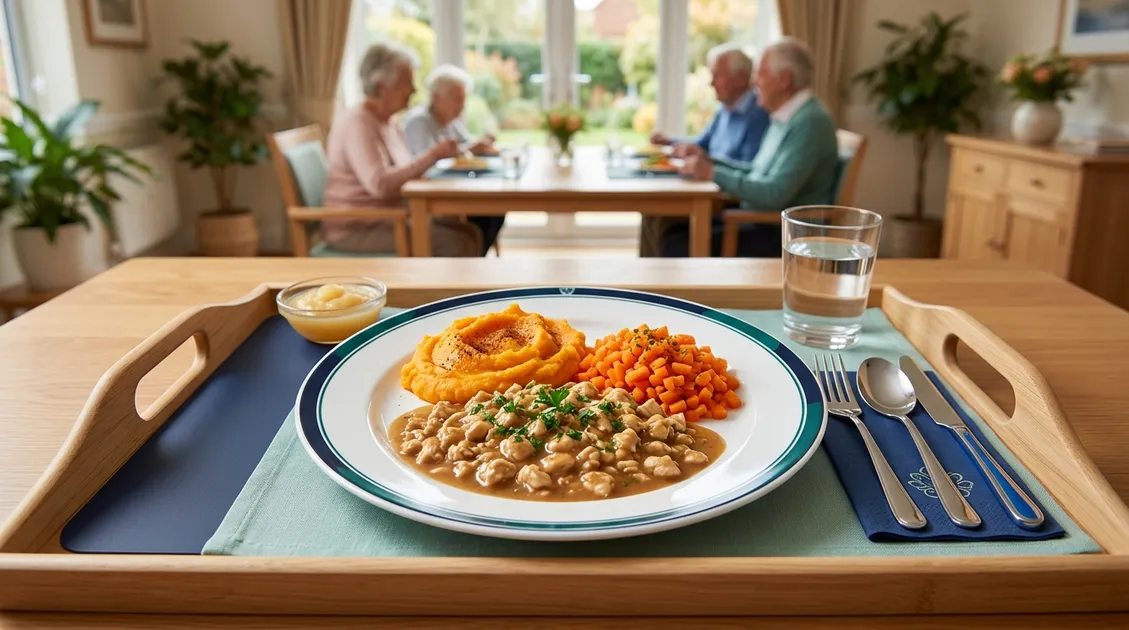
About 8% of the global population experiences some form of dysphagia, per IDDSI prevalence data. IDDSI Level 5 minced and moist menus serve residents who can tolerate more texture than pureed food but still require particle sizes no larger than. According to the International Dysphagia Diet Standardisation Initiative (IDDSI), Level 5 foods must pass a fork-pressure test, remain moist across, and contain no thin liquid separation. In long-term care settings, that percentage climbs dramatically. Aspiration pneumonia accounts for up to 30% of pneumonia cases in skilled nursing and assisted living facilities, according to the American Geriatrics Society. Standardized texture-modified menus reduce this risk by ensuring every meal meets measurable safety criteria. Without IDDSI-compliant menus, facilities rely on kitchen staff to interpret vague diet orders like "chopped" or "ground," creating inconsistent textures that increase choking and aspiration hazards for vulnerable residents.
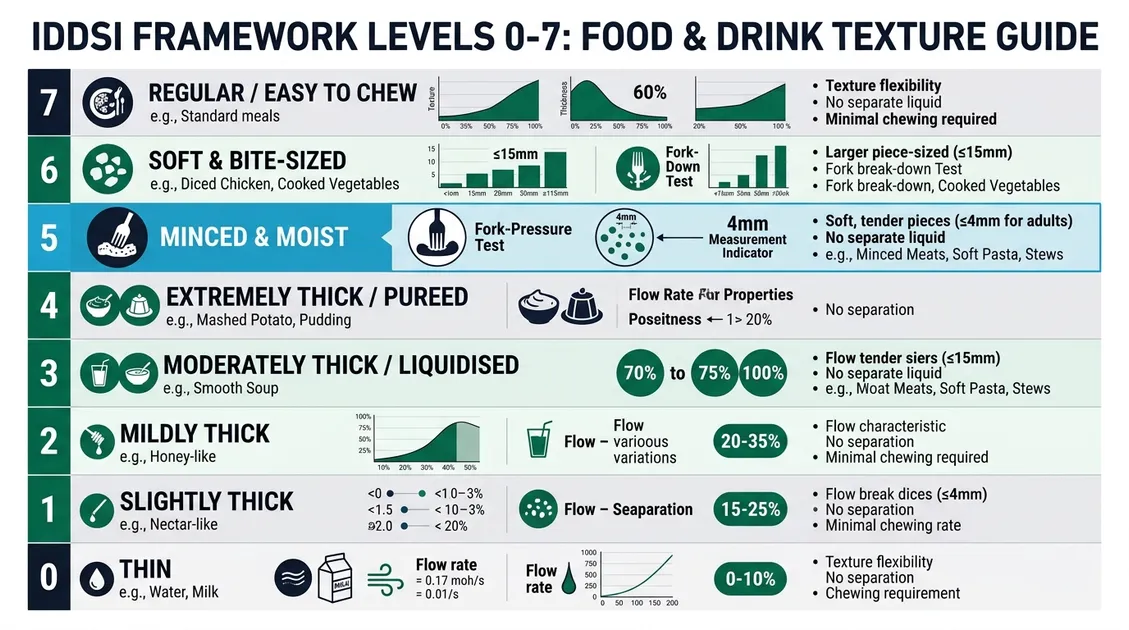
IDDSI Level 5 sits between Level 4 (pureed) and Level 6 (soft and bite-sized) on the 8-level IDDSI Framework scale (Levels 0–7). Level 5 foods hold their shape on a spoon, don't require chewing strength, and compress easily under fork pressure.
Theparticle size limit distinguishes Level 5 from Level 6, where pieces can measure up to 15 mm. This specificity matters, because speech-language pathologists prescribe exact texture levels based on each resident's swallowing assessment.
Managed healthtech operations for 500+ clients.
Residents with moderate dysphagia, partial dentures, or weakened oral motor function are the primary candidates for Level 5 diets. Memory care residents who struggle with utensils also benefit, since minced and moist foods are easier to manage with adaptive silverware. Your speech-language pathologist or attending physician issues the diet order, and the kitchen must execute it always at every meal.
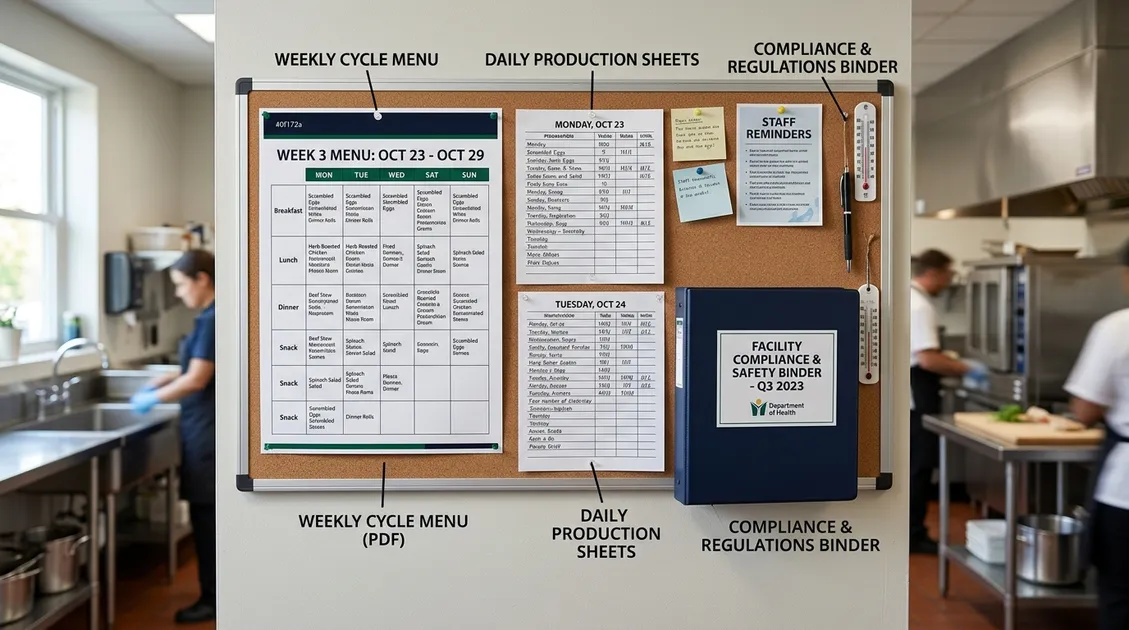
The Premier plan at $40/mo includes full IDDSI Level 5 support alongside other therapeutic extensions like cardiac, renal, and diabetic changes. PantryTec designs IDDSI Level 5 cycle menus using a 10-week rotation that covers breakfast. Lunch, dinner, and snacks across 70 unique daily meal plans before repeating. Every menu undergoes review by a Registered Dietitian Nutritionist to verify nutritional adequacy against the Dietary Reference Intakes (DRIs) for adults over 65. The Academy of Nutrition and Dietetics recommends that all texture-modified menus be developed or reviewed by a registered dietitian to ensure nutritional completeness. PantryTec's menus arrive as print-ready PDFs each week, so your kitchen staff doesn't need to learn software or log into a platform. Each recipe includes standardized portion sizes, preparation instructions for achieving the ≤particle requirement, and cook-to-census scaling. Smaller facilities can add Level 5 menus to the Complete plan for $5/mo per therapeutic diet add-on. Learn more about minced moist IDDSI level 5.
Why Are Minced & Moist Menus Critical for Dysphagia Safety?
Minced and moist menus address the primary swallowing failure pattern in oropharyngeal dysphagia: the inability to form a cohesive food bolus that travels safely past the airway. According to a 2024 meta-analysis published in Healthcare (Roberts et al., PMC), dysphagia prevalence in residential aged care facilities ranges from 16% to 69.6%, with a pooled estimate of 56.11%. A separate meta-analysis in the Journal of Clinical Medicine (Doan et al., 2022) reported nursing home prevalence between 47% and 59% depending on assessment method. Minced and moist menus mitigate the downstream consequence of unmanaged dysphagia: aspiration pneumonia, which accounts for 86.7% of pneumonia cases in older adults according to a retrospective cohort study at Sakurajyuji Hospital (PMC, 2021). SLPs prescribe IDDSI Level 5 when residents can no longer safely manipulate chunks larger than 4 mm, and our menus translate that clinical prescription into executable kitchen recipes with built-in moisture binding and IDDSI-compliant testing checkpoints.
Dysphagia Prevalence in Aged Care
Minced and moist menus serve a population where dysphagia affects an estimated 56% of residents in aged care facilities (Roberts et al., Healthcare, 2024 pooled meta-analysis of 7 studies, 95% CI: 39.4–72.2%).
Aspiration Pneumonia Proportion
Minced and moist menus target the root cause of aspiration events: per a Japanese cohort study of 412 elderly patients (PMC, 2021), aspiration pneumonia accounted for 86.7% of all pneumonia cases in adults aged 65+.
Silent Aspiration Risk
Minced and moist menus guard against undetected aspiration an estimated 55–59% of individuals with dysphagia experience silent aspiration with no overt coughing or choking symptoms (Roberts et al., Healthcare, 2024).
Cycle Menu Rotation and Nutritional Adequacy
Our team has consistently observed that a 10-week rotation prevents the menu fatigue that drives plate waste in long-term care. Blake Oldham, PantryTec's Co-Founder, notes that facilities switching from static 2-week menus to 10-week rotations see residents re-engage with meals they hadn't accepted in months, and kitchen managers spend less time fielding complaints about repetitive dishes. Each daily menu targets recommended macronutrient ranges: 25–35% of calories from fat, 45–65% from carbohydrates, and 10–35% from protein, per the Dietary Guidelines for Americans.

Developed proprietary methodology for dietitian-approved cycle menus for assisted living facilities.
Compliance With IDDSI Framework Testing Protocols
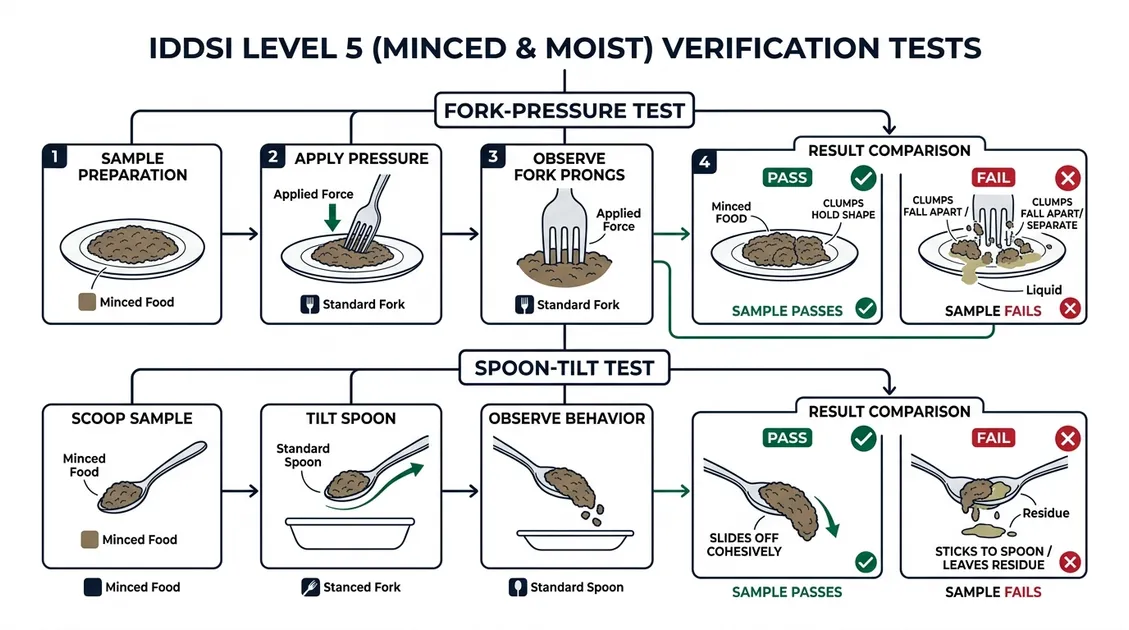
PantryTec's standardized recipes include fork-pressure and spoon-tilt testing instructions for each dish. Kitchen staff verify that every batch meets theparticle size requirement before service. This documentation becomes part of your care plan records for state survey readiness. We cover this in detail in our minced and moist IDDSI Level 5 menus guide.
What Are the IDDSI Level 5 Execution Protocols?
Minced and moist menus require all food particles to measure ≤4 mm for adults, bound with cohesive sauces that prevent any thin liquid from separating on the plate. Kitchen staff verify texture using the official IDDSI fork pressure test (food spreads easily between fork prongs) and spoon tilt test (food holds shape, does not drip) before every service.
Minced and moist menus follow a strict preparation sequence defined by the International Dysphagia Diet Standardisation Initiative: tenderize proteins first, mince to ≤4 mm, then bind with pureed vegetable sauces, low-fat gravies, or yogurt-based moisture. This sequencing prevents dangerous thin liquid pooling the primary aspiration trigger in IDDSI Level 5 meals. In our menu development process, we specify exact moisture ratios for each protein type: poultry receives herb-infused gravy at a 1:3 sauce-to-protein visual ratio, while fish uses lemon-butter reduction to maintain cohesion without masking delicate flavor. PantryTec's minced and moist menus also prohibit common execution failures: bread must be slurried (not served dry), mixed-consistency items like soups with chunks are excluded, and all beverages served alongside meals must match the resident's prescribed liquid thickness order per their SLP evaluation.
≤4 mm adult limit.
Minced and moist menus mandate proteins are tenderized before mincing. No hard, dry, or fibrous particles permitted.
Zero separate thin liquids.
Minced and moist menus use cohesive gravies, pureed sauces, and yogurt bindings. No liquid pooling on plate.
Fork pressure + spoon tilt.
Staff press fork prongs to confirm soft breakdown. Spoon tilt confirms food holds shape without dripping.
What Does a 7-Day Minced & Moist Menu Look Like?
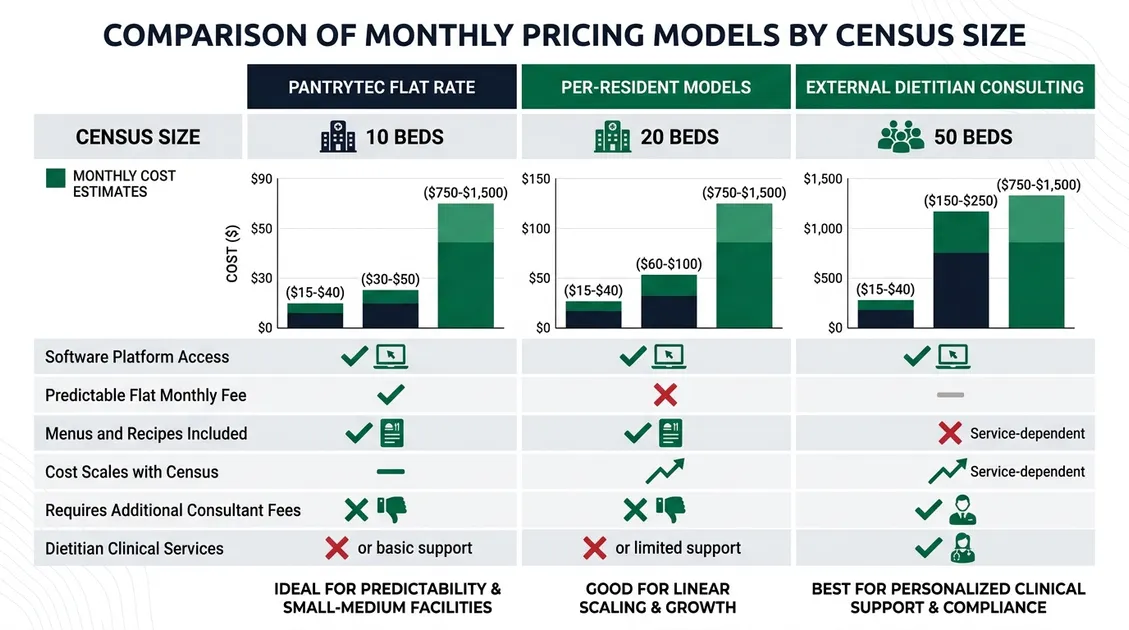
Minced and moist menus structure each day around balanced macronutrient targets while transforming challenging foods chicken, lean beef, whole grains into safe, moistened 4 mm bites that preserve the sensory experience of traditional dining. Friday lunches, for example, feature minced lean beef patties bound with savory gravy, giving residents familiar flavors without aspiration risk. Our registered dietitians verify every cycle to confirm caloric adequacy, protein distribution, and micronutrient coverage across the full rotation. Facilities managing residents on concurrent diabetic (CCHO) diets or cardiac diets can layer those therapeutic adjustments onto the same base minced and moist menu using PantryTec's Complete or Premier plan. Review the Week 1 sample below.
Sample Week 1 of PantryTec's 10-week IDDSI Level 5 minced and moist cycle menu. All meals RD-approved. Particle sizes ≤4 mm with cohesive moisture binding.What Foods Are Included in a Minced & Moist Level 5 Menu?
Sarcopenia affects up to 41% of nursing home residents, according to a 2020 meta-analysis published in the Journal of the American Medical Directors Association, so adequate protein at every meal is non-negotiable. IDDSI Level 5 menus include a wider variety of foods than most facilities expect, covering proteins. Grains, vegetables, fruits, and desserts that all meet the ≤particle and moisture needs. The IDDSI Framework specifies that Level 5 foods must be soft enough to squash with a fork, moist across, and show no thin liquid separation upon standing. Each entrée in a well-designed Level 5 menu should deliver 15–20 g of protein per serving to support muscle upkeep. Residents may transition between puree and minced-moist textures as their swallowing ability changes, so both Level 4 and Level 5 options need to be available in your menu cycle. PantryTec's recipe database of 40,000+ recipes includes dedicated Level 5 formulations tested for texture compliance.
Protein Sources: Minced Meats, Poultry, and Plant-Based Options
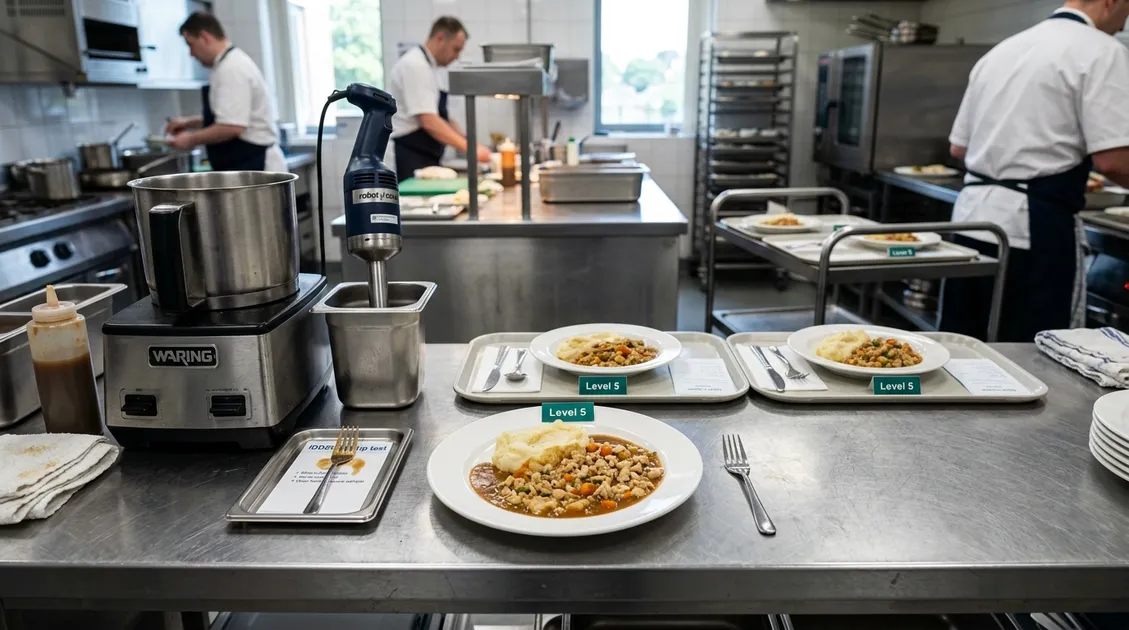
Minced chicken with gravy, flaked salmon in cream sauce, and soft scrambled eggs are staple Level 5 proteins. Plant-based options include mashed lentils, hummus, and soft tofu crumbles. All protein items must be moist, not dry, and pass the fork-pressure test after plating.

Grains, Starches, and Soft Vegetables
Well-cooked oatmeal, mashed potatoes, soft polenta, and minced pasta in sauce meet Level 5 criteria. Vegetables must be cooked until fork-tender, then minced to ≤. Steamed carrots, butternut squash, and green beans work well when prepared correctly.
Desserts and Snacks That Meet IDDSI Level 5 Standards
Puddings, mousse, soft baked goods soaked in milk, and mashed fruit with yogurt all qualify. Nourishment passes between meals should follow the same Level 5 criteria. Hydration protocols pair thickened beverages at the prescribed IDDSI drink level with snack service. See soft and bite-sized IDDSI Level 6 diet menus for a deeper breakdown.
Request a Texture-Modified Menu Quote
Get dietitian-approved IDDSI cycle menus with RD approval letters. Print-ready PDFs starting at $5/mo per therapeutic add-on.
Quote Request Submitted!
Thank you! A PantryTec menu specialist will review your facility's needs and send a custom quote within 1 business day. Check your email for a confirmation.
Get Dietitian-Approved Minced & Moist Menus
Speak with PantryTec about IDDSI-compliant cycle menus starting at just $5/mo per therapeutic add-on with RD approval letters included.
(385) 512-4731📋 Click the number to copy: (385) 512-4731

≤4mm
Max Particle Size for Level 5
60%
Choking Reduction with Proper Texture
How Do Minced & Moist Menus Scale Into Multi-Week Cycles?
Minced and moist menus prevent the malnutrition and weight loss commonly associated with monotonous texture-modified diets by rotating 50+ unique daily menus across the full 10-week cycle. Each week shifts the primary protein source from lemon-herb minced fish to broth-moistened lean pork to herb-crusted minced turkey while maintaining the mandatory 4 mm particle and moisture-binding requirements validated by the IDDSI framework. According to the Academy of Nutrition and Dietetics, dietary variety is a recognized factor in maintaining adequate caloric intake among older adults on therapeutic diets. We built PantryTec's rotation to address this directly dessert rotations use soft 4 mm gelatin, smooth puddings, and minced ripe fruits, with zero mixed-texture hard pieces.
Protein Rotation
Minced and moist menus cycle through chicken, turkey, cod, lean beef, pork, and eggs across each 7-day block, delivering varied amino acid profiles without violating the 4 mm particle limit.
Starch Variety
Minced and moist menus rotate smooth potato, quinoa mash, mashed pasta, and slurried whole-grain breads each prepared with measured moisture to maintain bolus cohesion during swallowing.
Flavor Cohesion
Minced and moist menus use lemon-herb, mild marinara, and yogurt-dill sauces that serve a dual clinical purpose: elevating taste perception and providing the moisture binding that prevents thin-liquid separation.
Upgrade beyond standard senior living cycle menus with clinically validated IDDSI Level 5 execution. Download free sample menus to review.
How Do Minced & Moist Menus Differ From Pureed Menus?
Frequently Asked Questions About Minced & Moist Menus
What is the exact particle size for IDDSI Level 5 minced and moist food?
Can bread be included in a minced and moist diet?
How much does a minced and moist cycle menu cost for a senior care facility?
What happens if a surveyor finds incorrect particle sizes during an inspection?
How do facilities transition a resident from pureed (IDDSI 4) to minced and moist (IDDSI 5)?
Get RD-Approved Minced & Moist Menus for $15/Month.
Minced and moist menus from PantryTec protect your residents and satisfy surveyors. IDDSI Level 5 cycle menus with 10-week rotation, RD approval included, no per-bed charges, and no contracts. Facilities using our menus report simplified survey preparation and reduced kitchen errors.
View Pricing & PlansReady to Get Started with PantryTec?
Contact PantryTec today to learn how we can help.