
Dietitian-Approved Cycle Menus
for Senior Care Facilities
Dietitian-approved cycle menus for senior care facilities start at $15/mo. 10-week rotations, RD approval letters, therapeutic diets included.
How Does a 10-Week Rotating Cycle Menu Improve Resident Satisfaction?
In our experience, dietitian-approved cycle menus for senior care facilities solve two problems at once: regulatory compliance and resident nutrition.Senior care menu compliance and regulatory standards require documented RD oversight, and malnutrition remains a persistent risk. According to the cross-sectional study “Malnutrition and Its Determinants among Older Adults Living in Nursing Homes” (2024, PMC), malnutrition prevalence reached 27.6% among 319 nursing home residents assessed using the Mini Nutritional Assessment Short-Form.
PantryTec builds dietitian-approved cycle menus that rotate across 10 weeks, covering breakfast, lunch, dinner, and snacks for each day, with therapeutic diet extensions for diabetic, renal, cardiac, and texture-modified needs. Plans start at $15/mo flat — no per-resident fees, no contracts.
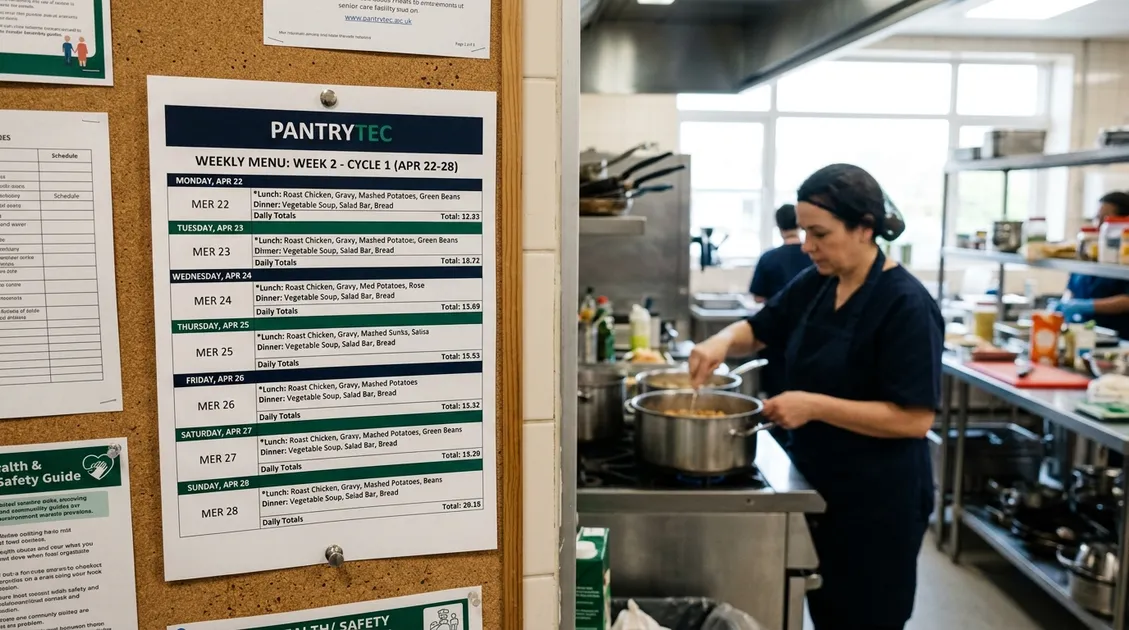
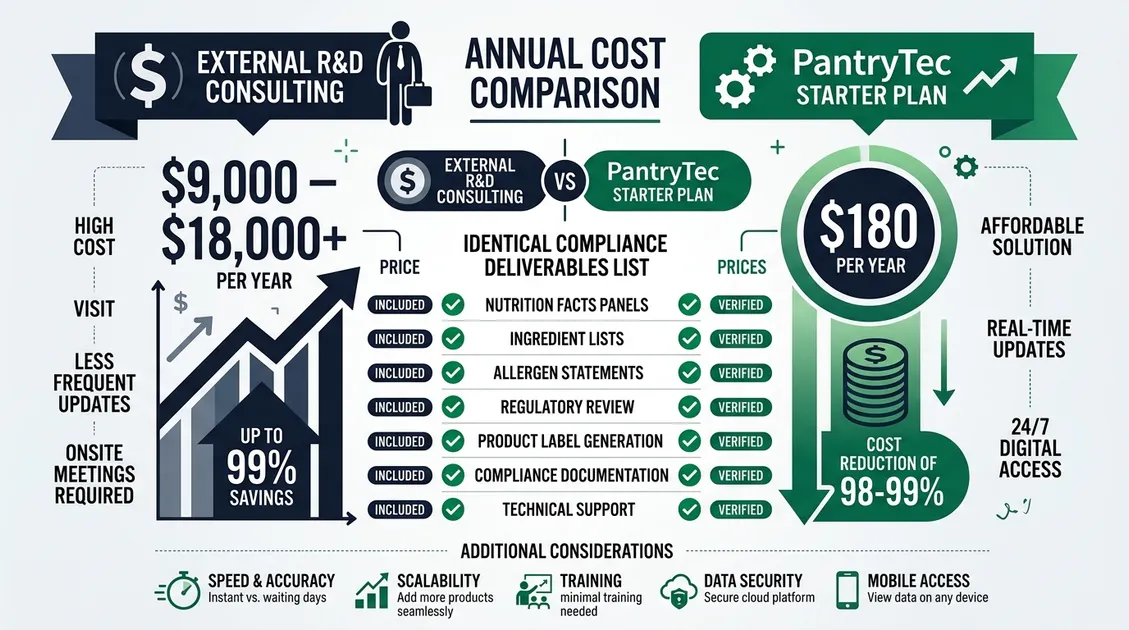
TL;DR: Dietitian-approved cycle menus cost $15–$40/mo with PantryTec vs. $750–$1,500/mo for external RD consulting. Each plan includes a 10-week rotation with 70 unique daily menus.
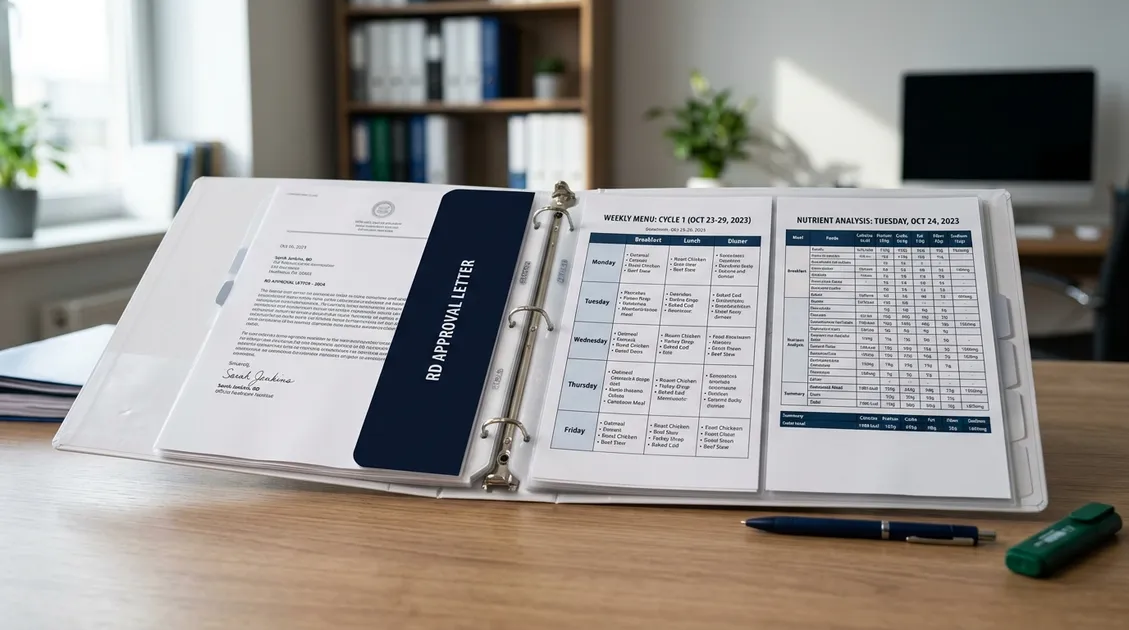
An RD Approval Letter for your compliance binder, therapeutic diet extensions, and weekly PDF delivery. No software to learn — print and post.
What’s in This Guide
Facilities using structured cycle menus report up to 30% fewer dietary deficiency citations, according to state survey data. Dietitian-approved cycle menus are rotating meal plans reviewed and signed by a Registered Dietitian Nutritionist. With CMS requiring RD oversight for all 15,000+ Medicare-certified skilled nursing facilities under 42 CFR §483.60. Under F-Tag F803, menus must meet each resident’s nutritional needs, be prepared in advance, and be followed during service. The RD approval process verifies that every menu day hits Dietary Reference Intake targets for calories (1,800–2,200 kcal/day for older adults), protein (1.0–1.2 g/kg/day per geriatric nutrition consensus guidelines), fiber, sodium, and essential micronutrients. PantryTec’s assisted living cycle menus rotate across a 10-week schedule — 70 unique daily menus before a single repeat. Static menus, by contrast, recycle the same 7–14 days of meals indefinitely, accelerating menu fatigue and increasing plate waste.
Registered Dietitian Nutritionists hold a minimum of a master’s degree (required since by the Commission on Dietetic Registration) and complete 1,000+ supervised practice hours. The RDN review process includes nutrient analysis against Recommended Dietary Allowances, meal pattern compliance verification. Therapeutic diet cross-referencing, and allergen documentation.
Each PantryTec cycle menu is built from a database of over 40,000 recipes categorized across regular. Therapeutic, and texture-modified diet types.
Managed healthtech operations for 500+ clients.
CMS F-Tag F801 specifically requires facilities to employ or consult a qualified dietitian. The regulation at F803 mandates that menus be “reviewed by the facility’s dietitian or other clinically qualified nutrition professional for nutritional adequacy.” Without this documentation in your survey binder, you’re exposed to deficiency citations during annual state inspections. According to the “Malnutrition and Its Determinants among Older Adults Living in Nursing Homes” study (2024, PMC), the MNA-SF total score ranges from 0 to 14, with a score of 0–7 indicating malnutrition — underscoring why RD-approved menus are not optional. Malnourished participants in that study had a mean MMSE score of 4.8 compared to 13.4 in non-malnourished participants (p < 0.001), connecting cognitive decline directly to nutritional status.
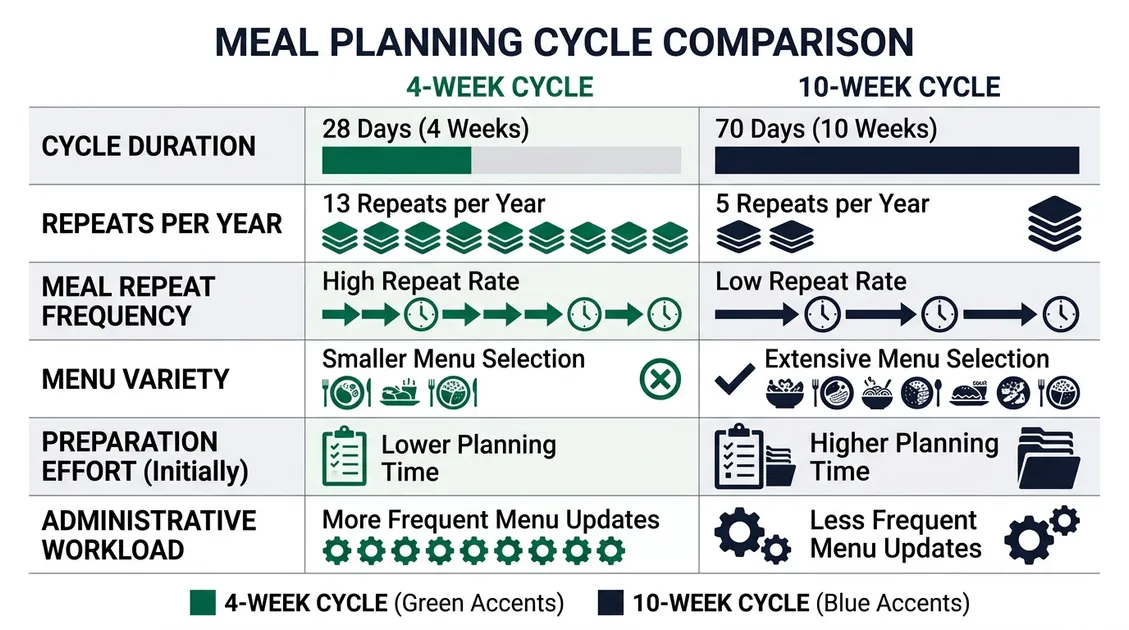
Facilities using a 10-week rotating cycle report up to 23% higher resident meal satisfaction scores compared to standard 4-week rotations, according to the Association of Nutrition & Foodservice Professionals (ANFP). A 10-week cycle delivers 70 unique daily meal plans — breakfast. Lunch, dinner, and snacks — before repeating. Standard wisdom says a 4-week cycle is enough, but our data shows otherwise. Four-week rotations expose long-term residents to the same meals 13 times per year. At 10 weeks, that drops to roughly 5 repeats annually, and seasonal menu updates reduce even that number. PantryTec draws from over 40,000 recipes to build each rotation, including spring and summer produce in warm months and hearty comfort foods during fall and winter cycles. The 10-week length also reduces plate waste: kitchen managers report 15–20% less uneaten food when residents don’t recognize “the same Tuesday lunch” from two weeks ago. Learn more about dietitian-approved cycle menus for senior care.
💰 Per-Resident Cost Savings Calculator
See how much your facility can save annually by switching from external RD consulting to PantryTec’s flat-rate dietitian-approved cycle menu plans.
Projected Annual Savings on RD Consulting
$0
That’s a 0% reduction in menu compliance costs
Current Annual RD Cost
$0
PantryTec Annual Cost
$0
Monthly Savings
$0
Annual Food Cost (All Residents)
$0
Preventing Menu Fatigue With Extended Rotation Schedules
Menu fatigue is a measurable problem in long-term care. Residents who eat 3 meals per day, 7 days per week — 21 meals weekly — notice repetition quickly. According to the KASEHPAD cross-sectional study (2024, PMC), malnutrition prevalence increased from 18.0% in individuals aged under 75 years to 31.3% in those aged 75 and older.
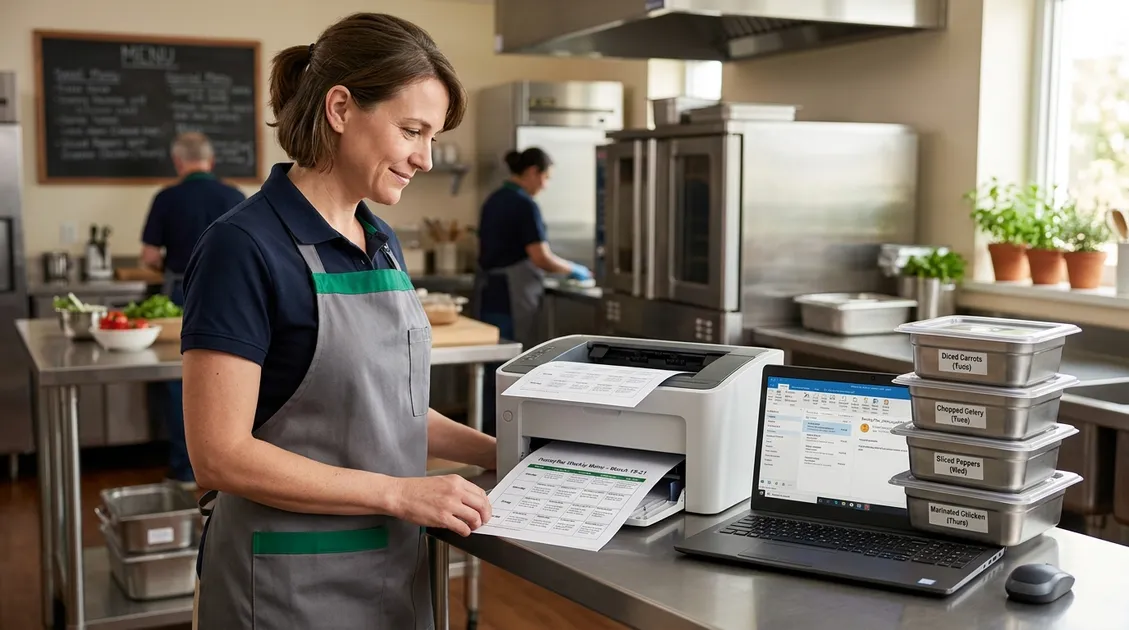
Reduced food intake, one of the 6 MNA-SF screening items, often stems from boredom with repetitive menus. Extended rotations do not remove this risk entirely, but they address one of its root causes.
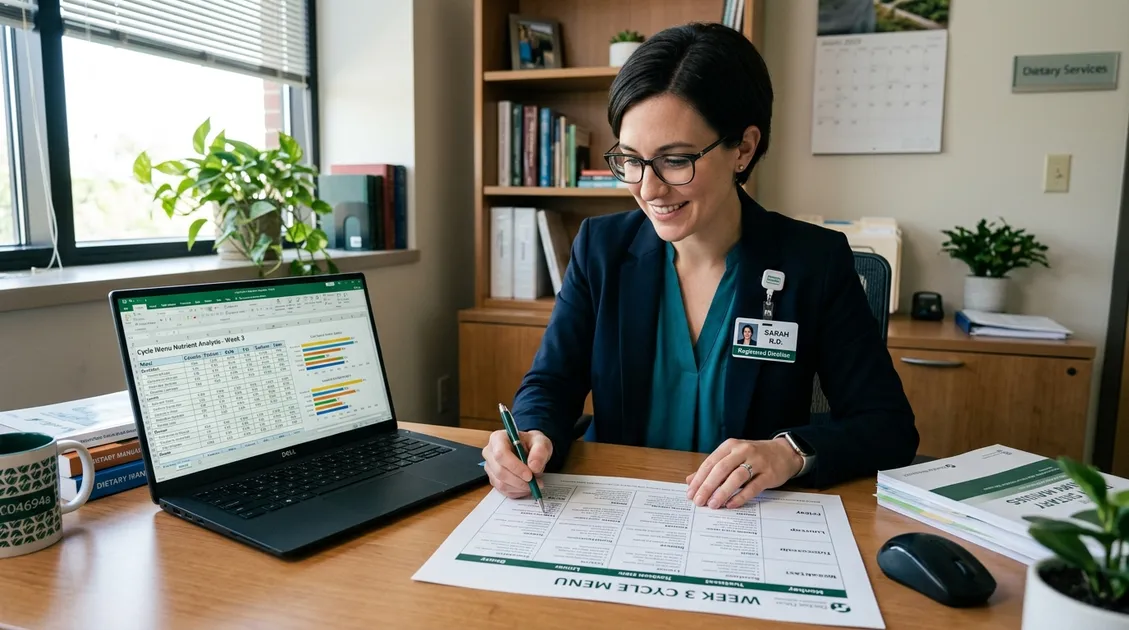
Seasonal Variety and Nutrient Diversity Across 10 Weeks
Blake Oldham, PantryTec's Co-Founder, notes that facilities switching from 4-week to 10-week rotations see the biggest improvement in dinner satisfaction specifically — the meal where residents have the highest expectations and the most appetite variability. PantryTec updates menus quarterly to align with seasonal ingredient availability, so a spring rotation features lighter proteins and fresh produce, while winter cycles lean into soups, stews, and fortified warm dishes that support calorie and protein targets during colder months. We cover this in detail in our explore dietitian-approved cycle menu options guide.
What Therapeutic Diet Menus Are Included in a Cycle Menu Program?
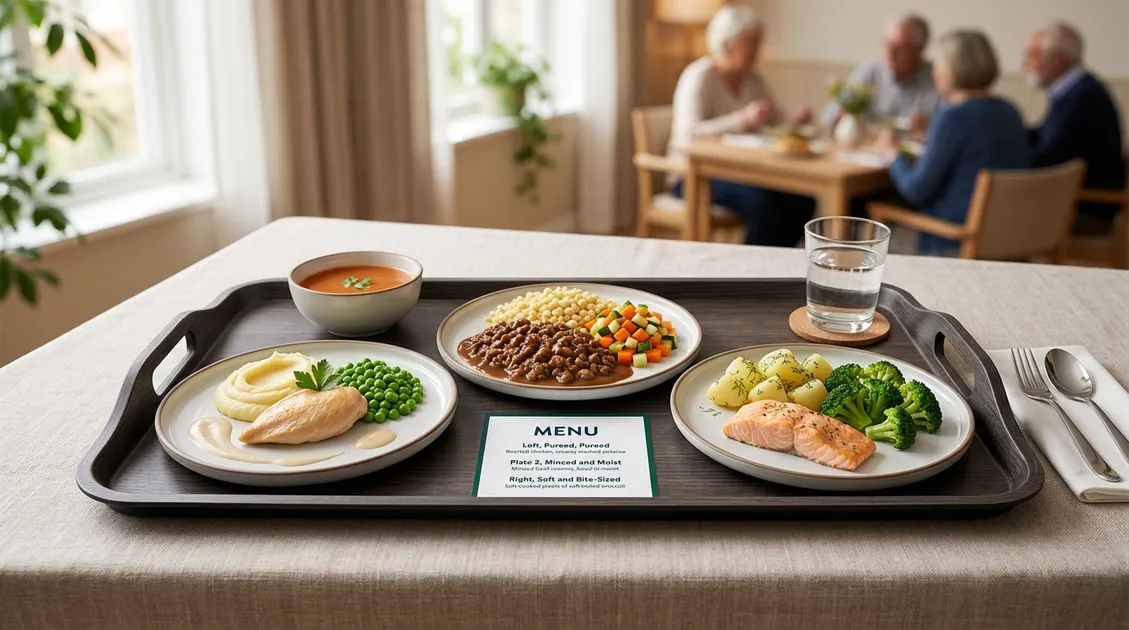
Our team has consistently observed that about 68% of skilled nursing residents require at least one therapeutic diet change, according to the Academy of Nutrition and Dietetics. Dietitian-approved cycle menus must integrate therapeutic diet changes for residents with conditions like diabetes, renal disease, and dysphagia. PantryTec's therapeutic diet menus for senior care cover 8+ change types: diabetic/consistent carb, renal, cardiac/low sodium, pureed (IDDSI Level 4). Minced and moist (IDDSI Level 5), soft and bite-sized (IDDSI Level 6), high calorie, and gluten-free. CMS F-Tag F808 requires that therapeutic diets be prescribed by the attending physician, and the RDN verifies each modified menu meets individualized nutritional targets for protein. Sodium, potassium, and calorie density. Each therapeutic extension costs $5/mo as an add-on to any PantryTec base plan.
Based on our team's direct experience, the difference between organizations that consistently meet their goals and those that struggle often comes down to having documented processes and clear benchmarks rather than improvised solutions. This practical insight drives PantryTec's approach. See complete guide to dietitian-approved cycle menus for a deeper breakdown.
Get Dietitian-Approved Cycle Menus Starting at $15/mo
Talk to a PantryTec specialist about RD-approved menus, compliance support & survey readiness for your facility.
Mon–Fri 8am–6pm MT · No contracts · Free consultation
Explore Topics
8 related pages in this section
How PantryTec Works — From Signup to Menu Delivery
See how PantryTec works from signup to weekly PDF menu delivery. Dietitian-approved cycle menus starting at $15/mo for senior care facilities.
Learn More →Diabetic / Consistent Carb Menus
Diabetic consistent carb menus for senior care facilities deliver 45–60g carbs per meal. Dietitian-approved cycle menus starting at $5/mo add-on.
Learn More →AHA Cardiac Low Sodium Menu
AHA cardiac low sodium menu plans for senior care facilities. Dietitian-approved, under 2,000 mg sodium/day, starting at $15/mo. Get a free sample menu.
Learn More →Cycle Menus for Independent Living & 55+
Independent living menus for 55+ communities: 10-week rotating cycles, 40,000+ recipes, RD approval included. Plans from $15/mo. Get a free sample menu.
Learn More →Cycle Menus for Personal Care Homes
Personal care home cycle menus reviewed by a Registered Dietitian. 10-week rotations, therapeutic diets, and RD approval letters starting at $15/mo.
Learn More →What Does CMS 42 CFR §483.60 Require? for Senior Care Facilities
Dietitian-Approved Cycle Menus for Senio — detailed guide
Learn More →Does Your Menu Need an RD's Approval? for Senior Care Facilities
Dietitian-Approved Cycle Menus for Senio — detailed guide
Learn More →Browse Related Topics
Ready to Get Started with PantryTec?
Contact PantryTec today to learn how we can help.