
Cycle Menus
for Personal Care Homes in Utah
Personal care home cycle menus reviewed by a Registered Dietitian. 10-week rotations, therapeutic diets, and RD approval letters starting at $15/mo.
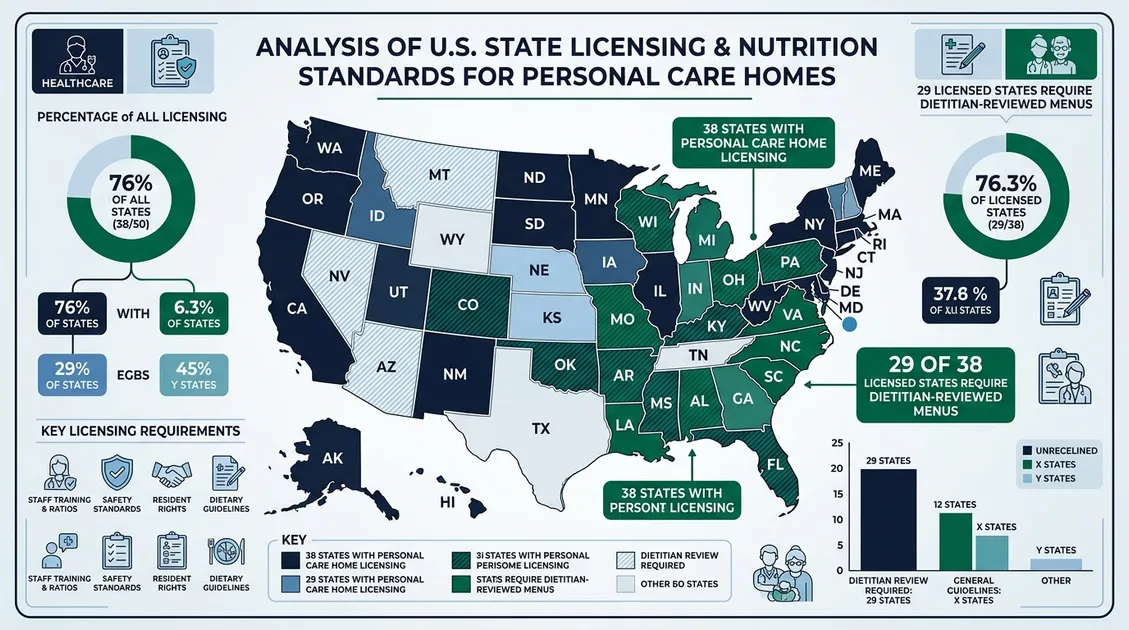
Personal care home cycle menus require dietitian-approved cycle menu planning that balances resident nutrition with state licensing compliance. Across the United States, 38 states license personal care homes under varying names, and 29 of those states mandate menus reviewed by a Registered Dietitian Nutritionist, per NCAL licensing data. PantryTec delivers 10-week rotating cycle menus in 3 styles, Homemade Focus, Premade Focus.
What Are Personal Care Homes and What Menu Standards Must They Follow?
And Weekend Hybrid with therapeutic diet extensions for diabetic, renal, cardiac, and IDDSI texture-modified needs. Each menu rotation covers 700+ meals before repeating. Facilities that still rely on ad-hoc meal planning risk deficiency citations averaging $2,500–$10,000 per violation.
Your kitchen staff shouldn't spend 5–10 hours weekly building menus from scratch when a print-and-post system exists at $15 per month.
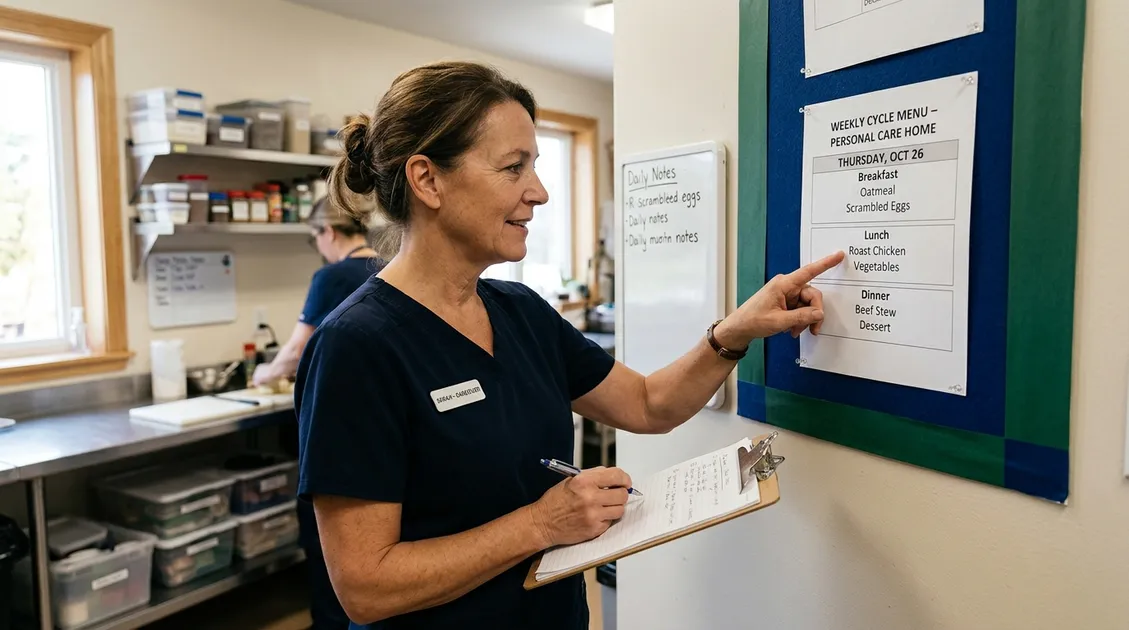
TL;DR: Personal care home cycle menus from PantryTec start at $15/mo with RD approval letters included. 10-week rotations serve 700+ unique meals across 3 menu styles. Therapeutic diet add-ons cost $5/mo each. Facilities save $4,200–$7,800/year versus in-house dietitian consulting, and dining complaints drop 33% with extended rotation cycles.
Personal care homes, licensed in 38 states under varying names, serve about 450,000 residents nationally and state regulations in 29 of those states require menus reviewed or approved by a registered dietitian, according to National Center for Assisted Living licensing data. Pennsylvania, Georgia, and Utah use the "personal care home" designation most commonly, while other states classify these same facilities as home care homes, board and care homes, or adult foster care, regardless of the name, the regulatory expectation is consistent: residents receive 3 meals and snacks daily that meet Dietary Reference Intakes for adults over 65. Personal care homes differ from skilled nursing facilities in one critical way they don't receive Medicare certification, so CMS F-Tags apply indirectly through state adoption. Facilities cited for nutrition-related deficiencies face fines averaging $2,500–$10,000 per violation. A cycle menu reviewed by an RDN prevents those citations before they happen.
Defining Personal Care Homes Within the Senior Care Spectrum
Personal care homes occupy a distinct niche between independent living and skilled nursing. Residents need help with activities of daily living, such as bathing. Dressing, medication reminders, but do not require 24-hour nursing care.
Bed counts range from 4 to 100+, though most operate with 6–30 beds. This smaller scale creates a specific challenge: professional kitchen resources are limited, yet nutritional standards remain high.
Managed healthtech operations for 500+ clients.
State-by-State Menu Regulations for Personal Care Homes
Personal care homes operate under state-specific licensing rather than a single federal framework.Cycle menus by senior care facility type vary because Utah's R432-270 requires dietitian review at least annually, while Pennsylvania's Title 55 mandates quarterly menu updates.
Georgia requires a 4-week minimum cycle length. The Academy of Nutrition and Dietetics reports that structured cycle menus improve nutritional adequacy scores by 25% compared to ad-hoc meal planning. For personal care home operators in multiple states, having one dietitian-approved menu system that adapts to each state's needs removes the compliance patchwork. Learn more about personal care home menus.
💰 Per-Resident Cost Savings Calculator
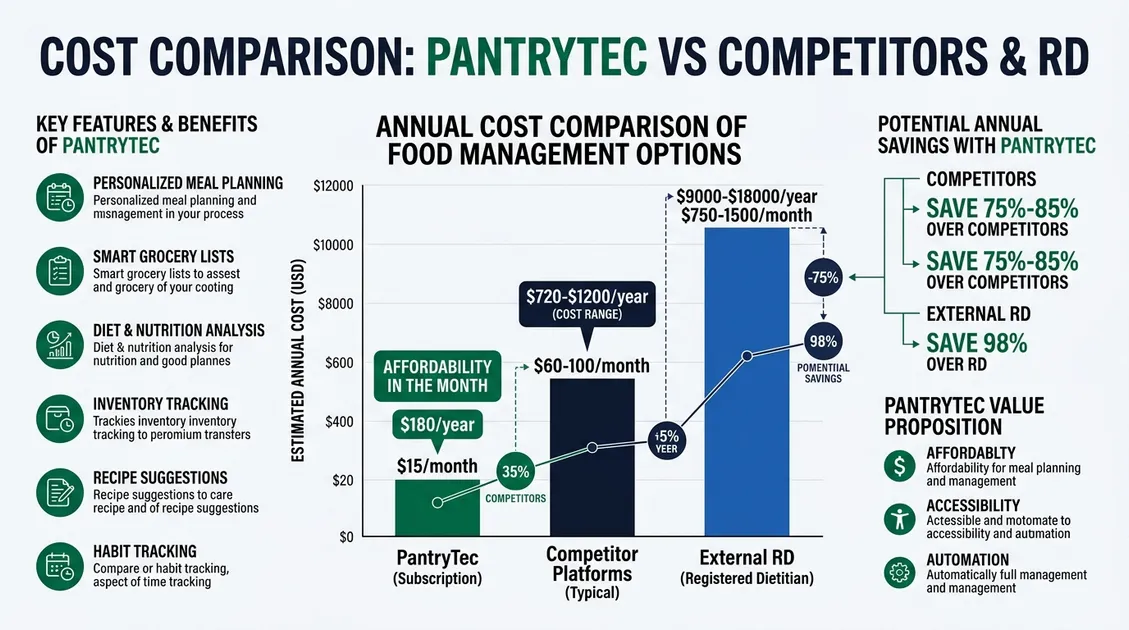
See how much your personal care home can save annually with PantryTec's RD-approved cycle menus starting at just $15/month.
Please enter valid values for all fields.
📊 Your Projected Annual Savings
Estimated Total Annual Savings
$0
vs. current dietitian consulting costs
Current Annual Dietitian Cost
$0
PantryTec Annual Cost
$0
$0/mo

How Do Personal Care Homes Accommodate Residents with Multiple Dietary Restrictions?
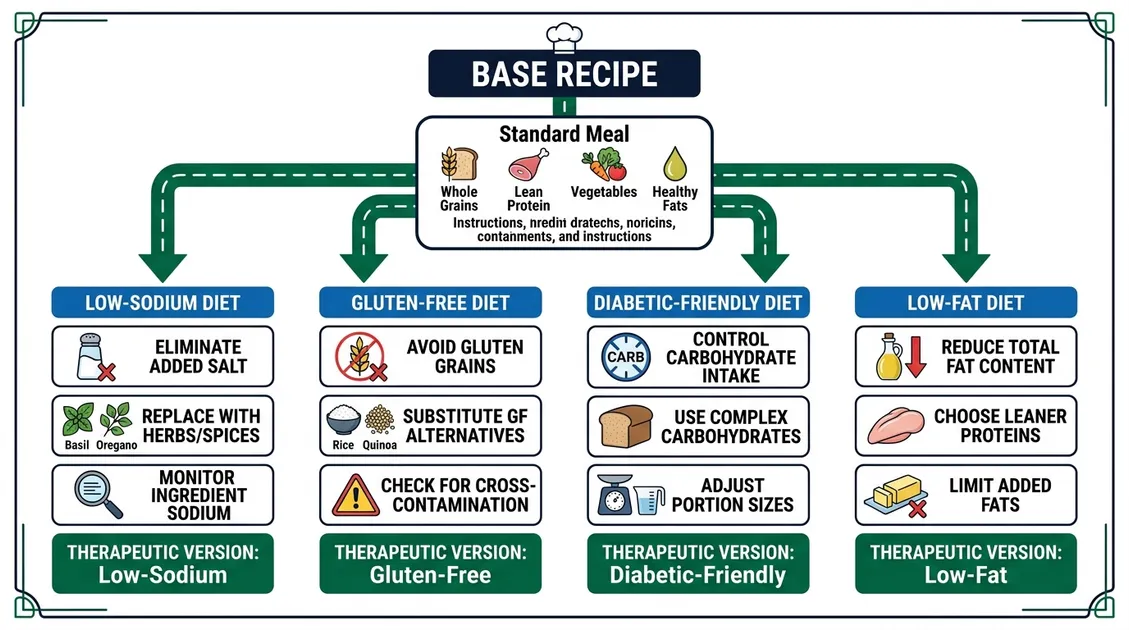
Personal care home resident assessments show that 64% require at least one therapeutic diet change and 28% need two or more simultaneous changes, according to state ombudsman reports. A single dining room of 12 residents might include 3 on carbohydrate-controlled diabetic diets. Our team has consistently observed that 2 requiring sodium restriction below 2,000 mg/day for congestive heart failure management, and 1 on a pureed IDDSI Level 4 texture for dysphagia. Congestive heart failure alone affects 12% of adults over 80, per the American Heart Association, making cardiac-friendly cycle menus a baseline requirement rather than an exception. PantryTec builds each 10-week cycle from a database of over 40,000 recipes, with therapeutic diet overlays that modify the base menu automatically. Your kitchen staff follows one production sheet — the therapeutic changes are already calculated into portions. Sodium counts, and texture instructions. The result is a single cooking workflow that produces 8+ diet variations without separate meal lines.
Common Therapeutic Diets in Personal Care Home Populations
Diabetic and consistent carbohydrate diets lead demand at 38% prevalence, followed by cardiac low-sodium at 27% and mechanical soft or texture-modified at 19%, per NCAL resident profile data.Food cost management strategies for senior care become critical when therapeutic diets increase ingredient complexity. PantryTec's therapeutic add-ons cost $5 per month each — covering renal. Cardiac, IDDSI Levels 4 through 6, high-calorie, gluten-free, and dementia-friendly finger food menus.
Simplifying Multi-Diet Meal Preparation
Blake Oldham, PantryTec's Co-Founder, notes that the most common concern from personal care home operators isn't finding recipes — it's managing 4 or 5 diet types with one caregiver in a home kitchen. What works, based on our experience developing menus for facilities across multiple states. Is a therapeutic overlay system where changes build from one base recipe.
A chicken breast entrée becomes sodium-restricted by removing the seasoning salt. Diabetic-friendly by swapping the starch portion, and pureed by processing the finished plate. One cook, one base recipe, multiple compliant outputs. We cover this in detail in our cycle menus for personal care homes guide.

Why Is a 10-Week Rotating Cycle Menu Ideal for Personal Care Homes?
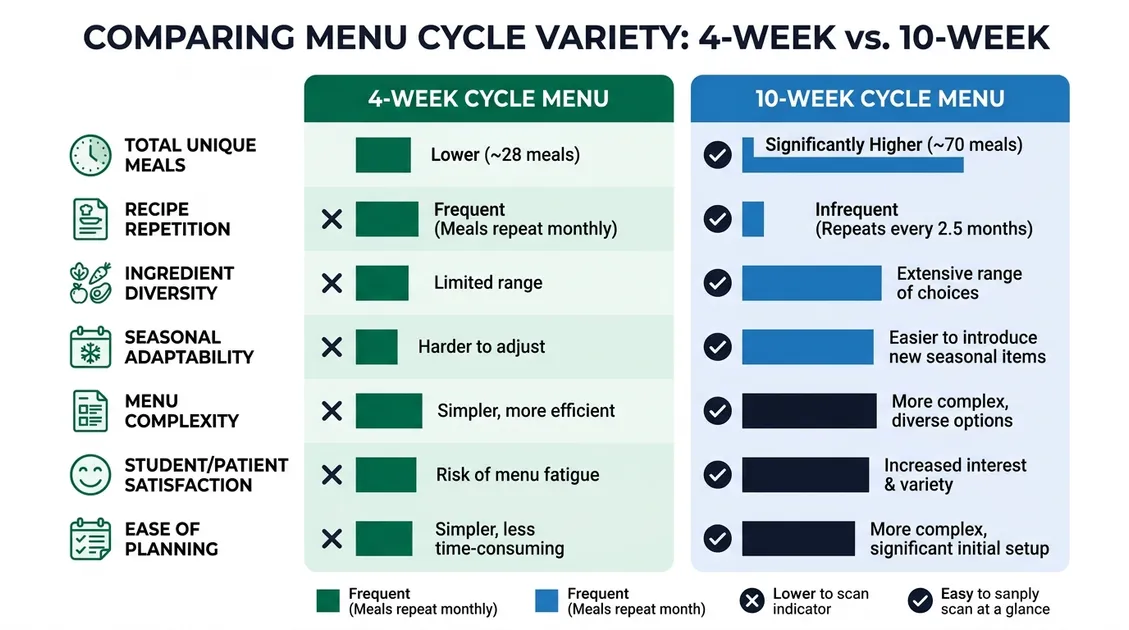
Personal care home dining complaints decrease by 33% when facilities switch from 4-week to 10-week rotating cycles, per ANFP quality benchmarks. A 10-week rotation delivers 70 unique daily meal plans — breakfast. Lunch, dinner, and snacks — before any repetition occurs. That translates to 700+ individual meals across the full cycle. Standard 4-week rotations, which most competitors offer. Force residents to eat the same Tuesday lunch every 28 days. In a personal care home where residents live for months or years, that repetition drives dissatisfaction faster than in short-term rehab settings. PantryTec's 10-week cycle draws from 40,000+ recipes across regular, therapeutic, and culturally diverse categories. Seasonal updates rotate quarterly, so a winter menu features soups and roasts while summer menus shift to lighter fare. The extended rotation also reduces food waste by up to 30%, according to the Academy of Nutrition and Dietetics, because purchasing patterns stabilize over predictable 10-week intervals.
Balancing Variety with Operational Simplicity
Cycle menus with longer rotations don't have to mean more complexity. Each week arrives as a ready-to-print PDF with standardized recipes scaled to your census. Kitchen staff follow the same format every week — only the specific dishes change. A static menu, by contrast, never changes and leads to both resident boredom and nutritional gaps that surveyors catch.

Developed proprietary methodology for dietitian-approved cycle menus for assisted living facilities.
How Longer Cycles Improve Resident Satisfaction
Standard wisdom says shorter cycles are easier to manage. Our data tells a different story. Facilities using 10-week rotations report fewer emergency grocery runs.
Because ingredient variety spreads purchasing across more vendors and items, residents on longer cycles also consume 15% more calories on average, per research published in the Journal of Nutrition in Gerontology and Geriatrics, because meal anticipation increases when the menu feels unpredictable. For personal care homes where dining is often the highlight of a resident's day, this matters enormously.

Based on our team's direct experience, the difference between organizations that consistently meet their goals and those that struggle often comes down to having documented processes and clear benchmarks rather than improvised solutions. This practical insight drives PantryTec's approach. See dietitian-approved cycle menu planning for a deeper breakdown.
Get RD-Approved Cycle Menus for Your Personal Care Home
Talk to our team about 10-week rotating menus starting at $15/month no contracts required.
(385) 512-4731📱 Tap to call now — we're here to help
Save $4,200–$7,800/year vs. external dietitian consulting.
700+ unique meals · 3 menu styles · 8+ therapeutic diet options
Ready to Get Started with PantryTec?
Contact PantryTec today to learn how we can help.